Month: September 2020

  • Thunderbolt and Lightfoot (1974)

    Thunderbolt and Lightfoot (1974)

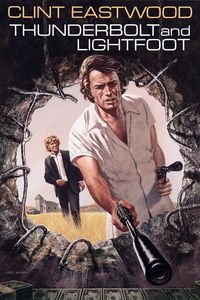
    (YouTube Streaming, September 2020) Ah, the 1970s New Hollywood! A time so predictable in its overdone nihilism that it couldn’t have even a simply buddy road movie without killing off one of its lead characters by the end! I’m not jesting: While most saner hands at another time in Hollywood’s history would have maintained Thunderbolt and Lightfoot’s lighthearted tone throughout, here is Michael Cimino doing his Cimino thing of ensuring that no one in the theatre is happy by the end of the film. Headlined by Clint Eastwood as a grizzled robber and Jeff Bridges as a happy-go-lucky drifter, Thunderbolt and Lightfoot starts out firmly in outlaw comedy, as Eastwood is disguised as a preacher and pursued by a gunman through field, after which he’s hit by Bridges’ car. Taking the younger man under his wing (and vice versa, up to a point), the veteran tells of a robbery haul still in the wild, hidden behind the blackboard of a one-classroom rural school. Pursued by two ex-members of Eastwood’s crew, they drive across a chunk of the American heartland to discover that the school is gone. Thinking of nothing better to do, they hatch another robbery, taking aim at the same place with the same tactics. For much of its duration, Thunderbolt and Lightfoot is a decently entertaining crime comedy, with antagonists not quite willing to pull the trigger on the protagonist and the protagonist working with the antagonists to reach their objectives. But this amiable façade comes crashing down at the very end, with characters meeting messy ends and one of them slumped over dead. How did we get there? The answer is “early 1970s,” obviously. While people always talk about Cimino’s second (The Deer Hunter) and third (Heaven’s Gate) films, this debut is worth noticing as well: Other than the downbeat ending, we can see Cimino taking utmost advantage of widescreen cinematography in his portrayal of the modern American west and the roads on which our characters travel from one part of the script to the other. Still, movies live or die on their endings, and the ending of Thunderbolt and Lightfoot seems unearned and unlikely to make anyone want to revisit the film as a romp.

  • Plymouth Adventure (1952)

    Plymouth Adventure (1952)

    (On Cable TV, September 2020) As a Canadian, there are a few pieces of American mythology that confound me, and the Mayflower is one of them. I know that Thanksgiving comes from its pilgrims, and so does part of the American overinflated sense of democracy. Never mind that it was a mere drop in the massive immigration waves that truly made America, that the American Revolution was far more crucial to its system of government or that Thanksgiving is a bit of a hollow celebration as we come to grips with colonization. But Plymouth Adventure goes all-in to mythologize the trip in celluloid form, featuring none other than Spencer Tracy as the captain of the ship ferrying the pilgrims to the new world. The journey is interminable for both the pilgrims and the audience, as the film overstuffs itself with an ensemble cast and several dramatic deviations from historical fact. There are romantic entanglements, deaths, storms and that stuff—with special effects so good at the time that they netted an Oscar. Dramatically, though, Plymouth Adventure is a bit of a bore. It’s so deeply convinced of the value of its story that it fails to make a case for its importance. The style of the film is typical of early 1950s bombast, although I fear what would have happened if they had made this film a few years later, just as 1950s films took on epic scope and length in order to outclass television. I don’t mean to imply that Plymouth Adventure is a bad movie—you can still watch it today and appreciate the result, as well as be thrilled at some of the storm sequences. But it’s self-satisfied in a way that limits its appeal to non-Americans—or even Americans who don’t buy into the white Pilgrim myth as the birth of the nation.

  • Viaggio in Italia [Journey to Italy] (1954)

    Viaggio in Italia [Journey to Italy] (1954)

    (On Cable TV, September 2020) I’m going to keep this short—writer-director Roberto Rossellini’s Journey to Italy is a good film, maybe even a great one, but not for me. Its depiction of a quarrelling couple well on its way to dissolution is depressing enough (although the film is working toward a better resolution), but the film’s loose, slow, episodic, almost improvisational quality isn’t the kind of thing I go out of my way to see. The black-and-white cinematography often stops the Italian scenery from being as impressive as it should be. I don’t quite dislike Journey to Italy—we get good performances out of Ingrid Bergman and George Sanders, the intrusion of the Vesuvius eruption into the narrative is clever, and there’s a travelogue-to-1950s-Naples quality here that’s interesting. But it’s not the kind of film I get enthusiastic about.

  • Cross of Iron (1977)

    Cross of Iron (1977)

    (On Cable TV, September 2020) Director Sam Peckinpah and war movies seem like an ideal match, and one of the surprises of his filmography is that there are so few of them in there. Maybe producers couldn’t trust him with the budget of a war movie; maybe he felt that there were only so many ways he could say he was anti-war. No matter the reason, at least we have Cross of Iron to fall back on—a gritty, non-sentimental, harsh and nihilistic view of WW2 as seen from the German officers fighting against the Soviets. (The question of their allegiance to Hitler is minimized—one character admits to hating Hitler, and the Nazi political officer is a reprehensible person even by the standards of the film.) The story is substantial, having to do with a glory-seeking officer facing off against a more pragmatic one, but the real worth of Cross of Iron is in the implacable battle sequences filled with explosions, death and futility. Peckinpah is in his element here, as he apparently revels in the senseless violence, the machismo of the soldiers, and the innate ugliness of it all. At least we get decent performances out of James Coburn, Maximilian Schell, James Mason and David Warner. Cross of Iron isn’t for everyone: even those viewers familiar with Peckinpah’s brand of violence may be put off by the unrelenting pace of this film and the way it sees no way out. But that does put Cross of Iron squarely in-line with the rest of the 1970s war films, digesting Vietnam through increasingly meaningless war films that were much closer to the war-is-hell end of the spectrum than war-is-an-adventure Hollywood movies of an earlier generation.

  • Victory aka Escape to Victory (1981)

    Victory aka Escape to Victory (1981)

    (On Cable TV, September 2020) No matter how you slice it, “Sylvester Stallone, Michael Caine, Max von Sydow and Pelé” is a really interesting cast for a WW2 movie. One of those fun war movies absolutely not adapted from real events, Victory posits an exhibition football match between Nazis and allied prisoners in Paris, who set in motion a complex escape plan. Sylvester Stallone stars as an American (captured while fighting with the Canadians) with plans to escape who’s recruited into the resistance for an even bigger escape plan. Cleverly playing both the underdog sports tropes and the war movie escapes one, Victory may not be believable or coherent, but at least it’s distinctive from most other WW2 films you’ve seen. John Huston directs with his usual late-career competence, and the production means are generally sufficient for the film’s scope. But here’s the thing: despite the high potential of the film, its built-in comfort zone, and good performances from Stallone, Caine, Sydow and Pelé, Victory all feels curiously… dull. The execution is fine, but there’s a spark missing: the suspense is slight, the episodes on the way to the ending feel perfunctory, and the entire thing can be almost immediately forgotten. Which is weird considering how unusual a blend of elements it is. Ah well—I suspect Victory is one of those films that begs to be rediscovered periodically: not quite as an enduring gem, but as a curio.

  • Frankenhooker (1990)

    Frankenhooker (1990)

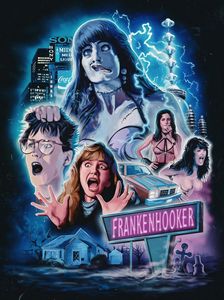
    (On Cable TV, September 2020) This. This is what B-movies should be about: grotesque, raunchy, offensive, funny, audacious, goofy and not for everyone. Frankenhooker, as the title suggests, is a riff on Frankenstein (or maybe The Brain That Wouldn’t Die) as an amateur scientist goes the stitched body-parts route to revive his dead girlfriend. In the hands of writer-director Frank Henenlotter (famous for Basket Case), the result is a bizarre mixture of horror, comedy, nudity and dismembered body parts. It’s not made for mainstream audiences: Frankenhooker is deliberately aimed at the EC-comic sensibilities of horror fans who can take a gory joke and revel in the sickness of it. (By the time the protagonist’s “super-crack” makes prostitutes explode, well… even the bad special effects are part of the fun, as the actresses are switched with obvious mannequins that then explode.) While James Lorinz headlines the film as the nerdy scientist, I was more interested in seeing Heather Hunter in a small role. It’s all capped off by a dark ironic joke that claws back much of the film’s over-the-top misogyny. While I’m not sure that I would have been as charmed by Frankenhooker before becoming a jaded horror viewer, I found it all very funny—one of those wonderfully perverse, absolutely reprehensible films that are nonetheless about as far as it’s possible to go in that vein while remaining fun rather than gross. The 1980s were big on those films (there’s a heavy streak of Re-Animator energy here) and it’s a shame that we haven’t seen anything quite like this in the years since then. But, at least, we’ll always have Frankenhooker

  • Woodstock (1970)

    Woodstock (1970)

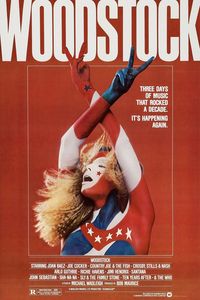
    (On Cable TV, September 2020) In the Summer of 1969 historical face-off, I’m more of a moon landing guy than a Woodstock one, but even I’ll have to admit that the concert had better music. The massive documentary Woodstock is about as close as I’ll ever want to get to spending three days in a muddy field listening to music. At 185 minutes (or a massive 224 minutes for the director’s cut), it has a lot of material to present in between thirty musical acts, footage of the 400,000 people that were present for the event, and interviews with bemused locals talking about the hippie invasion of their quiet rural town. But anything that’s not the music is a distraction: the performance footage is the heart of the film. Woodstock was almost never made—according to legend, director Michael Wadleigh decided at the last minute to send a filming crew to upstate New York, and captured so much footage that it took months and a team of editors (including Martin Scorsese and Thelma Schoonmaker) to wrestle it all into the final result—and that’s with the split-panel presentation to show as much footage as possible. It’s quite a movie, even if you have to set aside most of an evening to watch it all. For those who weren’t even alive in 1969, Woodstock is also a wonderful time capsule of an event unlikely to ever happen again.

  • L’appât [The bait] (2010)

    L’appât [The bait] (2010)

    (On Cable TV, September 2020) Crime comedies are very close to being the platonic ideal of French-Canadian summer blockbusters, and it’s not that surprising to see the producers of the film look for a transatlantic crossover in L’appât by asking noted French-Canadian superstar Guy A. Lepage to star alongside French comedian Rachid Badouri. Clearly aiming for a large audience, writer-director-producer Yves Simoneau (in a surprising return to cinema screens after decades working in television) bets everything on accessible action-comedy. But does he succeed? That depends on your tolerance for broad, almost intentionally stupid execution. The narrative hook of pairing a dumb gaffe-prone municipal cop (Lepage) with a near-flawless special agent (Badouri) is promising, but Simoneau makes the French-Canadian character an exasperating grade of weapons-grade stupid with few redeeming traits, and the film has to carry that on its shoulders for the entire running time. It doesn’t help that Lepage plays the character like in a sketch comedy which doesn’t fit into the world of the film. Badouri comparatively does better, but the script is at the other character’s level. (At least we get to see striking Montréal-area actress Ayisha Issa in a small role.) It all feels like a waste of talent and resources, especially given how the film’s technical credentials shine whenever there’s a bit of action on-screen. But in the end, L’appât is not an action movie: it’s a broad-spectrum comedy, and it doesn’t quite succeed all that well at it. Sure, there are a few laughs… but they’re either accidental or guilty ones.

  • Viskningar och rop [Cries and Whispers] (1972)

    Viskningar och rop [Cries and Whispers] (1972)

    (Criterion Streaming, September 2020) I don’t watch Ingmar Bergman movies for fun, and so Cries and Whispers was on my list solely because it’s an Oscar nominee—otherwise, it’s not as if spending even 90 minutes in the company of a dying woman, her servant and her two sisters is an appealing prospect. It’s all made even worse by Bergman’s typically leaden style, crammed with more symbolism and ellipses than I care about. To cover the bases: Yes, this is a superior film, filled with odd atypical moment not seen elsewhere. Yes, it has powerful performances, especially from Harriet Andersson and Liv Ullmann. Yes, it’s filled with allusions that you can spend an afternoon decoding and authentic moments of cinema that no other director could hope to pull off. On the flip side: No, I did not enjoy Cries and Whispers. No, I did not like it. No, I did not want it to go any longer. But I have seen it, and I’m now one movie closer to my goal of having seen all of the Best Picture nominees.

  • Profondo Rosso [Deep Red aka The Hatchet Murders] (1975)

    Profondo Rosso [Deep Red aka The Hatchet Murders] (1975)

    (TubiTV Streaming, September 2020) If anyone is looking at Italian giallo films as the logical progenitors of the American slasher genre, Profondo Rosso would be something along the lines of Exhibit A, a year after the Canadian Black Christmas but substantially more impressive in its willingness to go over the top. Writer-director Dario Argento’s work does not deal in subtleties or restraint: it’s about stinging musical cues, brighter-than-real red blood, impressionistic camera angles and characters screaming their heads off. Here, a photographer gets dragged into investigating the murder of a woman (one that’s a telepath, but that odd bit of weirdness could have been removed entirely from the film without making a difference). His investigation takes him to an abandoned house as the bodies pile up, but the details of the rather detailed plot are not as interesting as the way they’re executed—Perhaps taking lessons from contemporary Italian director Sergio Leone, Argento directs in high-impact close-ups, with plenty of blood and music to keep us invested in the action. I don’t normally like slashers or anything feeling like slashers, but Profondo Rosse (especially alongside Suspiria) is something different—cinematically potent enough to be interesting on a strictly stylistic level.

  • Boom Town (1940)

    Boom Town (1940)

    (On Cable TV, September 2020) There’s something fun in seeing Clark Gable and Spencer Tracy play frenemies on-screen in Boom Town, each of them bringing their usual persona to the fore in a tale of duelling oil tycoons throughout the years. The story spans more than a decade, and sees them make a large fortune at a time when oil madness was sweeping the United States. Women, business deals and even revenge tie their characters as much as it compels them to competition, and if the film has a narrative backbone, it had to be the character played by Claudette Colbert who becomes a prize for them. (Meanwhile, Hedy Lamarr gets an early good role as the temptress that comes in between the lead trio.) Boom Town gets a while to get going, something that is not at all helped by a cyclical structure that keeps getting back to familiar ground, suggesting an unsatisfactory lack of growth for the characters. Both Gable and Tracy are good at being themselves and playing off each other (this was their third collaboration after San Francisco and Jet Pilot, and perhaps the best) while Lamarr is striking in a limited role, but Colbert is wasted in a role that barely touches upon her comic talents. The result is not bad, but it misses being better than good by a wide margin—not enough development, a repetitive structure and a disappointing ending. I still liked the look at the wild oil fields of the early twentieth century and the character interplay (Gable had worked with his father on such fields, so he had a better than average understanding of how that worked), but Boom Town could have been better.

  • Cook Off! (2007)

    Cook Off! (2007)

    (On Cable TV, September 2020) I can see bits and pieces of where Cook Off! could have been better. As a mockumentary taking on a cooking competition, there are clearly plenty of comic opportunities to seize. Unfortunately, writer-director-star Cathryn Michon casts her net too large in a 98-minute movie, with an ensemble cast that is too unwieldy to properly introduce before getting down to the necessities of plot. The film doesn’t quite get a chance to properly develop: the action is condensed in three days and too few events, and the characters step on each other’s toes in an attempt to get laughs. Then there’s the quality of the comedy that’s actually in the picture—while Cook Off! gets a few chuckles here and there, much of the humour feels needlessly laborious, stretched over too long a setup. It’s simply not at all funny despite the promising characters and situations. Even the conceit of having two rival newscasters at the cooking competition, leading to alternate takes on the events, is mostly left on the floor as a missed opportunity. The low-budget mockumentary conceit is better handled than most films of that type (much of the action takes place in a big room with cameras present), but there is still plenty of footage that should not logically exist due to any cameras being present. Perhaps the most interesting thing about Cook Off! is in its post-production history: The film was completed in 2007, shown at film festivals and then shelved for a full decade before popping up as VOD fodder and, now, Cable TV filler. One suspects that a minor role for Melissa McCarthy (then modestly known for her TV show roles, but nowhere near her post-Bridesmaids fame) has much to do in unearthing the film from the vaults. I’m still relatively sympathetic to the result, which does get a few smiles along the way and I’m curious to see what else Michon could go if given the proper means and a bit more focus.

  • School Ties (1992)

    School Ties (1992)

    (In French, On Cable TV, September 2020) There’s some heavy-grade irony in seeing School Ties nearly thirty years later and spotting Brendan Fraser, Matt Damon and Ben Affleck—I’m not sure that anyone would have predicted their respective career path back then. They are easily the best thing about the film, a 1950s-set drama in which a Jewish young man (Fraser) heads to college on a football scholarship but manages to “pass” as non-Jewish until the secret predictably gets out. It’s an old-fashioned tale of anti-Semitic prejudice, and we can almost see every plot turn coming well in advance. If you’re approaching the film thinking that it will have some of that old-fashioned boarding school charm, then you’re looking at the wrong place: School Ties really isn’t one of those “inspiring teachers” kind of film and the lead character faces adversity at every turn in this very WASP-ish environment. There’s some structural oddness here and there, with minor characters popping up and then disappearing—almost as if the original intent of the film was bigger, and got whittled away to the anti-discrimination theme though successive editing. I don’t know. But there’s a limited appeal to School Ties nonetheless—while no one will object to its basic message of decency and anti-discrimination, the film doesn’t do much more than deliver on the essentials, and can’t help (by its predictability) to feel a bit perfunctory about it. It’s not exactly a bad watch, but it could have been better at achieving its own objectives.

  • Café Society (2016)

    Café Society (2016)

    (In French, On TV, September 2020) I’ve made my peace with the idea that, despite my overall dubiousness about Woody Allen’s personal life, I will eventually see most of his movies. The latter half of his career has been exceptionally consistent: A mixture of some nostalgia, straightforward plotting, capable actors and no-nonsense filmmaking. Occasionally, a performance will get nominated for the Oscars, or a topic matter will strike the imagination of specific people—and that’s how I feel with the Golden Age Hollywood material in Café Society. Much of the film’s first half is spent in the shadows of the movie studio system of the 1930s, as a young man moves from New York to Los Angeles in the hope of something better in service of his uncle, a powerful studio executive. The patter is heavy with movie reference that would have completely flummoxed me before taking a crash course in classic movies, and that’s part of the fun as the characters name-drop like crazy. Don’t expect to spend much time on set, as the film is limited by its budget to show us tight angles on exteriors and sets that can approximate 1930s Los Angeles. That part of the film is actually fun, and shot with luminous clarity. Then things get more complicated, as our protagonist unsuccessfully romances his uncle’s secretary and eventually decides, upon being rebuffed, to go back to New York, where he’s able to help his mobster brother set up a nightclub. Much of Café Society’s second half plays off the thrill of the first, letting the pieces of an unconsummated romance fall where they are exposed in time for the wistful ending. It’s not bad, but it’s not designed to make you feel happy: the more the film advances, the more it becomes apparent that it’s reaching for regret rather than laughs. Oh well; that’s where Allen wants to go for this film. At least the acting talent is worth a look: Now that Allen merely narrates the film, Jesse Eisenberg is probably one of the two best actors to play Allen-like characters and his second time doing so after To Rome with Love. Kirsten Stewart is not bad opposite him, although she once again plays a very specific kind of character. Steve Carell flexes some antagonist muscles as the uncle wooing the same girl. In the end, the rush of the opening half having dissipated, Café Society fells like many, many twenty-first century Allen movies: pleasant enough to watch, with some good actors along the way and a decent-enough plot to follow, but not particularly memorable or worth getting excited about. Even by his latest standards, it’s middle-tier material.

  • My Own Private Idaho (1991)

    My Own Private Idaho (1991)

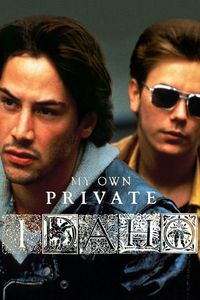
    (YouTube Streaming, September 2020) I suspect that most circa-2020 viewers will approach My Own Private Idaho because it happens to star young Keanu Reeves and River Phoenix and you know what? That’s a perfectly respectable reason. Phoenix’s talent, taken too soon, is showcased here, and Reeves turns in a looser performance than in many of his other roles. But it’s not the only reason to watch My Own Private Idaho. Some will flock to it because of its strong gay themes at a time where such topics were not yet part of the mainstream; others for watching one of writer-director Gus van Sant’s early efforts; and others for the film’s stylish presentation halfway between realism and dreamlike escapism. It is because of this whole package that My Own Private Idaho remains interesting, even to those who, like me, aren’t particularly interested in either of those specific reasons. It’s a film that doesn’t quite play out like expected. The expressionistic moments are refreshing in the middle of so much grimy meditation on the outcasts of society; and the narrative remains a stream of surprises. While I don’t particularly like My Own Private Idaho (too long, too scattered, too sad), I can certainly respect it, no matter why anyone would want to watch it.