Month: November 2020

  • Jamaica Inn (1939)

    Jamaica Inn (1939)

    (On Cable TV, November 2020) I like Alfred Hitchcock and I like Charles Laughton, but if my understanding of Jamaica Inn’s troubled production history is correct, the on-screen result is what remains after a spectacular clash of egos. As the story goes, Hitchcock took Daphne Du Maurier’s novel (the first of three adaptations of her stories, followed by Rebecca and The Birds), but had trouble with Laughton-the-producer-and-actor, who wanted to transform a dreary gothic novel into something funnier, more eccentric and not quite some faithful to the original. The result is, for lack of a better word, often weird. The still-unnerving premise (an innocent woman discovering that she’s in the middle of a village of marauders, attracting ships to a treacherous coast where the ships run aground, then, killing the survivors and selling the cargo) runs into a semi-comic performance by Laughton and bizarre touches of humour. The film can’t quite make up its mind about whether it has revelations to tell us, and the ending just gets more and more ludicrous, as the heroine is kidnapped by a lusty villain because… well, there’s no real good explanation, since his plan is untenable from the get-go. This is really not top-tier Hitchcock, and probably not second-tier either—while the film was a commercial success and stands as the last of Hitchcock’s British period before going to Hollywood with Rebecca, it’s weaker than many of Hitchcock’s other 1930s films. Aside from the always-interesting Laughton, special mention should be made of the heroine being played by Maureen O’Hara in one of her early leading roles. The 2014 Cohen Media Group restoration of the film is nothing short of terrific—great image quality and clear sound make this a joy to watch — if it wasn’t for the content!
  • I Married a Witch (1942)

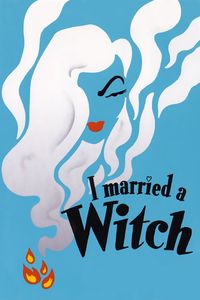
    I Married a Witch (1942)

    (On Cable TV, November 2020) There are a few wonderful surprises buried in Hollywood film history, and I Married a Witch certainly feels like it. A fun blend of comedy and witchcraft, it features a father-and-daughter pair of sorcerers burnt at the stake in early New England and imprisoned in a tree until the 1940s, when they are freed by a lightning strike and eager to wreak vengeance on the descendants of the man responsible for their immolation. That doesn’t quite sound so much fun (and some of the dialogue from the historical antagonist is downright psychopathic), but I Married a Witch is very much presented as a comedy, and everything is in the execution. The daughter is played by Veronica Lake, and while Lake is extraordinarily beautiful to begin with, she also gets to play her characters with impish humour that adds much to her sex-appeal. Meanwhile, Fredrick March is the straight man of the story, bewildered at all the right moments and indignant at the others—he’s meant to be outshined by Cecil Kellaway as the warlock who’s not held back by anything like romantic love. The modern witchcraft angle is rare in classic Hollywood (feel free to pair it with Bell, Book and Candle fifteen years later), and the special effects are still decently effective. Still, it’s the great mixture of humour, romance and political satire that works much better than anything you may imagine from reading I Married a Witch’s plot summary. Don’t miss it!

  • Torpedo Run (1958)

    Torpedo Run (1958)

    (On Cable TV, November 2020) As far as submarine movies go, Torpedo Run is slightly more melodramatic than most, harping on revenge through a WW2 submarine captain (Glenn Ford) explicitly gunning for the ship responsible for the death of his wife and children. The audience stand-in is his lieutenant, played by Ernest Borgnine, as he voices the doubts that the audience may be having as to his suitability for a task of such personal gravity. While this element drives Torpedo Run’s plot, much of the film itself is a fairly standard submarine film—executed with the cooperation of the US Navy and executed through then state-of-the-art special effects (nominated for an Academy Award). The mechanics of WW2 submarine life take a bit of a backseat to the drama, but this is otherwise an average war film, competently executed but overly familiar at times. Thematically, it still feels like a WW2 propaganda film even a decade and a half later—the personal vengeance is atypical (and would not have flown as a movie premise during WW2) but dovetails into the government’s war agenda, and the crimes of the enemies include shielding a warship with a transport filled by non-combatant prisoners of war. Ford and Borgnine do bring a bit of character work to the proceedings, and fans of the actors should be pleased by their performances. Otherwise, Torpedo Run ends up being a decent but unspectacular WW2 submarine movie—better than bad, more dramatic than most, but not as striking as others.

  • Les mémés cannibales [Rabid Grannies] (1988)

    Les mémés cannibales [Rabid Grannies] (1988)

    (In French, On Cable TV, November 2020) With a title like Les mémés cannibales / Rabid Grannies, it’s no surprise if the film has become a minor cult classic reference. One notes, however, that the title lies twice (no grannies, no cannibalism/rabies), considering that the story features two aunts acting as possessed conduits of violent revenge over a greedy, ungrateful brood from an outcast family member. The production pedigree of the film is a multi-national mess that barely makes more sense than the plot, but so is the nature of low-budget schlock horror more concerned about gory effects and over-the-top marketing hooks. The image quality is poor even by the lax standards of the grainy TV channel I watched it on, and the soundtrack is just as terrible. If you’ve seen other similar movies, you know what to expect: perfunctory exposition, and then a steadily whittled-down cast as they all perish in over-the-top violent fashion. Rabid Grannies is not a good movie, and it falls short of even its own standards. But it’s not quite as boring, disgusting or pointless as I expected: There are a few good lines here and there, some worthwhile characters and the pacing is not that bad. That’s low praise indeed, but considering that the film is now best known as a Troma fan favourite, that’s probably quite enough.

  • Maria Chapdelaine (1983)

    Maria Chapdelaine (1983)

    (On TV, November 2020) As I grow older, I suppose that it’s inevitable that I would come back to claim ownership of my own culture. My French-Canadian family tree is made of farmers and lumberjacks dating all the way to the 1600s, and the older I get the more I’m delighted to accept that lineage as my own cultural history, equally folkloric and interesting as other ethnic lines. In parallel, I’m also rediscovering depictions of this heritage, made easier by Québec’s longtime insistence on highlighting its rural roots. This brings us to Maria Chapdelaine, a minor French-Canadian classic with a storied ancestry of its own—the original novel written by Louis Hémon, a newly arrived French Immigrant who died before the novel became a major success in Europe. The 1983 version of Maria Chapdelaine is the third adaptation of the film, but the first that was made in Québec by French-Canadian filmmakers for a local audience—previous versions being made by and for Europeans. The nice thing about this atmospheric period piece is that it has aged quite well—it credibly portrays frontier life in the early 1900s, with plenty of period details, rural joual and wilderness shots. Carole Laure plays the beautiful Maria, with a supporting cast that includes half a dozen French-Canadian actors who would become household names later on—including future politician Pierre Curzi. For French-Canadian viewers, there’s added comedy in how writer-director Gilles Carle would later return to a similar frontier-village territory with the far more ribald La Postière. But as for Maria Chapdelaine itself, it feels like a shot of pure laine tropes: you’ve got the hardy colonizers, the three suitors each representing facets of the French-Canadian character, a deep respect for winter, quasi-caricatural expressions and historical recreation… it’s the Québec often being sold (erroneously) as “the true Québec” from a certain traditionalist perspective and it’s interesting to watch. The romantic suspense of having three suitors for the heroine becomes its own kind of suspense veering into political commentary. In other words, I found quite a lot to contemplate in Maria Chapdelaine… but I acknowledge that you practically have to be among the characters’ notional descendants to get as much out of it.

  • The Rezort (2015)

    The Rezort (2015)

    (In French, On Cable TV, November 2020) Much as movie zombies end up transforming varied people into the same monster, zombie movies often end up transforming a wide variety of premises into what feels like the same film, with zombie hordes, protagonists being bitten and not much beyond headshots and gore. The Rezort does have an initial spark of interest, as it takes us to a park created in the aftermath of a global zombie apocalypse: After the death of two billion people, someone somehow ended up creating a park where zombies can be hunted for sport. Faster than anyone asking if this was a really a good idea, faster than questioning the numerous similarities with Jurassic Park, the park is sabotaged and our human characters are thrown in the middle of a hungry group of zombies. The rest of the film plays more or less the same as similar movies, leaving the impression that the film is almost exactly the same damn thing as any random zombie film that you can catch on late-night Cable TV. It’s not much of a legacy, even though there were a few elements that could have been developed into something interesting. The sad truth is that zombie movie watchers are a bit like zombies themselves: they see the zombie label, they watch the film—anything going beyond trite zombie movie clichés is far too risky to be contemplated by filmmakers.

  • Ray Harryhausen: Special Effects Titan (2011)

    Ray Harryhausen: Special Effects Titan (2011)

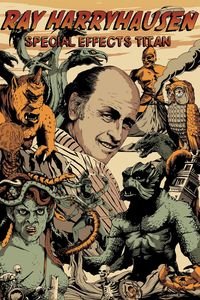
    (On Cable TV, November 2020) Usually, I prefer written biographies than the bite-sized filmed ones, but there’s something so innately cinematic about Ray Harryhausen’s stop-motion animation that it would be impossible to do justice to his work without showing it on-screen. Clearly an authorized biography completed by friends of his, Special Effects Titan digs deep in interviews, archival footage and new-for-this-documentary material to pay homage to his work, from his early inspirations to the CGI legacy he has left. Most (if not all) of his films are mentioned, commented and shown. Heavy hitters of spectacle-driven cinema such as Spielberg, Jackson, del Toro, Cameron and Lasseter show up to pay tribute, and the film clearly highlights the friendship between Harryhausen and writer Ray Bradbury. The stop-motion work is described and commented upon, with frequent praise being that his stop-motion puppets had acting character of their own. At 95 minutes, Special Effects Titan is a quick, clean summary of Harryhausen’s life and work, well worth a look for anyone even slightly interested by his legacy.

  • J’ai tué ma mère [I Killed My Mother] (2009)

    J’ai tué ma mère [I Killed My Mother] (2009)

    (On TV, November 2020) Seeing J’ai tué ma mère after nearly every other film in the Xavier Dolan filmography, I have the impression that I’ve found the origin myth of his career. If you compare this directorial debut to his other movies (and you almost have to, considering the repetition of themes and stylistic affectations), it’s markedly weaker—it feels like a first draft of Mommy and everything that Dolan would revisit in his next half-dozen movies. It doesn’t stand up very well on its own now that Dolan has done better, and the rough production values only hint at what he went on to do with bigger budgets. But, of course, it should not be seen under such a harsh retrospective glare—Dolan was literally a teenager when he wrote and directed this semi-autobiographical story about a difficult mother/son relationship. He certainly doesn’t come across as likable here, but after a one-sided start, you also come to understand why he hates his mother so much. Beyond the themes, J’ai tué ma mère also shows the stylistic quirks that would also grace Dolan’s later films—pop music, montages, idiosyncratic directing, etc. But it doesn’t quite hold up as well now that Dolan has fulfilled the promises created by this first film—in literally every aspect, he has improved and done better in later movies. This makes J’ai tué ma mère best suited for a somewhat specific public, more eager to dig into Dolan’s filmography than appreciate the film at face value. Let’s just say that if you can recognize the landlord character as a split-second cameo from Dolan’s father (legendary singer and actor Manuel Tadros), then you’re ready to see it in its ideal context.

  • Dead Ringer (1964)

    Dead Ringer (1964)

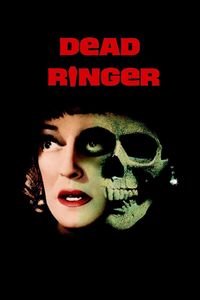
    (On Cable TV, November 2020) Amusingly enough, Bette Davis played twin characters twice during her career—first in 1946’s romantic comedy A Stolen Life, and then in 1964’s late-noir thriller Dead Ringer. Two Bette Davis for the price of one ticket? All right! This being said, the Bette Davises in Dead Ringer were more than 18 years distant from the ones in A Stolen Life—Davis aged visibly (What Happened to Baby Jane, still the best known of her later-career movies, was released two years prior to this one), and much of what she brings to her roles here is in portraying a woman on the decline, eager to secure something on her way down. That “something” here ends up being her own estranged sister’s identity, following a dark web of money, murder and unsavoury associates. The plot is best kept at arm’s length, though: the best thing here is Davis and the atmosphere of the film, and the multiple hooks to earlier eras of the film. The noir influence here is clear, but it’s mutating into something else. Directed by former Hollywood star Paul Henreid, it features the same cinematographer as A Stolen Life, improving upon the special effects to make us believe in twin Davises. It does work, and partly because it manages a good hybridization between crime thriller and romantic drama, allowing some fine character work without quite losing sight of the plot driving the entire film. I quite liked it, although I suspect that the film is best appreciated in the Hollywood continuum than as a single film—there’s quite a bit more weight to give to the film once you know about Davis and Henreid and noir and A Simple Life. Keep it in reserve after you know more, maybe—call it a 201-Hollywood history-grade film.

  • Strip Search (2004)

    Strip Search (2004)

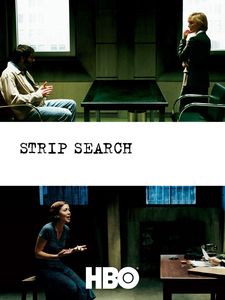
    (In French, On Cable TV, November 2020) It goes without saying that I can appreciate any film that reinforces my values and outlook on life. But it sometimes happens that a film simply goes too far, preaches too much and wears its politics too visibly on its sleeve that I can turn on it in the worst way. Look: I was around and awake in 2004. I remember how Americans were practically forbidden from speaking ill of any anti-terrorism initiative. I remember the public discourse curdling against any dissenting voice, and anyone trying to introduce any kind of sophisticated analysis being branded as anti-American. I remember the hysteria of the War on Terror and how anyone who thought it may not have been an unqualified good felt so alone. The fact that Strip Search, which makes explicit parallels between terrorism and American values, was made at the time (even as a TV movie!) was nothing short of amazing—which explains why, according to Wikipedia, the film almost immediately disappeared after its HBO premiere. (I ended up seeing in French translation, which is probably significant.) The premise is simple: An American woman gets detained and interrogated in an unspecified Asian country, while an Arabic man gets detained and interrogated in the United States. The parallels between both situations are not meant to be subtle: much of the dialogue is repeated word-for-word in both strands of the plot. Which ends up being the single worst irritant of the film: As a good third of it simply repeats itself with very few variations, the touches of wit of the dialogue get dulled fast, and once you realize that this is what the film is going to do for the following hour, well, you’re stuck with it for the following hour indeed. There’s quite a bit of talent assembled here: Directed by Sidney Lumet and starring no less than Glenn Close (as the American interrogator) and Maggie Gyllenhaal (as the American prisoner), the film hits above its weight in terms of star power. Alas, this comes to naught thanks to the heavy-handed nature of its discourse. Even when I agreed with the intent of the film, I felt irritated by the brute-force nature of its repetitiveness. A savvier script would have intercut into both conversations as a way to show how both were the same, but Strip Search simply re-rolls the tape with very minor variations, with us knowing the exact words about to be repeated for the next few minutes. It probably doesn’t help that, fifteen years later, we don’t need to be convinced about the film’s then-upsetting thesis. We now know about the horrors of Abu Ghraib, of Guantanamo, of secret detention camps and the 2004–2008 period. Strip Search was brave and bold and misguided upon first broadcast. Now, it simply seems misguided—not for the core of what it’s saying than the way it says it, then forces us to listen to it again.

  • Quai d’Orsay (2013)

    Quai d’Orsay (2013)

    (On TV, November 2020) As a public servant, I have a professional interest in movies that take a look at the vast bureaucracy that supports politicians, and while the protagonist of Quai d’Orsay isn’t quite a public servant per se (handpicked by the minister, he’d be considered partisan staff), his troubles in trying to write speeches for a smart but mercurial French foreign minister sure feel like universal experience to anyone working in government. Quai D’Orsay takes a comic tone in showing our hero’s apprenticeship of the delicate nature of government work—the endless consultations; the trivial turf wars; the inconsistent directions received from above; the differences between the gilded offices of the minister and the cramped quarters of the support staff; the way crises can derail an entire day; the way the career bureaucrats are the ones resolving situations while the elected officials are screaming about their sharpies; and so on. Writer-director Bertrand Tavernier, working from a satirical bande dessinée, manages both the initial comedy and the gradual shift into more serious relevance, as we realize that Quai d’Orsay is a film à clé of the way French diplomacy reacted to the lead up to the 2003 American invasion of Iraq. Raphaël Personnaz is rather bland by design as the protagonist, leaving the spotlight on Thierry Lhermitte as the breeze-blowing minister, and Niels Arestrup as the quiet but efficient career official handling the real business of the foreign ministry. It is occasionally very, very funny—there’s a recurring gag about paper blowing everywhere as the minister enters a room that makes no coherent sense, but had me smiling every time. Call it a gallic equivalent of In the Loop if you like—it’s an accurate approximation. But it’s also a film that shows, through the cynicism and Sisyphus-like nature of government work, that good people can end up making a difference—in this case, to have France stay out of the American invasion of Iraq and demonstrate the principles of the nation. I liked it quite a bit—to the point of including in my shortlist of essential movies for any public servant.

  • Emperor (2012)

    Emperor (2012)

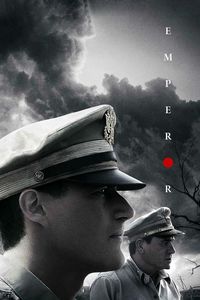
    (In French, On TV, November 2020) As has often been observed, winning a war is one thing, but winning the peace is something else. Emperor starts once the WW2 hostilities between the United States and Japan have ended, but you can still feel the lingering tension of the war throughout the entire duration of the film, as the newly-occupying Americans wonder whether the emperor should be tried as a war criminal. The stakes are high—any false move could trigger insurrections and threaten the stability of the American occupation. While Tommy Lee Jones headlines the film as General Douglas MacArthur, the protagonist is played by Matthew Fox, as a younger man with very personal reasons to find the truth. Less of a war movie and more of a strategic whodunit trying to piece together the big decisions of the war after the fact, Emperor is also a story of cultural reconciliation, as the Americans try to manage a situation in a very different country. The suspense is in low keys, but it’s as real as anything else. American jingoism is kept to a minimum, and the result shines a welcome cinematic light on one of the codas of World War II and brings something new to the WW2 corpus.

  • Emma. (2020)

    Emma. (2020)

    (On Cable TV, November 2020) At this stage, Jane Austen adaptations are worth watching more for the quirks than the core. The stories are familiar thanks to a dozen previous versions, so every new take is free to play around with the foundation until it has something specific to say. No pressure on delivering a best or faithful adaptation. This 2020 version of Emma, as directed by Autumn De Wilde, is slightly skewed toward the comedic end of the spectrum, making heavy use of background jokes and musical cues to reassure us that this is all lighthearted. The great Bill Nighy aside, it’s a good showcase for the young actors, even though few make any lasting impression. In the end, this Emma is likable without being all that special—which is not necessarily a criticism, considering that I like Austen best as a flurry of costumes, period settings and deliciously arch dialogue. As such, this version is almost exactly what it meant to be, and should make any viewer even hallway sympathetic to Austen adaptations feel completely satisfied.

  • Parallel Minds (2020)

    Parallel Minds (2020)

    (On Cable TV, November 2020) There is an intriguing mixture of indigenous spirituality and high-tech futurism at the heart of Parallel Minds that gives it a special status as a Canadian science-fiction film. Unfortunately, there isn’t much more to the film. Going in half a dozen directions without much connective tissue, it’s about runaway artificial intelligence, transhumanism, a dystopian company, and Metis prophecy. It’s triggered by what is either a murder or a suicide, leading a police detective to take up the case. And yet, despite this promising collection of elements and decent production values, Parallel Minds struggles to keep our attention. The script is messy and not in a good way, as it can’t seem to create a single compelling narrative to hold all of that together. It’s alternatively dull, twee, inscrutable and lazy in its use of genre elements. It’s the kind of film where an elliptical, deliberately mysterious style eventually reveals itself to be incompetent rather than keeping mysteries in reserve. Despite rooting for the film for many reasons (it’s Canadian, it’s low-budget, it’s Science Fiction, it’s about Metis issues), it simply can’t make fire out of the cordwood of promising elements at its disposal. I still think it’s worth a casual look—there’s been a few Canadian science-fiction movies bringing in indigenous issues, and this is one of the best of them—but you will have to be very generous in order to like the result.

  • Running Mates (1992)

    Running Mates (1992)

    (In French, On Cable TV, November 2020) A surprising number of politically themed American films are really romantic comedies in disguise, and Running Mates certainly upholds that tradition. Telling us about the romantic relationship between a children’s book author and a political candidate, it does spend a lot of time detailing how the public glare can make any relationship near-impossible, and how every single past indiscretion can be magnified. Since it’s a romantic fantasy, it also makes sense that the conclusion feels a bit too convenient to be entirely credible (although it’s true that the notion of what constitutes a scandal has taken a beating since 2016). Fortunately, lead actors Ed Harris and Diane Keaton bring a lot to the film, helping keep up interest even through the script’s most obvious moments. As a political film, it’s not that new or interesting… but it’s somewhat more successful as a romantic comedy about characters in special circumstances. The sequence in which one character’s early indiscretions resurface is decently amusing, although it leads to a conclusion that doesn’t quite manage to satisfy. Still, Running Mates is about romance, not political credibility.