Month: December 2020

  • In the Tall Grass (2019)

    In the Tall Grass (2019)

    (Netflix Streaming, December 2020) In horror, hooking an audience is easy – but getting them to an appropriate conclusion is the hard part. In the Tall Grass, based on a novella by Stephen King and his son Joe Hill, at least gets the first part right, as a brother and sister hear cries for help from a tall field of grass and head in… only to find themselves unable to get out. From that point on, the film becomes far less successful: strange and disturbing elements accumulate, but when it comes time to wrap it all up, the film can’t quite make sense of everything it has smashed together. It certainly looks great – director Vincenzo Natali has enough experience to be able to make us believe in a sinister field of grass trapping its victims. But it’s on a narrative level that In the Tall Grass is either incoherent or facile. Considering that the film messes with unreliable geography and time travel and hallucinations, you’d be forgiven for thinking that nothing in this film makes sense longer than the images it features. What could have been a clean, solid plotline ends up overcomplicated beyond belief to no clear purpose. By the time some characters do make it out of the grass field, we’re just happy it’s over.

  • Blood and Wine (1996)

    Blood and Wine (1996)

    (Netflix Streaming, December 2020) I don’t think that Blood and Wine is all that good, but the rather amazing cast bolsters a nicely effective neo-noir plot and leaves enough of a good impression to make it worthwhile. Any movie that pairs up Jack Nicholson with Michael Caine as would-be jewel thieves, then adds Stephen Dorff and a splendid Jennifer Lopez as a younger couple (plus Judy Davis and Harold Perrineau Jr. to round things up) definitely gets some attention. Once you start weaving a twisty plot of thievery, betrayal and revenge, however, things get far more interesting. The sultry atmosphere of Southern Florida polishes things to a warm entertaining finish. Plot-driven without neglecting characters, Blood and Wine proceeds without mercy throughout its own fatalistic hit list: As a film noir from the 1990s, it can be less than subtle at times, but still worth a look for pure entertainment.

  • Keepers of the Magic (2016)

    Keepers of the Magic (2016)

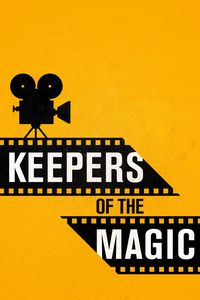
    (On TV, December 2020) An explicit interest in cinematography is often how you can distinguish moviegoers from cinephiles – understanding how the images of cinema come to be created is a bold leap in the technical aspect of filmmaking, and unlocking the secret language of cinema – beyond script, beyond acting, even beyond directing – is often about how visuals affect our emotional reaction to the content of a film. In Keepers of the Magic, we get a good evocative look at some of the best cinematographers in the business as of 2016, and highlights of previous decades. It’s an introductory film (it’s hard to be that technical in 90 minutes) and it relies on interviews and anecdotes more than analysis or historical reporting – but it’s quite a bit of fun for those who are familiar with the films being discussed, and those who want to explore the often crucial but seldom highlighted relationship between directors and cinematographers. Heck, writer-director-cinematographer Vic Sarin’s Keepers of the Magic goes even a little bit further – in a telling anecdote, we’re told how a clever cinematographer can help out actors by providing them with a break and blaming it on resetting equipment. There’s a lot of footage to illustrate the anecdotes, and it almost always looks terrific due to the nature of the topic being discussed. As someone who has, thanks to the pandemic lockdowns, recently watched an unhealthy number of movies, I really enjoyed the result: I can always use reminders that films are more than plot engines, and that there’s a significant effort in showing us things in evocative ways.

  • You Are What You Act (2018)

    You Are What You Act (2018)

    (On TV, December 2020) A feature-length examination of the old saw “fake it ‘till you make it,” You Are What You Act begins by examining incidents in which actors (actors!) were involved in real high-risk situations and practically became true action heroes at a time when many people would have simply frozen in place. Writer-director Albert Nerenberg uses this as a springboard to an examination of the field of “embodied cognition” – the idea that physical practice, visualization, and role-playing can prepare your body and your mind to be ready for future situations. You Are What You Act’s big crush on Tom Cruise is a bit amusing (seriously – he comes up three or four times during the course of the film), but the point is that Cruise, playing an action hero and often doing his own stunts, is exposing himself to high-risk situations and learning how to react during them. Not that the film stops there – noting the very high prevalence of affairs between on-screen romantic partners, Nerenberg explores whether there are shortcuts to human emotions – if it’s possible to fall in love by telling another that you love them until you both believe it. Midway through the film, there are plenty of ways you can poke holes at its theory – not the least of them being that actors have publicists, but more realistically that acting exercises have been with us for a long time. Almost on cue, that’s when You Are What You Act does become more interesting, by criticizing itself and exploring the history of drama exercises that create rapid emotional intimacy between actors required to fake it until we believe them. It all ends up in a big ball of multidisciplinary ideas thrown in a blender, but hard to dismiss. Nerenberg himself makes for a very likable host, well informed and willing to portray himself as exploring doubts in his own thesis. One tangent I would like to have followed is the idea that expertise stems from repetition driving conscious actions into unconscious reactions – but maybe that’s implicit in the rest of the film. I was, at first, somewhat skeptical about You Are What You Act –Tom Cruise obsession included – but eventually warmed up to the film as it kept re-examining its thesis for flaws or links with other theories. It’s a clever film about a clever topic, and it deserves a look if you have even a passing interest in self-improvement.

  • Man’s Favorite Sport? (1964)

    Man’s Favorite Sport? (1964)

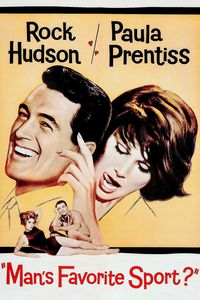
    (On Cable TV, December 2020) Any movie that claims to be directly inspired by Bringing Up Baby gets a fast-track to my affection, and Man’s Favorite Sport has a much stronger claim than others at that distinction, having been directed by Howard Hawks – who apparently tried to get Cary Grant and Katharine Hepburn to reprise their roles. He obviously wasn’t able to do so, but getting Rock Hudson and Paula Prentiss instead is really not a bad substitute. The story has to do with a fishing expert having never fished (Hudson) and the woman (Prentiss) who discovers his secret on the eve of a major competition. But the plot is really a driver for a neo-screwball comedy featuring Howard’s typical fast pace running roughshod over absurd comic situations. The film can be especially funny to those with some outdoors experience, as much of it is seeing a befuddled Hudson trying his best at becoming an outdoorsman. Prentiss is cute and vivacious enough, while Hudson is perhaps a bit uncomfortable in a zanier comic persona that was asked of him in earlier romantic comedies. (I have a hunch that Hudson was never able to completely surrender his persona to the ridiculousness of the comedy beats.) There’s a sense that the film wasn’t quite able to get the lightning pace of previous Hawks screwball comedies, but it’s not for lack of trying and the result is that Man’s Favourite Sport is merely funny rather than hilarious – which is still a success.

  • Dolemite Is My Name (2019)

    Dolemite Is My Name (2019)

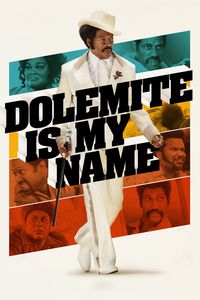
    (Netflix Streaming, December 2020) So, do we officially have a subgenre of great movies about the making of bad movies, now? We had Ed Wood (about Plan 9 From Outer Space), The Disaster Artist (about The Room) and now Dolemite is my Name, which describes the making of Dolemite. I know; I know – Dolemite was conceived as a comedy and thus doesn’t quite rank as an unintentional disaster. But I watched it right before Dolemite is my Name, and it is a wretched film from a technical standpoint: rough script, amateur filmmaking, terrible audiovisual quality, approximative acting and substantial pacing problems. But what this fictionalized making-of accomplishes is to give us a look behind the scenes – at Rudy Ray Moore trying to find his voice on the comedy circuit, at black creators trying to put together a film appealing to their sensibilities, at a crew of student filmmakers working on their first production with a minuscule budget. Eddie Murphy gets one of his best roles in years as Moore, keeping some of his worst tics in check and playing a character for once. Dolemite is my Name is never as enjoyable as when it shows the amateur filmmakers putting together a movie – especially if you have a fresh memory of the original. It all amounts to a somewhat inspiring finale, although it’s made even better in that Moore surpassed his wildest ambitions in putting together Dolemite – the film may not be very polished or funny to contemporary audiences, but it was a massive hit back in the mid-1970s. For Murphy, too, the film feels like a success equivalent to Dolemite – it was a passion project for him, and it must be gratifying to get the kinds of notices that Dolemite Is My Name earned, seeing how its look at a bad film became a really good one.

  • Dolemite (1975)

    Dolemite (1975)

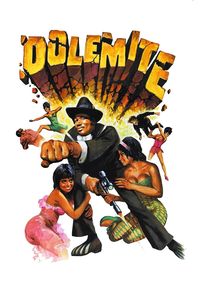
    (Tubi Streaming, December 2020) Aaargh. I know that Dolemite is a bit of a cult classic, and I can see where the fuss comes from: The grander-than-life nature of Rudy Ray Moore’s character is hard to resist, and the flowery use of language is the kind of thing I really like in movies. I approve of the filmmakers’ agenda at play here in taking back blaxploitation from the big studios (especially given how much I like blaxploitation already), and I really enjoyed the demented pimp-centric world that the film sets up, bit by bit. But let’s be honest: Dolemite is far too often a chore to get through. The production values are abysmal, the audiovisual quality is terrible, the script is borderline moronic and the moral values promoted here are abominable. You can definitely see it as a comedy, but seeing it as a satire takes substantial presumptions to cut through the amateurish filmmaking to see which point the film was trying to make. I watched Dolemite as prelude to 2019’s fictionalized making-of Dolemite is My Name, and I don’t regret it. But I would have had a much harder time and a much harsher appreciation had I tried watching it on its own, without a much slicker production right afterward to help make sense of it.

    (Second viewing, On Cable TV, April 2022) I don’t often re-visit films, but one of the surest way to get me to do that is create a sense of doubt when comparing my reaction to the film versus everyone else’s: Have I missed anything? Did I simply not catch what there was to catch? In Dolemite’s case, I suspected that my first viewing conditions (low-resolution, bad audio version of the film) were not ideal, and that a best-possible presentation could make it a different experience. I was right, somewhat – As presented on TCM from the best available digital copy of the film, Dolemite does feel different: the production values are terrible but not intolerable, and you get to see details (such as fake fighting blows clearly missing their marks) that reinforce the sometimes non-obvious comedy of the film. (Well, let me qualify that – Dolemite’s comedy is not always distinguishable from earnest low-budget weirdness.) I still think it doesn’t quite achieve what it wants to, and the same self-indulgence that makes the film special (in allowing Rudy Ray Moore’s irrelevant monologues, for instance) are what stops the film from going that extra level. Still, I found the film better a second time around – funnier, more compelling and closer to the consensus opinion about Dolemite. Don’t underestimate the impact of a good presentation!

  • Good Boys (2019)

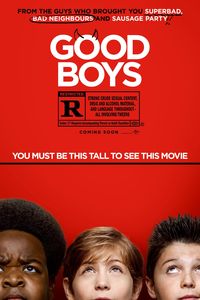
    Good Boys (2019)

    (Netflix Streaming, December 2020) For once, Good Boys’ title isn’t meant to be ironic. Not entirely, anyway: As an affectionate character study of three smart but clumsy young teens trying to look cool, Good Boys may be raucous, crammed with profanity, all-too-quick to turn to raunchy content, but it never loses track of the core goodness of its three protagonists. Finding that Seth Rogen was one of the co-producers of the film is almost a forgone conclusion to the viewer, so closely does the tone of the film seems to adapt Superbad for the slightly younger set. Jacob Tremblay, Keith L. Williams, and Brady Noon star as three sixth graders who find themselves in adventures far above their heads during a hectic day that will have consequences for all three of them. The fast-paced adventure brings together far too many tangents to summarize adequately, but even the breakneck plot never forgets that this is about character-driven comedy. As someone who’s only a few years away from having a sixth-grader, I was not entirely amused at the wall-to-wall profanity, sex jokes and R-rating of a film for that age group, but the gags work more often than not, and the film cleverly doses things to ensure that the offensive front put up by its insecure protagonists never quite obscures their own moral compass. A good compromise would have been to cut half the profanity and see how that went. Still, I didn’t dislike Good Boys as much as I expected to – in fact, I found it amusing and engaging, perhaps one of the best things to come out of the Rogen comedy factory. But then again, I’ve been a good boy sixth-grader at some point.

  • Witness to Murder (1954)

    Witness to Murder (1954)

    (On Cable TV, December 2020) I count at least four excellent reasons to watch Witness to Murder. For one thing, it has a really good late-period film noir premise, as a woman looks outside her apartment window and witnesses a man murdering another woman. The second reason is that our heroine is played by Barbara Stanwyck, in a late-career role (her first was in a 1920s silent film!) that does much to reinforce her chameleon-like acting range. The third reason is her opponent – a deliciously slimy George Sanders, with his haughty attitude complementing a character that delights in covering his track and making the heroine feel as if she’s going crazy. Finally, the fourth reason to watch the film may be more striking to modern audiences: the encroaching paranoia as the heroine tries to convince the authorities that a murder has taken place, but no one will believe her. The film isn’t afraid to rile audiences against impassive authority figures, and that does give, along with a role as a single career woman for the mature Stanwyck, a progressive kick to the result. A fifth, perhaps most visible reason to watch Witness to Murder would be the terrific cinematography, which luxuriates in strong black-and-white imagery to give the film an undeniably film noir visual polish that elevates the script into something worth seeing. No matter the reason, Witness to Murder does rank as a very enjoyable thriller, more for the above-average execution than the sometimes-frustrating nature of the script.

  • The Seventh Cross (1944)

    The Seventh Cross (1944)

    (On Cable TV, December 2020) There are a few good reasons to watch The Seventh Cross – It’s an early film from Academy-award-winning director Fred Zinnemann, it features Spencer Tracy and it’s the first on-screen pairing of real-life couple Hume Cronyn and Jessica Tandy (the last being 1987 science fiction family comedy Batteries Not Included). More significantly, it’s one of the very few Hollywood films to talk about Nazi concentration camps as WW2 was going on, and before the true horrors of the camps were revealed. The story has to do with seven escapees from a concentration camp trying to evade capture, despite a commandant determined to bring them all back (“on crosses,” hence the title). Our protagonist (Tracy) is the seventh, the last escapee trying to get out of Germany despite a population not sympathetic to his goals. The premise is not bad, the acting talent is remarkable, the director would go on for better things and the script has a few flourishes (notably in having the narrator being one of the first dead escapees), but I found The Seventh Cross to be surprisingly uninvolving once past the first few minutes. This may be a reflection of a contemporary view of the situation: escaping Nazis would seem, today, to be of utter urgency, leading to a suspenseful film – but it seems more intent on an examination of the human spirit than out-and-out thrills. Whatever the reason, The Seventh Cross seems more interesting than purely enjoyable or entertaining today.

  • Superman: Red Son (2020)

    Superman: Red Son (2020)

    (On TV, December 2020) As someone who really enjoyed the graphic novel that Superman: Red Son adapts, I was really curious to see how faithful the film would be. Red Son, after all, is a parallel universe (“Elseworld,” in DC parlance) story that starts with the “what if” of Kal-El landing in Soviet Russia rather than the United States. How would someone like Superman be shaped by the larger cultural and political forces surrounding him? It doesn’t take long for his idealistic nature to come to the fore, and be disgusted by a country that can’t even provide for its citizens. Much of Red Son’s attraction comes after, as Superman sets out to acquire and consolidate power in service of the utopia he imagines for his comrades – essentially becoming dictator in order to improve everyone’s lives. If alternate takes can do one thing, it’s to allow characters to behave in ways that their primary incarnation wouldn’t, and so here we are reminded of Superman’s scientific genius, but discover his political craftiness as well. The other main draw of Red Son has to be the equally alternate takes on familiar characters, as most of the main players of the DC Universe pop up in sometimes very different roles. (To any fan of the comic book: Yes, we get Batman in a Russian hat. That is all.) The movie, as expected, does tone down some of Mark Millar’s comic book material– but it arguably delivers a more conventionally satisfying ending, so there’s room to argue about the choices made here. Still, it’s a story for adults, and one that manages to make a lot of mileage by confronting Superman with social issues that the main Superman would never be allowed to tackle. As such, it’s really not a bad entry in the animated DCU – certainly more substantial than many of the minor episodic material that we’ve seen from Warner Animation Studios lately, and a bold expansion of what those movies can do.

  • Fractured (2019)

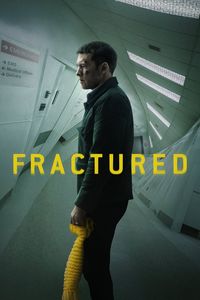
    Fractured (2019)

    (Netflix Streaming, December 2020) I have overdosed on movies that end up taking place in the protagonist’s insane mind. And if that’s a spoiler for Fractured, well, I’m not really sorry – the film tries to go for a psychological thriller but makes so many mistakes along the way that it settles for something very close to “it was all a dream” with a very dark coda. Nominally the story of a father who, after an accident, brings his wounded daughter to the hospital only to be told later on that she never existed, it’s a remarkably humourless film shot in cold dark blue cinematography and blurry nightmarish images. Sam Worthington does what he can in a role that asks him to look either confused or angry, but he can’t fight against a script that seems to go some tired ideas in exasperating fashion. I am a bit fascinated by director Brad Anderson: Looking at his filmography, I can find some movies that I considered terrific (The Machinist) and others that I found abominable (The Vanishing on 7th Street) – and right now, I’m so incredibly tired of Fractured’s biggest “idea” that I’m shoving it in the second category. I may or may not be wrong about this – I suspect that had I come to the film under different circumstances, in a different mood or under a different astrological configuration, I may have liked it more. But right now? No. The protagonist is crazy, anything can happen and there are no rules. Why should I respect a film like that?

  • Velvet Buzzsaw (2019)

    Velvet Buzzsaw (2019)

    (Netflix Streaming, December 2020) I’m weirdly interested in the modern art market: the intersection of art and irrational investment is almost too weird to be true, but the dollar figures speak from themselves. For writer-director Dan Gilroy, it was perhaps the most logical follow-up to Nightcrawler’s local news insanity. In Velvet Buzzsaw, Jake Gyllenhaal plays an art critic who becomes involved in the posthumous discovery of an outsider artist, and who realizes far too late that the work is cursed in lethal ways. Unfortunately, there are two films in Velvet Buzzsaw and one is far more successful than the other. The satirical look at the modern art industry is on-target and could have sustained the film on its own: The complex ecology of artists, critics, gallery owners, investors, museum curators, “investment consultants” and assistants to all of these is very well portrayed, and the film isn’t afraid to blend whimsy with satire – seeing the protagonist having an opinion on every-single-thing never stops being funny, but the script’s fast-paced rhythm manages to skewer nearly everyone in sight. (By the time a gory murder scene is hilariously misinterpreted as an installation, I was cackling aloud.) Weirdly enough, though, the story’s steady and complete slide into horror is not as successful – and I say that as someone who’s far friendlier to genre material than most, and who often shoves liminal works into a supernatural interpretation. What bothered me most is a common failing of non-horror writers who decide to tackle the genre: an absence of clear rules as to what we’re dealing with. The horror in Velvet Buzzsaw is more expressionist than logical: There are no limits to what demonic possession can or cannot do, and that gives an arbitrary quality to the narrative when even smart characters can’t adequately anticipate and protect themselves against fatality. Maybe that’s part of the point, but I don’t think so – while I can appreciate an ironic finale as much as anyone (and Velvet Buzzsaw has a really good one that ties back into its title), there’s a mushy dreamlike quality to the third act of the film that could have been much improved had it been overlaid on a coherent foundation: when everything is a dream, the stakes are lowered, and when the plan is to kill everyone but the bespectacled assistant (a very cute Natalia Dyer), then the horror remains a joke. Gilroy being Gilroy and friendly with half of Hollywood, the talent assembled here often outstrips the material: Nightcrawler star Gyllenhaal can’t do any wrong here, Gilroy’s wife Rene Russo is well cast as a galley owner, Zawe Ashton makes a good impression as an assistant and John Malkovich has a superfluous but enjoyable turn as a cranky artist. I may be disappointed by Velvet Buzzsaw’s uneven control over its material, but I did like the result quite a bit despite its imperfections: it’s funny, dark, smart, fast-paced and as visually interesting as some of the pieces it showcases.

  • Sense, Sensibility & Snowmen (2019)

    Sense, Sensibility & Snowmen (2019)

    (On TV, December 2020) It’s December, and Christmas movies have invaded the airwaves. Movies that would never get any airtime at any other time of the year now get a few scheduled showings at prime-time hours, sometimes on several channels. They’re usually low-budget features made to formula, with only the barest of distinctions to allow viewers to remember if they’ve already seen it. But Christmas romantic comedies can be fun even when they’re mediocre: no one gets killed, nihilism is the furthest thing from the film’s goals and everyone looks cute. (Even though female leads of Christmas romantic comedies are never too attractive – something about being relatable, probably.) If I had to see at least one Christmas romantic comedy this year, I let myself be drawn in by Sense, Sensibility & Snowmen – surely the Jane Austen-inspired title suggested a more literate movie, right? Well, no. Aside from a few character names, there really isn’t much here drawn from classical literature – the bait-and-switch is clearly within the realm of false promises. Here, we have a woman having trouble sticking to a job, then meeting a handsome client in time to organize his Christmas party. The rest of the plot is as predictable as it’s irrelevant – it’s about the two leads walking in the Christmas market together, being antagonistic until they’re not, suffering through the usual mistaken-intentions subplots and reconciling on the evening of the 24th of December. Despite the blatantly misleading title, Sense, Sensibility & Snowmen is not a terrible film – but I say that having done something else while hearing-more-than-watching it.

  • The Mexican Spitfire’s Baby (1941)

    The Mexican Spitfire’s Baby (1941)

    (On Cable TV, December 2020) To be fair, there’s a really good idea at the heart of The Mexican Spitfire’s Baby, the fourth instalment in an eight-film series where the last seven films are as identical as they are interchangeable. Here, the misleading title sets up the film’s big joke: That when the titular Mexican Spitfire (Lupe Velez, equal to herself) and her featureless husband decide to adopt a French war orphan, they end up with a comely 20-year-old. Once again, the series’ usual comic engines then take over: Leon Errol once again does double duty as likable Uncle Matt and pompous Lord Epping, Velez screams incomprehensible Spanish, attempts to deal with the beautiful war orphan lead to the usual threats of divorce, and so on. While the film’s premise may be different, it soon degenerates into more or less the same kind of comic mayhem as the other films in the series, complete with a too-quick ending. Those waiting for a Mexican Spitfire newborn will have to wait (more or less) until the eighth and last instalment for the series to conclude on the impending arrival of a stork. Until then, The Mexican Spitfire’s Baby is pretty much the baseline standard for a series that took pride in reiterating the exact same formula.