Month: December 2020

  • It Came from Beneath the Sea (1955)

    It Came from Beneath the Sea (1955)

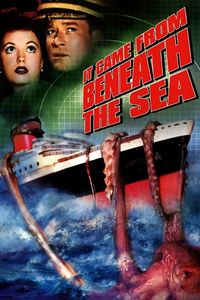
    (On Cable TV, December 2020) Many low-budget creature features were made in the 1950s and not many of them are worth watching today as anything more than examples of the Cold War obsessions of the time. It Came from Beneath the Sea would, at first glance, seem to belong to that category: a low-budget monster film taking what’s become a bit of a cliché (radioactivity creates a monstrous life-form!) and running with it until the spectacular climax. But there are at least two things that make it worth a look. First, a quasi-documentary approach in the first half of the film that gives it a nice 1950s techno-thriller feel: it’s not entirely silly, and the film’s cooperation with the military ensures at least a patina of realism on the result. The second reason becomes more obvious once the tentacle monster reaches San Francisco in time for the climax: Ray Harryhausen’s spectacular stop-motion work, doing its best with an “octopus” limited to six arms due to a limited budget. Taken together, those two advantages take an already adequate film to something worth watching if you’re looking in the corpus of the 1950s creature features.
  • The Diary of Ellen Rimbauer (2003)

    The Diary of Ellen Rimbauer (2003)

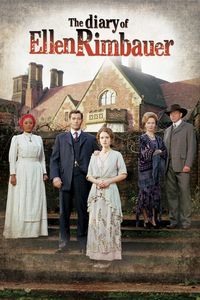
    (In French, On Cable TV, December 2020) As far as made-for-TV horror movies go, The Diary of Ellen Rimbauer doesn’t do too badly at all. Hampered by a low budget, it can’t quite deliver on its gothic vision of a haunted mansion and a twisted relationship between an oil magnate and a shy woman. The inspiration from the Winchester Mystery House is obvious and welcome, but the film goes a bit further. Adapted from a tie-in novel complementing the Rose Red TV series imagined by Stephen King, it’s chiefly an origin story and a work of atmosphere: if you’re expecting a complete narrative, you’ll be disappointed and have to head over to the TV series. Still, it’s not a bad film if you’re not expecting much: there aren’t that many surprises and you’ll have to be patient in order to let the atmosphere work its magic despite a too-modest budget. Directed by Craig R. Baxley, The Diary of Ellen Rimbauer is handled with some subtlety rather than out-and-out horror, making it a welcome oddity still.

  • Santa Claus Is Comin’ to Town (1970)

    Santa Claus Is Comin’ to Town (1970)

    (On TV, December 2020) Not being a native Anglophone, I find myself with curious blind spots when it comes to “childhood classics that everyone knows.” I’m making an effort to catch up on some of it, though, and Santa Claus Is Comin’ to Town popped up on the list given the TV Channel December schedules. It did immediately remind me of Rudolph the Red-Nosed Reindeer in that it, too, is a stop-motion short animation film with a delightfully tactile feel, as the felt-made characters are moved around with physical presence. I had a big smile during the first few moments, as an immediately recognizable animated Fred Astaire (also voiced by him) plays the narrator of the piece. Running at an hour-long length, it features a fair amount of plot, certainly more than the 30-minute specials: the film is an origin story for Santa Claus, with plenty of original material to go by. It’s a fun special, and I can certainly understand how it’s now been broadcast for fifty years.

  • Christmas in Connecticut (1945)

    Christmas in Connecticut (1945)

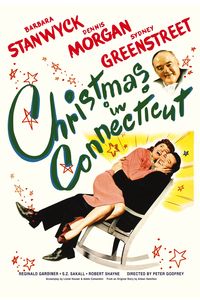
    (On Cable TV, December 2020) One of the central tenets of my evolving Grand Unified Theory of Christmas Movies is that for one to succeed, it must simultaneously depend on Christmas and yet be interesting outside of it. In other words, farther away from quantum uncertainty: The plot must be made possible by Christmas, yet be interesting enough to be watchable anytime from January to November. On those two metrics, Christmas in Connecticut succeeds admirably: It features a comic premise in which a single childless columnist having never set foot outside Manhattan is forced to pretend to be the exemplary rural housewife of her columns due to a Christmas publicity stunt. At the same time, it quickly becomes the kind of farce that’s well worth watching at any time of the year. It certainly helps that it features Barbara Stanwyck at her funniest, with capable character actors such as S.Z. Sakall and Sydney Greenstreet to keep things funny even when she’s not on-screen. The complications, deceptions and convoluted plans pile up as quickly as the romantic tension between the protagonist and a war hero targeted by the charade, leading to a climax in which everything is revealed. As a comedy, it’s quite good enough to satisfy even without the Christmas element, but removing it would make the film collapse under its own contradictions. (If the lesson here is that Christmastime makes people behave irrationally, well, I think that’s my point.) The depth of Hollywood Christmas movies is such that I hadn’t seriously looked at Christmas in Connecticut before this year, but now that I have, I can see it become a season favourite.

  • The Undertaker and His Pals (1966)

    The Undertaker and His Pals (1966)

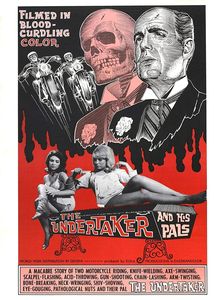
    (On Cable TV, December 2020) You can see anything on TCM Underground… from the best of cult cinema to the dregs of cinematic history. The Undertaker and His Pals certainly feels like the latter, being an ultra-low-budget attempt to tell a story about women being partially butchered for restaurant meat and the undertaker making money off the rest of the corpse. It’s meant to be a comedy, as evidenced by victims being selected by their last names and the resulting heavy-handed puns (e.g.: “Lamb is on the menu”) But such dark comedy is excruciatingly difficult to pull off even in the most skilled hands (Eating Raoul was terrific, but that’s about it for cannibalistic restaurant comedies) and writer-director T.L.P. Swicegood is far, faaar from being a skilled hand. The comedy is tasteless to the point of feeling alien, the horror material is garbage and the half-hearted investigation plot makes little sense. It doesn’t help that from a technical quality, the film is execrably put together, with inconsistent colours, sound, directing style and acting. It’s terrible in the worst ways – bad enough to avoid recommendation, without any of the qualities that would lead anyone to take a curious peek. Struggling to find something nice to say about the film, I draw a blank. The photo-of-the-sailor gag in the opening sequence is funny? Sally Frei looks cute? The entire thing is weird? I’m out. While I can imagine some so-bad-it’s-good movie reviewers having fun with The Undertaker and His Pals, I’m not going to give it any more attention or time.

  • The Highwaymen (2019)

    The Highwaymen (2019)

    (Netflix Streaming, December 2020) There’s an intriguing duality of purpose to The Highwaymen’s premise – not only portraying a historical tale of 1930s policemen on the hunt for criminals, but perhaps more significantly offering the law enforcement side of Bonnie and Clyde as the two lead characters hunt down the folk heroes that inspired the landmark 1967 film. Better yet is finding out that the film features none other than Kevin Costner and Woody Harrelson as the dogged Texas Rangers that tracked down the outlaws. Unfortunately for that casting coup, the film itself proves to be… merely adequate. The big-budget historical recreation is convincing, and there’s certainly a sense that the film is trying to stick closely to a hybrid between real-life crime history and the familiarity offered by the Warren Beatty film. Alas, this kind of approach to the material often results in a leaden atmosphere, and The Highwaymen often feels laborious – an excerpt of history that has to be learned rather than a thriller to enjoy. The reverence with which the topic is handled prevents a zippier approach, and while there is nothing specifically wrong in the result, The Highwaymen doesn’t manage to unshackle itself from historical fact – and probably never intended to.

  • Polar (2019)

    Polar (2019)

    (Netflix Streaming, December 2020) Circa-2020 cinema has a number of issues, but the one that sticks into my craw is the sharp uptick in psychopathic gory comedy in the past few years. There’s now a constant stream of R-rated comedies that seem eager to supplement their funny gags with gag-inducing violence, and the blending of the two isn’t complementary as much as it’s indicative of some deep-rooted psychopathy from the filmmakers. While I think that there’s a place for gore and comedy in films such as the John Wick series, or in Zombieland: Double Tap, it’s all about tone, and movies that can’t control their tone end up feeling like mental ward escapees. There’s no need to figure limb amputation as a comic device in The Spy Who Dumped Me, for instance, or to spoil what could have been a decent enough action film in Polar with a near-intolerable amount of gore, death and gratuitous meanness. Mads Mikkelsen stars as an assassin about to retire from “Damocles,” an organization employing hitmen for the highest bidders. But HR problems are about to catch up with him once Damocles realizes the savings they could make by eliminating him before he cashes his pension. This goofy opening sequence drives much of the tone of Polar’s imagined universe, except badly: Compared to the far more successful worldbuilding of the John Wick series, Polar can’t keep its stories straight nor be disciplined about how it’s going to go about it. Even the opening sequence sets a discordant tone with its off-kilter proportions of violence and comedy: There’s too little comedy for too much violence, and Polar doesn’t feel as edgy as pathetic in the way it indulges teenage conceptions of what an R-rated film should contain. It doesn’t help that the story goes in overtime to tie itself up in unnecessary knots, further proving the unreality of its universe. Director Jonas Åkerlund does have a keen instinct for fluidly moving narratives (although there’s a big, big lull in the third quarter), but he would be better served by better scripts. In parallel, I sure hope that everyone soon burns out on extreme violence in otherwise adequate films – there’s a race to the bottom there that I don’t want to see, as comedies now rival old-school horror movies for the number of exposed innards.

  • The Hunt (2020)

    The Hunt (2020)

    (On Cable TV, December 2020) There are two movies duelling it out in The Hunt, and while one of them is a decent horror thriller featuring a capable heroine and two solid acting performances, it has the misfortune of being wrapped in a dumb argumentative take on American politics that feels designed to exasperate everyone. The best part of the film isn’t the dip into the familiar “rich people hunting protagonists” trope – Ready or Not did it far more successfully, and The Hunt isn’t interested in being subtle about its politics. No, The Hunt is at its best when it plays with viewers’ expectations: The first half-hour has a clever structure in which we jump from one protagonist to another, convinced that they’re worth cheering for until they inevitably get killed by the hunters. The film arguably gets better once it finally reveals its real heroine, a whip-smart veteran fighting to escape death, and understands what has led her to this place. On a strict execution basis, The Hunt doesn’t do any better than during its action sequences, with tight editing and suspense compensating for an excessive level of violence. Alas, the film takes a sharp and noticeable nosedive once it reveals its secrets and engages with political material: the script’s biggest idea is in making its antagonists a bunch of frustrated, ostracized left-wingers taking revenge on their right-wing online critics. While we can understand the desire to tweak expectations, it simply doesn’t work and makes the film feel like a puerile “both sides!” argument. (The film was famously delayed for months once uninformed online pundits got hold of the film’s premise, lending it undeserved gravity.) Fortunately, the film does have a late-third-act resurgence once its protagonist, played by Betty Gilpin (in a terrific performance) goes toe-to-toe with Hilary Swank during a vicious, well-paced hand-to-hand combat that trashes most of a kitchen. It’s almost enough to forgive a terrible script that outstays its welcome the longer it doesn’t delve into its suspense set-pieces. Unfortunately, they’re not quite enough to overcome the film’s real and unpleasant flaws: I can’t bring myself to recommend The Hunt even for curiosity’s sake, so stupid does it sound when it’s trying to grapple with more complex ideas.

  • Impractical Jokers: The Movie (2020)

    Impractical Jokers: The Movie (2020)

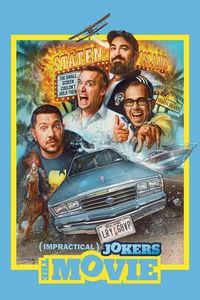
    (On Cable TV, December 2020) Considering that “Impractical Joker” is a TV show with eight seasons broadcast on a channel unavailable in Canada, watching Impractical Jokers: The Movie is doing it on hard mode, with no idea of the TV show’s premise, its creators or their comic style. Fortunately, there’s just enough hand-holding to set things straight, with an added (fictional narrative) about the four protagonists having a chance to impress Paula Abdul twenty-five years after a disastrous 1990s encounter. The main draw of Impractical Jokes is that it’s a set of candid camera comedy bits, albeit ones where the cast gets to act the fool more often than the audience, usually by doing crazy dumb dares under the bemused sight of civilians inside a solid scripted framework. That takes care of most of my issues with candid-camera-style comedy, but I was still surprised to realize that the film had me laughing a few times. Featuring Paula Abdul (one of my early-1990s celebrity crushes) helps a lot, but the comic energy of the lead quatuor does the rest: It’s not sophisticated comedy (and the low budget often shows), but it gets its laughs. As the group makes its way down the east coast from New York to Miami, the film has a basic road-movie narrative energy and manages to frame its candid challenges in a well-paced fashion. I would probably have a lot more to say about Impractical Jokers: The Movie if I was a fan of the show, but as an introduction it’s not too bad.

  • Two Girls and a Sailor (1944)

    Two Girls and a Sailor (1944)

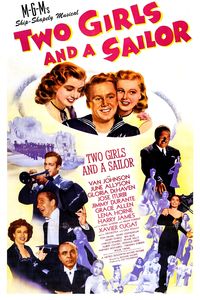
    (On Cable TV, December 2020) A surprising number of WW2 MGM musicals were made primarily to be shown to troops. As such, they were collages of artists in the studio’s stable, with a plot optimized to get as many numbers on-screen as possible without it seeming like a clip show. Two Girls and a Sailor borrows a plot lifted from The Broadway Melody and updates it with elements familiar to viewers of Hollywood Canteen and Stage Door Canteen. Here, we have two sisters headed to Broadway, but falling into all sorts of romantic and professional complications. But the script (nominated for an Academy Award, amazingly enough) is really a backdrop to the musical numbers once the film gets underway. Everyone will have their favourites – for myself, the number one performance remains Virginia O’Brien’s hilarious rendition of “Take it Easy,” taking her unflappable comic singing gimmick to another level by miming nearly falling asleep during her performance. Close seconds include a capture of Jimmy Durante singing his famous “Inka Dinka Doo,” Gracie Allen having fun with “Concerto for index Finger” (it’s exactly what it claims to be) and the superb Lena Horne crooning “Paper Doll” like only she could. Two Girls and a Sailor works better considered as an anthology film of the time’s entertainers coming in for a number or two. It’s fun, albeit best considered in bit pieces rather than a full course.

  • C’est pas moi, c’est lui (1980)

    C’est pas moi, c’est lui (1980)

    (On Cable TV, December 2020) Pierre Richard strikes back as a hapless gaffe-prone protagonist in C’est pas moi, c’est lui: Playing a frustrated ghostwriter-screenwriter who gets the bright idea of passing himself off as someone else in order to get recognition for his work, he soon finds himself in Northern Africa, tangled in a mess of assumed identities and double-crossing associates. If you’re familiar with Richard’s screen persona, this is a pure undiluted take on it — slightly enhanced by how the character, even if clumsy and awkward, is clearly competent in his field. (One of the film’s most clever scenes has the character outwitting repossession officers through rule-bending and a bit of physical comedy.) The film can also rely on more than the physical comedy for laughs – the identity-confusion material is good for more than a few laughs, and the foreigner-out-of-his-element is also good. Unfortunately, the film ends on an underwhelming note, as the character spends far too long away from his pregnant fiancée, and escapes captivity through a bit of unnecessary violence. Otherwise, there’s plenty to laugh about here – the scene where he keeps puncturing absurdly inflated sofas is memorable. In many ways, though, C’est pas moi, c’est lui does suffer from being so similar to other Richard movies – if it’s the first one you’ve seen, you’re guaranteed to have fun. If it’s the fifth or sixth, well, you may want to space them out for greater impact.

  • The River (1984)

    The River (1984)

    (In French, On Cable TV, December 2020) Sissy Spacek and Mel Gibson are struggling farmers trying to keep it together in the face of regular floods and economic pressures in The River. It’s directed with the kind of gritty blue-collar graininess characteristic of the 1970s – there are no glossy golden-hour shots of the farm here when the focus is on intractable social issues. It gets even worse when, in a bid to avoid financial problems, the male protagonist accepts a steel-working job and realizes to his dismay that he’s been asked to go past picket lines during a strike. But the bank remains the ultimate enemy, especially when the farmer sits in the middle of an area slated for large-scale geoengineering. The River is such a downbeat picture that the happy(er) ending comes across as surprising and unrealistic. It doesn’t help that the entire film, even the flooding scenes, comes across as dry and unlikable – we cheer for the underdog by habit, but there comes a point in the film where we just want the farmers to take the money and run in the face of nature wanting their lands for flooding. (It probably doesn’t help that, over the past few years, climate change oblige, twenty-first century audiences are getting far more sensitized to the concept of deliberate flooding zones: our sympathy for mounting insurance bailouts is getting shorter.) While The River may hold some appeal for Gibson and Spacek fans, the resulting film had too little reason for other audiences to care.

  • I Am Mother (2019)

    I Am Mother (2019)

    (Netflix Streaming, December 2020) While, in theory, I’m a strong proponent of complex science fiction narratives in movies, and while I’m not averse to dark stories, and while I’m a not-so-recovered former film critic for a Science Fiction magazine who kept bemoaning the pap that Hollywood churned out, there is something that’s keeping me from liking I Am Mother as much as I should. It starts promisingly enough, with a robot bringing up an embryo as a daughter, in a bunker clearly sealed off from a post-apocalyptic landscape. But there’s only so much mileage you can make out of that restrained premise, and before long the darker nature of the script comes into focus as a survivor from outside (Hilary Swank!) comes knocking at the door, and the robot demonstrates highly Machiavellian traits. The narrative gets darker as it goes along, with the expected evidence of previous child-rearing attempts and complex power games between human and robot. I think that most of my objections to the film have to do with a lack of disbelief in its premise – at regular intervals, I found myself second-guessing the basic assumptions of the film, its direction, its means or its justifications. That is not how to have a healthy film/audience relationship, but I am Mother never managed to win me over. As it trekked over its recovering post-apocalyptic landscape, I kept glancing aside at story paths not taken, at more optimistic viewpoints and at ways the film could have been more compelling. Oh, it’s skillfully put together: the special effects are fantastic for a mid-to-low-budget Australian production, Clara Rugaard is quite good in the lead role and there are plenty of ideas scattered around. But I was simply never on board with what the film tried to do, no matter how much I wanted to.

  • Klaus (2019)

    Klaus (2019)

    (Netflix Streaming, December 2020) December is the time for Christmas movies we would otherwise be unwilling to watch at any other time of the year — but some of them do manage to be more interesting. Usually, the difference is in the non-Christmas portion of the narrative: while Christmas movies should hinge on Christmas, the best of them also have narratives that can be enjoyed on their own. In this regard, Klaus does manage to have it all: as an origin story for Santa Claus, sure, but also as the story of an over-privileged misfit asked to set up a postal service in a small village with two warring families. I’m not sure if there was much of a movie genre for postal comedies before, but Klaus manages to find new and witty elements to use as building blocks to the familiar Claus mythology. Visually, the film is remarkable for its unique art style – two-dimensional animation with an incredible polish that holds up against the now-familiar CGI baseline. The mixture of old-fashioned elements used in clever ways is what helps make Klaus so enjoyable – and perhaps even a new Christmas classic in the running. It’s a remarkable success, not just as a Christmas film or a family film (or worse yet, a Christmas family film), but on its own terms, watchable at any time of the year… but best in December.

  • Two Girls on Broadway (1940)

    Two Girls on Broadway (1940)

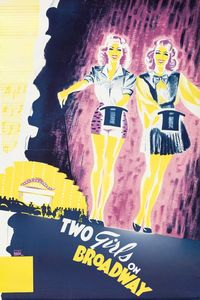
    (On Cable TV, December 2020) If there’s a slightly familiar quality to Two Girls on Broadway, it’s not as much due to it being a loose remake of the Academy award-winning Broadway Melody of 1929 than being very similar to countless other Broadway musicals. At the time, much of the media attention on the film was on Lana Turner – she was fast rising as a sex symbol, and the film showcased her (largely unfulfilled) potential as a musical star. Little surprise, then, if the film is more remarkable for its musical numbers than its overall narrative – as a story of two sisters trying to succeed on Broadway while not meeting the wrong men, it’s slight, adequate and just enough to bring this film to feature-film length. Joan Blondell is featured as Turner’s sister, but much of the emphasis of the film is on big production numbers, even if they don’t quite leave much of an impression once the film wraps up. It’s definitely not one of the most striking musicals of the era – it pales even when compared to its more daring and less technically accomplished inspiration. Still, Two Girls on Broadway is amiable enough and fits squarely in the idea we have of circa-1940 Hollywood musicals riffing off Broadway’s mystique.