Vivre sa vie: Film en douze tableaux [My Life to Live aka It’s My Life] (1962)
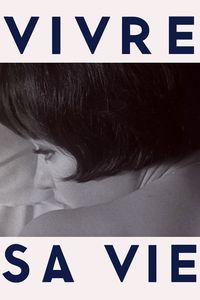
(Criterion Streaming, April 2021) At this point in my exploration of Nouvelle Vague cinema, I’m content to just let the movies wash over me, not trying too hard to find meaning or satisfaction in my film education. In Jean-Luc Godard’s halfway experimental Vivre sa Vie, we’re stuck with a young woman as her dreams of stardom as she leaves her husband and child to become an actress and, when that doesn’t pan out, gradually turn toward prostitution. Even before its gratuitously violent ending, Vivre sa vie is not meant to be an uplifting film — the protagonist’s descent through desperation is portrayed clinically, as she methodically has to abandon her dreams and, even then, has trouble surviving. Anna Karina (then Godard’s wife) is often impassible, as much of the film plays in her head. As a narrative, it doesn’t do much hand-holding — we’re left to infer much of the plot from clues and one showpiece sequence after another. There are intertitles, unconventional editing, jump cuts, deliberately artificial sets, an explicit shout-out to Jules et Jim, and what I’d call cinematic humour so dry as to be undistinguishable from style. This is a film of moments more than sustained storytelling: One montage scene tells us more than we’ve ever wanted to know about the legalities and practices of early-1960s prostitution in Paris. Another has Karina dancing around a pool table to the delight of viewers and disinterest of the characters sharing the room with her. One last highlight is a lengthy conversation between the protagonist and an older man on philosophical topics. Then there’s the hilariously violent scene that takes the film and (not without a bit of earlier foreshadowing, mind you) shoves it brutally into the crime genre, sparing no one. It’s going to linger in memory for sure, and it clearly shows Godard’s preoccupations in between other career landmarks, such as À bout de souffle and Le Mépris. Good? Bad? Who cares — it’s Godard.