Month: September 2021

  • Jim Thorpe—All-American (1951)

    Jim Thorpe—All-American (1951)

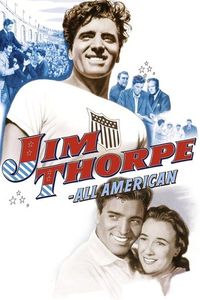
    (On Cable TV, September 2021) As much as I wanted to completely embrace Jim Thorpe—All-American’s message of admiration for a Native athlete who overcomes the odds in order to become an exceptional athlete in track-and-field, baseball and football, the fact remains that Thorpe is here played by the very Irish-ethnic Burt Lancaster. While I do like Lancaster a lot and can see how he could pass (faintly) as a Native with darker hair and skin, any contemporary appreciation of Jim Thorpe—All-American has to contend with inappropriate casting, made even worse by the constant depictions of racism against Thorpe. If you can manage to get past that, the film itself isn’t too bad — there’s a near-constant promotion of sports as American religion, but Thorpe’s life is filled with dramatic peaks and valleys. It’s a great introduction to an exceptional well-rounded athlete (the film doesn’t even dwell on the other sports he played well) that has been largely forgotten since then, even if the film irons out many of the less appealing aspects of his life. Still, getting past the inappropriate casting — even knowing how few opportunities there were for Native American actors at the time and Lancaster’s commercial appeal — is a big, big hurdle. Ultimately, Jim Thorpe—All-American ends up creating a lot of questions that run against the message it’s trying to preach, making it vexing at best.

  • Spontaneous (2020)

    Spontaneous (2020)

    (On Cable TV, September 2021) On paper, Spontaneous looks like a risky prospect — I mean: a teenage dark romantic comedy in which the characters are constantly at risk of spontaneously exploding? Well, yes, and it doesn’t take a long time for the premise to get going: As senior students of a small-town American high school start to explode in big bloody splashes without warning, our heroine begins a carpe diem kind of romance with a kindred spirit. Our two leads are naturally far more interesting to hear than their classmates, and their sarcastic dialogue does much to keep viewers invested in their plight. A good sense of (pitch-dark) humour from writer-director Brian Duffield tempers the film’s bloodier moments even if the result is definitely not for younger teenagers. I was disappointed but not really surprised that the film remains bereft of explanations as to why kids are exploding — this is one of those “the explanation isn’t as important as the situation” thing, but it’s still annoying. (The original novel reportedly isn’t any better.) Katherine Langford makes quite an impression as the lead character, playing off a good range of emotions along with co-lead Charlie Plummer — although Hayley Law does steal most of her scenes as the best friend. The last third of the film deliberately takes the story in a different direction, more sombre but arguably achieving its themes. There are other bits and pieces that I don’t like — the gore, the concluding existentialist philosophy and worst of all the unbearable soundtrack but let’s face it — I’m a middle-aged man trying to pass judgment on a film for teenagers, so I’m factually wrong on those aspects. But even with those annoyances, Spontaneous does end up a very successful teenage comedy — thick with subtext and literalized metaphors prodding at teenage angst and vulnerabilities. Imperfect but audacious and generally well-executed, it’s a nice surprise in a crowded landscape of teenage movies.

  • Six Minutes to Midnight (2020)

    Six Minutes to Midnight (2020)

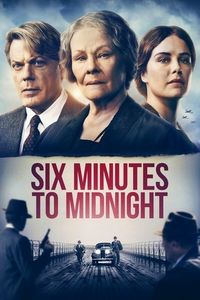
    (On Cable TV, September 2021) I don’t often finish films in perplexity about the existence of said film, but Six Minutes to Midnight had me stumped. It’s a bizarre mixture of a low-key story, miscast lead and overbearing execution, and just isn’t as interesting as it thinks it is. If I have the film’s production history correct, it started as a vanity project for writer-actor Eddie Izzard (who wrote the script based on childhood hometown stories) and that explains a lot. Taking as a springboard the existence of an English finishing school for daughters of the Nazi elite in the weeks before the start of WW2, the film soon delves into spy-movie shenanigans, as Izzard plays a counter-espionage agent sent undercover as a teacher to find out more about another evil teacher and the Nazis’ dastardly plan to go back to Germany with somehow-acquired super-secret plans. It feels like a very lackadaisical justification for a spy thriller, and unfortunately, I never bought into it. That, in turn, made the overdone nature of suspenseful scenes more funny than impressive — by the time we’re in a night-time dogfight between planes to prevent the extraction of their Nazi students and their super-evil teacher, the only thing I kept thinking was “why can’t they just let the Nazis go back home? They’ll lose the war anyway.” Izzard seems wasted in a serious but not overly impressive role — sure, it shows range from his comic persona, but it’s as if they left two thirds of his personality on the shelf. Flat direction from Andy Goddard doesn’t help either, and there’s a limit to what even Judy Dench can do to rescue the result. At best unremarkable and at worst misguided, Six Minutes to Midnight seems destined to end up in the heap of WW2 film arcana: a disappointing curiosity unable to make the most of what it has at its disposal.

  • Le nid [The Nest] (2018)

    Le nid [The Nest] (2018)

    (On Cable TV, September 2021) Considering the miserly budgets available to its filmmakers, French-Canadian cinema has become masterful in finding ways to produce interesting material with next to nothing. Le nid takes this to an extreme of sorts, featuring a cast of merely three people, and a small hermetic set. It starts rather ominously, as a filmmaker willingly locks himself in an empty church basement, supposedly as part of a filmmaking exercise in which his wife (outside the locked basement) will give him creative cues every day and then let him put together a film project. It’s supposed to last five days, but if you have this queasy feeling that this is going to turn ugly, you still don’t have any idea how bad it’s going to be. Day Two begins with the revelation that she had an affair, and that sets things falling apart. The five days are a mere prelude, and there are plenty of elements to suggest that there’s an ugly thing we don’t yet know underlying the entire exercise. The third act gets increasingly disconnected from reality. The ending is a disappointment in the usual psychological-thriller vein (as in: “I don’t believe in any of this”) but the ride to get there is wild even as the film makes the most out of its tiny cast and hermetic shooting location. Pierre-Luc Brillant and Isabelle Blais aren’t bad as the lead couple (they were a couple at the time of the film’s production and play characters with the same name as themselves), but it’s writer-director David Paradis who earns the biggest congratulations for pulling off a high concept. Unusually dense at 84 minutes and three characters, Le nid is not always pleasant or successful, but it’s nonetheless an achievement.

  • The Assistant (2019)

    The Assistant (2019)

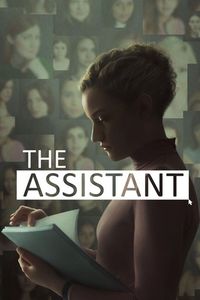
    (On Cable TV, September 2021) There’s a comforting idea that evil (for lack of a better word) is aberrant, exceptional and even flamboyant — the romantic myth of the outlaw crossed with the conviction that evildoers are working on their own. But real-life examples abound to show that many kinds of evil need systemic support, even logistics. The obvious inspiration for writer-director Kitty Green’s The Assistant has to be the most stomach-churning details that emerged from the Harvey Weinstein scandal — that while he was the one accused of sexual abuse, there was an entire support system facilitating these things for him — booking hotel rooms, talking young women into doing what he expected and, obviously, turning a blind eye to whatever was happening even as everyone knew it was happening. The film takes us within that kind of support system, through the viewpoint of a young assistant who pieces together the little pieces of her strenuous job into a portrait of ongoing, tolerated abuse. If you’re looking for plot, that’s roughly all you’ll get: Aside from a predictably ineffectual attempt to raise the alarm, The Assistant is slow cinema at its most excruciating — long shots, oppressive fluorescent hum in lieu of soundtrack, quotidian minutiae filmed in banal cinematography. I had most of this review drafted in my mind ten minutes after the beginning of the film and not much happened afterward to change it. Of course, that’s the point of the film: Evil-sustaining systems are revolting but boring, and it’s easy to convince ourselves that the minutiae itself is morally neutral. It’s really not a pleasant film to watch: hermetically centred on a single character (the rather good Julia Garner, able to sustain interest for an entire film), it’s intentionally cramped, ugly and inconclusive. No character, male or female, is meant to be admirable — at best they’re victims rather than oppressors or enablers. As much as I can’t imagine enthusiastically rewatching The Assistant a second time, I have to acknowledge its very specific intent and execution, successfully approaching a difficult theme at an unusual angle.

  • The Hollars (2016)

    The Hollars (2016)

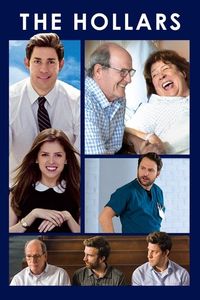
    (In French, On TV, September 2021) While writer-director-actor John Krasinski earned rave reviews as director of A Quiet Place, he already had two feature-length movies in his filmography before his horror breakout. The Hollars is the second of them, and it falls squarely in that favourite playground of low-budget independent cinema: the dysfunctional family dramedy, coupled with a “city boy comes back to town” plot to tie it all together. A cherubic beardless Krasinski anchors the picture as the prodigal son coming back to his childhood home after his mom gets ill — only to discover a bankrupt father, bitter brother, clinging ex-girlfriend and the realization of the fears holding him back from marrying his pregnant girlfriend. This is thoroughly familiar stuff, only slightly elevated by decent execution and a rather good cast. While such familiar names as Anne Kendrick, Sharlto Copley, Charlie Day, and Richard Jenkins add to the film, it’s Margo Martindale who earns the most attention in a tough part as a sick matriarch. The rest of the film is not bad, but it is familiar enough to be forgettable, and there are enough half-sketched subplots to make anyone wonder if the film ended up stuck between comedy and drama, instead aiming for a half-satisfying compromise. Watchable but not memorable, The Hollars is an honourable result for Krasinski, but a pale precursor to his next films.

  • Ode to Joy (2019)

    Ode to Joy (2019)

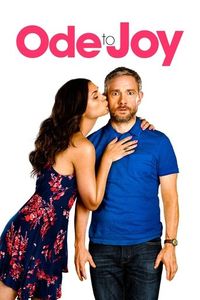
    (In French, On TV, September 2021) A clever premise goes a long way to making a romantic comedy memorable, even if it ultimately ends up going somewhere familiar. A great cast also helps, so when we see Martin Freeman show up in Ode to Joy as a man with a neurological condition that has him fainting at the slightest strong emotion (especially joy), we’re in good hands — and the same goes with having Morena Baccarin as the exuberant woman who catches his eye. The film’s most interesting segment comes next, as our eminently reasonable protagonist concludes that he literally can’t process life on such an emotional roller coaster, and arranges for her to date his brother and for him to find companionship with an emotionally-muted colleague of hers. Practical! Clever! And doomed to failure! As we shift into our third act, it becomes clear that nothing is going to keep our lead couple apart except for some temporary misunderstandings, and so Ode to Joy eventually ends where we expected it to be, albeit with truly interesting moments along the way thanks to unobtrusive direction from Jason Winer. Freeman and Baccarin have a good chemistry despite the dangerous nature of the male lead’s condition — the film’s epilogue is cute and poignant at once. Some good supporting work from Jake Lacy and Melissa Rauch wrap up the lead quartet. While not a great movie, Ode to Joy is fun and likable and, yes, joyful — perfect undemanding entertainment if you just want to see something that ends well with enough good times along the way to the expected conclusion.

  • Le party (1990)

    Le party (1990)

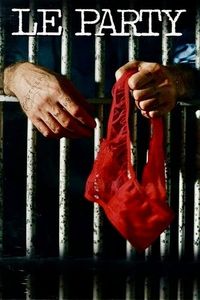
    (On Cable TV, September 2021) There is a surprisingly strong tradition in Quebec cinema for street philosophers, dispensing surprisingly highbrow wisdom from the gritty urban perspective. It’s probably in this tradition that Le Party is best appreciated, as we have writer-director Pierre Falardeau taking a look at life from the perspective of inmates. There isn’t much of a plot (prisoners greet the annual burlesque/comedy/singing show put together by outside entertainers), but there is a multiplicity of subplots and a string of good performances. It either comes together as a twisted musical, a misogynist drama, an inmate apologia, or a blender mix of whatever the filmmakers had in mind. By squarely taking the prisoner’s perspective, Falardeau brings viewers into a different universe with different values — a universe of rough men, crude language, simmering violence and constant longing for what they can’t have — women, quality alcohol and most of all freedom. Desire is the key to the characters in the film, and the springboard on which the film’s lyrical moments take flight. The price to pay for a revue film with scattered subplot, of course, is that not all works equally well: For instance, there’s an annoying series of scenes with a stuck-up journalist that not only rings false when measured against the rawness of the rest of the dialogue. But underneath its crude appearance, Le Party gives far more to think about than you’d expect.

  • The Marijuana Conspiracy (2020)

    The Marijuana Conspiracy (2020)

    (On Cable TV, September 2021) Contemporary filmmakers making period films inevitably end up imposing contemporary moral values and judgment over history. An explicit aspect of The Marijuana Conspiracy, for instance, is that it could only have been made in a post-pot-legalization Canada. Set in the early 1970s, it focuses on four women recruited in an unusually elaborate experiment to assess the impact of cannabis. Undertaken on behalf of the Ontario government contemplating a possible legalization of marijuana by Trudeau père (the joke, repeated three times, being that Trudeau fils is the one who achieved legalization forty-some years later), the study locks up its subjects for three months in perfectly controlled conditions, and measures the productivity of the cannabis group against the non-cannabis group. As befit a post-legalization film, it’s hardly any surprise if moderate use of cannabis is hailed as an overall good thing (the coughing and bad health effect only happen when those mad scientists increase the dosage). But The Marijuana Conspiracy goes further and, alas, in some far more familiar places. It’s hardly a surprise when the black character details a history of racial discrimination, nor when the gay character must deal with prejudices from a colleague — it’s in those moments where the film, rather than expand its social progressivism, feels as if it gets stuck in overly predictable material meant to show how far more enlightened today’s audiences (or is it filmmakers?) present themselves. The entire film also leads to an overdone conclusion in which the “conspiracy” ends up being the absence of any result from the study, leaving its participants wondering what happened and why. The epilogue, at least, reassures us that the flagrant lack of ethics in designing the research experiment has since been reined in by a code. Still, the result feels surprisingly scattered, going in one direction or another without much cohesion — it feels bloated with condescending tangents even at slightly more than two hours. Writer-director-producer Craig Pryce does get a few things right — the visual period detail is evocative without being overdone, the actresses are quite good, and there’s an intriguing story at the heart of the film. But the execution definitely could have been better at most levels, from trite dialogue to slack pacing to overstuffed script. Less preachiness could have improved things, or at least made the film a bit less self-satisfied in its own righteousness.

  • Jack of Diamonds (1967)

    Jack of Diamonds (1967)

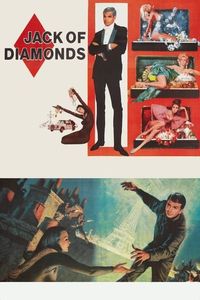
    (On Cable TV, September 2021) As much as we’d like to pretend that we watch movies for their intrinsic worth, that doesn’t always stay true once you get into classic films and the way they show things according to the standards of their times. Every era has its highlights, and the 1960s remain distinctive for their comedies. Something like Jack of Diamond is not a hidden gem. It is, at best, a perfunctory, competent exercise (thanks to director Don Taylor) in a familiar formula — that of a likable jewel cat-burglar whose only crimes are really against rich insurance companies and spoiled actresses such as Zsa Zsa Gabor. The film quickly sets up a mythology of famous thieves — the titular Jack of Diamond, played by a trim and not-so-tanned George Hamilton, his mentor the Ace of Diamonds, and a mysterious female competitor who quickly becomes as much of a rival as a love interest. As I wrote: familiar formula, but Jack of Diamond has the charming quality of having been executed in the 1960s, right at the cusp of the New Hollywood and mid-century modern class. As such, it still has a classical quality, but its colour cinematography (slightly blurry, as the film hasn’t been seriously restored) that brings it closer to the modern age. It’s not that good and the ending feels like a let-down, but it’s occasionally fun to watch Hamilton as a suave cat burglar, especially when the sparks start to fly with his distaff competitor played by Marie Laforêt. It’s not a great film, but Jack of Diamonds is a good period piece and something that can be watched easily enough.

  • Mortal Kombat (2021)

    Mortal Kombat (2021)

    (On Cable TV, September 2021) Most will agree that it’s useless to criticize Mortal Kombat for its excessive violence — considering that the videogame series on which it’s based was epochal for its depiction of pixelated gore, and that the making of its latest instalment was so stomach-churning that it gave PTSD to some of its developers. I never played the series, but still, as a filmgoer, I would like to watch films without cringing at the sight of spurting blood, spilling guts or a woman being very graphically sliced in half. I may think more of the soundtrack of the 1995 Mortal Kombat film than the film itself, but the PG-13 film did not need to be so violent and had a charm of its own. This newest version, despite being far more technologically advanced (is there a single frame without a digital effect?), is considerably bloodier and duller. The problems start with some curious choices made at the onset of the film — positioning this as a first-of-three films means that we merely get a prologue, and one that has a character quixotically trying to stop the mortal tournament from taking place. Then there’s the selection of the male lead, a very bland actor playing an even blander protagonist, while, right next to him, the character arc of the Sonia Blade character is immeasurably better. Mortal Kombat doesn’t necessarily get better in execution, with recycled sets, dull settings, inexplicable plotting and a very strange mishmash between the series’ grandiose mythology and some crude dialogue coming from some characters. (The character of Kabal feels particularly out-of-place, but the flip side of that is that Josh Lawson is the film’s highlight even in an incredibly abrasive role.)  The fights are choreographed with some skill, especially when special effects dominate the scenes — but that may explain the film’s over-reliance on close-ups quick editing rather than seeing the fights play out at length and in medium shots. Watchable but distasteful due to the excessive gore, Mortal Kombat is technically smoother than its cult classic predecessor, but not something I’d recommend to anyone but the already-accursed fans of the videogame series.

  • Sommarnattens leende [Smiles of a Summer Night] (1955)

    Sommarnattens leende [Smiles of a Summer Night] (1955)

    (On Cable TV, September 2021) I know, I know: “An Ingmar Bergman romantic comedy” is not exactly a string of words that go well together. It feels strange to contemplate and even stranger to type. But that’s Smiles of a Summer Night — not merely a comedy, but an influential one as well, as its complex criss-crossing of lust and love inspired later filmmakers to do better. The opening has a quasi-Lubitschian quality in how it describes married people contemplating affairs past and current, a two-year marriage left unconsummated, and an eight-point graph of people lusting after one another. After an urban-set first half that sets up the tensions, the action moves to a vast rural domain where the passions all play out against the backdrop of the year’s shortest nights. From Lubitsch to Shakespeare, the romantic entanglements get untangled in time for a happy conclusion. I’m maybe halfway through the Bergman filmography, but Smiles of a Summer Night is definitely atypical — although this should not be interpreted as a change in Berman’s typically heavy direction: his style remains slow, ponderous and energy-free: you have to pay attention to figure out that it’s a comedy (anyone merely passing by would assume it’s just one more of his drama) and it’s a given that a lighter-touched director would have been a better fit for the material. Still, it’s nice to have a Bergman that doesn’t necessarily revel in impenetrable doom and gloom, so there’s at least that. I can certainly understand why it’s been remade a few times since then: plenty of directors can picture themselves doing more comedic justice to the base material. But, hey: “An Ingmar Bergman romantic comedy.”  You get what you get.

  • Karen (2021)

    Karen (2021)

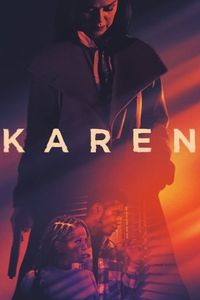
    (On Cable TV, September 2021) Let’s admit it: It’s really hard to resist a film titled Karen when it’s about a crazy entitled racist white woman taking on a couple of likable black protagonists. It’s such an on-the-nose topic (even acknowledged by the characters in a rare clever meta-moment) that it’s barely surprising when the film pulls out all of the stops to make its titular antagonist as humanly unpleasant as possible. We all know where this is headed, from neighbourly microaggressions with a fake smile to gunning for the female lead in a rain-soaked night-time finale. It’s clearly meant not meant to be a good movie, but to satisfy some appetite for retribution and I suppose that it does exactly that. It could have been far wittier in better hands, but writer-director Coke Daniels, perhaps working according to a specific deadline, doesn’t waste much time in non-essential refinements. Karen is unsubtle to the point of being amusing, although there are a few occasional nice touches (such as the HOA refusing to go along with the antagonist’s overly racist schemes) to keep it from floundering too badly. Taryn Manning, made up to be as ugly as her character, is perhaps too good in the role considering how easily she gets to be so exasperating. Meanwhile, Jasmine Burke doesn’t have all that much to do as the female lead, but she looks good doing it. As the male lead, Cory Hardrict has a meatier and not entirely perfect character to play with — and he has the unenviable task of acting through a ridiculous scene where he discovers a bathroom filled with Confederate memorabilia, including a soap dispenser with a Dixie Flag sticker. I mean — really? If you’re not laughing at this point, you’re probably missing the point. (Although the point may be that this probably should have been turned into an overt comedy.)  In the end what we get with Karen is not a good film, but it’s an entertaining watch, and you can make a case that it’s sociologically interesting. While I’m not happy about the rise of “Karen” as a generic insult (the two Karens I’ve known best were two of the sweetest, most likable women ever — and one of them was black), I think that the concept that it vehicles is useful — highlighting a racist archetype that is more insidious and no less corrosive than the typical redneck-KKK cliché which has been a too-convenient singular shorthand for too long. Still, there’s still plenty of space for a cleverer screenwriter to explore the subtleties of the idea because Karen really isn’t interested in being more than an in-your-face movie-of-the-week.

  • The Super Cops (1974)

    The Super Cops (1974)

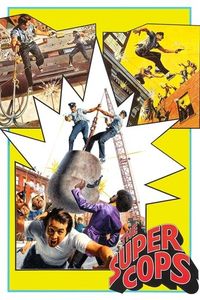
    (On Cable TV, September 2021) If you want to talk about a blast from the past, have a look at The Super Cops, a rather joyous police comedy set in the desolate urban landscapes of early-1970s New York City. The plot has to do with two overeager buddy-cops taking down criminals and making busts by the dozen, earning the enmity both of their fellow cops, street hoodlums and internal affairs. While the setting is almost apocalyptic (NYC was in a terrible shape at the time), the tone of the film is considerably jollier than its setting, as our two fast-talking cops have a lot of fun while busting criminals, seizing drugs and making fun of their corrupt colleagues. The tone is resolutely upbeat, with plenty of references made to Batman & Robin along the way. Unbelievably enough, it’s based on a true story — but as the careers of those two real-life policemen shows (both were arrested for various reasons later on), viewers are justified in being skeptical of anything presented at face value. The result is… interesting, and not that far away from blaxploitation, considering that it’s directed by Gordon Parks. As of 2021, the film has a strange quality, exulting at the actions of two (white) policemen that can be seen as problematic in a broader context of drug legalization and community engagement. But as I said — The Super Cops is a blast from the past: unlike historical period pieces made today looking backward, we don’t get to choose what comes out of those older films.

  • The Last Wave (1977)

    The Last Wave (1977)

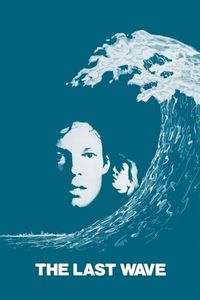
    (In French, On Cable TV, September 2021) It simply takes too long for Australian horror film The Last Wave to cohere: As a subplot about Aboriginal judicial troubles is intercut with sombre predictions about extreme weather, the result feels more scattered than complementary. To be fair, this is an ambitious film from writer-director Peter Weir (one of the last of his filmography that I hadn’t yet seen), blending social drama about legal discrimination against Aboriginal people with more fantastic material about the upcoming end of the world, to a character study about a white lawyer finding affinities with his Aboriginal clients, and straighter horror cues such as people being harmed by extreme weather or having their house flooded. It’s a bold mixture, but it doesn’t really take until fairly late in the film — Weir being Weir, his ambitious concepts weren’t necessarily grounded, and it’s this (intentional) lack of a tether that gets The Last Wave splashing in all directions despite its strengths.