Author: Christian Sauvé

  • Tom Thumb (1958)

    Tom Thumb (1958)

    (On Cable TV, May 2020) Producer George Pal was the SFX wizard of his time, always picking projects that pushed back the state-of-the-art in matters of cinematic spectacle. As the first project he directed, Tom Thumb isn’t that big of an anomaly in his career—we remember the Science Fiction films Destination Moon, War of the Worlds and The Time Machine, of course, but he also produced (sometimes directed) some more family-friendly fantasy films like this one. An attempt to combine effect-heavy blockbuster filmmaking with the very different demands of a musical comedy, Tom Thumb may not have stood the test of time as well as Pal’s other films, but it’s still worth a look. Various techniques, such as oversized object trick photography and stop-motion animation, all help sell the illusion of the VFX side, while catchy songs do the rest on the musical side. The demands of special effects clearly constrained the final result, since the film clocks in on the much-shorter side for musicals at only 98 minutes. Ascendant stars Terry-Thomas and Peter Sellers have supporting antagonist roles in here, while Russ Tamblyn seems in his element as the hero. While the seams on the special effects are now obvious, that’s part of the fun as well. Thankfully, this Tom Thumb doesn’t stick too close to the fairytale: the entire thing is bouncy, lighthearted and a joy to watch, which is not the case with all adaptations of that source material.

    (On Cable TV, March 2021) A wild blend of musical comedy and special effects, Tom Thumb takes considerable liberties with the original story to deliver a rounded old-school Hollywood experience, albeit with a heavier dose of spectacle than most films. Helmed by event-filmmaking legend George Pal, it starts with the proposition that special effects are the point of the film, and then go on to deliver a (thin) story and (ambitious) musical numbers, one of them even incorporating extensive stop-motion animation. Having a feature film with a tiny character means quite a bit of trickery and while much of that has already been done better in the years since, there’s still a charm and an earnestness to the results here that’s hard to dismiss. Good song backed by a spirited performance from Russ Tamblyn (with some supporting work from British comedy legends Terry-Thomas and Peter Sellers) help sell the entire package. Comparisons with some of Disney’s family pleasers aren’t misplaced, even though Tom Thumb is often more interesting is bits and pieces rather than as an entire film.
  • Dressed to Kill (1946)

    Dressed to Kill (1946)

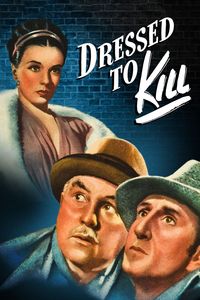
    (On TV, May 2020) Given that I haven’t seen any of the previous thirteen films in which Basil Rathbone played Sherlock Holmes and Nigel Bruce played Watson, it’s not that clever to start with the fourteenth-and-final instalment Dressed to Kill. On the other hand, it does such a good job that it becomes a good advertisement for the rest of the series. Moving like a well-oiled machine of people all comfortable with their part to play, it sends Holmes and Watson on a treasure-hunt chase as they compare musical boxes to end up finding government secrets. It’s all very charming in a classical way, with a bit of suspense and humour to make it interesting throughout. The period atmosphere is evocative, and Patricia Morison plays a very capable antagonist. After so many 21st-century takes on Holmes in which he’s essentially a cognitive superhero, it’s almost refreshing to see him in a film where he’s merely very smart. And that’s one of the reasons why, even if Dressed to Kill may be the last of the Rathbone Holmes, it remains a compelling reason to watch the rest of the series.

  • Coming Home (1978)

    Coming Home (1978)

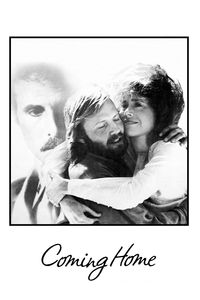
    (On Cable TV, May 2020) If you were to assemble a team of scientists to create a film guaranteed to feel dull to me, you would probably end up with something like Coming Home—Hal Ashby, Jane Fonda, late-1970s drama, disabled protagonist, Vietnam veteran drama, documentary-style filming… it all adds up as things I’m not particularly interested in. Plus, I have already seen Born on the Fourth of July, which tackles many of the same themes and even has a common point of inspiration. Clearly a film of its time, Coming Home is a blunt-force declaration of themes as much as it’s a character drama. Handled by director Ashby, it’s a film with an unusually soft image quality—even on TCM, which I assume uses the highest-quality version available. And yet, despite all of this, I found Coming Hope quite a bit more involving than expected. The drama is decent, and it builds up to a good (if tidy) conclusion. What’s perhaps most interesting is how specific it is in its late-1960s detail (including a soundtrack that even includes as rare appearance by the Beatles), representing the era both as a current memory, but also as a period piece. The message is blunt, the ending is convenient and the drama feels endless, but I liked Coming Home quite a bit more than I expected.

  • They Live by Night (1948)

    They Live by Night (1948)

    (On Cable TV, May 2020) The “lovers on the run” subgenre of romantic tragedy and thrillers has a long history, and while it predates They Live by Night, the impact of that specific film over directors in later decades (including a slew of films in 1970s New Hollywood) remains significant. Farley Granger and Cathy O’Donnell star as, respectively, a young criminal on the run after a prison escape and a robbery, and an isolated young woman who takes care of him after he’s wounded in the robbery. Eventually, they decide to make a run for it, and get married along the way. Typical of criminals on the run during the Production Code era, it does not end well for them—hence the mystique of tragic romance that led to so many imitators, whether in France for La Nouvelle vague or in New Hollywood. But while its legacy is significant, it’s worth noting that They Live by Night is a pretty good film by itself. It holds the distinction of being the first film with a helicopter tracking shot (in fact, it’s almost the first shot in the film) and being acclaimed writer-director Nicholas Ray’s first film. As an early noir, it draws from the novel it was adapted from, as well as French Poetic Realism. It’s easily watchable, although romanticizing the bad-boy criminal remains just as problematic as it ever was. Still, it’s not a bad film, and viewers can have fun tracing the chain of influence from this to À bout de Souffle to Bonnie and Clyde to Natural Born Killers to even newer films about lovers on the run.

  • The Prisoner of Zenda (1952)

    The Prisoner of Zenda (1952)

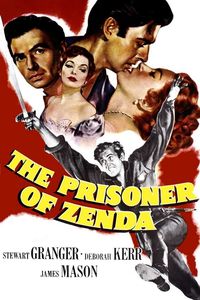
    (On Cable TV, May 2020) Modern critics of Hollywood’s fondness for near-identical remakes should find perverse satisfaction in being reminded that this is not a recent development. In fact, many periods in Hollywood’s history had blatant remakes as the order of the day—the 1930s for sound remakes of silent hits; the 1950s wave of colour remake of past black-and-white crowd-pleasers. Few, however, have been as blatant in remaking the same material as the 1952 version of The Prisoner of Zenda, which took nearly the exact same script (aside from a few minor modifications) as the 1937 version. Except in colour, and with the added technical innovations of 15 years of filmmaking. The premise is a trope classic: the visitor in a foreign country who looks exactly like the king, and thus becomes involved in palace intrigue. It’s generally watchable for a wide variety of audiences, considering that it hits upon matters of adventure, romance, action and political conflict. While lead actor Stewart Granger is a second-tier classic Hollywood reference at best, the film has another lead role for Deborah Kerr, and a deliciously scene-chewing performance from James Mason as a villain. As a modern (ish) European fairytale, The Prisoner of Zenda ends with a spectacular sword fight and plenty of swashbuckling victories for its hero. It’s not bad by itself, and even more interesting as a remake… but the baseline is that it works no matter how you see it.

  • In Which We Serve (1942)

    In Which We Serve (1942)

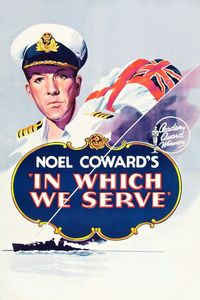
    (On Cable TV, May 2020) If ever you’re tired of American WW2 propaganda movies, why not try a British WW2 propaganda movie? In Which We Serve has the distinction of being largely shaped by well-known playwright Noel Coward, his fingerprints being present on the entire film considering that he served as writer, co-director (handing the baton to David Lean in his first feature film credit as such), producer, star (as the captain of the ship it follows), and co-composer. Whew. The plot here is didactic in its intention to follow the life of a ship from the initial riveting to a gripping battle sequence that eventually leads to the sinking of the ship. The episodic plot alternates between life aboard the ship and home life for the characters. Thanks to playwright Coward being in control, the dialogue is much better than usual for a war film. While clearly propagandist in the British still-upper-lip style, In Which We Serve is generally interesting and has a great shipboard atmosphere. (Your assignment: compare and contrast with American WW2 propaganda films.)

  • The Story of Louis Pasteur (1936)

    The Story of Louis Pasteur (1936)

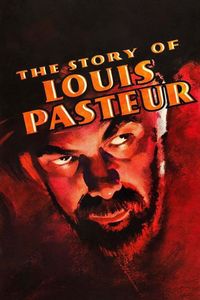
    (On Cable TV, May 2020) The 1930s were a high-water mark for ham-fisted heroic biographies, and Paul Muni starred in many of them. Accordingly, The Story of Louis Pasteur is not subtle at all yet effective at what it does, and reasonably OK (but absolutely not perfect!) on the scientific details. Still, the reason to watch is Muni in an Oscar-winning role, at the start of a string of biographical movies – leading to the somewhat better The Life of Emile Zola. I found it quite pleasant to watch in its triumph of the scientific process kind of way. Of note: an unusual use of (at least two) narrative fake outs. While there are better biographies dating from the 1930s, I found The Story of Louis Pasteur uplifting and inspiring—including how it passes the baton to others later on.

  • Bull Durham (1988)

    Bull Durham (1988)

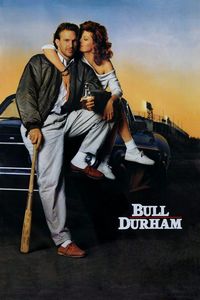
    (On Cable TV, May 2020) While baseball is integral to Bull Durham, this is not a film in which the entire plot depends on a make-or-break play coming at the very end of the film. It’s more of a baseball-adjacent romantic comedy where the sport plays a load-bearing role, but the real action is elsewhere—in this case, a romantic triangle between a young hopeful (Tim Robbins), a grizzled veteran (Kevin Costner) and a middle-aged woman (Susan Sarandon) who picks one hopeful per year for romance and education. Because of this unusual out-of-focus role for the sport in this romantic comedy, there are a lot of things to like about Bull Durham—the focus on a less-than-stellar league and team, the interesting three-way relationship between the three leads, one of Costner’s best performances, and some telling small-town details. (And let’s not forget that Sarandon is scorching hot here.) Writer-director Ron Shelton drew upon his own experience as a minor-league baseball player in putting together the film and that familiarity shows in many subtle details that make the film even richer. But, more than anything else, Bull Durham is a romantic comedy that both plays with the form and upholds it in the end. It’s not hard to like, even if you’re not a baseball fan.

  • Tom, Dick and Harry (1941)

    Tom, Dick and Harry (1941)

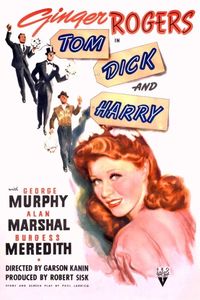
    (On Cable TV, May 2020) There was a clear risk that Tom, Dick and Harry’s familiar premise (a young woman must choose between three different suitors) would have produced a very familiar romantic comedy, but the Oscar-nominated script goes a few extra steps to ensure that the film would be something better than the average. For one thing, it’s far more visually imaginative than other similar movies of the time, from an interesting opening credit sequence that plays with anagrams to extended daydream sequences in which our heroine imagines visions of her future life with her suitors in a dollhouse. Ginger Rogers, who won an Oscar for Kitty Foyle during the shooting of this film, seems to enjoy a purely comic role and looks good with a great hairdo. Some good dialogue underpins a familiar tale, albeit one that goes to the wire before delivering a conclusion. I do have issues with that ending—not so much how it ends as the way it goes about it in a way that could have been more graceful and hopeful. Still, some of the film’s period details can please and surprise: while the newsreel mention of Hitler is a bit wild for a romantic comedy, the film does provide an interesting depiction of the life of a telephone operator—and even throws in a fun split screen to depict a three-way phone conversation. But all of that pales in comparison to the examination of social mores at the time—Tom, Dick and Harry is not just about having the richest guy throw himself at the heroine, but her making a choice about which one is the most appropriate.

  • Dolor y gloria [Pain and Glory] (2019)

    Dolor y gloria [Pain and Glory] (2019)

    (On Cable TV, May 2020) I don’t necessarily love all of writer-director Pedro Almodovar’s movies, but I’m certainly interested in what he has to say, film after film, and Dolor y gloria is more autobiographical than most. Antonio Banderas plays an Almodovar alter ego, an aging film director lost in nostalgic recollection as he tries to put his life back together, while Penelope Cruz plays the somewhat thankless role of the director’s mother in flashbacks. I’m not quite up to knowing enough about Almodóvar’s life to fully appreciate the material (let alone identify with an acclaimed gay Spanish film director), but Banderas is quite good as the kind of grouchy guy who’s given up on giving a damn about his own life. The ending is quite moving in how it brings the framing device together with the rest of the story. I may never quite get Almodovar to its fullest extent, but as long as he keeps doing films like Dolor y gloria I will be there to take a look.

  • Coffy (1973)

    Coffy (1973)

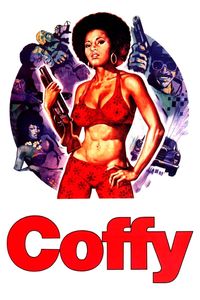
    (On Cable TV, May 2020) While Coffy wasn’t Pam Grier’s first starring role, it was the one that established the tough-woman screen persona that would make her an icon. Under a perfect afro of many dangerous secrets, she delivers a character that’s both an avenging angel, capable and sexy, but also one with moments of weakness and vulnerability unlike other female-avenger roles. This film is close to the Blaxploitation ideal for several reasons—the early-1970s style, the over-the-top nature of its sequences, the go-for-broke sadistic villainy of the antagonist (dragging someone behind a speeding car—yes, there’s a strong racial component to that), the dramatic-bordering-on-exploitative way the film is built, and so on. It’s not quite perfect: in keeping with Blaxploitation tone and genre, it’s often surprisingly violent and the nudity in catfights gets to be intrusive after a while. But, throughout the film, we keep going back to Grier, perfect in a role that matches sexiness and toughness, with agency and credible fight scenes despite the awkwardness of early-1970s low-budget staging. Various elements, like the anti-drug message, a female protagonist and Grier herself, have made Coffy age much better than many of its contemporaries. There’s something wonderful in how Grier is, through retrospectives of the films of her first heyday, now seducing entirely new legions of fans and is likely to keep doing so well into the future.

  • Pillow Talk (1959)

    Pillow Talk (1959)

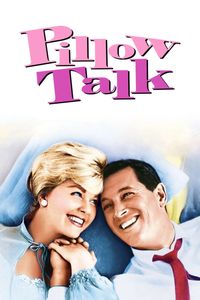
    (On Cable TV, May 2020) Doris Day may now be known better for her late-career chaste and demure roles, but she was a feminist icon in many of her earlier movies—independent, feisty, with a good job, and not willing to compromise on her choices of romantic partners. Pillow Talk is somewhere between those poles, but closer to the female-empowerment side. Naughty then but almost wholesome now, it’s the story of a Manhattan career girl who falls in love with a fellow user of a telephone party line—an early precursor to the gentle sex comedies of the early 1960s. (If you liked Mad Men, there’s a bit of this in here.) The technological limitations of a party line clearly date this, but the Oscar-winning script remains compelling, with plenty of well-used voiceovers reinforcing the comedy of the plot. Pillow Talk’s biggest assets remain its lead actors, with Doris Day and Rock Hudson sharing the screen for the first of three times (you’ll understand why the fuss after watching the film), and supported by notables such as Thelma Ritter (nominated for an Academy Award) and Tony Randall in a very Tony Randallish role. Perry Blackwell is also a bit of a highlight as a sassy lounge singer. Pillow Talk also works well as a glorious Eastmancolor time capsule through comfortable-class late-1950s Manhattan apartments, with three-way split screens to further enliven things. There’s some uncomfortable irony in having Hudson’s character insinuate (with malice) that someone else is gay. Other than this slip-up, Pillow Talk is quite entertaining and its familiarity with various tropes certainly helps spruce things up. Meanwhile, Day gets a bit of a glow-up over previous roles and makes it work to her advantage.

  • Ms .45 (1981)

    Ms .45 (1981)

    (In French, On Cable TV, May 2020) At first glance, Ms. 45 does look a lot like an exploitation film. How else would you call a film in which a young woman is raped twice in the same day, then turns to violent vengeance against arbitrarily picked men? And yet, and yet—this is a film from iconoclast director Abel Ferrara and while it does play by the extreme codes of 1970s-style exploitation thrillers, it’s also trying to say something about the nature of vigilante films. Our heroine is not righteous; she’s insane. The murders turn less and less justifiable with time. People around her notice something is up. It doesn’t end well for her. I wouldn’t necessarily call Ms. 45 an exploitation film critique (by the end of it, we’re thickly back into lurid exploitation) but it is a commentary. Ferrara certainly knows what he’s doing in transforming 17-year-old Zoe Tamerlis from mute seamstress to avenging angel and then, thanks to a Halloween party, a sexy nun gunning down every man in sight. Despite the violence, it ends up being better than expected, and easier to watch than some of the films it takes inspiration from, such as Death Wish. It has a distinctive style, and at 80 minutes is just long enough for it to make its point and leave. I wasn’t expecting to like Ms. 45 and you can argue that I still don’t, but at least I respect it more than many similar films.

  • Pride and Prejudice, Cut aka Becoming Ms. Bennet: Pride & Prejudice (2010)

    Pride and Prejudice, Cut aka Becoming Ms. Bennet: Pride & Prejudice (2010)

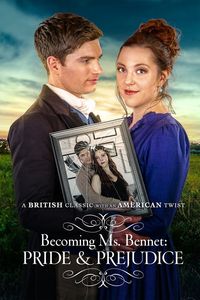
    (On Cable TV, May 2020) I wasn’t expecting much from made-for-TV movie Pride and Prejudice, Cut: it’s a modestly budgeted romantic comedy with little-known actors, deliberately silly plot developments, an audience-baiting affection for Jane Austen, and a tone that speaks either to young women or their moms. This being said, it is very cute and likable: pushing the whole “hiring actresses because of their number of social media followers” thing, it follows an American vlogging influencer after she’s picked to play Elizabeth Bennet in a new adaptation of Pride & Prejudice. Except that she can’t get the English accent right; except that her co-star doesn’t respect her as an actress; except that, at the first sign of trouble, she ends up criticizing the production and gets chastised for it. (What did she expect? Oh, right: made-for-TV contrived plotting.) At least the film is on firmer footing when introducing the expected metafictional mirroring of Austen’s narrative onto the modern-day moviemaking plot. There have been many “frothy rom-com redoing Austen in modern times” movies, and if you want to be picky about it, then Austenland did it better. But this is a subgenre based on familiarity, not novelty and what ends up on-screen in Pride and Prejudice, Cut is good enough for a few smiles and satisfy the viewers’ romantic expectations.

  • Killers Anonymous (2019)

    Killers Anonymous (2019)

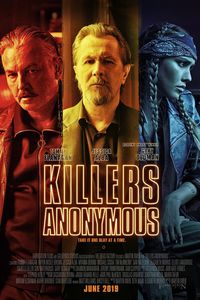
    (On Cable TV, May 2020) The failure state of an assassin movie is that, in the end, it’s still a movie about people killing people. You can try to dress it up as righteous killings, or slather it in dark comedy, or try to show the personal toll it takes, but in the end… still people killing people. And yet Killers Anonymous, in its ineptness, manages to become so thoroughly repugnant that it almost creates a new category of failure of its own. Everything starts with writer-director Martin Owen, apparently so enamoured of killers as characters that he has them sit down in a support group. Except that it’s not so much a group to help them stop killing as to encourage them to do so. Further twists quickly pile up in a bewildering fashion, taking us to spy thriller territory and then back. So many tropes are piled up on top of each other that the entire thing collapses in a pile of nonsense. But it gets worse, as all of Killers Anonymous is handled with such a pervasive sense of amorality (killers: so cool right now!) that the viewer is liable to feel completely detached from all of it. It certainly doesn’t help that the characters are so abrasive, unlikable, unrelatable and not much worth caring for—the only character for whom I had some sympathy was MyAnna Buring’s Jo, and I strongly suspect that too much of this had to do with her looking cute in a bob haircut and round glasses. The film is so audience-unfriendly that by the time a character is unceremoniously brought into the story by a series of long shots and the audience is asked to care whether she dies or not, we’re done playing along. The directorial flourishes feel more annoying than effective, reflecting my overall mood about the film. Here’s something worth keeping in mind: There have been at least two recent films (Hotel Artemis and Bad Times at the El Royale) with similar stylish presentation of several killers in an isolated place, and both of them were easily better than Killers Anonymous. See it if you don’t believe me, but you will regret it.