Author: Christian Sauvé

  • The Back-Up Plan (2010)

    The Back-Up Plan (2010)

    (On Cable TV, February 2012) Reviewing some movies can also be about taking stock of one’s place in life, and I mention this solely because I suspect that as a new dad, I’m a bit more receptive than usual to a slightly-sarcastic comedy about pregnancy.  Here, it’s almost a relief to see Jennifer Lopez take a step back from being a celebrity gossip object to focus on a roundly comic role as a baby-crazy woman who ends up meeting her perfect match shortly after artificial impregnation.  This being said, The Back-Up Plan isn’t a particularly good film: The plot threads are obvious, the scenes plays out as they’re expected to, socially-acceptable morals are reaffirmed and cute animals are used as plot devices.  But viewers with recent experience with pregnancy may want to tilt their appreciation upward, if only in sympathy.  Even as an over-romanticized romantic comedy about people enjoying vast New York apartments and lifestyles on unclear financial footing, The Back-Up Plan is innocuous and even compelling at times.  Lopez turns in a good comic performance, and some of the supporting players earn their shares of laughs.  Not great, not bad, but a whole lot better if you’re rocking a newborn in your arms as you watch at low volume.

  • The Spy Next Door (2010)

    The Spy Next Door (2010)

    (On Cable TV, February 2012) Ever since Schwarzenegger’s Kindergarden Cop, the family-friendly comedy pitting muscleman against kids seems to be a mandatory step in the career of aging action actors.  From Dwayne Johnson’s The Tooth Fairy to Vin Diesel’s The Pacifier, the results usually aren’t very good, falling short of delivering bone-crunching action while not bringing anything new to the family film genre.  Jackie Chan’s The Spy Next Door is much of the same.  While Chan fans will occasionally get a reminder about his considerable physical skills (starting from the opening archive footage taken from other movies), the film itself isn’t particularly interesting.  The unthreatening kid-spy plot beats are all obvious, the jokes are weak, the action sequences are tepid and the script is more dumb than compelling.  Chan himself is far too old to play the pseudo-nebbish man courting an attractive mother-of-three, and parts of the villain’s dastardly plot could be flipped over to become a force for good without too much trouble.  Still, The Spy Next Door isn’t a complete loss: Chan remains a charming presence and some of the action sequences show some of his usual flair.  Still, there isn’t much to miss here…

  • Trolljegeren [Troll Hunter] (2010)

    Trolljegeren [Troll Hunter] (2010)

    (On Cable TV, February 2012) I haven’t soured on the whole found-footage sub-genre yet, but I sure wish they’d find a different ending than “they all died at the end”.  (This isn’t a spoiler, given that the film starts with a cute “we’ve been trying to figure out whether this is real or not” notice.)  This being said, Troll Hunter isn’t a bad example of the form at all.  As student filmmakers befriend a tough man who proves to be a professional troll hunter (Otto Jespersen, in a striking role), what the handheld camera captures becomes stranger, bigger and more thrilling.  A monster-movie in shakycam mode, Troll Hunter delivers on its promises: Big trolls, government conspiracies, well-used special effects, a few good action sequences and a found-footage frame that credibly doesn’t break character too often.  (There aren’t many instances where you wonder why they’re still shooting, which is typically one of the sub-genre’s biggest flaws.)  Add to that the strangeness and beauty of the Norwegian landscapes, and you’ve got a pretty good film experience.  This makes the coda even more unsatisfying, as it seems willing to throw away a perfectly good happy ending in favor of a downbeat conclusion that deliberately writes itself in a corner.  Too bad, but that’s really not enough to take away anything from Troll Hunter except a too-slavish adherence to found-footage conventions.

  • Angel-A (2005)

    Angel-A (2005)

    (On DVD, February 2012)  The most remarkable thing about Angel-A is how atypical it feels when compared to the rest of writer/director Luc Besson’s filmography.  You’d have to dig back to the eighties (past the most recent bad action movies and older better action/SF films) to find something like it, perhaps The Big BlueAngel-A begins by showing small-time hustler down and out in Paris, about to throw himself off a bridge.  But then!  A mysterious woman appears and forces our protagonist to take control of his own life.  The rest of the film unfolds as a black-and-white dream set in picturesque Paris, as protagonist and guardian angel solve their problems and fall in love.  Plot-wise, it’s thin.  Visually, however, it’s absolutely gorgeous: The black-and-white cinematography is nearly perfect at capturing Paris at its most inspiring, and the fairytale atmosphere helps a lot in establishing Angel-A‘s own reality.  In other hands, it could have been a pretentious art-house mess.  In Besson’s grip, however, it turns into a relatively entertaining piece of ambitious popular cinema.  Hardly perfect, no: the plot contrivances are numerous and those who think Besson can’t quite write female characters will have more material to consider here.  Jamel Debbouze, far better-known as a comedian, is a bit of a revelation here as the pathetic protagonist.  Unfortunately, Rie Rasmussen isn’t the best choice as Angela; her delivery (in her third language) is mealy-mouthed and her physique doesn’t add that much to the film.  Still, Angel-A is a remarkable piece of work for its cinematography alone; Besson fans and detractors owe it to themselves to have a look, if only to show that he can do something else than dumb anti-establishment action-comedies.

  • Bébé(s) [Babies] (2010)

    Bébé(s) [Babies] (2010)

    (On DVD, February 2012) Being a newly-minted dad is the best feeling in the world, but holding a squirming, sometimes-crying two-weeks-old isn’t so good for movie-watching.  Eventually, I figured that the most appropriate film to watch while rocking back-and-forth would be a narration-less documentary about babies that I would set on fast-forward and appreciate without sound.  I suspect that Babies is one of those films that is enhanced by being at a certain place in life: I probably wouldn’t have been so endeared to the stories of four babies from around the world (Namibia; Mongolia; Tokyo; San Francisco) had I not been cradling my own daughter in my arms at the time.  Still, Babies achieves its own objectives: By showing the first year of life of four very different babies, it’s enough to tell us about the differences and the commonalities between every one of us.  By opposing third-world laissez-faire to first-world overprotectiveness, it suggests that all kinds of experiences are equally valid in bringing up baby.  Depending solely on natural sound rather than trying to impose a redundant narration, Babies also chooses to rely heavily on spectacular cinematography: from a purely visual standpoint, there is a lot to appreciate here, especially in third-world locations.  A few moments of humor also enliven the film, perhaps the funniest being a goat drinking up a Mongolian baby’s bathwater.  While Babies doesn’t feel particularly deep or insightful, it does manage to reach and maybe even exceed its own goals, and the result is perfect for a new-parent’s gift basket.

  • Contraband (2012)

    Contraband (2012)

    (In theaters, January 2012) January is often a Hollywood dumping ground for average genre efforts, but that’s not necessarily something to hold against smuggling thriller Contraband, a film that manages to find enough interesting things to do with a stock premise to keep viewers intrigued. Mark Wahlberg once again stars as a blue-collar hero, in this case an ex-smuggler brought back for "one last job" in the hope of saving family members from harm.  The bulk of the film is spent following him as he boards a ship from New Orleans to Panama City and back.  Procedural thriller fans will love the inside look at the operations of a modern cargo ship as Contraband spends just enough time describing how everything works.  Panama City is an under-used locale, and the film is credible in its depiction of smugglers working under the radar.  Otherwise, there’s quite a bit of plot to digest and a triumphant conclusion for the heroes.  None of this amounts to something new or even particularly enjoyable, but Wahlberg is instantly credible as a working-class hero and the look at container shipping is something you don’t see all that often.  Solid genre pictures work in part because they follow plot templates that practically ensure viewer satisfaction, and Contraband certainly does much to ennoble the notion that even average genre pictures are sometimes work a look.

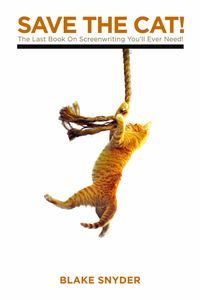
  • The Happiest Baby on the Block, Harvey Karp

    The Happiest Baby on the Block, Harvey Karp

    Bantam, 2003, 288 pages, C$18.00 pb, ISBN 978-0-553-38146-7

    Part One: January 2012

    You may expect the reviews on this web site to be intended for visitors, as guides to good or bad reading, movies worth watching or avoiding: the self-styled blogger as one more voice in the cacophony of recommendations.  The truth is that more often than not, this site serves as a public archive of what I was thinking at a given moment –an online journal of striking experiences as mediated by movies and books, if you will.  So it is that in early 2012, few things weigh heavier on my mind than the imminent birth of my daughter.  I have planned in consequence; as far as this web site is concerned, I have made sure the coding can sustain a few months’ worth of inattention; more visibly, I have put up a semi-hiatus notice so that no one can expect me to post much in 2012.

    But that doesn’t mean I’m completely off the reviewing game.  You can turn a reviewer in a father, but you can’t entirely erase the reviewing impulse.  When I get my hands on a book such as The Happiest Baby on the Block, my second thoughts (after reading and absorbing its content) are to talk about it online.

    I picked up the book in the first place because it is a quasi-universal reference whenever expecting parents ask for recommendations online.  It usually follows the encyclopedic What to Expect The First Year (which is as review-proof as they come –just buy it!) as an essential resource in dealing against the dreaded colics, those endless crying bouts that seem to take so much out of new parents during the first three months of many babies’ lives.  The recommendations usually come along with a variation on “This really works”.  So; is there some truth in this book’s reputation?

    The only way to say for sure is to report back in three months.  In the meantime, though, there are a few things to say.

    The first is that The Happiest Baby on the Block is a very enjoyable read.  Karp writes at length about a fairly simple topic (much of the book can be summarized in a few words –swaddle, side, swing, shush, suck–, and in fact you will find a handy two-page summary of the book on pages 127-128, right where you’d break the spine to keep the book open) but he does so in a relatively entertaining fashion, with plenty of repetition, anecdotes, call-backs and amusing illustrations to make his point.  The repetition may be annoying, but it may also be essential for a book of this kind –you’re not going to read it at 3AM when baby’s bawling, so it does its best to repeat a simple message in many ways and hope that one of those formulations sticks in your mind long enough to be useful in the wee hours of the morning.

    Much of The Happiest Baby on the Block is built around the “Fourth Trimester” theory –based on the observation that babies don’t really start interacting with their environment until the three-month mark; Karp theorizes that the first three months of live are really a “fourth trimester” in which the just-born fetus becomes a true baby.  The better we understand and try to replicate the environment in which the baby has spent the first three trimesters, the better are our chances are at calming it down.  For instance, Carp reminds us that newborns like background noises (the womb is very noisy) and like to be coddled (they’ve been squeezed from every direction for months).  More audaciously, Karp looks at the evidence about colics to suggest that they’re often not about innate factors as much as they’re about developmental anxieties from babies suddenly experiencing the world.  He points at the lack of colics in other cultures and other hints to suggest to parents that colics can be controlled and managed –if not avoided entirely.

    There is, of course, a slight cultish tinge to Karp’s book: The first few chapters are classic “don’t listen to anyone else; only I have the truth” indoctrination.  The sometimes-cloying writing style makes the same point over and over.  Keep in mind the intended audience of the book, though: ultra-stressed sleep-deprived parents seeking any kind of reassurance.  At least one friend has compared infant-caring to brainwashing (no sleep, constant focus on one individual and repetitive mindless tasks –hello, Geneva Convention abuse hotline?) and it doesn’t take a stretch of the imagination to imagine Karp trying to impose another kind of brainwashing over the one created by the newborn.  The fact that the book comes accompanied by an online store filled with a small galaxy of related products (Web site!  DVD! CD! Blanket), and is prefaced by celebrity endorsements (including one by “Pierce Brosnan… environmentalist and actor”) will count as negatives for readers eager to distrust the too-slick “baby MD to the stars” approach.

    Still, it’s a fun read.  The writing style is easy to grasp and the book is greatly enhanced by a number of adorable Parisian-style cartoons illustrations by Jennifer Kalis (“You will soon fall in love with a bald stranger who doesn’t speak a word of English.”)  The book’s primary value for expectant fathers without much baby-handling experience is to offer a framework of things to do in handling a newborn: Reading the book is a huge confidence-booster while anticipating baby’s arrival.

    But, of course, there’s no way to be sure whether the book works until we make it out of the first three months.

    Part Two: May 2012

    Now that our daughter has celebrated her sixteenth week, we can almost safely say that we’re out of the colics danger zone.  And the biggest news to report on this front is… nothing.  Baby has cried a lot during these past three-and-a-half months (her parents will never take sleep for granted ever again) but there have not been any extended bouts of unexplainable crying.  Most of the time, baby cried briefly or for easily-identifiable reasons (most of them gas-related) and we were able to clam baby down by applying the techniques described in the book.

    So there’s your review of The Happiest Baby on the Block.

    The confidence-booster in reading the book can’t be overestimated.  We started applying the book’s calming techniques moments after birth (most dramatically trying to calm down baby while blood samples were being taken by the nurses) and haven’t really stopped so far.  As someone with non-existent baby-handling experience, the book’s recommendations were immediately helpful in knowing how to handle a baby and calm her down.  While the effectiveness of some techniques has ebbed over the past sixteen weeks (swaddling was immediately helpful the first three weeks but became counterproductive once baby grew; pacifiers only became useful around week six), the overall message that crying can be controlled was a huge help in approaching the issue.  The book keeps telling readers to apply calming measures vigorously, to be persistent, and meet the baby with an appropriate level of effort: This helped a lot in sticking to the plan and as a result, baby seldom cried more than a few minutes at a time.

    The big question becomes; were we exceptionally lucky in having a good non-colicky newborn, or did the book help?  My own suspicion, based on nothing more than a hunch, is that babies can often be “programmed” to go into colics, or conversely avoid them.  Reading the book may have helped us create an environment in which baby has always been effectively reassured, hence unlikely to resort to the kind of constant crying that drives parents crazy.  It helped us calm down the nagging doubts that we may be spoiling the baby by providing this much attention (at nearly four months, we are only now progressively leaving her by herself for longer periods of time) and helped us figure out what was likely happening.

    For expectant parents, The Happiest Baby on the Block shouldn’t be your only pre-birth reading material (taking care of a baby is a project of vast scope, and this only covers “calming down baby”) but it’s likely to become an essential set of tools in dealing with the chaos of the first few weeks following birth.  It’s a morale-booster, a conceptual framework (especially helpful if you’re the analytical kind –and here you are reading book reviews, aren’t you?) and a helpful guide at once.  It’ll help.  Don’t worry.

  • Cold Souls (2009)

    Cold Souls (2009)

    (On DVD, January 2012) Unabashedly eccentric, comic fantasy Cold Souls teeters at the edge of an entertaining film without quite making the leap from oddity to success.  Paul Giamatti plays Paul Giamatti as a burnt-out actor trying to enliven his life.  The solution goes through a new medical procedure that extracts his soul for storage.  Never mind the yadda-yadda premise; Cold Souls tries for an off-beat fantastic tone that never quite gels, in part because it’s so subtle: The soul remains undefined, the effect of its removal are insignificant to the point of being unnoticeable and you have to be patient before the story gets underway.  After a while, we find ourselves deep into international soul-trafficking as Giamatti desperately tries to get his own soul back after it’s been implanted into a Russian soap-opera actress.  Odd, weird, off-beat, in the tradition of Eternal Sunshine of the Eternal Mind or Being John Malkovich, but never quite the intriguing fantasy it could have been.  Giamatti is, fortunately, quite good as Giamatti.  Some of the design work is decent, and there are a few scenes that charm simply because they seem so unlikely.  Nonetheless, Cold Souls seems a bit too restrained, too subtle to be memorable.  The DVD contains one mildly-interesting design featurette, and half a dozen forgettable deleted scenes.

  • Fool’s Gold (2008)

    Fool’s Gold (2008)

    (On DVD, January 2012) I suppose that you have to be in the right kind of mood to appreciate this tropical treasure-hunting romantic comedy.  Matthew McConaughey and Kate Hudson practically sleepwalk through familiar roles as the bickering lead couple, but the real worth of Fool’s Gold is in its carefree sunny atmosphere.  Colorful cinematography, distinctive supporting characters and a fairly unassuming plot all add up to the kind of film designed to cheer up anyone stuck in gloomy winter.  Too bad, then, that the film couldn’t go beyond the obvious and deliver something that could be appreciated by broader audiences.  A few annoying characters, dull dialogue, unnecessary violence (three deaths, including a fairly graphic one that crams an unnecessary “ewww” in the middle of a lighthearted film), talky exposition sequences and a general sense that no one is trying harder than the strict minimum (except the cinematographer) all conspire to make the film less interesting than it could have been.  Too bad, because for a few moments, some sequences of Fool’s Gold point the way to a lighthearted Caribbean adventure.  At least it has the decency to wrap up well.  It’s just a bit inert, and no amount of gorgeous blue tropical water photography can make up for a less-than-stellar effort.  The DVD doesn’t help matters with a too-short making-of featurette and a forgettable gag reel.

  • Arthur (2011)

    Arthur (2011)

    (On cable TV, January 2012) Safely devoid of surprises, this romantic comedy about a slacker billionaire having to grow up is a vehicle for Russell Brand’s comic personae more than anything else.  It’s a risky bet, as the spoiled man-child shtick can quickly grow wearisome and then irritating.  Nonetheless, this Arthur remake manages to walk along that line and remain on the side of viewers’ affections: Never mind that Jennifer Garner is more interesting here as the romantic antagonist than in many of her previous movies: It’s Brand and Helen Mirren as her nanny that steal the show, with occasional assist from Luis Guzman and a gruff Nick Nolte.  The plot beats are intensely predictable, which makes the small details of the story seem more important.  The dialogues are surprisingly good, with a good understanding of conversation-as-argument and a bigger vocabulary than most romantic comedies.  Still, if those strengths do save Arthur from being nothing more than a typically average remake of a much-better film, they don’t do much more to strengthen the film.  At best, we end up with a watchable but inconsequential film that will gradually sink in memory even as the 1981 original will endure.

  • Gentlemen Broncos (2009)

    Gentlemen Broncos (2009)

    (On DVD, January 2012) After Napoleon Dynamite and Nacho Libre, I already know that I’m not a fan of Jared Hess’ brand of so-called comedy and wouldn’t have attempted watching Gentlemen Broncos if it wasn’t for one thing: It’s tangentially about science-fiction writers.  Not SF writers in our universe but in Hess’ typical Midwest Pathetic Kitsch aesthetics, SF writers in an alternate dimension where trashy forties pulp SF has become the dominant aesthetics of the genre as of 2009.  (One imagines a world where Heinlein remained healthy throughout his years in the Navy, became admiral and never wrote the stuff.)  Not that one would expect realism from Hess, whose love for hum-drum small-town settings can’t hide grotesquely dysfunctional characters.  Gentlemen Broncos isn’t about its weak plot or weaker jokes as much as it’s about the awkwardness card played every thirty seconds, stretched over too-lengthy doses of meaninglessness.  Everyone is a moron in this film and if Hess remains somewhat attached to them in a non-condescending fashion, it’s not an affection that translates into an enjoyable viewing experience.  There are, to be fair, a number of interesting things buried deep in the muck: The opening credits are ingeniously designed through SF paperback; Michael Angarano is sympathetic as the teenage hero (albeit never more than when he finally shows some spine), Jemaine Clement has a very nice voice and can build a memorable comic character as a SF professional plagiarist; and there’s an interesting take on the creative process as we see the same fantasy filtered through three different minds.  But the rest is the kind of stuff for which “cult movie” was defined: Intentionally stilted, deliberately perplexing and consciously crude in an effort to isolate itself from the mainstream.  You can almost see in Gentlemen Broncos the blueprint for a much funnier film (in fact, you can see it in the trailer) –it’s a shame that Hess’ worst instincts are holding back the material.  The “rental exclusive” DVD contains no special features, which isn’t exactly a disappointment.

  • Stranger than Fiction (2006)

    Stranger than Fiction (2006)

    (On DVD, January 2012) Much like I missed seeing author-centric Wonder Boys at the time of its release, it took me years to come along to Stranger than Fiction, a film in which an everyday man suddenly starts hearing narration about his life… informing him that he’s about to die.  The wait was worth it, as Stranger than Fiction features Will Ferrell’s best role to date and a resonant message about life’s most important trivialities.  The script allows itself a bit of fun with literary theory, satirizes the pathologies of authors and leads to a satisfying conclusion.  Ferrell is effectively restrained in this atypical performance and, at the exception of a few shouted Ferellisms, comes across as far more sympathetic than his usual man-child persona.  Meanwhile, Maggie Gyllenhaal is unspeakably cute as the love interest; Dustin Hoffman turns in a charming performance as a literary theoretician called to the rescue and Emma Thompson is pitch-perfect as a neurotic author.  Quirky, oddball and remarkably smarter than most other comedies (the “flours” joke is awesome), Stranger than Fiction asks interesting questions and suggests compelling answers.  The script’s only flaw is a concept that’s almost richer than what the script can deliver: I could have used more scenes from the author’s point of view, or a more sustained interest in the wristwatch.  But what made it on-screen is good enough.  Of course; I’ve written enough fiction to be a particularly good audience for that kind of story.  Non-writer’s opinions may vary… although not by much.

  • The Bleeding (2009)

    The Bleeding (2009)

    (On DVD, January 2012) I enjoyed The Bleeding for all the wrong reasons.  Let’s be clear: this is not a good movie.  It revels in clichés, terrible cinematography, dull plotting and unsuccessfully tries to ape much better films.  Still, it’s aimed at horrors fans, and I can recognize the wolf-whistles aimed at that particular constituency.  A vampire movie loaded with hot cars, heavy weaponry, occasional female nudity and death metal music, The Bleeding desperately wants to please the sometimes-insular horror film fan community, and nearly every misstep that the movie makes is due to blatant fan-service.  The protagonist’s over-the-top narration is so grotesquely filled with pretentious tough-guy talk that it borders on parody; a sudden dismemberment scene is designed to please the gore-hounds; the female character ecstatic over the protagonist’s car is designed to appeal to a specific kind of movie-watcher.  If you have some current or past affinity for that crowd (male, white, 18-to-34, undiscriminating horror fanatic, often single; I’ve been there) then The Bleeding will find a place in the happy place of your brain, even as you recognize that it’s terrible.  More seasoned audiences will still be fascinated by the film’s attempt to re-create better films, and why the attempts don’t work: Stone-faced Michael Matthias tries hard to be Vin Diesel (and you can almost imagine how Diesel would play that role more forcefully), but the script gives him some lines of dialogue that have to be heard to be believed.  Michael Madsen, at least, has a little bit of self-aware fun as a gun-toting priest.  Kat Von D shows up briefly (but not as briefly as Armand Assante’s one-scene cameo) while Vinnie Jones growls a standard-issue villain and DMX shows up for a hilariously convenient bit of exposition.  The script is terrible in a quasi-charming way, being made almost entirely of macho posturing and onrushing exposition.  The cinematography isn’t confident enough in itself and feels forced to bathe everything in super-saturated monochrome.  No doubt: The Bleeding is bad… and yet, at the same time, kind of entertaining. You already know if you want to see it, don’t you?  The DVD contains three inconsequential featurettes, plus The Bleeding’s own trailer –which is even funnier after seeing the film!

  • The Heavy (2010)

    The Heavy (2010)

    (On DVD, January 2012) This surprisingly acceptable British thriller comes across the pond in humble DVD format, setting up low expectations that are eventually surpassed by the content of the film.  Initially presented as the story of a criminal operative, The Heavy eventually morphs into a far more engaging political/family thriller.  A timeline-hopping structure keeps things mysterious until it’s no longer time for them to be, but good cinematography, fine performances, an intriguing soundtrack by Paul Oakenfold, good direction by writer/director Marcus Warren and unusual characters do the rest.  The film gets better as it goes on and while it doesn’t end happily, it finishes on a satisfying note.  (Screenwriters with a desire to kill off most of their lead characters may want to study this film and understand why some downbeat endings work better than others.)  There are, to be sure, a number of bad flaws in the mix: Nearly every scene involving the protagonist’s parents are written so on-the-nose as to be wince-worthy.  Gary Stretch is OK as the lead, but a few other performances aren’t as polished and Vinnie Jones’ character seems overly sadistic as a corrupt cop.  The Heavy, to be entirely fair, doesn’t take place in our reality as much as one in which criminals and influent politicians can take out convoluted contracts on each other… so don’t expect realism as much as a satisfying shuffling of known archetypes.  Still, The Heavy is absorbing-enough as it plays, and the strong ending makes it look quite a bit better than it may be in its entirety.  The DVD contains three short making-of featurettes, rounding up the film without any extra flashes of brilliance.

  • High Life (2009)

    High Life (2009)

    (On DVD, December 2011) Few plot points are predictable in this oddball Canadian crime comedy/drama: Mis-marketed as a heist thriller on the DVD cover, High Life is a broad look at four young men planning a bank heist in the wild woolly days of 1983 where ATMs were still considered a novelty.  Three of them have done time and all of them are serious drug addicts –naturally, things don’t go as planned.  Darkly funny and lightly dramatic, High Life  still manages to do much with little, partially due to a script that’s above the norm for low-budget film. Timothy Olyphant headlines the piece but it’s Lee MacDougals’ witty script and Gary Yates’ fast-paced direction that make the film go by even faster.  It’s reminiscent of other well-written crime comedies without being derivative, and it doesn’t overstay its welcome even at less than 80 minutes.  The last half-hour becomes steadily more unpredictable, and not even the violent death of a few characters is enough to erase a generally good impression.  High Life isn’t exactly focused, but it’s interesting throughout, and that’s already quite a feat.  The DVD presents a few short interviews and a quick making-of featurette, but don’t expect too many revelations.