Author: Christian Sauvé

  • Lorenzo’s Oil (1992)

    Lorenzo’s Oil (1992)

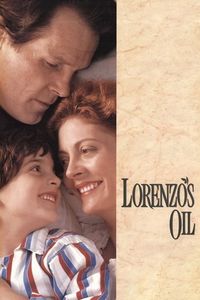
    (On TV, October 2021) As far as real-life stories go, the one behind Lorenzo’s Oil seems tailor-made for a movie adaptation. It’s about the dramatic high-stakes of a child being sick of a rare disease and gradually degenerating, with his parents trying to find any solution to make him better. But it’s also about the parents doing research, learning about the disease, coming up with ingenious solutions and finding ways to implement them despite formidable obstacles (such as synthesizing rare organic compounds) and shifting the scientific consensus despite opposition. You can see the elements that attracted writer-director George Miller to the film, and you can also see why it was essential to have a veteran, polyvalent director like him at the helm. What could have easily turned out to be a bland movie-of-the-week here turns into something more challenging, better-handled despite the potential for mawkishness. Not that the entire film escapes melodrama—whenever the kid is in obvious pain, Susan Sarandon emotes as the mom or Nick Nolte goes on a thickly accented rant, we can feel the melodrama being deployed. Still: tolerable. What’s not so much fun about the film is how it’s probably used as inspirations by deluded parents who are not being rigorous about their “research” and contest the facts—even the filmmakers acknowledged that Lorenzo’s Oil goes too far in its depiction of scientists as useless, and you can see how the film dismisses some truly valid questions by sole virtue of being aligned with the parents. Still, there’s some skill in the way it’s all put together, with evocative vignettes (such as the elderly chemist taking on the synthesis of a new compound as a personal challenge) adding much to the film. Of course, we now know a few things that we didn’t when Lorenzo’s Oil was released: Most of the characters have died since then (although the titular Lorenzo defied prognoses by dying at age 30, after improving thanks to his parents’ discovery) and the compound at the heart of the film is still under study as a preventative agent. The latest news has states mandating testing for the genetic ailment at birth so that preventative measures can be taken early. In that respect, Lorenzo’s Oil has aged much better than others promoting dubious cures. The key, which many will miss, is that the parents were indeed scientists and rational in how they approached the problem—they just had very different incentives from the establishment and (in real-life, if not the film) were able to work with them.
  • Boss Level (2020)

    Boss Level (2020)

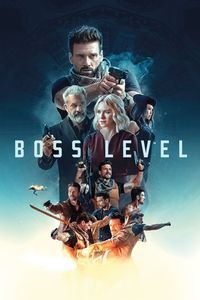
    (Amazon Streaming, October 2021) It’s been interesting to see time-loop movies making a comeback, but being shaped by videogame tropes rather than philosophical considerations. Explicitly taking us where Edge of Tomorrow suggested, Boss Level wallows in familiar videogame metaphors, as it shows us the protagonist’s attempts to survive a looping day in which a group of assassins is sent to kill him. Directed by Joe Carnahan (whose latest films inevitably end up delayed by years) and headlined by the dependable Frank Grillo, Boss Level proves to be an energetic Science Fiction action comedy in which much of the dark comedy comes from the protagonist taking a decidedly casual approach to mortality after 140 brutal deaths. Bloody rather than gory (although I’d like to see far fewer decapitations in my comedies—zero being the ideal number), this is clearly for older audiences. There’s a bit of a lull in the action once the initial rush of establishing the situation goes by, although the film’s third-act display of sweetness is definitely deserved. The conclusion probably could have been stronger, but there’s some inventiveness in how the film structures itself through repetitive actions and gradual progress. (It’s also fun to see Michelle Yeoh in any role, even small ones.)  Grillo’s been hovering near the edges of A-level filmmaking for a while and may get there if he keeps taking on such roles and doing a good job with them. Carnahan, meanwhile, continues to show why he’s one of the most undeservedly underused directors in the business, with another distinctive, funny, fast action comedy in the footsteps of Stretch and other distinctive films. Boss Level amounts to a fine action movie with enough SF and comic elements to make it worth remembering.

  • It Happened One Valentine’s aka Love Exclusively (2017)

    It Happened One Valentine’s aka Love Exclusively (2017)

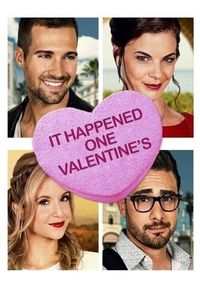
    (On Cable TV, October 2020) There’s not a lot to say about Love Exclusively, a very familiar romantic comedy set against Los Angeles music stardom. Our protagonist (Haley Webb) is the usual pretty-but-not-gorgeous brunette tailored not to threaten its target audience, playing a journalist with a personal history with one of the biggest stars on the film’s music scene. She gets the assignment to kindle a romantic relationship between that guy and another musical superstar, but the screenplay clearly has different ideas in mind. (Fortunately, the B-couple ends up being composed of the protagonist’s roommate and the other music star, so it all works out.)  Thanks to writer-director Jake Helgren, the expected plot elements are all there: the gentle romantic antagonism of the first act, the second-act attraction that both leads deny, the lies exposed late in the third act, and the everyone’s-happy conclusion. Don’t watch if you’re expecting anything interesting about the music business. At least the film is cleanly shot, with the colour of its Southern California setting reflecting well on the somewhat pedestrian direction. Clearly a Hallmark production, Love Exclusively is tailored to be an easy-to-watch romantic comedy (perhaps best suited for background watching, considering how empty it feels on a dedicated watch) meant to make audiences happy through obvious platitudes and a neatly wrapped-up romance. Not great, not good, not bad.

  • Fools’ Parade (1971)

    Fools’ Parade (1971)

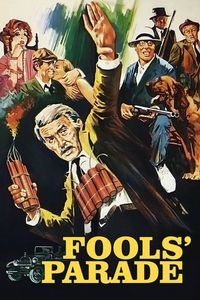
    (On Cable TV, October 2021) A surprisingly older James Stewart anchors Fools’ Parade, a Depression-era comic thriller in which a just-released ex-con with a sizeable check in his pocket gets involved in a number of adventures to protect his hard-earned money. Playing with his usual drawl, good-natured persona and exaggerated squint (the character is missing a glass eye), Stewart does have some company in the cast: It’s a shock to recognize a young Kurt Russell in a supporting role (meaning that you can jump from 2021’s The Fast and the Furious 9 to 1936’s Rose-Marie with this one degree of separation), or have George Kennedy play the heavy. It’s billed as a comedy for obvious reasons—it ends well, for one thing, and there’s one sequence that ends with a surprising bang—but the tone is not always jolly. Clearly shot in the muddy 1970s, it’s a film drowning in browns and blacks, which does take away from a comic atmosphere. Still, it’s reasonably entertaining: Where else can you watch Stewart with sticks of dynamite strapped to his body, genially threatening to blow up the bank if his reasonable demands aren’t met? As you may guess, Fools’ Parade doesn’t quite fit together: a bit too sombre for pure comedy, and too comic for pure thrills. But it does work, largely thanks to Stewart being so effortlessly watchable.

  • Kenny Rogers as The Gambler (1980)

    Kenny Rogers as The Gambler (1980)

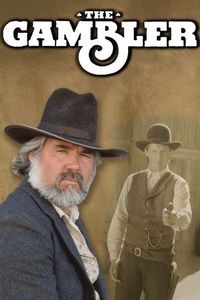
    (On Cable TV, October 2021) Whenever you hear someone bemoaning how Hollywood is making movies out of silly things (a comic book, a board game, a toy), gently remind them that The Gambler was adapted from a song popularized by Kenny Rogers, and that it’s not a bad movie at all — in fact, it’s a great portrayal of Rogers at his most charismatic. Nearly everyone of a certain age can hum the chorus of the song: “You’ve got to know when to hold ’em, know when to fold ’em, Know when to walk away, know when to run,” and those who can’t surely will after seeing the film, because it’s still a first-grade earworm. Much of the film follows the song, as a naïve card shark (Bruce Boxleitner) is mentored by an older man (Rogers) who has seen it all. The younger man simply wants to play cards for money; the older is on a mission to reunite with his ex-wife and his estranged son. Much of the story takes place aboard a train or near its stops, giving some implicit forward momentum to the story. Even those who aren’t fans of westerns will appreciate how the script uses tropes of the genre in a way adapted from card-playing, with bluff and odds-counting being integral parts of the shootouts and dramatic scenes peppering the story. Still, the best asset of The Gambler remains Rogers himself, immensely likable with his calm jaded demeanour, soft-spoken voice and glorious beard. He’s not a good actor (the edges of his acting talent wear thin in some scenes) but you can’t help but like him. It’s a shame that The Gambler, which features some surprising cinematography for a made-for-TV production, was shown on TCM in such poor image quality that some sequences seem to come from a sepia-toned movie. Still, that’s not quite enough to make anyone walk away from a surprisingly entertaining western that cleverly weaves in the themes of its inspiration.

  • Trucks (1997)

    Trucks (1997)

    (In French, On Cable TV, October 2021) Oh, this is just stupid. Look: I’ve read shelves full of Stephen King books. I’ve seen nearly all of the movies adapted from his work and can run his filmography forward and backwards. I’ve been aware of movies for decades and semi-religiously reviewing since 1997. And yet until today, despite recording the film on my DVR and having it sit there for six months, I was unaware that King’s short story “Trucks,” which led to Maximum Overdrive, also led to the latter Trucks. This is really weird and can only be explained by selective memory, an amazing set of oversights and the fact that Trucks is nearly forgotten today. There’s a good reason for that. Made for television (hence flying under the radar of moviegoers in a pre-streaming era), Trucks makes a series of artistic choices that, in nearly all cases, lead to a superior film than Maximum Overdrive… and yet fail to hold our interest like the first film did. The answer to that mystery is counterintuitive. Even the kindest, most objective observers will note that King spent much of the 1980s in a haze of fame and cocaine (having been in such a state that he doesn’t even remember writing some novels). At the height of his first bubble of fame, he was offered the directing job for Maximum Overdrive and, in coke-fuelled insanity, proceeded to make an utterly ridiculous film that never stopped to question whether what it was doing was sane or logical. The result is a film that’s both terrible and hypnotically fascinating. No one thinks that Maximum Overdrive is a great movie, but they remember its insanity and love it for its excesses. So when director Chris Thomson took on Trucks and set out to make a more serious adaptation of a skimpy short story, a lot of competent people made very competent decisions. They gave a serious spin to the production to make it an outright horror film rather than a comedy. They hired better actors who could deliver the serious lines. They followed seasoned screenwriters’ advice and got relatable characters. They relocated the action to the American southwest to make it visually distinctive. And they utterly forgot one point: sentient evil trucks are a fundamentally stupid idea. It doesn’t work. It’s inane and crazy. So, in making a more respectable horror film out of “Trucks,” they completely exposed the futility of ever trying to turn the story into something halfway respectable. Worse: in not being able to fully realize their vision (thanks to limited budget, lack of imagination, and lack of daring), they ended up with a thoroughly mediocre product that leaves no lasting impression. Oh, there are other problems with the film: the characters are from stock, the directing is pedestrian and the insertion of gory sequence makes no sense (the Tonka truck killing someone? It’s like trying to put some Maximum Overdrive in a film that’s not built for that speed. Oh, and the axe murder has me asking if the masked figure was a truck in disguise.)  So that’s what you get: Trucks is a marginally better film that’s somehow not as good as its demented predecessor. That makes just about as much sense as me not knowing about the film’s existence.

  • Evil Ed (1995)

    Evil Ed (1995)

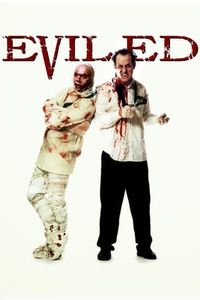
    (On Cable TV, October 2021) Hang around the horror scene too long and you’ll start noticing the dark streak of humour running throughout its fandom. The humourless scary horror fan is rare—most have a healthy dose of ironic self-deprecation in their appreciation of the genre. They know it’s fake, off-putting, and repellent to the mundanes and that’s part of the fannish identity. That probably explains the strong subgenre of gory comedy made by and for horror fans. Evil Ed is definitely one of them—taking on a mild-mannered film editor driven mad by editing gory horror film, it eventually becomes the kind of film that it spoofs in its first half. The fake horror films re-edited at the beginning of Evil Ed are so ridiculously over-the-top that they evoke comedy on top of horror—but they still evoke horror. Unfortunately, I’m not a fan of gore at all, so that aspect of the film eventually falls flat and there isn’t much non-gore comedy to make up for it. Despite some good ideas from writer-director Anders Jacobsson, Evil Ed feels like a horror comedy made for far more extreme horror fans than I am. The ironic aspect of horror films actually turning someone violent is not lost on me, but I wish it was used in the midst of a better movie.

  • True to the Game (2017)

    True to the Game (2017)

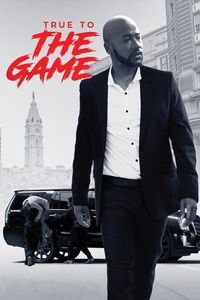
    (On TV, October 2021) Eh, what a mess. There’s something very familiar to much of True to the Game, as a young woman falls for a bad-boy drug dealer and gets caught in the crossfire when gang wars turn hot. But it’s in the way it’s put together than the film loses points. Erica Peeples is not a particularly likable pick in the lead, and her annoying, materialistic self-entitled character (who’s supposed to be super-smart—go figure) does no one any favour. You can literally point at any other actress in the film (even veteran Starletta DuPois!) and say, “I’d like her better as the lead.”  Columbus Short is slightly better as the drug lord (supposedly trying to go straight, which lasts maybe five minutes), but he’s ill-served by the demands of the script. Speaking of script, well: people get gunned down on a regular, almost predictable schedule, and the women sitting next to their targeted boyfriends don’t fare any better. I remain puzzled by the film’s message, because in between the usual “if you run with gangsters, you’ll get shot” theme, it seems curiously comfortable with the protagonist living off what she knows is blood money. I know, I know: fantasy wish-fulfillment, etc., but it’s still dumb. The direction is indifferent, the photography is flat, and there’s scarcely any reason to keep watching the film as it gets dumber and more amoral. (By the time the lead character is arguing with an executor about a house that belongs to someone else, we’re firmly in the “self-absorbed brat, please” camp.)  It’s just a clumsy film without much of an idea where it’s going, or how to get there. Learning that True to the Game is based on a self-published novel explains quite a lot, except why many people thought that this was just fine as a movie. (Even worse: it has spawned two sequels, which I’ll eventually see because I can’t help myself.)

  • The Affairs of Annabel (1938)

    The Affairs of Annabel (1938)

    (On Cable TV, October 2021) I’m always a good sport for Hollywood-insider movies, especially from the 1930s. But The Affairs of Annabel tested my patience. I didn’t hate the film—I just found that it failed to work. I can see the jokes, I can appreciate a young Lucille Ball looking good and playing for laughs, I appreciate the film’s admirably short 68-minute running time and I’m appreciative as always at the time-capsule funhouse look at Hollywood of past decades. But it just doesn’t work. I’m left unmoved by the shenanigans of the young star protagonist and her publicist as they stage elaborate stunts. The Hollywood satire seems toothless, and the character’s mugging for the camera (specifically Jack Oakie) is more annoying than successful. I’ll allow for some mood-related variance here—maybe it would be funnier if I was in a better mood. But as it stands, it’s going to take a while before I revisit The Affairs of Annabel.

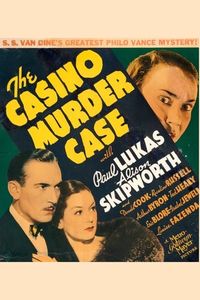
  • The Casino Murder Case (1935)

    The Casino Murder Case (1935)

    (On Cable TV, October 2021) Hmmm. When I said to myself that I’d watch the Philo Vance series, I did so after watching a William Powell Vance, not a Paul Lukas Vance. The Casino Murder Case (which features far less of a casino setting than you’d think) is a decent but not overly impressive murder mystery, as foppish detective Vance goes around collecting clues that the police has missed. There’s poisoning, recalcitrant witnesses, candies, fake-outs and characters obsessing over the properties of heavy water. Lukas is disappointing as Vance, hitting the worst notes of the character without quite managing to let the best come out—Rosalind Russell is better in the lead female role, but not that good due to the limitations of the part. The plot itself is rather dull, with the comedy only hitting in brief spurts. The Casino Murder Case amounts to a somewhat mediocre example of 1930s murder mystery in a light vein: not unwatchable, but hardly worth as much attention as other examples of the subgenre.

  • Une heure de tranquillité [Do Not Disturb] (2014)

    Une heure de tranquillité [Do Not Disturb] (2014)

    (On TV, October 2021) There’s an admirably compact aspect to the central idea of Une heure de tranquillité, as a middle-aged music lover finds a beloved album in a record store and heads home to listen to it in peace. Alas, this won’t be—an incompetent contractor has started work tearing down the walls of his upscale Parisian apartment, his wife has a marriage-shattering secret to tell him, his rebellious son brings in immigrant refugees, and one of his psychiatric patients is hounding him, threatening to expose their affair. Adapted from a theatrical play by playwright Florian Zeller himself, Une heure de tranquillité spends much of its first half setting up its conflicts, and the second half detonating them. The result can be very funny: the protagonist being so self-absorbed and intent on listening to his album, the revelation that his son has been fathered by someone else barely registers—or rather acts as a comfort considering how much he dislikes his son’s simpleminded activism. Other moments don’t work as well (anything to do with his mistress seems wasted, for instance) but the tone remains amiable throughout. The film’s concluding irony is that the character gets to listen to his album only when he lets go of the idea of doing it alone. It wraps up nicely: Une heure de tranquillité may have too many small annoyances and unlikable characters to fully register as a great comedy, but it’s pleasant and amusing enough to be worth a look.

  • Scissors (1991)

    Scissors (1991)

    (On Cable TV, October 2021) There are roughly 45 minutes of an intriguing film in Scissors; alas, it leads to 45 minutes of a much worse film. Feeling a lot like a mellow de Palma film, it’s a psychological thriller (aka—weird stuff, not physically impossible) revolving around a young woman who gets assaulted in the elevator of her apartment, then sees things get truly weird. Talking to her psychologist doesn’t help much; speaking to her neighbours doesn’t help much (especially when one of them is definitely stalking her) and the strangeness doesn’t abate. Sharon Stone, in one of her pre-stardom roles, is actually quite likable as the eccentric lead even if it’s not a right fit for her later screen persona. The film is intriguing until it hits the midway part and abruptly switches gears by locking up its protagonist in a nightmarish apartment filled with animated objects, unsettling reminders of her past traumas and… a dead man, the same one who assaulted her in the elevator. Abruptly changing to a lock-up thriller, Scissors becomes less interesting and subjectively much slower-paced. It picks up again toward the end, as the explanations are given and our protagonist gets one final opportunity to strike back. While the film wants to be odd and unsettling, it settles for mere weirdness—director Frank De Felitta is not particularly gifted and his control over the results degrades the longer Scissors goes on. In the end, a potentially intriguing film has degenerates into mere mediocrity, barely worth remembering.

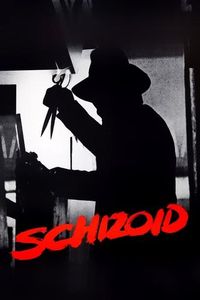
  • Schizoid (1980)

    Schizoid (1980)

    (On Cable TV, October 2021) There’s a long list of reasons why I loathe slasher movies, with gore and nihilistic disregard for human life being near the top of the list. But the inherent misogyny of the genre, especially in its first flash of early-1980s popularity, is right up there with the worst. It’s always young women being targeted, with the desecration of their bodies being integral to the murders. Schizoid, while better than many other slashers from a narrative perspective, is harder to excuse when it comes to violence directed at women: the targets are older, they’re not necessarily a cheerleader squad and the identity of the killer underscores its misogyny badly enough. From a narrative point of view, Schizoid has a few more things going for it than the usual summer camp bloodbath slasher: As a psychiatrist receives threatening letters and sees members of her therapy group being murdered one by one, she wonders: who’s the murderer? Could it be… creepy Klaus Kinski? Well, maybe—terribly miscast as what’s supposed to be an irresistible senior psychiatrist, he rings off red herring alarms the moment he walks on the screen. Could it be… creepy Christopher Lloyd as an unhinged handyman? Well, maybe—except how about that weird teenager with an axe to grudge against the protagonist? There are plenty of possibilities and Schizoid, once it moves away from the gruesome murders, does have some interest as a whodunnit. Alas, it does remain a slasher and not a particularly well-handled one. Whatever attempts at giallo style are there fall flat and there’s not much more to compensate. Kinski is a presence by himself, but Marianna Hill is merely beautiful-but-bland in the lead role. I’ll tolerate Schizoid as being slightly better than the average slasher, but that’s not a very high bar to begin with.

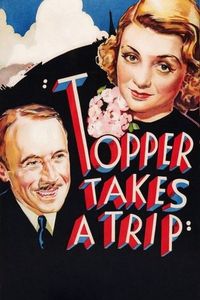
  • Topper Takes a Trip (1938)

    Topper Takes a Trip (1938)

    (On TV, October 2021) Picking up right after the first Topper (but negating its reconciliation conclusion), Topper Takes a Trip foregoes Cary Grant but keeps the rest of the cast, as banker Cosmo Topper and his wife are once again at odds and she decides to leave for France during a temporary separation. This won’t do, decides the flirtatious friendly ghost of the first film (Constance Bennett, given that Grant has presumably ascended to heaven) as she sets out to reunite the bickering couple. As with the first film, the emphasis remains on silly, often improperly justified comedy, as ghosts materialize or appear without much consistency in their powers. The important part is taking in the gags and having the Toppers reunite at the end. Roland Young and Billie Burke are not bad as the Toppers, but they clearly play second fiddle to Bennett. Topper Takes a Trip is a fairly weak brew as far as comedies go, but it’s unquestionably a follow-up that steps into the shoes of its predecessor. I liked it without loving it—it’s reasonably fun, but not that good nor that funny.

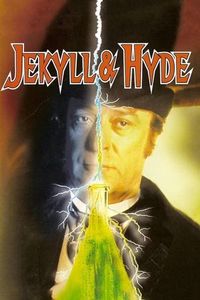
  • Jekyll & Hyde (1990)

    Jekyll & Hyde (1990)

    (In French, On Cable TV, October 2021) If you’re looking for the biggest distinction between the 1990 TV movie’s take on Jekyll & Hyde when compared to other versions, the best I can offer you is Michael Caine in the lead roles. It makes sense that actors would regularly want to measure themselves up against one of the most famous dual roles in classic literature—some have gone for heavy makeup, others just acting to distinguish both alter egos. This version, made for ABC television network, is nicely executed: the production values are strong, Caine is having a lot of fun in bladder makeup and the perverse romantic angle is juiced up. It’s psychologically developed to the 1990s standards of TV filmmaking and showcases an interesting angle on the usual story. It’s important to note that, at this point, I don’t evaluate Jekyll & Hyde movies on their individual basis as a vehicle for the story: I’m more interested in how they differ from other takes, or how the actor distinguishes himself from the tradition set by Barrymore, March, Tracy and others. This one certainly isn’t perfect: timid in some areas, too wild in others (that ending stinger is just silly). But Caine as Jekyll and Hyde? Worth seeing.