Reviews

  • Le party (1990)

    Le party (1990)

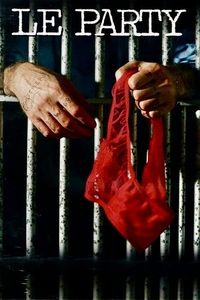
    (On Cable TV, September 2021) There is a surprisingly strong tradition in Quebec cinema for street philosophers, dispensing surprisingly highbrow wisdom from the gritty urban perspective. It’s probably in this tradition that Le Party is best appreciated, as we have writer-director Pierre Falardeau taking a look at life from the perspective of inmates. There isn’t much of a plot (prisoners greet the annual burlesque/comedy/singing show put together by outside entertainers), but there is a multiplicity of subplots and a string of good performances. It either comes together as a twisted musical, a misogynist drama, an inmate apologia, or a blender mix of whatever the filmmakers had in mind. By squarely taking the prisoner’s perspective, Falardeau brings viewers into a different universe with different values — a universe of rough men, crude language, simmering violence and constant longing for what they can’t have — women, quality alcohol and most of all freedom. Desire is the key to the characters in the film, and the springboard on which the film’s lyrical moments take flight. The price to pay for a revue film with scattered subplot, of course, is that not all works equally well: For instance, there’s an annoying series of scenes with a stuck-up journalist that not only rings false when measured against the rawness of the rest of the dialogue. But underneath its crude appearance, Le Party gives far more to think about than you’d expect.

  • The Marijuana Conspiracy (2020)

    The Marijuana Conspiracy (2020)

    (On Cable TV, September 2021) Contemporary filmmakers making period films inevitably end up imposing contemporary moral values and judgment over history. An explicit aspect of The Marijuana Conspiracy, for instance, is that it could only have been made in a post-pot-legalization Canada. Set in the early 1970s, it focuses on four women recruited in an unusually elaborate experiment to assess the impact of cannabis. Undertaken on behalf of the Ontario government contemplating a possible legalization of marijuana by Trudeau père (the joke, repeated three times, being that Trudeau fils is the one who achieved legalization forty-some years later), the study locks up its subjects for three months in perfectly controlled conditions, and measures the productivity of the cannabis group against the non-cannabis group. As befit a post-legalization film, it’s hardly any surprise if moderate use of cannabis is hailed as an overall good thing (the coughing and bad health effect only happen when those mad scientists increase the dosage). But The Marijuana Conspiracy goes further and, alas, in some far more familiar places. It’s hardly a surprise when the black character details a history of racial discrimination, nor when the gay character must deal with prejudices from a colleague — it’s in those moments where the film, rather than expand its social progressivism, feels as if it gets stuck in overly predictable material meant to show how far more enlightened today’s audiences (or is it filmmakers?) present themselves. The entire film also leads to an overdone conclusion in which the “conspiracy” ends up being the absence of any result from the study, leaving its participants wondering what happened and why. The epilogue, at least, reassures us that the flagrant lack of ethics in designing the research experiment has since been reined in by a code. Still, the result feels surprisingly scattered, going in one direction or another without much cohesion — it feels bloated with condescending tangents even at slightly more than two hours. Writer-director-producer Craig Pryce does get a few things right — the visual period detail is evocative without being overdone, the actresses are quite good, and there’s an intriguing story at the heart of the film. But the execution definitely could have been better at most levels, from trite dialogue to slack pacing to overstuffed script. Less preachiness could have improved things, or at least made the film a bit less self-satisfied in its own righteousness.

  • Jack of Diamonds (1967)

    Jack of Diamonds (1967)

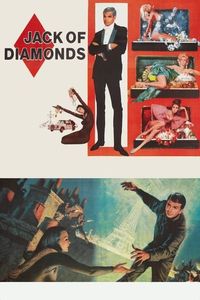
    (On Cable TV, September 2021) As much as we’d like to pretend that we watch movies for their intrinsic worth, that doesn’t always stay true once you get into classic films and the way they show things according to the standards of their times. Every era has its highlights, and the 1960s remain distinctive for their comedies. Something like Jack of Diamond is not a hidden gem. It is, at best, a perfunctory, competent exercise (thanks to director Don Taylor) in a familiar formula — that of a likable jewel cat-burglar whose only crimes are really against rich insurance companies and spoiled actresses such as Zsa Zsa Gabor. The film quickly sets up a mythology of famous thieves — the titular Jack of Diamond, played by a trim and not-so-tanned George Hamilton, his mentor the Ace of Diamonds, and a mysterious female competitor who quickly becomes as much of a rival as a love interest. As I wrote: familiar formula, but Jack of Diamond has the charming quality of having been executed in the 1960s, right at the cusp of the New Hollywood and mid-century modern class. As such, it still has a classical quality, but its colour cinematography (slightly blurry, as the film hasn’t been seriously restored) that brings it closer to the modern age. It’s not that good and the ending feels like a let-down, but it’s occasionally fun to watch Hamilton as a suave cat burglar, especially when the sparks start to fly with his distaff competitor played by Marie Laforêt. It’s not a great film, but Jack of Diamonds is a good period piece and something that can be watched easily enough.

  • Mortal Kombat (2021)

    Mortal Kombat (2021)

    (On Cable TV, September 2021) Most will agree that it’s useless to criticize Mortal Kombat for its excessive violence — considering that the videogame series on which it’s based was epochal for its depiction of pixelated gore, and that the making of its latest instalment was so stomach-churning that it gave PTSD to some of its developers. I never played the series, but still, as a filmgoer, I would like to watch films without cringing at the sight of spurting blood, spilling guts or a woman being very graphically sliced in half. I may think more of the soundtrack of the 1995 Mortal Kombat film than the film itself, but the PG-13 film did not need to be so violent and had a charm of its own. This newest version, despite being far more technologically advanced (is there a single frame without a digital effect?), is considerably bloodier and duller. The problems start with some curious choices made at the onset of the film — positioning this as a first-of-three films means that we merely get a prologue, and one that has a character quixotically trying to stop the mortal tournament from taking place. Then there’s the selection of the male lead, a very bland actor playing an even blander protagonist, while, right next to him, the character arc of the Sonia Blade character is immeasurably better. Mortal Kombat doesn’t necessarily get better in execution, with recycled sets, dull settings, inexplicable plotting and a very strange mishmash between the series’ grandiose mythology and some crude dialogue coming from some characters. (The character of Kabal feels particularly out-of-place, but the flip side of that is that Josh Lawson is the film’s highlight even in an incredibly abrasive role.)  The fights are choreographed with some skill, especially when special effects dominate the scenes — but that may explain the film’s over-reliance on close-ups quick editing rather than seeing the fights play out at length and in medium shots. Watchable but distasteful due to the excessive gore, Mortal Kombat is technically smoother than its cult classic predecessor, but not something I’d recommend to anyone but the already-accursed fans of the videogame series.

  • Sommarnattens leende [Smiles of a Summer Night] (1955)

    Sommarnattens leende [Smiles of a Summer Night] (1955)

    (On Cable TV, September 2021) I know, I know: “An Ingmar Bergman romantic comedy” is not exactly a string of words that go well together. It feels strange to contemplate and even stranger to type. But that’s Smiles of a Summer Night — not merely a comedy, but an influential one as well, as its complex criss-crossing of lust and love inspired later filmmakers to do better. The opening has a quasi-Lubitschian quality in how it describes married people contemplating affairs past and current, a two-year marriage left unconsummated, and an eight-point graph of people lusting after one another. After an urban-set first half that sets up the tensions, the action moves to a vast rural domain where the passions all play out against the backdrop of the year’s shortest nights. From Lubitsch to Shakespeare, the romantic entanglements get untangled in time for a happy conclusion. I’m maybe halfway through the Bergman filmography, but Smiles of a Summer Night is definitely atypical — although this should not be interpreted as a change in Berman’s typically heavy direction: his style remains slow, ponderous and energy-free: you have to pay attention to figure out that it’s a comedy (anyone merely passing by would assume it’s just one more of his drama) and it’s a given that a lighter-touched director would have been a better fit for the material. Still, it’s nice to have a Bergman that doesn’t necessarily revel in impenetrable doom and gloom, so there’s at least that. I can certainly understand why it’s been remade a few times since then: plenty of directors can picture themselves doing more comedic justice to the base material. But, hey: “An Ingmar Bergman romantic comedy.”  You get what you get.

  • Karen (2021)

    Karen (2021)

    (On Cable TV, September 2021) Let’s admit it: It’s really hard to resist a film titled Karen when it’s about a crazy entitled racist white woman taking on a couple of likable black protagonists. It’s such an on-the-nose topic (even acknowledged by the characters in a rare clever meta-moment) that it’s barely surprising when the film pulls out all of the stops to make its titular antagonist as humanly unpleasant as possible. We all know where this is headed, from neighbourly microaggressions with a fake smile to gunning for the female lead in a rain-soaked night-time finale. It’s clearly meant not meant to be a good movie, but to satisfy some appetite for retribution and I suppose that it does exactly that. It could have been far wittier in better hands, but writer-director Coke Daniels, perhaps working according to a specific deadline, doesn’t waste much time in non-essential refinements. Karen is unsubtle to the point of being amusing, although there are a few occasional nice touches (such as the HOA refusing to go along with the antagonist’s overly racist schemes) to keep it from floundering too badly. Taryn Manning, made up to be as ugly as her character, is perhaps too good in the role considering how easily she gets to be so exasperating. Meanwhile, Jasmine Burke doesn’t have all that much to do as the female lead, but she looks good doing it. As the male lead, Cory Hardrict has a meatier and not entirely perfect character to play with — and he has the unenviable task of acting through a ridiculous scene where he discovers a bathroom filled with Confederate memorabilia, including a soap dispenser with a Dixie Flag sticker. I mean — really? If you’re not laughing at this point, you’re probably missing the point. (Although the point may be that this probably should have been turned into an overt comedy.)  In the end what we get with Karen is not a good film, but it’s an entertaining watch, and you can make a case that it’s sociologically interesting. While I’m not happy about the rise of “Karen” as a generic insult (the two Karens I’ve known best were two of the sweetest, most likable women ever — and one of them was black), I think that the concept that it vehicles is useful — highlighting a racist archetype that is more insidious and no less corrosive than the typical redneck-KKK cliché which has been a too-convenient singular shorthand for too long. Still, there’s still plenty of space for a cleverer screenwriter to explore the subtleties of the idea because Karen really isn’t interested in being more than an in-your-face movie-of-the-week.

  • The Super Cops (1974)

    The Super Cops (1974)

    (On Cable TV, September 2021) If you want to talk about a blast from the past, have a look at The Super Cops, a rather joyous police comedy set in the desolate urban landscapes of early-1970s New York City. The plot has to do with two overeager buddy-cops taking down criminals and making busts by the dozen, earning the enmity both of their fellow cops, street hoodlums and internal affairs. While the setting is almost apocalyptic (NYC was in a terrible shape at the time), the tone of the film is considerably jollier than its setting, as our two fast-talking cops have a lot of fun while busting criminals, seizing drugs and making fun of their corrupt colleagues. The tone is resolutely upbeat, with plenty of references made to Batman & Robin along the way. Unbelievably enough, it’s based on a true story — but as the careers of those two real-life policemen shows (both were arrested for various reasons later on), viewers are justified in being skeptical of anything presented at face value. The result is… interesting, and not that far away from blaxploitation, considering that it’s directed by Gordon Parks. As of 2021, the film has a strange quality, exulting at the actions of two (white) policemen that can be seen as problematic in a broader context of drug legalization and community engagement. But as I said — The Super Cops is a blast from the past: unlike historical period pieces made today looking backward, we don’t get to choose what comes out of those older films.

  • The Last Wave (1977)

    The Last Wave (1977)

    (In French, On Cable TV, September 2021) It simply takes too long for Australian horror film The Last Wave to cohere: As a subplot about Aboriginal judicial troubles is intercut with sombre predictions about extreme weather, the result feels more scattered than complementary. To be fair, this is an ambitious film from writer-director Peter Weir (one of the last of his filmography that I hadn’t yet seen), blending social drama about legal discrimination against Aboriginal people with more fantastic material about the upcoming end of the world, to a character study about a white lawyer finding affinities with his Aboriginal clients, and straighter horror cues such as people being harmed by extreme weather or having their house flooded. It’s a bold mixture, but it doesn’t really take until fairly late in the film — Weir being Weir, his ambitious concepts weren’t necessarily grounded, and it’s this (intentional) lack of a tether that gets The Last Wave splashing in all directions despite its strengths.

  • The Country Girl (1954)

    The Country Girl (1954)

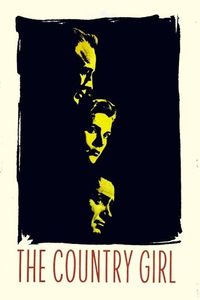
    (On TV, September 2021) There are several reasons why The Country Girl is a film still worth watching today. You can point to its quality as an Oscar-nominated film, you can laud its character-based plot following an alcoholic singer given one last chance at redemption, you can point at a cast that includes Bing Crosby, William Holden and Grace Kelly in de-glammed mode, or you can highlight the technical quality of the production. There’s quite a punch to seeing Crosby letting go of his likable persona to play a man troubled by a past tragedy, constantly at risk of crawling back into the bottle and bringing down an entire Broadway production with him. Holden is solid as a producer trying to keep his friend from imploding… until he starts having an affair with his wife. And then there’s Kelly in one of her least glamorous roles as the long-suffering wife of an alcoholic, tempted by another man for a while. Decent dialogue and plotting keep the film interesting despite some broad story threads and the familiar environment of a Broadway show: there’s some good narrative rhythm to the result. As an Oscar nominee, The Country Girl hasn’t aged too badly.

  • Shadow (2009)

    Shadow (2009)

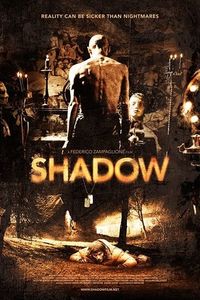
    (On Cable TV, September 2021) The point of a late-movie twist is hopefully to get the audience gasping, reconsidering everything in light of that revelation and ending on a high note. Of course, that presupposes that the audience is invested in the film at that point. If that’s not true, no number of earth-shattering revelations will make any difference — in fact, the extra plot curlicues may simply further alienate the audience. So it is that by the time Shadow attempts its concluding twist, it not only falls flat — it makes the film even worse than it was. The plot gets going in a very familiar fashion, as an Iraqi veteran on a biking holiday encounters a young woman and then falls prey to a serial killer with a penchant for torture. At that point, though, we’re firmly into one of my least favourite genres: torture horror. Much of the rest of Shadow is a waiting game until the final revelation, which doesn’t work because it just drags on and on without a point for far too long. It’s a measure of how much Shadow has collapsed by this point that a last-second sting meant to make everyone scream is greeted by a predicted shrug. If I rake my brain trying to find something nice to say about the result, only three things come to mind: the cinematography of the mountain biking scenes is nice, Karina Testa is very cute as the female lead, and Nuot Arquint is quite effective physically as the villain. But the compliments stop there, because otherwise writer-director Federico Zampaglione manages to mix the worst elements of torture horror with dream twists and xenophobic travel thrillers. Shadow is predictable except when it’s not, and then stupid when it reaches for something else. There are some far better horror films out there, even in its low-budget class.

  • Léon Morin, prêtre (1961)

    Léon Morin, prêtre (1961)

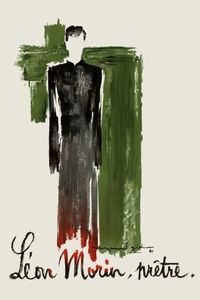
    (On Cable TV, September 2021) At first glance, I wasn’t expecting much from Léon Morin, prêtre: Why should I go back to Vichy-era rural France for a priest’s character study? But as it turns out, the film is slightly better than that, and not all that much about religion. It ebbs and flows, takes a while to get to the point and doesn’t end on a particularly satisfactory note (although it’s unclear if it ever could), but it gradually imposes its style. Much of the film’s plot ends up centred on the relationship that the priest develops with a young widowed mother, as they converse about theology, philosophy and other intellectual topics. The suspense comes when she clearly develops feelings for him, and finds her advance rebuffed by the very pure priest. Much of the credit of the film’s success goes to Jean-Paul Belmondo and Emmanuelle Riva in the lead roles — both of them attractive and compelling even in the midst of abstract conversations. The oppressive atmosphere of Nazi-occupied France adds some interesting subplots, and Jean-Pierre Melville’s direction shows his familiarity with the era. There’s an unpredictability to the details of the film, and while Léon Morin, prêtre definitely plays with seduction, the ending doesn’t necessarily provide cheap culmination. It all adds up to a substantially more interesting film than I expected, and one that fits nicely within Melville’s filmography.

  • Mosura tai Gojira [Mothra vs. Godzilla] (1964)

    Mosura tai Gojira [Mothra vs. Godzilla] (1964)

    (On Cable TV, September 2021) I’m slowly dipping my toes into the Godzilla-Toho catalogue, and while Mothra vs. Godzilla does have the advantage of featuring the iconic moth, it’s very much an early-period Godzilla film: It’s still weird to see Godzilla portrayed as a pure antagonist (rather than the sympathetic but uncontrollable force for good of later films) and the entire menagerie of creatures and aliens isn’t quite there the enliven things up. Not that the result isn’t weird enough, what with Godzilla running amok over Japan, a mysterious egg, a nuclear-devastated island of fairy-like creatures, rapacious theme park developers and the scientists trying to find a solution. It’s thankfully in colour, features just enough rubber-suit rampaging (although I’ll never get over Godzilla’s ping-pong eyes) and the obvious miniature sequences add to the charm. Historically, this is the fourth-in-the-series film that marked the shift of the series to a kid-friendly style and, in doing so, cemented its style. It doesn’t quite stand alone, but that’s something true of the rest of the series as well. Still, Mothra vs. Godzilla remains reasonably fun as a kaiju film.

  • The Available Wife (2020)

    The Available Wife (2020)

    (On TV, September 2021) It’s not always easy to distinguish between a film that audaciously takes chances and one that simply doesn’t quite understand what it’s doing, and BET-broadcast The Available Wife had me more flummoxed than usual in its final moments. I suspect that part of the problem is how I first approached the film, expecting an upbeat drama and getting a glum thriller in return. Much of the plot revolves around a music company CEO who gets involved with a sexy/dangerous artist. If you’re expecting this to be a formula story of how a plucky woman manages to work her way up the industry and fend off threats to her marriage… The Available Wife has more on its mind. Perhaps too much. As director Jamal Hill advances the story, we steadily lose sympathy for a protagonist who blows up her marriage for a man who (predictably) proves to be violent and manipulating. It gets worse when the ellipse between prologue and early film is filled out to reveal that she slept and cheated her way to the ownership of the music company (first by sleeping with the owner, then by producing a fraudulent will). By the time the third act rolls by, with our protagonist having blown up her marriage, willingly allied herself with a dangerous criminal, ignored warnings from friends and family, and revealed to be a scheming fraudster, we’re left to wonder — why exactly are we supposed to cheer for her, or even care? You could argue that the early moments of The Available Wife, portraying the younger protagonist as an artist spouting familiar female empowerment messages, are a clever misdirection, aiming to pull the rug underneath us when the film becomes a tragedy of ambition. But that’s an insanely generous way of looking at things, considering that when you take a look at the film in retrospect, those early sequences absolutely do not pay off later on. Hence The Available Wife getting knocked down by ambitious genre-switching to simply a film that doesn’t know what it’s doing. It’s not that much of a stretch—any film that lets Roger Guenveur Smith overact so badly in a caricatural role is not a fine-tuned machine. I’m not saying that I disliked The Available Wife — it’s got swagger, some good technical credentials, pacing moves quickly (perhaps too quickly, as in an attempt to palm a few cards), and K. J. Smith is beautiful enough that the film doesn’t miss featuring a spectacular lingerie scene. But as promising as some of the elements can be (let’s face it — murder and betrayal at the top of the music industry sounds like a can’t miss premise), the execution is too scattered and uncontrolled to be effective. By the time The Available Wife’s final verdict comes down, the protagonist goes to prison and the audience can only applaud the decision — is this what the entire thing was really working to achieve?

  • Destination: Infestation aka Deadly Swarm aka Ants on a Plane (2007)

    Destination: Infestation aka Deadly Swarm aka Ants on a Plane (2007)

    (In French, On Cable TV, September 2021) Imitation is the sincerest form of commercial exploitation, and so ants-on-a-plane thriller Destination: Infestation follows Snakes on a Plane by a year. But there’s a world of difference between the energetic and intentionally campy Samuel L. Jackson thriller and this lower-budgeted, often dour affair. Clearly made to order for schlock distribution (it was a Lifetime premiere!), it’s not a film that deals in subtleties. There’s a plane, there are ants, and so there are ants on a plane. The setup presents the various characters that will deal (or not) with the threat, and the action gets going once a nest of ants explodes from within a man feeling sick. These ants are supercharged fictional nasties, able to kill with toxins and gnaw their way through airplane cabling. Against them is a team made up of an entomologist and a sky marshal simultaneously fighting ants and falling in love. To cover the remaining bases of any cheap thriller, there’s a ticking-clock aspect to the plane being consumed mid-flight, and a human villain flat-out refusing to allow the ant-infested plane back on US soil. It’s all incredibly familiar. You can certainly watch the result, but there’s very little here from director George Mendeluk to make it seem interesting. Ants don’t make for very charismatic antagonists, and the human characters aren’t necessarily any better. The absence of any spark of self-aware wit or humour does not help in the slightest. I still have good memories of Snakes on a Plane, but all Ants on a Plane manages is to make them even fonder in comparison.

  • The Hypnotic Eye (1960)

    The Hypnotic Eye (1960)

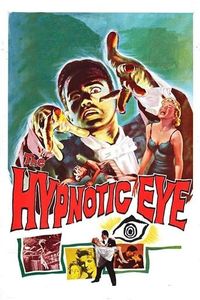
    (On Cable TV, September 2021) This won’t be a newsflash to anyone, but exploitation cinema is older than nearly all of us, and as you get away from major studio movies (and even then), it’s easy to find films based on nothing more than dubious premises and cheap thrills. So it is that The Hypnotic Eye doesn’t make any attempt at hiding how shameless it is, as it begins by describing a curious epidemic of attractive young women disfiguring themselves. One breathless demonstration of hypnotism later, there isn’t much more to piece together: it’s all about the hidden dangers of hypnotism and how this evil mastermind is driving young women to cut and mutilate themselves. Hypnotism is always a bad plot device (there’s one exception: The Manchurian Candidate) and The Hypnotic Eye doesn’t break the rule. The plot is paper-thin and napkin-big, with much of the film dedicated to outlandish demonstrations of the quasi-magical powers of hypnosis as filtered through the movie thrill machine. It’s all bunk, but the audiences at the time probably lapped it up in disregard of the reality of the practice. Reading about the film’s marketing is a wild ride, and helps explain the film’s, um, fascination even when it’s such transparent claptrap: exploitation is always close to the raw fears of the paying audience, and it’s amusing to see how far director George Blair is willing to go (for instance, in showing a young woman setting her face on fire) in order to get a rise out of its audience. It’s almost a good way to better appreciate what modern movies are doing to rile us up with topics we (now) barely understand and will eventually find quite silly.