Reviews

  • Nell (1994)

    Nell (1994)

    (In French, On Cable TV, September 2021) There are a lot of Hollywood dramatics in Nell, the story of two researchers investigating what could be a feral child following the death of her mother. Liam Neeson and Natasha Richardson play the slowly-falling-in-love researchers in likable performances (as far as I can determine, the shooting of the film roughly coincided with their real-life wedding), but Jodie Foster hogs all attention as the not-so-feral-child around which the rest of the film revolves. It’s a ferocious, daring performance, especially given how much of it is in a quasi-invented language. The rest of Nell is very much aligned with the usual tropes of outsiders being taken in by so-called normal characters. There are many plot contrivances along the way, but it ends like it should with everyone being reasonably happy. It’s generally interesting throughout, and there’s more nudity from Foster than anyone would expect (it’s not a scene meant to make anyone feel good). Neeson is very solid in a role that expects him to be an anchoring presence. Much of the film takes place in well-photographed nature, making it even more alien when the film briefly retreats to a courtroom in time for a trial. Familiar but executed reasonably well, Nell isn’t meant for surprises.

  • Atanarjuat [Atanarjuat: The Fast Runner] (2001)

    Atanarjuat [Atanarjuat: The Fast Runner] (2001)

    (With French Subtitles, On TV, September 2021) In the pantheon of Canadian movies, Atanarjuat comes with exceptional acclaim. It was a global sensation upon its release, won Cannes’ Golden Camera award, ranked high at the Canadian box-office, heralded First-Nation filmmaking and regularly turns up on various Canadian best-of lists since then. There’s some substance behind its enduring popularity: As the first Inuktitut-language film, entirely shot in Nunavut, it represented a new branch of cinema even a century into the art form. It’s definitely something fresh to watch even today: taking us back thousands of years and into the arctic circle, it has immense documentary value in showing the traditional Inuit lifestyle — from building igloos to icing sleds to preparing food, director Zacharias Kunuk takes pain to bring viewers somewhere else entirely. Some magnificent arctic imagery also shows something new, not merely ice floes but the land in the brief arctic summer, and other unusual vistas as well. In recounting an ancient legend, it also presents something quite unlike anything else. So far so good — but Atanarjuat can also suffer from its own hype. When the film was crowned “Greatest Canadian film of all time” by the Toronto Film Festival in 2015 (most likely a methodology artifact — every critic polled will have different opinions about the greatest Canadian movies, but many will include Atanarjuat somewhere in their top-10 list), it also exposed itself to some contrarian opinions. It’s not as if the film is perfect, or has aged as well as you’d think. Shot at the dawn of digital cameras as a viable filmmaking tool, Atanarjuat now looks uglier than ever on high-definition screens. The low resolution and blown-out picture are now actively irritating in that it places an obstacle between what’s being shot and how it’s shown to viewers. The muddy, indistinct shapes of the image are disappointing, and the quality of the camera movement breaks immersion. This is not helped by a directing style that is better intentioned than fluid: strange and inappropriate choices in close-ups, medium shots and long shots frustrate more than they charm, and the film seldom flows well from one image to another. But it’s the narrative quality of the film that frustrates more than anything else: coming from a different storytelling tradition, the narrative feels jumbled and frankly interminable at more than two hours and a half. The acting is tough to gauge — except when moments of it feel intensely annoying. There are still some great moments, though: Lead actor Natar Ungalaaq deservedly earns our respect for being willing to run for extended periods of time barefooted, bare-naked (with plenty of frontal nudity) on wet ice in the film’s action climax. There’s a lot more sex and violence to Atanarjuat than you’d guess, and it’s hard to put into words the wonder of watching something so alien on-screen. But at the end of it (bruised and battered from the extended running time and the film’s shaky narrative drive), I found myself more disappointed than exhilarated from it all. Landmark film? Absolutely. Great film? Let’s talk.

  • 21 Bridges (2019)

    21 Bridges (2019)

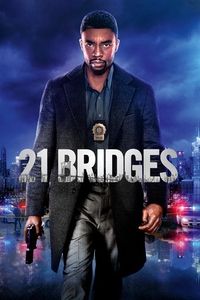
    (Amazon Streaming, September 2021) As much as standalone thrillers have gone out of favour compared to superhero movies or fantasy films, there will always be an audience for them, and 21 Bridges is a decently entertaining example of the form. (Considering that the film was produced by Marvel directors Joe and Anthony Russo, this line from superhero films to this thriller isn’t as tendentious as you’d think.)  The titular idea has The New York Police Department shutting down the 21 bridges connecting Manhattan to the rest of the world to contain and catch two suspects who have been involved in a deadly firefight with a group of police officers. NYPD is rabid about cop-killers, and our lead character is a cop with a history of shooting suspects — that makes him a trusted man to complete the assignment. The clock is ticking (the bridges can’t stay closed once the morning commute starts) and the suspects are moving, but there’s just one detail that doesn’t add up: Why would two small-time criminals stumble upon 300 pounds of cocaine at the same time as a group of heavily armed police officers? The answer to that propels the last and most interesting act of the film. Headlined by one of Chadwick Boseman’s final performances, 21 Bridges isn’t quite a perfect film: After a strong opening, it meanders for a while before coming back in focus in time for a good third act. J. K. Simmons also turns in a reliably good performance, although it’s just a bit too easy to guess much about where the film is going to end based on a flashy scene early in the narrative — why would someone of Simmon’s stature be there for a walk-on role? The subject matter of the film isn’t anything we haven’t seen in other corrupt-cop thriller, but it has its moments. What doesn’t quite work as intended, though, is the decision to make the protagonist a habitual suspect-killer: Attitudes toward abusive cops have thankfully changed in the past two years, and there’s a cloud of ambiguity over the story that probably wasn’t meant to be quite as pronounced upon release. Still, director Brian Kirk can bring things to a boil when it counts, and fans of corrupt police thrillers are likely to appreciate the result.

  • Coolie No. 1 (2020)

    Coolie No. 1 (2020)

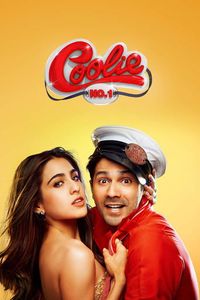
    (Amazon Streaming, September 2021) Profoundly silly but often very entertaining, Coolie No. 1 is a comedy that takes us to an Indian train station, where our protagonist works as a porter — but not just any porter: the best one, the number one. His life suddenly becomes more complicated when he gets a glimpse at a local beauty whose rich father is trying to marry — and there’s a disgruntled marriage broker ready to engineer events for maximum chaos. Varun Dhawan is quite good in the lead role, able to reach the romantic, comedic and even the action requirements of the role. The script quickly gets down to classic dual-identity shenanigans, with the lead character pretending to be his richer twin brother, and characters either being fooled or not at all. Meanwhile, Sara Ali Khan makes for an excellent love interest (although I did like Shikha Talsania more as the female lead’s sister) and other characters provide the comic chaos required by the script. A handful of colourful musical numbers enliven things considerably, my favourite being the poppy “Mirchi Lagi Toh” set against a bright pastel square. Coolie No. 1 is not great or witty cinema: it mugs for the audience too often, relies on familiar material and falters with a climax that just goes slightly over the top. But it’s funny, likable, bouncy and colourful. That can be hit or miss, but it was a definite hit after a streak of watching so many serious films.

  • The Newspaperman: The Life and Times of Ben Bradlee (2017)

    The Newspaperman: The Life and Times of Ben Bradlee (2017)

    (On Cable TV, September 2021) It’s impossible not to know about Watergate without knowing about Ben Bradlee (1921–2014), the famous editor of The Washington Post who helped the paper navigate the tumultuous events that led from a low-rent criminal investigation to the end of the Nixon presidency. Extra points are given for knowing about his role in the Watergate prequel The Pentagon Papers, in which the Post went to the courts in order to secure journalistic freedom. But there’s a lot more to learn about Bradlee’s life and tenure. He was best friends with John F. Kennedy and Jacqueline Onassis, prior and during his presidency (thus paving his access to the Washington political class). Then there’s the Janet Cooke scandal, a 1981 incident that resulted in The Post returning a Pulitzer Prize (still a unique event!) when the winning article was revealed to be a fabrication by an overambitious young reporter. And that’s just the headlines — As The Newspaperman: The Life and Times of Ben Bradlee goes on, we learn about his tumultuous personal history (three marriages, the latter two stemming from affairs that broke up the previous marriages), a healthy ego fed by Jason Robart’s Award-winning performance playing him All the President’s Men, his childhood bout with polio, and his views as one of the most recognized news editors of the late twentieth century. Much of the film benefits from Bradlee’s narration, as his reading of his autobiography gives him a voice three years after his death. In these voiceovers and archive footage, Bradlee does come across as a highly charismatic presence, a passionate advocate for truth and a charming rogue when it comes to women. While complimentary of his subject, director John Maggio goes beyond the bloodless portrayal of a two-fisted editor or semi-political figure — the truthfulness of his personal history, as he skips from one wife to another, can be surprising. (Significantly, late-life archival footage of him asked about regrets focuses on the anguish he caused to his first two wives.)  The Newspaperman, as the title indicates, will largely be of interest to political junkies and news buffs who already know just enough to be interested by Bradlee but not enough to know the full story. It’s quite entertaining and progressively illuminating about the evolution of American journalism under his lifetime.

  • The Shadow (1994)

    The Shadow (1994)

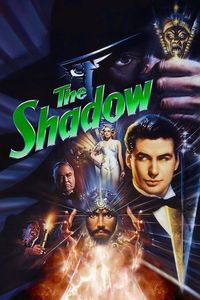
    (In French, On Cable TV, September 2021) I’m not going to pretend that The Shadow is a particularly good movie — it doesn’t do justice to its film noir potential, it’s a superhero film crippled by mid-1990s special effects and there’s something slightly off in its take on pulp adventure theatrics. But I’m still sorry I’ve missed it until now. Director Russell Mulcahy does manage to animate the film with enough energy to get it off the ground, especially once it truly starts taking advantage of its noirish pulp atmosphere. But having all of these things at the film’s disposable doesn’t necessarily translate into fulfilling that potential, and so The Shadow repeatedly sparks but seldom ignites. Alec Baldwin has some unrealized potential as a playboy who moonlights as a crime fighter (yes, this should be familiar) and “knows what evil lurks in the hearts of men.”  Penelope Ann Miller tries her best as a pulpy blonde, and other names such as Peter Boyle, Ian McKellen and Tim Curry further enliven the cast. Some moments work and some parts don’t: generally speaking, the better ones don’t rely on exotic orientalism that didn’t play very well back in 1994 and plays even worse today. The awkward special effects certainly limit what the film could do — I’m not saying we need a remake, but this is the kind of film that would be very different if made with today’s technology. Still, I do have some fondness for the result — part of it due to some attachment to 1990s films, and part of it due to The Shadow’s willingness to play with noir archetypes that I like a lot. I can’t even specifically highlight its deficiencies as being specifically surprising: many attempts at reviving pulp heroes have run aground on similar shoals. You can certainly include it in a filmography of proto-superhero movies and see what other later examples (I’m thinking Sky Captain and the World of Tomorrow, but also The Spirit and Batman Begins) would do with similar tone or plot elements).

  • The Gorgeous Hussey (1936)

    The Gorgeous Hussey (1936)

    (On Cable TV, September 2021) Maybe it’s my still-evolving understanding of English vocabulary, but I’m still grinning at the moxie required to name a movie The Gorgeous Hussey. It does fit, though: As a very fictionalized retelling of the life of a humble woman who became an unlikely power broker thanks to her friendship with American politicians such as Andrew Jackson, it’s meant to be a clash of sensibilities between beauty and politics within a character definitely meant to illustrate more contemporary values. In the surprisingly large filmography about American politics, this film stands out by being more about saucy romance and backroom dealings than policy or memorable speeches. Of course, the project was crippled from the get-go — made in the early aggressive early days of the Hays Code, The Gorgeous Hussey got away with its title, but could not do justice to the affairs, bawdy actions and ostracism of the Petticoat Affair it describes. As a result, it feels neutered — especially when you look up the historical record of the events that the film is meant to explore. It’s not a complete loss, though: visually, the film makes the most out of its period settings with great costumes and sets. Acting-wise, the good news is that the cast has a number of very familiar names, from Joan Crawford in the lead, James Stewart and Franchot Tone as supporting players, and Lionel Barrymore playing Jackson with panache. Unfortunately, that casting is now a double-edged sword: Crawford’s persona is too modern to play a historical figure without reminding audiences of her other films, and a similar problem also affects Stewart — magnified by the thinness of his part. All of these issues make The Gorgeous Hussey more a curio than a satisfying film in its own right. It’s worth a look to see how a Hays-Code-era film tried to portray a subject matter too salacious for its own good, but it’s not really much of a success on its own.

  • Standing in the Shadows of Motown (2002)

    Standing in the Shadows of Motown (2002)

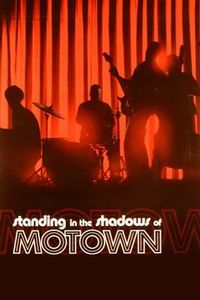
    (On Cable TV, September 2021) The influence of The Funk Brothers as the uncredited house band heard on many of Motown’s iconic hits has long been appreciated by music buffs, but documentaries such as Standing in the Shadows of Motown did much to capture their contribution, interview them before they passed away, and offer a glimpse behind the Detroit-based hits-making machine. By the time later documentaries such as 2019’s Hitsville rolled around, they could mention The Funk Brothers knowing that viewers knew what they were talking about. But going back to 2002 ends up being an invaluable time capsule, as the documentary is able to interview many elderly Funk Brothers about their experiences working with Motown to create that signature sound. Some of the film’s most emotional moments involve members of the group going back to Motown’s “Studio A” and reflecting on what happened in that room during their many years backing up the studio stars. (The film ends as they walk out of the studio for a final time and shut off the light.)  In parallel, Standing in the Shadows of Motown follows the days leading to a reunion concert in which surviving members of the band were highlighted for their contributions. This leads to a rather good moment with Joan Osborne spontaneously going acapella on a Motown song and doing a very good job at it. As one would expect from the subject matter, the soundtrack of the film is nothing short of terrific, with a mixture of classic recordings and newer covers with more contemporary artists. With Standing in the Shadows of Motown, director Paul Justman gave himself the explicit mission to shine a light on a little-known facet of music history and apparently succeeded — the film is a reference in most discussions of The Funk Brothers I’ve consulted, and it’s clearly still educating viewers to this day. Pair it with Hitsville for a near-perfect Motown double-feature with an embarrassment of great music.

  • Soorarai Pottru (2020)

    Soorarai Pottru (2020)

    (Amazon Streaming, September 2021) Capitalists of the world will be reassured to find out that the pseudo-populist business tycoon biopic is alive and well, as evidenced by India’s Soorarai Pottru. Here we follow a young entrepreneur, a former fighter jet pilot, who gets the idea of a low-cost airline fit to compete with train travel for poorer Indians. Viewers familiar with such hagiographies will recognize the ways in which it’s dramatized for maximum impact — the personalization of opposition into one central figure, the truth-stretched dramatic events on which everything hinges, and the hard-headedness of the protagonist presented as a virtue. It’s all overdone to a point that skirts ridiculousness, something that’s not helped by some specific aspects of Indian cinema. The national style of blending musical numbers doesn’t quite match up with the hard-nosed business fable, the subpar CGI regularly breaks immersion, and the tagging of specific shots with text indicating that they do not reflect the procedures or opinions of Indian state organization clearly highlights the lack of independence between Indian filmmaking and Indian government. (Yes, I suspect that the text was the result of a contractual obligation in obtaining privileged access to state facilities for shooting — but there’s nothing quite so illustrative of social differences between here and there than finding out just how some facets of Indian society are excessively deferent to others.) Then there’s the truth-versus-fiction factor: It doesn’t take a lot of research about Deccan Air to find out just how fanciful writer-director Sudha Kongara became in adapting the story — in real life, our protagonist already owned a cargo airline before starting a low-cost passenger line, and that company merged with another one five years later. Despite those issues, some significant pacing problems throughout the film, and many unquestioned assumptions about capitalism and nepotism (hurray for giving catering contracts within the family!), Soorarai Pottru is generally entertaining to watch. It doesn’t pass muster in North America for the litany of reasons described above, but it can be a revelatory glimpse at a very different culture.

  • It’s All Gone Pete Tong (2004)

    It’s All Gone Pete Tong (2004)

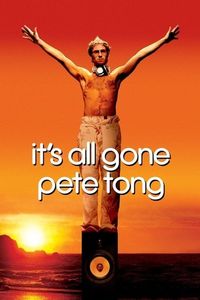
    (On Cable TV, September 2021) I’m half bemused by It’s All Gone Pete Tong, a film that doesn’t really knows what it wants to be and only moderately works in small bursts. Initially presenting itself as a mockumentary comedy about a star DJ, it ends up breaking nearly everything about that initial promise. Blending real-world DJ celebs with a fictional protagonist (Paul Kaye as a DJ demigod) in a pseudo-documentary format, it often means to be so excessive as to be ridiculous. But this is not a finely tuned film, and before long the deviations from its initial style become apparent. The mockumentary format is a mere pretence, as we’re quickly (and increasingly) presented with shots and sequences that can’t be explained by a TV crew filming the events. The comedy is also very uneven, with writer-director Michael Dowse inconsistently reaching for absurd humour and then drawing back into more mundane material. Even the overall genre of the film changes once the main conflict is introduced: After years of loud living, our protagonist is losing his hearing, and no amount of help or medical treatment will enable him to regain his hearing. It turns really dark at times despite the half-hearted attempts at comedy, and the parallels with the superior Sound of Metal (featuring a heavy metal drummer also losing his hearing) are perhaps a bit too raw to keep enjoying It’s All Gone Pete Tong as a comedy. Curiously (or appropriately enough for a film I find mediocre at best), the electronic music of the film is uneven, rarely taking advantage of the feast of opportunities that the early-2000s Ibiza scene presented. I’m left more disappointed than anything else by It’s All Gone Pete Tong: there is some good raw material and snippets in here, but it doesn’t cohere nor lead to a satisfying experience for the viewers.

  • Dead Man’s Switch: A Crypto Mystery (2021)

    Dead Man’s Switch: A Crypto Mystery (2021)

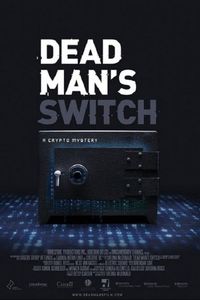
    (On TV, September 2021) I’m not sure if I can properly express my all-encompassing dubiousness at the concept of cryptocurrency, and it’s not a documentary like Dead Man’s Switch: A Crypto Mystery that will make me feel any better about it. Rest assured that it’s skepticism at all levels, starting with the idea that cryptocurrency is a libertarian (hence dumb) attempt to decentralize something that should not be — it’s an idea incompatible with civil society, and its scamful implementation managed to make it even worse. Never mind the environmental impact of it — even a decade in the cryptocurrency age, it’s an idea that doesn’t solve any existing problem. It’s something without practical value except as a financial speculation instrument, and that is the root of most of the other problems — as a form of gambling (at best) and deliberate deception (at worst), cryptocurrency continues to attract criminals, scammers and hustlers — and they all have very lengthy arguments about why we should give them our money to perpetuate this nonsensical bubble they plan on profiting from. Dead Man’s Switch gets interested in one of the worst scandals of Bitcoin’s history so far — the Canada-based QuadrigaCX scam and the sudden disappearance of its founder Gerald Cotten, leaving more than a hundred million dollars unaccounted for. The technical details can be complex, but the story itself isn’t: a threadbare scam clothing itself in techno-libertarian ideals to masquerade living a lavish lifestyle on investor money. When the sharks started circling, as they always end up doing, the owner went to India and died. Or should that be “died”? As the title of the film suggests, there are still plenty of unanswered questions about Cotten’s QuadrigaCX and writer-director Sheona McDonald patiently takes viewers through a years-long story of deception and fraud. What eventually emerges is familiar: A pair of men (one of them with a criminal past and two changed names) used to penny-ante scams are suddenly swept along the Bitcoin bubble and getting more money than they knew what to do with. Lavish spending explains where some of the money went, but the whole leaving-to-India-when-questions-arose thing remains open-ended, as the journalists interviewed for the documentary recount persuasive arguments for and against Cotten’s death over there. For all of the entertaining and clear-eyed explanations in Dead Man’s Switch, the most frustrating element of the film remains its lack of answers. Two of the people who would know are not talking, and an official investigation isn’t over yet. I can’t quite say I had a good time watching the film — the concept of cryptocurrency goes unexamined, and many of the interviewees are quite heavily invested in the concept. It’s also frustrating to leave so many questions unanswered, and watching the film so soon after its release offers none of the additional answers that will eventually emerge (Watch the Wikipedia article, I suppose). But as far as high-tech docs go, Dead Man’s Switch is more skillful than most in giving both a polished sheen to its cinematography and clearly explaining its topic. This being said, I’m still waiting for that anti-crypto takedown…

  • Young and Innocent (1937)

    Young and Innocent (1937)

    (On Cable TV, September 2021) Coming from the phase of Alfred Hitchcock’s career in which he was consistently hitting evermore ambitious marks in the United Kingdom, Young and Innocent features some familiar material for him — a couple on the run, trying to identify the real murderer even as the police are tracking them. You can already recognize Hitchcock’s showmanship here — a number of sequences go beyond the strictly necessary, whether we’re talking about a suspense scene in which the hero tries to rescue a woman from falling into a pit, or a much-lauded single shot that sweeps across a busy hotel lobby to zoom incessantly on the murderer finally located. It’s a competent thriller even today, and goes well with titles such as near-contemporary The 39 Steps and The Man Who Knew Too Much in illustrating why Hitchcock was, by the late 1930s, just about ready to board a transatlantic trip all the way to Hollywood.

  • Antropophagus (1980)

    Antropophagus (1980)

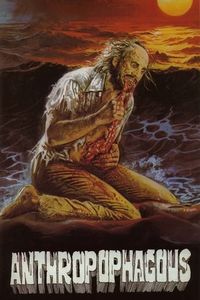
    (In French, On Cable TV, September 2021) Ugh — why am I torturing myself so? Sure, the point of being a cinephile is to learn as much as I can about as many film subgenres as I can, hitting the high points and taking a look at the landmark films. For better or for worse, Italian gore film Antropophagus ended up on some list of noteworthy horror films — best known for being one of those “video nasties”’ banned in the UK, it’s credited by some as marking a turning point of some sort of Italian horror, which would then spend much of the 1980s pushing the limits of on-screen gore. That’s not a legacy to be particularly proud of, but hey — I’m just someone who loathes the stuff. I also suspect that the lurid self-cannibalism poster had something with the film’s reputation and video-club popularity. The actual movie, though, is predictably lame and ugly — much of it has to do with a psychopath cannibal stalking, killing and eating half a dozen tourists unlucky enough to set foot on the wrong island. (One of them is a pregnant woman, so that should give you an idea of how low it’s going to go.)  Oh, it’s put together with some competence for the genre — director Joe D’Amato has enough experience in this kind of stuff. But that’s not much of a compliment. Antropophagus is 90 minutes but feels remarkably longer — fortunately, modern viewers will be able to check their phones whenever it gets interminable.

  • I’m Thinking of Ending Things (2020)

    I’m Thinking of Ending Things (2020)

    (Netflix Streaming, September 2021) I have seldom felt as strong an impulse to bail on a film as I did through the fifth-to-fifteenth minutes of I’m Thinking of Ending Things. Here I was, stuck in the exasperating mind of a young woman who is herself stuck in a car with her current but soon-to-be ex-boyfriend. “I’m thinking of ending things,” she endlessly ruminates and repeats, berating herself for coming along as she contemplates — nay, looks forward—to ending their six-week relationship that feels shorter than the film already. The monologue goes on and on in what feels like a straight adaptation of a stream-of-consciousness prose narrative straight to the screen. Fortunately, the film has other creepy weirdnesses in store once past that rebarbative opening — This being a film from iconoclastic writer-director auteur Charlie Kaufman, the surrealism and off-putting material keeps piling up until viewers realize that I’m Thinking of Ending Things is not interested in narrative as much as formal experimentation. Narrators change, perspectives shift, genres blur into each other, strange stuff happens and we just keep going to the next thing. There’s an explanation of sorts, but no one will be blamed if they just don’t want to play Kaufman’s games. There are a few interesting moments and plenty of pop-culture quotes (including swatches of repurposed dialogue) and I’m rather happy with Jesse Plemons’ persona-busting performance. I also liked Jessie Buckley even if her character is exasperating—but that goes for much of the film as a whole. It’s not particularly deep experimental cinema, but it’s not interested by conventional storytelling either, so you’re either along for the ride or you check out—and I’m Thinking of Ending Things is a ride that starts out slow enough to send less-patient viewers heading for the exits.

  • Can-Can (1960)

    Can-Can (1960)

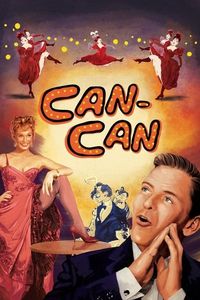
    (On Cable TV, September 2021) I never knew how badly I wanted to see a movie scene in which Frank Sinatra chats with Maurice Chevalier until I saw it right there in Can-Can, and it’s only one of the reasons why I liked the film so much. A classic 1950s musical that was released just ten weeks into 1960, it’s a mixture of familiar and fun Cole Porter songs, Sinatra crooning alongside Chevalier and Louis Jourdan, Shirley MacLaine dancing up a storm, and some delightfully chaste French debauchery as filtered through American Francophile sensibilities. MacLaine plays a Can-Can club owner trying to stay ahead of police raids against “lewd and lascivious dancing,” and having to pick between a lawyer (Sinatra) and a judge (Jourdan) while an older judge (Chevalier) is there to provide sage advice to all. It’s a lot of fun to see Sinatra and Chevalier, two crooners initially separated by decades and an ocean, chat about the meaning of love in Paris — if the scene didn’t exist, someone would have had to invent it. Jourdan is also quite good, singing and dancing pleasantly. Still, perhaps my biggest surprise of the film is liking MacLaine quite a bit as she credibly sings and dances — although I suspect that the long wig had a lot to do with it as well. The tone of the film is this kind of pitch-perfect blend between suggesting bawdiness without showing it (Khrushchev being easily impressed, there’s very little that’s risqué here) and falling back on an American’s idea of the relaxed French attitude toward love and marriage. It’s quite a bit of fun, and the soundtrack can rely on a few songs that can still be recognized. I’m fast running out of 1950s musical to see, but Can-Can is a decent addition to the corpus.