Reviews

  • Cats (2019)

    Cats (2019)

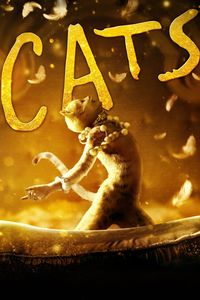
    (On Cable TV, October 2020) Like most avid cinephiles, I heard about the Cats experience back in December 2019—the hyperbolic bad reviews were bad enough to convince me to wait for Cable TV broadcast, although I reserved skeptical judgment until I had a chance to find out by myself. Alas, it really doesn’t take a long time for Cats to fill up the litter box. From the first few minutes alone, the film only raises one certitude: It should not have existed. Not like that. As animation, perhaps, but as “live action” (yet with more CGI than the entire first century of moviemaking), it’s simply grotesque. The production animates cat fur over motion-captured bodies, but does it so badly that it ends up creating more revulsion than admiration. Visually, the result is repellent: they don’t move like cats nor like humans (a corrosive impact of CGI is that you cannot suspend any disbelief regarding physical movement of the actors in cat suits. This isn’t like a musical of yore where you knew they got everything live: here, there are enough unnatural movements that everything may as well be animated by hand) and the celebrity caricatures are the things that will tarnish their resumés. (The one lone exception, and the only moment in the movie that I actually liked, was Taylor Swift vamping it up as Bombalurina–at least she understood how ridiculous it was, and her part was strong enough to overcome everything else.) Of course, it doesn’t help that Cats-the-movie is built upon the rickety Cats-the-musical, something weird enough that it first drew derision among Broadway fans. The story makes almost zero sense, and the way the film invents its own vocabulary like a mentally disturbed person does no one any favours—although I was grateful for the competent closed captioning. I could go on and on, but the thing is: I like cats (the animals) and I like musicals (the movie genre) and I cannot imagine watching Cats-the-movie again except to point out how terrible it is. It’s a misfire of such colossal proportions that it actually made me feel better: in an age of super-commercialization, industrial psychology used to manipulate wide audiences and movie producers searching for assured profits by adapting known properties, it’s a heartening statement that even the industrial-entertainment complex is fallible: hundreds of people and millions of dollars can be invested in an obviously boneheaded concept and still make it through to the end. It kind of makes you feel as if anything is still possible, right?

  • Tales from the Crypt: Demon Knight (1995)

    Tales from the Crypt: Demon Knight (1995)

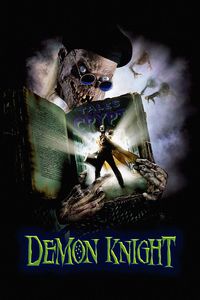
    (On TV, October 2020) There’s a curious absence of anything interesting to say about Tales from the Crypt: Demon Knight. Yes, it’s a spinoff from the then-popular Tales from the Crypt TV show, which updated Creepshow-style macabre humour. But once you get past this pedigree and overly cute framing device, there isn’t much left to talk about. The story has something to do with a good-versus-evil fight coming down to a New Mexico boarding house, the good sealing the house against Evil, but Evil tricking people inside the house into doing its bidding. It has early roles for Jada Pinkett (not yet—Smith), Thomas Haden Church and CCH Pounder, although it’s a bald Billy Zane who steals the show as velvet-voiced Evil. Otherwise, though, this is strictly formulaic stuff, with very little in terms of writing or direction to distinguish itself from many very similar horror movies from the 1990s. The bulk of Demon Knight mercifully drops the Cryptkeeper’s pun-overloaded patter, but doesn’t replace it with anything more interesting. The pacing isn’t particularly fast-paced (there’s a good 45 minutes in which nothing much happens, in the interest of padding this to a feature-film length), the tone is bland and the gore effects are unremarkable by the standards of the genre. It does raise the question as to why anyone would want to watch this, and the answer may be familiarity: Demon Knight is a comfortable kind of horror film, the likes of which you can leave running without paying much attention to it, knowing where it’s going and how it’s getting there.

  • Tamara (2005)

    Tamara (2005)

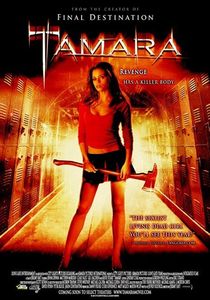
    (In French, On Cable TV, October 2020) There are many ways through which Tamara could have been more interesting, and analytical viewers may have more fun contemplating the paths not taken than the ones that it does follow. Adapting Carrie to the mid-2000s, Tamara features a mousy (but supernaturally obsessed) student come back from the dead to take revenge on the classmates responsible for her humiliating murder. The film could have gone in many directions from there, and indeed does run on parallel tracks: While it portrays its lead character as an avenging demon, it also tries to muster some sympathy for the students killed off, and that’s only one of the ways in which the result seems incoherent. The demands of schlock horror films mandate that something spooky (preferably fatal) happens every few minutes, leading to the antagonist playing with her prey for no perceptible reasons, keeping some of them for later and trying some fancy new kills along the way. (If I ever become an avenging demon, I’m going for efficient surprise: All of them dead in minutes, allowing them no chance to realize that they’re in danger and form a counter-attack plan.) But then the film doesn’t necessarily go for the deserving targets, nor does it stick to the teenage audience: By the time Tamara goes after her teacher’s wife, the teacher becomes the one to resolve the conflict. While there’s a perceptible amount of teenage commentary going on, it’s not developed long enough to be effective, and sequences in which the avenging demon does the oh-so-unspeakable thing of convincing two jocks to have sex together (right before convincing the beauty queen to stuff her face with food) come across as entirely wasted in a film that can’t be bothered to make use of even the most basic elements of satire. I did like Jenna Dewan switching between mousy and bewitching, as well as Melissa Elias as the irremediable prom queen… but there isn’t much more to Tamara than that. Too bad—anyone with half a clever wit could have been able to do a much better script.

  • Thirty Day Princess (1934)

    Thirty Day Princess (1934)

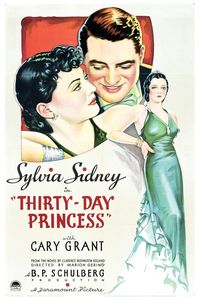
    (On Cable TV, October 2020) Cary Grant wasn’t always Cary Grant—his accession to Hollywood superstardom was the result of refining his screen persona until it hit an apex, quite unlike the young man born Archibald Leach. Thirty Day Princess hangs at the end of Grant’s apprenticeship in the movies—right before his breakthrough in Sylvia Scarlett, but already demonstrating his talent for suave, confident leading men. He’s not the star of the film—that would be Sylvia Sidney, playing a dual role as both a foreign princess come to America on a fundraising tour, and a young struggling actress who’s asked to impersonate the princess during a bout of illness. Grant plays the love interest—an influential New York City paper owner who is seduced by the actress playing princess. It’s a fair comedy: not hilarious by any means, but decently amusing and probably a film most viewers haven’t yet seen unless they’ve dug down deep in the Grant filmography. Its (barely) Pre-Code nature can be most clearly seen in some of the banter between princess and actress, as royalty lives vicariously through the impersonator’s romantic episodes. I really enjoyed the look inside an Automat—a relic of a past age that, somehow, always earns my fascination. Thirty Day Princess is not a film for the ages, but it’s watchable enough, gets a few laughs and certainly doesn’t overstay its welcome at a mere 74 minutes. Plus, you get Grant as a young thirty-year-old, a bit rough around the edges but already showing the world what everyone would love from him a few years later.

  • East Side, West Side (1949)

    East Side, West Side (1949)

    (On Cable TV, October 2020) There’s a glorious, fascinating messiness to East Side, West Side that shows how the Hays Code era wasn’t necessarily an impediment for some heavy-duty melodrama. The film begins with a seemingly-happily married couple. But this façade soon comes tumbling down when, first, an ex-flame of the husband comes to town and then an ex-crush of the wife comes to town. That would be enough to power a film by itself, but the script peppers complications throughout, throwing in performers such as Cyd Charisse in a minor role that serves no real big purpose, then hinges an entire third act on the murder of one of the four main players, leading to a detective subplot that suddenly involves another main character. (It also leads to a fairly long and now-shocking sequence in which the male detective gets into a slaps-and-punches struggle with a female killer.) There are characters and sudden shifts of tone here that add a lot of texture, at the expense of what we would consider a polished script. It’s messy but a lot of fun, although you’ll have to work harder than usual to keep up with the twists and turns. An all-star cast sweetens the deal. James Mason is quite good in his own distinctive fashion as the protagonist cad, while Barbara Stanwyck is equally compelling as his increasingly estranged wife. Ava Gardner is the temptress that exposes the fault lines in their marriage, while Van Heflin rounds up the main cast with a character that increasingly reveals how resourceful he truly is over the course of the film. Top dialogue keeps things rolling, while the cinematography gives a noirish edge to New York City. Director Mervyn Leroy has enough experience to keep all the moving pieces together, and the result is a strong drama that will keep you invested from beginning to end despite its lack of clear focus.

    (Second Viewing, On Cable TV, June 2021) The interesting thing about revisiting East Side West Side, even after a few months, is its all-star cast. In-between James Mason, Barbara Stanwyck, Eva Gardner and Van Heflin (with none other than Cyd Charisse being fifth-billed in a remarkably small role), it’s very much a collection of some of my favourite actors in the business at the time. But here’s the thing: It took me an embarrassingly long time to become a fan of Stanwyck and Gardner – While Mason is distinctive and easy to like, and a previous viewing of East Side West Side made me an instant fan of Van Heflin largely thanks to his remarkable character, it took me years to like Stanwyck given her lack of adherence to a rigid persona. Meanwhile, it took me until Night of the Lizard to finally see what others saw in Ava Gardner. But now that I’m on-board for all of them, East Side West Side takes on a different quality. Oh, the film more than stands on its own as a 1950s Manhattan melodrama – With the plot revolving around an ill-fitting couple contemplating affairs with past flames, it’s rife with dramatic situations, including woman-to-woman verbal combat and a superb mother-in-law-to-no-good-husband put-down. Mason is (as often) surprisingly good as a bad husband, while Heflin gets to play a character than, in most other movies, would be the protagonist: an immensely capable special forces operative with an uncanny ability to solve problems. One of the film’s highlights remains the physical altercation he gets with a murder suspect while they’re both sitting in a car – the fact that it’s a male/female fight is surprisingly shocking, perhaps even more so given that he’s clearly in the right in subduing a killer. The slapping, pulling and grabbing goes on for a surprisingly long time, and the close quarters of the car’s front seats mean that there’s nowhere to go. It’s not necessary to like the entire film (including a slow start and adequate finale) when it has those highlights and those stars. East Side West Side is well worth a revisit, especially if you get to appreciate the actors in other films in between those viewings.

  • The Incredible 25th Year of Mitzi Bearclaw (2019)

    The Incredible 25th Year of Mitzi Bearclaw (2019)

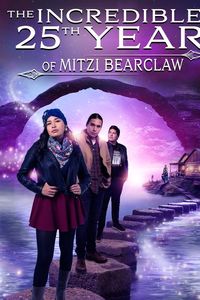
    (On Cable TV, October 2020) Despite its nearly-all-native cast and focus on First Nation issues, there’s a broadly accessible quality to The Incredible 25th Year of Mitzi Bearclaw’s narrative. In many ways, it’s a transposition of the old “college-educated young person goes back to small town” plot template, as the titular Mitzi feels compelled to abandon an upwardly-mobile career in Toronto as a fashion designer to go back to the reserve so that she can take care of her mother. What she rediscovers there is the old accumulation of romantic entanglements, dysfunctional family, old rivalries and the complications of living away from the big city. Where the film proves itself more interesting than expected is in the various flights or fancy (or moments of magical realism—your pick) that enliven the otherwise realistic narrative. Working at the limits of a very low budget, The Incredible 25th Year of Mitzi Bearclaw gets us in fantasy, horror and science fiction as it leaps inside its lead characters’ inner life. MorningStar Angeline is remarkable as the protagonist, credibly portraying a young adult going through a rite of passage rediscovering herself. Despite the very serious underpinnings of the themes, there’s an undeniable joy to the character and to the film itself. The conclusion isn’t quite as strong as the rest, but there’s an easy-to-like quality to the result that owes a lot to writer-director Shelley Niro’s ease with the material and competent handling of the camera in richly landscaped surroundings. Canadian First Nation filmmaking is undergoing a significant upswing right now, and The Incredible 25th Year of Mitzi Bearclaw is another example to add to the growing corpus of such films worth watching.

  • A Damsel in Distress (1937)

    A Damsel in Distress (1937)

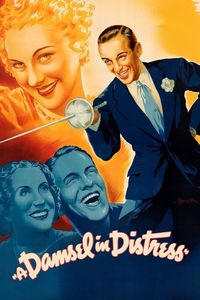
    (On Cable TV, October 2020) One of the lesser Fred Astaire musicals of the 1930s, A Damsel in Distress takes us to England, where Astaire plays (as usual) a renowned entertainer trying to find love. He eventually finds it in the character of an English lady, although not without the complications that usually follow such narratives. The cast does offer some interest, with Joan Fontaine at the female lead, and comic characters played by none other than George Burns and Gracie Allen, the later being progressively funnier as a squeaky-voiced airhead. There’s the usual number and variety of dance numbers from Astaire, and while there’s nothing truly anthology-worthy here, two or three sequences still work really well: “Stiff Upper Lip” leads to a showpiece funhouse dance number, while “Nice Work If You Can Get It” leads to an Astaire drum solo played with a variety of appendages. Nearly everything about the film is perfunctory by Astaire’s high standards—Fontaine is not a particularly good dancer, the comedy is slight (aside from Burns and Allen) and the premise is a bit dull compared to other movies of the era. Those who keep a wearied eye on Astaire’s romantic persona (boiled down to “no means try again later”) will note an explicit statement of the persistence credo late in the film, where a character calls out Astaire for being too passive and to Go Get It. Modern audiences will groan at that moment—what works for Astaire would mean a restraining order and social media denunciations in real life twenty-first century. Still, A Damsel in Distress itself is not too bad, even though it is frankly one of the more easily disposable of Astaire’s black-and-white films.

  • Laugh and Get Rich (1931)

    Laugh and Get Rich (1931)

    (On Cable TV, October 2020) By the high standards of the 1930s comedies that survive today, Laugh and Get Rich is not that good—Oh, it’s pleasant enough in its depiction of an eccentric family running a Depression-era boarding house, but it doesn’t have the supercharged dialogue and plotting of the era’s best work. This being said, it is from early in the decade, barely four years after the introduction of sound movies and before the development of the genre throughout the 1930s. As such, it does have its charms; it credibly pokes at the obsessions of the time (such as oil exploitation) and it does have an early leading role for character actress Edna May Oliver, even as Dorothy Lee provides sex appeal as her daughter. The story has to do with the daughter picking the right prospect for the cash-starved family, but the conclusion is right out of those Victorian morality plays—in which being virtuous invites chance and fortune. (Heck, it’s even in the title.) The conclusion works because it’s a happy one, but it does feel a bit cheap. Still, Laugh and Get Rich can be watched easily enough—it’s not riotous but pleasant, and that’s often good enough.

  • Red-Headed Woman (1932)

    Red-Headed Woman (1932)

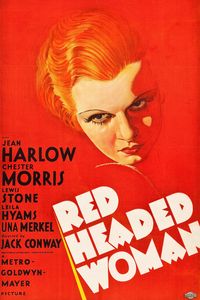
    (On Cable TV, October 2020) If you want a full-blown illustration of where Hollywood cinema was headed in the pre-Code era, go no farther than Red-Headed Woman, a salacious drama in which our heroine systematically goes about improving her social position by seducing increasingly important men, all the way to a climax where she tries to gun down the man she once seduced because he dared reconcile with his ex-wife. Jean Harlow is ferocious in the title role, clearly announcing her bombshell status of later years. There is a little bit of comedy to the proceedings, but Red-Headed Woman really is about shocking mainstream audiences, and it still does—despite some much-harsher material in the intervening years.

  • Reveille with Beverly (1943)

    Reveille with Beverly (1943)

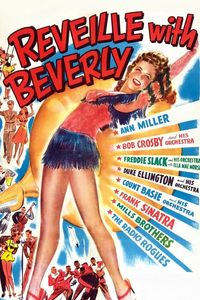
    (On Cable TV, October 2020) I won’t try to hide that I watched Reveille with Beverly solely because of Ann Miller—and while the film itself is now almost obscure for understandable reasons, it’s quite a delight for her fans. Here Miller, barely twenty years old (and possibly even nineteen when the film was shot—she played loose with her age early in her career), plays a radio station assistant with dream of having her own show. Opportunity presents itself when the stuffy host of a morning classical music show goes on vacation, leaving her free to shake things up with more modern music. Since Reveille with Beverly was designed as a home-front wartime propaganda film, it’s no surprise if her program is picked up by the local army training camp and then by the wider military forces. There are a few romantic shenanigans between her and two soldiers (resolved by shipping both of them to the front), but the film is primarily an excuse to showcase musical numbers. As the titular Beverly spins the tunes, the camera zooms in on the record and an optical effect takes us to what is essentially a music video of the performance. What’s noteworthy here is the unusually heavy percentage of black artists in the mix—from Count Basie to The Mills Brothers, to Duke Ellington. Musically, there’s some interesting material here—acting as an anthology of 1943 pop music, there are a few classics (“Take the A Train,” and “Night and Day” as sung by Frank Sinatra), plus a few fun surprises: “Cow-Cow Boogie” is fun (sung by Ella Mae Morse), but my favourite is probably “Sweet Lucy Brown.” Non-musically, the film does feature one of Miller’s relatively rare leading roles—and while much of the character is about non-dancing, non-singing comedy, she gets a very brief tap number at the start that foreshadows her climactic tap-dancing singing number. It’s not a great film, and we can understand how the thin plot, sometimes-dated material (including a comedy routine that’s maybe a fourth intelligible to modern audiences given how heavy it is on contemporary references) and wartime nature have made it a bit of a forgotten curio today. But fans of Ann Miller will get quite a kick out of it, and so will students of circa-1943 American pop music.

  • The Benny Goodman Story (1956)

    The Benny Goodman Story (1956)

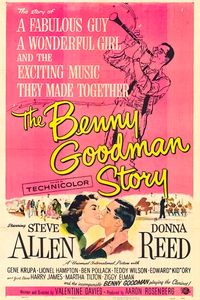
    (On TV, October 2020) I never expected to have watched so many movies about American band leaders, even less having an opinion on them, but we’re in the middle of a pandemic and weirder things are happening. There aren’t many clearer illustrations of how American pop culture has evolved as how band leaders have been replaced by other kinds of stars (usually lead singers of musical groups) in the popular imagination. Now, I’ve had a soft spot for Benny Goodman for plenty of reasons—Goodman was image-conscious, he regularly showed up in Hollywood movies between 1937 and 1948 and as luck would have it, I ended up watching his only featured role in Sweet and Low-Down a few weeks before The Benny Goodman Story. Here, Steve Allen (who would go on to become an exemplary talk-show host) has a credible take on Goodman, round glasses and general bonhomie included. The film is clearly in the Hollywood biopic mould, focused on his long-running romance with Alice Hammond (Donna Reed), whose character comes to exemplify the acceptance of Goodman’s brand of “hot” jazz by the American mainstream. There’s plenty of music to go along, and his classic cover of “Sing, Sing, Sing” is kept for the very end of the film. The Benny Goodman Story is an enjoyable film (and it’s just as good as something you listen to while doing other things) and a decent immortalization of Goodman. There’s some illustrative value here for jazz enthusiasts in depicting the transition of the art form into a more modern form, as well as a modest message of integration along the way.

  • Waltz of the Toreadors (1962)

    Waltz of the Toreadors (1962)

    (On Cable TV, October 2020) There are movies for which the only payoff is realizing, in the end, what could have been. Such is the case with Waltz of the Toreador, which stars Peter Sellers for his character work, but seems more interested in a blend of not-quite-slapstick, not-quite-serious tone. I tried staying interested in the film and failed more often than not, only seeing toward the end what could have been. The core seems solid enough, what with a retired military officer reflecting on his life and us seeing the results of choices made in flashbacks. But there are many ways in which such a movie can end in a disappointment, whether it’s in adapting source material that may not be suitably for the big screen (in this case, a theatrical play), squabbling between producers and directors as to what exactly is to be delivered, an actor’s ego getting in the way (a real possibility in the Sellers’ case) or simply the movie moving out of touch with time—Waltz of the Toreador may have been a commercial success back then, but it’s been mostly forgotten today even for Sellers completists. The result is a mess, neither going for the typical Sellers comedy nor achieving something along the lines of the not-dissimilar The Life and Death of Colonel Blimp. No matter the reason, Waltz of the Toreadors falls flat, and it’s more trying than you’d expect to make it all the way to the end, even if the end does tie it back together.

  • One Hour with You (1932)

    One Hour with You (1932)

    (On Cable TV, October 2020) It’s easy to see in One Hour with You why Maurice Chevalier was Hollywood’s Favourite Frenchman in the early 1930s—It’s not just about the really charming accent, it’s about the congenial bonhomie, the joie de vivre and the almost irresistible charm of the man. This may not be a great movie, but it’s a lot of fun and it allows Chevalier to do what he does best, up to speaking (and singing) directly to the audience in an attempt to explain himself. The story, slight as it is, has to do with a happily married couple being tempted by adultery—and while, in the freewheeling pre-Code era, our heroes do succumb to “temptation” by kissing, modern audiences may want to fill out more salacious details in their minds. Still, the plot isn’t nearly as interesting as seeing Chevalier (and Jeanette MacDonald as his wife) sing and deliver some great monologues, along with some witty repartee and sophisticated European attitude toward marriage, love and courtship. Amazingly enough, the film can be said to have been directed by Ernest Lubitsch and George Cukor thanks to some production shenanigans, although the Lubitsch touch is more obvious. Clocking in at a tightly tuned 80 minutes, the film earns a few laughs and leaves us with a big smile on our faces (which, considering that I watched it in close proximity with other tales of adultery through the decades, is no mean feat). A great script filled with witty dialogue and sophisticated comedy wraps up the rest. A clear star vehicle that delivers, One Hour With You is a shining example of Pre-Code romantic comedy, funny, daring and still incredibly effective ninety years later.

  • Virginia O’Brien: MGM’s Deadpan Diva, Robert Strom

    BearManor Media, 2018, 304 pages, C$45.00 hc, ISBN 978-1629332208

    One of the most charming afflictions of digging into Hollywood history is getting crushes on long-dead actresses, their fleeting likenesses captured in fuzzy black-and-white video and scratchy monaural audio. It’s almost tradition to look up their filmography and immediately get an overview of their careers and deaths. They may be gone, but their performances live on.

    Such is the case with Virginia O’Brien (1919–2001), a very distinctive performer with a short career: she appeared (sometimes briefly) in less than twenty movies, most of them from 1940 to 1947 while she was under contract to MGM. I first encountered her during a broadcast of Ziegfeld Follies (1945), a revue film in which the plot takes a distant second place to a series of musical and comedy numbers. After an introduction featuring no less than Fred Astaire, Cyd Charisse and then Lucille Ball cracking a whip over chorus girls dressed as panthers (!), the first thing that struck me about the film was the next performance: An unexpectedly hilarious song in which a cute brunette with a bored air but wickedly funny gestures sang about “Bring on Those Wonderful Men” from atop an obviously fake horse. I immediately watched the number again, because I wasn’t prepared for it the first time.

    That, in a nutshell, was Virginia O’Brien: a beautiful woman with a gift for song and comedy who could instantly become the highlight of any film with a two-minute performance. As I deliberately tracked down her screen appearances, the pattern would repeat itself. She would appear in the middle of a film, slay the audience with a deadpan rendition of a comic song, and leave us wondering why the rest of the film couldn’t be as good as she was. Most of her movie credits are one-scene appearances, sometimes two scenes if the producers wanted a little bit more fizz. More rarely, she had more substantial roles: She played second fiddle to Eleanor Powell in Ship Ahoy, to Lucille Ball in Du Barry was a Lady and to Judy Garland in The Harvey Girls — that last being the best-known of the films she played in. Her only starring credit is Merton of the Movies, in which she (ably) plays the romantic lead to frequent co-star Red Skelton, doesn’t sing but gets a great romantic comedy scene in teaching him thirty-seven kinds of kisses. O’Brien’s voice and style were so distinctive that it happened more than once that I’d perk up and pay attention when movies playing in the background featured her. (For more appreciations, have a look at my “Virginia O’Brien” tag.)

    That, if you only paid attention to the movies capturing her performances, would be all you’d know about Virginia O’Brien. Beautiful face, tall-and-slim figure, lovely brunette curly hair, great comic instincts and a decent voice made even more remarkable by her deadpan style. But “deadpan” undersells the effectiveness of her comic style: the bored voice is enlivened by lively interjections, quick facial expressions (eyebrows raised, eyes rolling, grimaces) satirizing the song and, in her best performances such as Du Barry Was a Lady’s “Salome” or Two Girls and a Sailor’s “Take it Easy,” hand gestures and full-body comedy to an extent that you’re missing more than half the fun if you’re only listening. Most of her work is in bite-sized song performances ideally suited to a YouTube binge, but quickly going through her filmography in that way does remove the element of contrast from her performances — she was remarkable because she did things very differently from other featured players of the time.

    It’s wonderful to realize that thanks to the Internet and film institutions such as Turner Classic Movies, people can still appreciate someone born a hundred years earlier, especially one who never achieved superstardom. There is no fan club for O’Brien, but there are plenty of fan pages. If you wanted more, your options were limited until 2017, when Robert Strom’s full-length authorized biography Virginia O’Brien: MGM’s Deadpan Diva became available for purchase. I couldn’t help myself — I had to learn more than the cursory biographies available online and so got myself a hardcover version of the book.

    As a piece of work celebrating O’Brien, Strom’s book has the essentials: A birth-to-death narrative, pages of sources, excerpts from contemporary articles, a stunning number of pictures, as well as recollections from her daughter and late-life acquaintances. If you’re looking to expand your knowledge of O’Brien’s life, you have plenty of material here.

    Unfortunately, you’re going to have to work and suffer for it because MGM’s Deadpan Diva is a frustrating biography. The issues are numerous, and they can be found at all levels, from the words to the structure.

    BearManor is a small publisher with a large catalogue, but based on this book I’m not sure that they have the resources to properly do justice to what they publish. Typos, errant spacing and typography errors abound. One of them is even on the back cover, failing to distinguish between two titles from the same author; some of them interrupt the flow of reading (such as when a piece of narrative is formatted as a quote on page 116); and there’s one oddly misplaced more on page 188 that makes me suspect that the editor’s notes were not completely removed from the printed manuscript. Such errors fall squarely in the realm of the publisher more than the author, but they don’t inspire confidence in the rest of the work.

    But the problems get worse when you get to the sentence-by-sentence writing of the book, which is straightforward at best, irritating at worst and clumsy most of the time. Ambiguous syntax abounds, failing to distinguish between O’Brien and other people. Many sentences have to be re-read to be understood. Crucial connective passages are missing, making the narrative feel like sentences simply strung together. The narrative flow is frequently absent, and Strom can’t always tell a story effectively due to a lack of structure in his paragraphs. Did anyone even try to improve the manuscript? Such editing errors are a disservice to the author: Awkward sentences without context make Strom sound dumber than he is (Such as the bit on page 225 where he praises Wikipedia at the expense of IMDB’s completeness… what?)

    Nearly every page has an issue. Some of them are obscure: the one French quote in the notes is garbled beyond full understanding, which probably won’t bother most of the book’s audience. But some of them are more spectacular than others, such as the dumb mistakes of repeating the same paragraph almost verbatim on successive pages (see “…articles began to appear about Virginia’s return to movies…” on pages 222 and 223). It’s enough to make anyone wonder if BearManor simply reprinted the first draft sent by the author. Any good editor would have done something to improve the result — and if one did, I shudder at the thought of what the initial draft looked like.

    But all of this pales in comparison to the biography’s more substantive failings. While I believe the Strom has assembled almost everything ever published or broadcast about O’Brien (most likely through having access to her personal archives), he hasn’t synthesized or analyzed much. Much of MGM’s Deadpan Diva reads like undigested press clippings, going from one article summary to another in an attempt to tell a life through media echoes of public appearances. The trivialities and repetitions are exasperating, especially in tangents that contribute nearly nothing to O’Brien’s biography nor the context in which she worked. Strom too infrequently cares to comment on the material he collects, leaving readers to wonder what’s important, what’s false and what’s normal.

    It doesn’t help that the chronology of the book seems focused on media appearances rather than O’Brien’s life. Some fundamental questions are addressed late in the book, as O’Brien reflects on her past career in interviews and Strom summarizes her recollections — but the best place for that information would have been earlier in the narrative, informing our understanding of O’Brien’s state of mind in the thick of her brush with stardom. As it is, Strom has produced a biography that never gets in O’Brien’s head and seems content to look at it from the outside, a hands-off approach that remains intensely frustrating throughout.

    Biographies don’t have to be like that. By happenstance, I ended up reading Scott Eyman’s superb Cary Grant: A Brilliant Disguise in parallel with Virginia O’Brien: MGM’s Deadpan Diva, alternating chapters from both books and… well, Eyman isn’t known as one of the best biographers of classic Hollywood for no reason. Eyman succeeds everywhere Strom falters: A Brilliant Disguise is a joy to read, dramatizes Grant’s life from the available documentation, does not spare its subject from criticism and actually gets into a very complicated man’s head in a way that answers troublesome questions. Coming back to MGM’s Deadpan Diva after that felt like having to do homework, trying to assemble a coherent picture of O’Brien from the breadcrumbs collected by Strom.

    It doesn’t help that Strom appears to be more of an admirer than an honest biographer. MGM’s Deadpan Diva is a hagiography. He doesn’t want to question his subject. He doesn’t even seem interested in presenting a full picture. One of the rare moments where his text becomes animated is in criticizing a negative but provocative review of O’Brien’s tribute show that more even-handed biographers may have used to explore her late career. Strom refuses to explore O’Brien’s life beyond lavish praise at everything she did and so I’m left at the end of his book with more questions than at the beginning. Even from the outline of her life, I want to ask — why the three marriages? How did she feel when at the mercy of the studio? What was it to be on set in MGM’s legendary backlot? Did she resent Judy Garland’s breakdown affecting the end of her MGM contract? (O’Brien may have had a very different career if Garland’s personal issues hadn’t delayed the filming The Harvey Girls beyond the date at which O’Brien’s risky first pregnancy required cutting down her role.)  Was her post-1947 life really entirely dedicated to recapturing her glory days at MGM, or is this just the impression left from Strom’s media-centric research? How did she feel after the end of her Hollywood experience, balancing family life with memories of quasi-stardom? How was Virginia O’Brien away from the stage? Strom barely answers, sometimes with a mere unquestioned line or two. Even later-life highlights, such as being designated honorary mayor of Wrightwood, CA, are barely covered. So many questions, not all of them comfortable.

    I can understand the reason behind some of these choices. 1940s Hollywood was a long time ago from an oral history perspective. Unlike other Hollywood superstars, O’Brien did not leave much in terms of interviews, writings, a lengthy body of work or critical commentary about her. You can’t just ring up Red Skelton and ask what he thought of her off-camera. The official early record is tainted by the work of MGM publicists, and later record filtered through people who wanted to be nice to her. Even being able to interview her daughter and a few other people who knew her in the 1980s (a point at which Strom’s portrait finally becomes less media-centric) is not like having access to contemporary recollections from third parties or private diaries —although I gather from the acknowledgements that Strom had access to O’Brien’s personal memorabilia and worked closely with her daughter. Strom took on a tough assignment, and at times I felt that getting rid of the book’s trivial minutia would probably not leave a viable work to publish.

    But there are ways around some of that, and you can see in the book a few ways in which it could have been improved. A structure that doesn’t clumsily begin with a dull exposition of what happened in the world in 1919 would have helped — considering that Strom repeats a few versions of O’Brien’s origin story (she discovered her gift for comedy when she was stage-struck in front of an audience, started singing with a stone-cold lack of facial expression, and got such a great reaction that she made that her shtick.), all of this could have been distilled in an opening chapter dramatizing her Big Moment.

    Strom also largely fails at the art of providing context. There’s a reason why “The Life and Times of X” have become such a cliché biography subtitle: understanding a person is only possible in understanding what was normal and what was not about them and their environment. There was an ideal opportunity to explore the life of a minor studio contract player through O’Brien. Glimpses of this appear in MGM’s Deadpan Diva, as Strom assembles the publicity material required of the studio’s marketing machine and hints at what was expected from those under contract. But there’s very little context. Even in introducing the movies in which O’Brien plays, Strom barely provides any descriptions of those films that would make it easier to understand O’Brien’s place in Hollywood. In fact, by highlighting O’Brien at the expense of the system of which she was a part, Strom gives a misleading impression that does a disservice to her accomplishments. (Again: the perils of a fannish biography.) I read more intriguing takes on O’Brien from quick blog posts commenting her performances without the depth of media clippings and friendly recollections that Strom assembled. What a missed opportunity — Superstar biographies are common, but this was a chance to do something more interesting about a regular player and, in doing so, explore the studio system from a different perspective.

    After so many paragraphs eviscerating the failings of MGM’s Deadpan Diva, you could be forgiven for thinking that I hate it… but I don’t. Oh, I was frequently annoyed, frustrated and even exasperated throughout the entire book, but I still think that its very existence is wonderful. I like that, even with its numerous problems, there’s an entire book dedicated to a minor MGM star born more than a hundred years ago.

    I certainly have issues with the way it’s presented, but I actually learned quite a bit from MGM’s Deadpan Diva: One particularity that short profiles of O’Brien undersell is how she was a rare Los Angelino to make it to the movies: She didn’t come to Hollywood from other areas of the United States seeking fame and fortune, but grew up around the city’s best-known industry and arguably fell into it by happenstance. Her father was a well-known policeman, her aunt (momentarily) married into the movie business and she was discovered by MGM because she was playing at a theatrical venue in town. Even left to my own conclusions, the repetitious detailing of O’Brien’s performances for the troops throughout World War II and radio appearances adds an intriguing dimension as something you can’t really know from the movies themselves. It’s amazing that we get a good chunk of the book dedicated to what happened to her after the cameras stopped rolling for the big screen, as she goes on to capitalize on her past fame by performing in small cabaret venues and for tribute shows with other aging celebrities. As someone with a deepening understanding of classic Hollywood history, I got quite a thrill learning that she was friends with Groucho Marx, met fellow-deadpanner Buster Keaton at least once (the book showcases a photo of him sitting on her) and was photographed next to other favourite MGM players such as Ann Miller and Cyd Charisse in their later years. Speaking of which — the book probably has the ultimate collection of Virginia O’Brien pictures ever assembled.

    In other words, I really enjoyed MGM’s Deadpan Diva even despite its hair-pulling problems. I’m actually proud to own the book — There probably aren’t that many printed copies out there, and the subject matter is so specific that the book can become a conversation piece by itself. I’d love to get the book autographed if I could. I may have a lengthy list of things that I wish Strom had done better, but the effort required to get all of that information must have been substantial, and I’m indescribably glad that someone did it. The flip-side of that is that you have to be a Virginia O’Brien fan before cracking open the book — Unlike other biographies, MGM’s Deadpan Diva presumes that you already love her and doesn’t make much of an effort to explain why she warrants your attention. It’s a biography for fans with the huge proviso that this entails, but if you’re hungering for more about O’Brien, steel yourself for bad writing and get the book anyway: it has everything that’s possible to dig up about her, even if there’s still quite a bit of assembly required.
  • The Long Voyage Home (1940)

    The Long Voyage Home (1940)

    (On Cable TV, October 2020) Hailing from that strange period in history where Hollywood was egging an isolationist United States to support England’s WW2 efforts but not quite yet under fire, The Long Voyage Home adapts and updates four Eugene O’Neill plays to contemporary times, following a team of sailors aboard a British steamer during the early days of World War II. This being said, it’s not quite a war movie despite a number of battle sequences and a glum conclusion: it’s far more focused on the characters and their relationship in the face of world events. As a result (plus the presence of John Wayne, annoying at the best of times), I don’t think too highly of the result—the film does feel overlong due to its lack of narrative density. The fairly grim narrative also contributes to the feeling of being stuck in the film longer than strictly necessary: this is not a fun ride, and while you can recognize director John Ford’s Western-ish touch, the setting does not lend itself to the same tone. It’s easy to see why The Long Voyage Home was nominated for a few Academy Awards (including Best Picture), and it does offer a drama of unusual scope when most war movies of the time were more restrained, but it’s not really a film you’ll watch more than once.