Reviews

  • Muscle Beach Party (1964)

    Muscle Beach Party (1964)

    (On Cable TV, October 2020) What may be insufferable juvenilia to a generation may be a cultural artifact half a century later, and if contemporary reviews for Muscle Beach Party weren’t kind, I suspect that more modern takes on the film will revel in the mid-1960s California beach atmosphere. The second of the “Beach Party” series with Anette Funicello and Frankie Avalon, this sequel brings together the burgeoning surfer and bodybuilding cultures together in a comic setting, with an added dash of romantic spice as an Italian countess distracts Avalon from Funicello’s affections. Add some bouncy music (by the Beach Boys, the Del Tones and an insanely young Stevie Wonder), a late-movie cameo by Peter Lorre (with the film having the decency to literally stop in mid-frame as he makes an entrance) and you’ve got enough here for any sixties pop-culture enthusiast. Don Rickles and Buddy Hackett provide additional comedy. It’s all set against the then-newish concept of the “the teenager,” with California showing the way to the rest of the nation. Muscle Beach Party is really not sophisticated entertainment, but it is sunny fun and it’s now almost perfect as a time capsule of its time.
  • Ride the High Country (1962)

    Ride the High Country (1962)

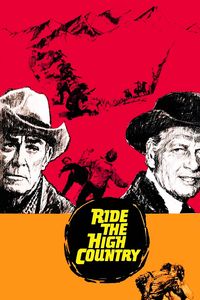
    (On Cable TV, October 2020) If you start watching Ride the High Country and see Sam Peckinpah’s name as a director, you may end up making a few unfortunate presumptions as to how the film is going to go. But seven years before The Wild Bunch made him define his own brand of ultraviolence, Peckinpah was still developing his skills as a filmmaker when he put together Ride the High Country, and while the result does show many of Peckinpah’s later trademarks, it’s also something much closer to traditional westerns. The plot has to do with two aging gunslingers taking on an assignment to transport gold from a miner’s camp back to the bank. But things get more complicated when they encounter a man with a daughter, and trouble follows them all the way to the miner’s camp. If you watch the film based on Peckinpah’s reputation, you will be surprised at some of the over-comedic touches of the film’s first half (complete with amusing musical cues), yet dreading the inevitable descent into violence that is sure to come. But while I’m no big fan of westerns, this one does things slightly differently enough, and well enough, that I found myself gradually taken by the result. By the time a rather dour finale rolls by, the film is actually quite remarkable, and we can understand those who call it Peckinpah’s first success. Former Golden-age Hollywood leading men Joel McCrea and Randolph Scott both get one last role here, with Peckinpah getting an early chance to showcase one of his predominant themes—the end of the wild west. Ride the High Country is both a representative western and an unusual one as well—the result is good enough to be worth a look even for those who don’t regard westerns with any particular affection.

  • Crimes and Misdemeanors (1989)

    Crimes and Misdemeanors (1989)

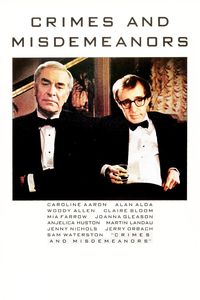
    (On TV, October 2020) I can objectively recognize that Crimes and Misdemeanors is a good movie and I can understand those who maintain that it’s one of writer-director Woody Allen’s best… but I don’t have to agree. Much of this disagreement is the overwhelming impression, sometimes left by his later movies, that we’ve seen all of this before. Taking place in Allen’s favourite upper-middle-class Manhattanite intellectual strata, it’s a film that blends witty dialogue, existential musings, comedy and drama in a mixture very much like, well, half a dozen of Allen’s other films, perhaps most closely with Manhattan Murder Mystery (which, in retrospect, can almost be called an affectionate parody), but also backward to Manhattan for the setting and character and forward to Irrational Man for the nods to existentialism. In other words, if you’ve seen the rest of Allen’s filmography, Crimes and Misdemeanors (to which I’m a late, late arrival) doesn’t hold anything new. It does not entirely help that the film abruptly gains meaning, narrative coherency and an extra star (or whatever you call a better reviewer’s grade) in its final scene, as it finally melds the twin strands of the plot into something looking like a point. Oh, I still liked it: No matter what I think of seeing Allen as a nebbish loser blowing up his marriage with extramarital longing, there’s still a comfortable atmosphere to the result, and despite what I just said, I’m not going to begrudge him another exploration of New York City intellectuals. The acting talent assembled here is, as usual, splendid: Martin Landau, Mia Farrow, Alan Alda and Anjelica Huston as a semi-hysterical mistress… yes, that does it. The comedy here is well dosed with the drama and the philosophical suspense, providing a film that neither errs too heavily on the side of ruminations nor (alas) on the side of absurd gags. It’s finely controlled, and my quip about the plots fusing only in the end scene is belied by plenty of thematic transitions between the two subplots. Still, I can’t help but feel that, given my zigzagging path through Allen’s filmography, I have come to Crimes and Misdemeanors too late to enjoy it at its fullest.

  • Creature from the Haunted Sea (1961)

    Creature from the Haunted Sea (1961)

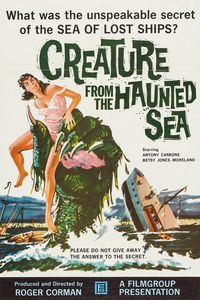
    (On Cable TV, October 2020) If I’ve understood Creature from the Haunted Sea’s production history correctly, it was born from the mercenary mind of legendary producer/director Roger Corman when he found himself fin Puerto Rico with leftover film stock, tax credits, actors, a crew and time to spare after shooting two other movies on location. A screenwriter was given three days to adapt an existing script in Corman’s files into a comedy making use of available scenery and props, and the film itself was shot in five days. Considering this, it’s a minor miracle that Creature from the Haunted Sea, at a bare 75 minutes, has survived all the way to 2020, let alone that it still gets a few laughs. The story has something to do with a less-than-competent American spy tagging along a criminal and his hoodlums as they exfiltrate a Cuban general and plot to steal his gold, notwithstanding the local sea monster. But let’s not be too complimentary: From the very first few moments, it’s obvious that this “comedy” is going to be more incompetent than actually funny. All of the characteristics of an ultra-low-budget production are obvious from the first minutes, from the awkward dialogue, staging, acting, scenery or editing. It just gets worse afterward, with narrative and tonal zig-zags all over the place as the comedy runs out of steam and the film tries to be serious for a moment. It all falls apart quickly, and the only thing fit to help viewers make it all the way to the end is a bizarre mixture of bad-movie howlers and some genuinely funny lines and moments. You can see how, given a few more weeks, this could have become a decently entertaining comedy—but in the state it’s in, this spy/monster spoof barely makes sense: The funniest lines (and some of them do get a laugh) come from the narration, which I suspect was put together in post-production with a bit more time to polish. It’s far more entertaining than you’d suppose (the film earned a rare lowest-of-the-low “7” raking from French-Canadian reviewing authority MediaFilm), but half of it is for the wrong reason: threadbare production values, bad acting and barely coherent plotting distract rather than add to the zany concepts and a dozen funny lines.

  • Angst (1983)

    Angst (1983)

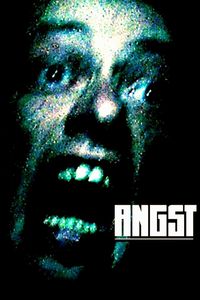
    (In French, On Cable TV, October 2020) If someone decided to make the film I would be most guaranteed to dislike, it would look a lot like Angst. It’s not just a non-supernatural horror movie with plenty of gore: it’s one that uses a naturalistic, borderline cinema-vérité style to follow a serial killing psychopath as he goes around his deadly business. The camera seldom flinches even as he kills and kills again, the narration (from the killer’s viewpoint) is grating and the effect is like being dragged in mud whether you like it or not. The only thing that saves the film (and I use the term loosely) is an undeniable filmmaking competency from writer-director-producer Gerald Kargl: he knows that he’s going for revulsion, and he won’t stop at anything to get it. In other words, this may be a gruesome, obnoxious, morally repulsive film, but it’s one that consciously set out to be, rather than struggling with even the basic elements of how to put a movie together. Angst is still not something to recommend: This is ugly cinema at its worst, and it’s the opposite of anything I want from a movie. Bring up a fluffy romantic comedy next, because I need to find some joy in life again.

  • Where the Sidewalk Ends (1950)

    Where the Sidewalk Ends (1950)

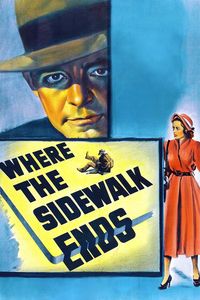
    (On Cable TV, October 2020) I’m always game for an Otto Preminger movie, and while Where the Sidewalk Ends doesn’t have the cachet of some of his better-known productions, it’s a perfectly fine example of a crooked-cop film noir. Dana Andrews plays a cop with a bit of a problem roughing up suspects, but things quickly turn ugly for him when a routine interrogation becomes manslaughter—covering up his traces only endangers the father of his newest flame, and much of the film consists in following him as he sees his scheme unravel and his conscience attempts one last stand. Cleanly directed, competently acted and almost perfectly following the classical noir atmosphere, this is an easy to watch, tightly-constructed film that tightens up the suspense and delivers a satisfying finale. Gene Tierney plays the love interest that ends up being the protagonist’s moral beacon, and Ruth Donnely has a small but very effective role as a bantering café owner. While twenty-first century viewers would frown at the idea of a rough cop being the hero, twenty-first century viewers would also expect his transgressions to be more extreme—in that light, there’s a curiously refreshing lower-stake approach to Where the Sidewalk Ends that almost makes it comforting viewing even when it gets into the gritty details of cop work in New York City.

  • Bride of Re-Animator (1990)

    Bride of Re-Animator (1990)

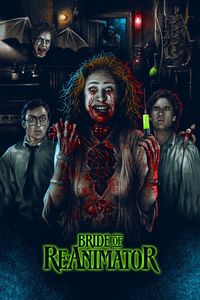
    (In French, On Cable TV, October 2020) While Bride of Re-Animator does build up to a suitably high-energy finale, it does take a lot of time to get to the Bride of Frankenstein reprise: Much of the film is spent getting the pieces in the correct order, even flying off the face of the logic established by the first film or its aftermath. Held together once again by the over-the-top performance of Jeffrey Combs as mad scientist Herbert West, Bride of Re-Animator does idle a lot of the time, only going for broke in its last half-hour with gory effects, grotesque creatures and a heart-ripping finale. It’s certainly a letdown from the first film, even if it clearly plays in the same playground with a bit more technical polish. The not-that-serious tone does help a lot in not entirely dismissing the result—if you’re even remotely interested in comic(ish) gory horror, Bride of Re-Animator is going to be good enough even though it’s clearly a second-tier effort despite some late-film energy.

  • Mountaintop Motel Massacre (1983)

    Mountaintop Motel Massacre (1983)

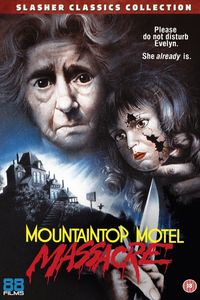
    (In French, On Cable TV, October 2020) Sometimes, I wonder if everyone and their dogs were filming slasher movies in the early 1980s—there are so many of them, with such slight variations, that viewers at the time must have been sick of them in short order—no wonder the genre deservedly went into severe eclipse after a few years. Mountaintop Motel Massacre is not fondly remembered as an exemplar of the genre and even a casual look will quickly reveal why: Uninspired direction blandly executed a script filled with slight variations on slasher clichés. The killer is a crazy middle-aged woman (that’s not even a secret), the setting is a dilapidated rural motel and the weapon is a sickle. That’s all you really need to know—the rest is just kills, kills, kills, as boring as they are devoid of meaning, theme or narrative meaning. So dull, so incredibly dull.

  • Return of the Living Dead III (1993)

    Return of the Living Dead III (1993)

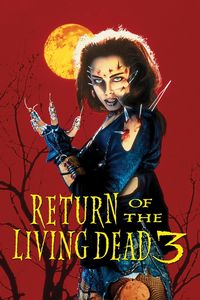
    (In French, On Cable TV, October 2020) My movie selection is eclectic and far more dependent on TV schedules than you’d think, and if I had my choice, I’m not sure that I’d go through the Return of the Living Dead series in ante-chronological order: After seeing the first, I skipped over to the fourth and just now watched the third. Although, considering the reputation of the series as getting worse and worse, maybe that watching order makes more sense: Whet your appetite with a solid first film, then go to the bottom and work your way back up. Return of the Living Dead III is certainly a step up from its disconnected follow-up Necropolis: It even approaches Hellraiser body horror territory at times by following two teenagers, as one of them is brought back from the dead and discovers that the only way to avoid succumbing to zombie urges is to practise extreme masochism. What’s not there, however, is the humour of the first instalment: this third entry is increasingly grim, and the final act of the film gets darker and approaches Day of the Dead levels of nihilism. That final act feels contrived, especially as the film could have ended minutes earlier with an equally powerful last shot—but no, it just keeps going in darker and more frustrating territory the longer it goes on, renewing with hackneyed weaponization clichés and terrible operational procedures that could have been left elsewhere—although the zombie cyborg thing is not bad. Under director Brian Yuzna’s supervision, Return of the Living Dead III is a blend of intriguing elements sometimes used effectively, and sometimes in ways that are too reminiscent of other zombie films. Melinda Clarke is not bad as the teenager who eventually becomes a vision of masochistic fetichism, but far more care has been spent on the gory special effects. Fans of the subgenre will find something in here to like, but I just miss the comic tone of the series’ first film. Although, come to think of it, I still have the second instalment to watch.

  • Justice League vs. the Fatal Five (2019)

    Justice League vs. the Fatal Five (2019)

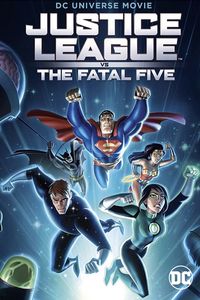
    (On TV, October 2020) At this point, I’m watching the DC animated movies with a very specific perspective: I’m not a completionist nor a big fan of the DC universe, so I don’t really care about the overall details of the universe, nor the specifics of the rather dull fights that feel contractually obligated throughout the films. I have a better time watching the films for their quieter moments: the relationship between the characters or the themes that emerge from the instalments once in a while. For Justice League vs. the Fatal Five, this means that the best bits are some dialogue snippets early in the film, as the main plot is being put together, the overall theme of dealing with mental illness, and a glimpse at the far future of the DC universe thanks to time-travel shenanigans. There’s some surprisingly compelling material here about characters reacting to PTSD and mental health issues, with a few good character moments for familiar characters such as Batman and Superman. Still, my interest in the film dwindled throughout its extended third act, as one meaningless fight after another takes the place of the dialogue and character building. But that’s more or less par for the course whenever we’re dealing with the animated DC universe: The good material is front-loaded, and by the time the fights start, you can fast-forward to the expected conclusion.

  • Cult of Chucky (2017)

    Cult of Chucky (2017)

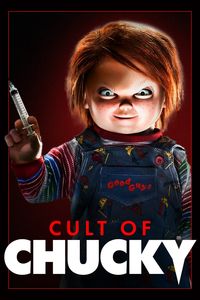
    (On TV, October 2020) I really wasn’t expecting much from Cult of Chucky considering the bland return to form of the previous Curse of Chucky, but this seventh instalment ends up recapturing some of the inspired lunacy of the previous films’ best moments. The tone is given early on, as a now-adult victim of the killer doll’s mass-murder sprees is revealed to keep the head alive… for torture. Bringing back bits and pieces of nearly ever single instalments so far (at least as much as I can remember from scattered viewings of the series), this Cult of Chucky is pleasantly over-the-top throughout, but goes fully crazy (in a good way) for the last thirty minutes of the film: By the end, the rules of the series are completely upended and the film sets itself up for even further instalments in traditional nihilistic fashion. (Although, as of 2019, the series seems to have rebooted.) The various gory sequences are sufficiently over-the-top that they have no relationship to reality, making them a bit easier to take. I still don’t like the series, and my tolerance of Cult of Chucky only goes so far, but this seventh instalment goes to surprisingly new places and ends up more entertaining than expected—perhaps only second to the metafictional comedy of Seed of Chucky.

  • Dans la brume (2018)

    Dans la brume (2018)

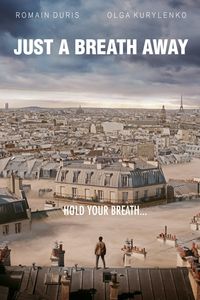
    (On TV, October 2020) I briefly interacted with director Daniel Roby prior to the release of his debut film La peau blanche back in 2003 (I coded the first iteration of the film’s web site) and we shared a common friend for a decade afterward, so I was favourably predisposed to see what he’d been up to recently, and that turns out to be the high-concept decently-budgeted French disaster film Dans la brume. The film’s first Big Idea is to have toxic gas emerging from the underground to blanket Paris with a thick multi-storey blanket of toxic fog, forcing two of our three main characters to find refuge in the top-floor apartment of their building. The third main character, in Dans la brume’s second Big Idea, is a teenager with a chronic health condition living in a hermetically-sealed bubble that periodically needs to be attended to during the resulting power outage. The main elements having been introduced, the script then goes on to further complicate the situation: ever step forward, such as getting out of the apartment, is accompanied by a step back—some of them frustratingly arbitrary. Still, there’s an interesting blend of thriller and science-fiction thinking at play here, with some horror thrown in late in the script in time for an ironic finale that is foreshadowed long before. There’s an eerie chill to the sequences in which the rooftops of Paris emerge from the toxic mist, or when the characters venture in the fog itself. Dans la brume is more gripping than expected, and while I have my concerns about the mean-spiritedness of the last act, the result is a striking piece of genre entertainment.

  • From Dusk Till Dawn 3: The Hangman’s Daughter (1999)

    From Dusk Till Dawn 3: The Hangman’s Daughter (1999)

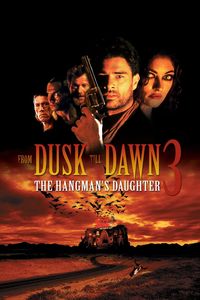
    (On Cable TV, October 2020) Filmed nearly concurrently with From Dusk Till Dawn 2: Texas Blood Money, From Dusk Till Dawn 3: The Hangman’s Daughter takes an opposite route in going back in time to deliver a prequel. Far closer in structure to the first film than the second, this prequel goes back to the late 1800s to feature none other than writer Ambrose Bierce heading to meet Pancho Villa and encountering a few other characters along the way, converging over the familiar dive bar that forms the nexus of the series. It all culminates into a nicely historical version of that concluding shot, except that we’re expecting it this time around. The point of the film is the concluding half-hour’s worth of gore effects as the characters battle vampires in the Aztec ruins underneath the bar, but there’s some additional ambition in featuring a historical character like Bierce and adapting his cynicism to the setting of the story—Michael Parks nicely drawls though Bierce’s convoluted speech patterns and sardonic outlook, and The Hangman’s Daughter wouldn’t be nearly as interesting without him. (Robert Rodríguez contributed to the story.) The film does have a few other highlights: Danny Trejo makes his usual cameo, Temuera Morrison is reliably good in a small role as the Hangman, and Ara Celi does look nice as the titular daughter. The film is clearly aimed at audiences looking for more of that grindhouse exploitation feel. Others may criticize how the cinematography is yellow-tinged, the story meanders in its first hour, and some moments could have been streamlined. But if you’re looking for a slightly more ambitious take on the same find of western/vampire hybrid of the original, The Hangman’s Daughter isn’t too bad.

  • Flower Drum Song (1961)

    Flower Drum Song (1961)

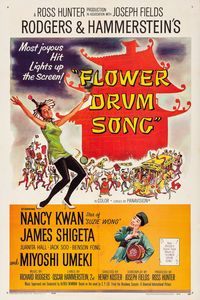
    (On Cable TV, October 2020) In racial sensitivity terms, I expected the worst from 1961 musical romantic comedy Flower Drum Song, but was surprised at how much of it still holds up decently today. Oh, it’s certainly not immune to criticism: Its central love triangle inelegantly recreates some Asian stereotypes, the characters are sometimes written in blunt archetypes and the fantasy portrait of San Francisco’s Chinatown is in unrealistic Technicolor. But considering that even sixty years later, it’s still one of the rare Hollywood movies featuring a mostly Asian cast (albeit of mixed nationalities) with male Asian romantic leads, it’s not a bad idea to look at the positive. It does feature racialized characters defined by their own personality traits, with a minimum of condescension, and they all have agency to pursue their own choices. While I may have issues with the film’s length, the way it presents the immigrant experience with far too many references to white-American cultural makers, or the uneven nature of its musical content, it still leaves a striking impression. If I’m less enthusiastic about the film, it’s largely because it’s from a Rodgers and Hammerstein musical, and I don’t particularly like these kinds of musicals as much as others. Still, there are good moments: Nancy Kwan is great (despite being dubbed) in “I Enjoy Being a Girl,” there is a rather dazzling mixture of musical elements in “Chop Suey” (despite lyrics that I find questionable), and “Gliding Through My Memoree” is a truly amusing bit of countercultural appropriation. Still, much of the film’s interest is in the ethnic details rather than the increasingly tedious romantic hijinks that end up forming the film’s last third. But overall, the film remains a high point of Hollywood openness to the Asian-American community—and one that, sadly, would remain as such for decades: considering the fuss that attracted 2018’s Crazy Rich Asians, there’s still quite a bit of work to do there.

  • Overdrive (2017)

    Overdrive (2017)

    (In French, On TV, October 2020) I’m a very good audience for car-centric action movies, and since we only get a Fast and the Furious instalment every other year, I have to bid my time with something in the meantime. Something, in this case, is Overdrive, and it’s not much of a stretch to call it a Fast and Furious derivative: Written by the screenwriters who have worked on the series (albeit on 2 Fast 2 Furious, easily the worst of the bunch), this film takes us to Marseilles, where a team of half-brothers specialize in stealing expensive cars for rich people. The plot gets underway when they are caught in the cross-fire between two very rich men: Agreeing to steal cars from one to the other, their scheme quickly becomes more complex with moves and counter-moves that all pay off in the last third of the film. Scott Eastwood stars in the film (making extra funnier the constant references to his character’s father), along with the always-attractive Ana de Armas and Freddie Thorp in a role meant for comic relief. Still, the stars here are the cars to be stolen, and the various action sequences that pepper the narrative. Ably directed by Antonio Negret from a production put together by notables such as Pierre Morel (of Taken fame), this is a lower-budgeted but still entertaining attempt at showing fast cars zipping by. The climactic sequence is set on the twisty roads near Marseille and includes some good moments along the way. Still, it’s not much compared to the best examples of the genre: Overdrive struggles with middling actors, bland dialogue, extremely familiar narrative engines and a tendency to fall in love with the cars it managed to bring on set. But if you’re looking for a decent-enough car thriller, this is better than many other examples: it’s entertaining enough to be worth a quiet unassuming look.