Reviews

  • The Manhattan Project (1986)

    The Manhattan Project (1986)

    (Second Viewing, On TV, August 2020) If I’ve got my dates right, I first watched The Manhattan Project almost exactly thirty years ago, a few days before starting eleventh grade. I remember that because I met one of my favourite high school teachers a few days later, and he did look rather a lot like John Lithgow in the movie. Thinking back, it does feel as if The Manhattan Project was a suspiciously appropriate film for my teenage self: after all, it’s about this very arrogant, smart yet somewhat dumb kid who decides to steal some plutonium from a nearby secret lab and uses it to create a nuclear bomb with household equipment just to prove that he could. Now, I never stole plutonium nor tried building a nuclear bomb (I swear!), but there’s something about the protagonist’s flaws that reminds me of my own worst teenage traits… some of them persisting to this day. Three decades later, though, The Manhattan Project now strikes me as a teenage power techno-fantasy, with hazily sketched motives in the service of the set-pieces planned for late in the movie – wouldn’t it be cool if a teenager actually built a nuclear weapon and had to disarm it? It does work as a film, although it’s clearly aimed at a teenage audience. There’s a kinship here with Wargames from three years earlier. Lithgow is quite likable as the kind of eccentric academic ready to step in a surrogate father – John Mahoney also shows up toward the end of the film as a high-ranking military officer, and a young Cynthia Nixon has an ingrate role as a new girlfriend who seemingly doesn’t have any more common sense than our young protagonist. While my perspective on The Manhattan Project may be more detached than as a teenager, I still had quite a good time watching it – despite some less-than-convincing plotting, it moves fast, benefits from Lithgow in maximally sympathetic mode, and it builds up to a very nice climax. Even in contemporary terms of films aimed at teenage audiences, it’s a cut above the norm.
  • Les Boys II (1998)

    Les Boys II (1998)

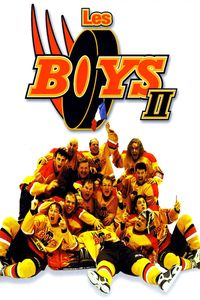
    (On TV, August 2020) Another sequel goes foreign in Les Boys II, the follow-up to the massively successful French-Canadian hockey comedy. Once again, the ensemble cast of who was who in late-1990s Québec film comedy is back for the laughs as the team heads over to France in order to compete in an amateur hockey tournament. This time, the plot has substantially more moving parts than the first film, even though the conclusion is a forgone victory. After briefly reintroducing the substantial cast of characters at a funeral, the first source of laughter comes from the culture clash of French Canadians heading to rural France, where even the language isn’t necessarily shared. Of course, the various personal issues of the team soon create problems of their own, especially when one of the Boys can’t keep his pants buttoned up and angers the local population, and another can’t go without his cocaine supply. The subplots accumulate and start stepping on each other’s toes as the team is held up for their possessions, and can’t run to the police due to a previous incident. Despite the large cast and the characterization relying on the previous film, director Louis Saia keeps it all quite straightforward – even the comedy is usually restrained to character gags, although there is a rather good bait-and-switch involving a match between the Canadians and the Cote d’Ivoire team. (Those will long sports memories will guess that something is afoot the moment Olympian Bruny Surin shows up as the captain of the opposing team.) Otherwise, the film aims right at the French-Canadian male common denominator: hockey, laughs, buddies, women and teaching a lesson to the Europeans. Once-superstar singer Eric Lapointe is back to sing the film’s signature tunes. Les Boys II makes for rather pleasant viewing once you cut it the slack that it requires. It’s very much in-keeping with the first film, while fixing the lacklustre plot issue that plagued its predecessor. The film was a massive crowd-pleaser back in its days (ending up being 1998’s highest-grossing Canadian film) and you can see why. It’s not sophisticated, but it’s fun.

  • Zoom (2015)

    Zoom (2015)

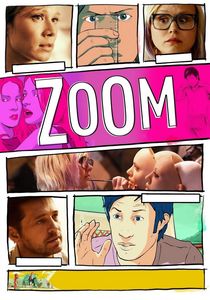
    (In French, On TV, August 2020) Canadian Content requirements weigh heavily on Canadian Cable TV channels, most of which are required to broadcast a certain percentage of Canadian content in order to keep their license. That’s often a recipe for substandard content, but once in a while you get a nice surprise, and that’s Zoom for you. I probably missed seeing this film for years due to its titular resemblance to the 2006 family film, but this 2015 Zoom is something else: a metafictional comedy that deals with ribald issues and three intertwined stories writing each other, once of them being executed as an animated (well, rotoscoped) movie. We begin with a sex-doll manufacturer who, unhappy with her own body, decides to have breast augmentation surgery but becomes unhappy with the results. In revenge, she reduces the penis size of the director protagonist in the comic book she’s writing. He, in turn, can’t quite decide what to do with the female writer protagonist of his film, especially once the producers are unhappy with the arthouse direction of his movie. Meanwhile, that woman writer is having trouble completing her novel, a tawdry story featuring a sex-doll manufacturer who, unhappy with her own body, decides to have breast augmentation surgery… The script takes a while to make the links clear, but as the film goes on, the plot threads become drawn closer and closer until we hit a climax that resonates through all three stories at once. Fans of metafiction will have a lot of fun with the results, even though some tightening up could have been beneficial in making the film even more fun. Still, what’s presented is quite entertaining to watch. Allison Pill is cute in her big glasses and overstuffed shirt, while Gael Garcia Bernal is all sputtering indignation as the shrunken member of the director’s guild. Director Pedro Morelli has the chance to deliver something quite unlike anything else, as he blends the relationship between his three interwoven stories. I’m surprised that I haven’t even heard about this film before today, but that’s today’s fragmented cultural universe for you. At least CanCon requirements have proven useful for once.

  • The Sheltering Sky (1990)

    The Sheltering Sky (1990)

    (In French, On TV, August 2020) As much as I’d like to blame director Bernardo Bertolucci for the waste of my time that was The Sheltering Sky, that would be mis-aiming my ire, which is really directed to the source material, a 1949 novel by Paul Bowles. Bertolucci does provide perhaps the best thing about the result, which is a visually striking depiction of Northern Africa, against which a married couple experiences the dissolution of their marriage. Despite a dramatic premise and a handful of sex scenes (and, later on, tragedy striking), The Sheltering Sky feels like a boring set of tableaux more than a drama. The setting is magnificent, but what’s happening in front of it can’t keep our attention, then becomes increasingly ludicrous as one bad thing happens after another. John Malkovich is playing the kinds of roles he played back then, while Debra Winger sports an androgynous look throughout the film. Don’t bother looking for a moral lesson, don’t bother looking for moments of entertainment, don’t even hope for any mirth along the way: it’s ponderous musings all the way through until a lead character dies and finally shuts up. But then The Sheltering Sky keeps going anyway for what feels like a pointlessly long time. While I’m obviously not the target audience for this film, it really could and should have been a bit better along the way.

  • Birds of Prey: And the Fantabulous Emancipation of One Harley Quinn (2020)

    Birds of Prey: And the Fantabulous Emancipation of One Harley Quinn (2020)

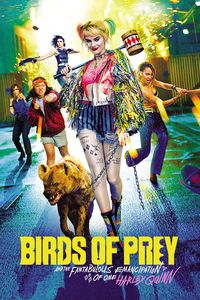
    (On Cable TV, August 2020) One of the reasons why I own a surprisingly large number of Batman graphic novels is the vast cast of supporting characters in his orbit. Not only villains, but allies as well – many of which can sustain stories by themselves, and that includes Harley Quinn and the Birds of Prey, which, curiously enough, have been mashed together in this very stylistically different spinoff, Birds of Prey: And the Fantabulous Emancipation of One Harley Quinn. As the story goes, Margot Robbie enjoyed playing Quinn so much in Suicide Squad that she pushed for a film of her own, and brought in the Birds of Prey to reinforce the film’s female empowerment themes. Far closer to Deadpool than anything else in the DC repertoire, this Birds of Prey is, from the title onward, designed as a garish neon piece of fourth-wall-breaking comedy. The rhythm certainly roars forward: Director Cathy Yan moves things with breakneck speed (especially in the first half-hour of the film, which jumps all around its chronology thanks to Quinn’s scattered narration) and the numerous action scenes have a good distinctive kick to them all. (I see that John Wick’s Chad Stahelski helped with some sequences, which makes complete sense.) The action is cleanly shot in full frame, with some impressive stunt work and (I’m guessing) copious use of CGI to stitch it all together. Acting-wise, both Margot Quinn and Ewan MacGregor are up to their usual selves, while it’s good to see Rosie Perez with another big role, Mary Elizabeth Winstead makes an impression despite a late arrival, and Jurnee Smollett is a bit of a revelation as Black Canary. I had a decent amount of fun throughout, which is more than I can say about most of the recent DC universe movies. But there’s a limit to how much I can like Birds of Prey when it starts labelling the actions of a murderous anarchic woman-child criminal as female empowerment. Much of Birds of Prey cribs from the now-cliché list of grrl power tropes, from queer sexual identities, punk rock aesthetics, sociopathic behaviour and systematic portrayal of male characters as terrible. (I only counted two likable male characters – one makes unhygienic sandwiches, while the other is a member of a crime family who saves the heiress of another crime family.) A gender-flipped Harley Quinn would be pilloried, and while I can understand while we’re giving a pass to this one, I’m not all that happy about the direction that this is taking. I agree that superhero films are too male-centric and that they’re too dour, but I also think that they’re also becoming far too sadistic for their own good, and I have considerable issues with the post-Arkham Asylum sexed-up direction taken by the Harley Quinn character. While I enjoyed Birds of Prey: And the Fantabulous Emancipation of One Harley Quinn almost as much as what I was expecting from its whimsical title, it does have its quirks to hold it back.

  • Mighty Morphin Power Rangers: The Movie (1995)

    Mighty Morphin Power Rangers: The Movie (1995)

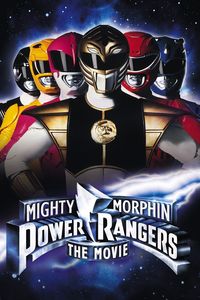
    (In French, On Cable TV, August 2020) Wow, that was terrible. It was, in fact, even more terrible than I expected, even from the Mighty Morphin Power Rangers title and premise onward. Keeping in mind that I didn’t watch the Mighty Morphin Power Rangers TV show as a kid and have no sentimental attachment to it, this film is truly wretched. I am not a kid, obviously, so whatever appeal this film might have had is just nowhere to be found. (Also, not to put too fine a point on it, I would not show this film to kids.) It’s hard where to start, but the conclusion is crystal-clear: this is not good. The actors are undistinguished, the special effects are awful even by the loose early-CGI standards of the mid-1990s, the plot is simple to the point of idiocy and the direction cannot be bothered to make even elementary sense on a shot-by-shot basis. The creature design is grotesque and even the decent soundtrack (meant to be energetic) is grating when it’s in service of such drivel. I could go on and on, but let’s keep it simple: Mighty Morphin Power Rangers is not recommended. As one could have expected.

  • Oliver Twist (1948)

    Oliver Twist (1948)

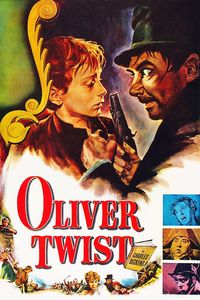
    (On Cable TV, August 2020) There’s something to the faithfulness of David Lean’s adaptation of Oliver Twist that simply makes it feel generic to me. I’m using “generic” in a somewhat unusual sense here – I have seen so many Classic Hollywood adaptations of classic English Literature novels by now that I almost know what to expect before the film even starts playing, and that was Oliver Twist from beginning to end. There are the historical sets, the black-and-white cinematography, the well-mannered theatrical acting from the actors and the loose adaptations in order to make it more of a movie than a book. The only thing that stands out from this Oliver Twist is Alec Guinness’s hideous anti-Semitic makeup as Fagin, a design decision from Lean that has been criticized even since the pre-production of the film and is likely to be criticized forever. Otherwise (and I’ll admit that it’s a big “otherwise”), the film itself feels like an EngLit class brought to motion. Great if you’re illustrating the classics, not so great if, like me, you’ve overdosed on them.

  • Southbound (2015)

    Southbound (2015)

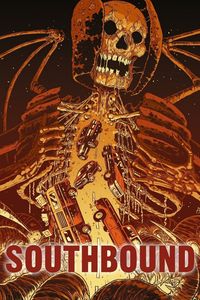
    (In French, On Cable TV, August 2020) I’ve been on the lookout for Southbound for years, ever since encountering Radio Silence’s short film in the V/H/S anthology. They hit commercial and critical success with last year’s Hide and Seek, but Southbound remained more difficult to track down. Having finally seen it thanks to a French-Canadian cable TV horror channel (where it was highlighted at the Friday evening movie of the week), I’m simultaneously intrigued and disappointed. There are certainly plenty of things to like in Southbound: As an anthology film from different directors, it’s surprisingly cohesive on both a thematic and visual level. Much of it takes place on or near the lonely roads of the American southwestern desert, as characters undergo horrifying hardships. The entire film is structured like a loop, easily reinforcing the idea that this is akin to purgatory and leading itself to repeat viewings. (Indeed, the film’s Wikipedia page gives a whole list of things to watch for.) The lead creature’s visual design is terrific, bringing to mind a macabre guardian angel. The segments themselves have interesting ideas and usually play with more ambitious concepts than simple horrific devices. (How would you like it if 911 operators weren’t really interested in helping you?) Alas, there’s a built-in limit to how much I can like the result. The idea of a purgatory means that tales don’t have neat beginnings or, crucially, ends. It doesn’t help that Southbound’s visual polish is uniformly flat: handheld, bleached by the desert sun or plunged into darkness. You can feel the grime coming off the screen. Pacing-wise, some conventional elements (cultists, home invaders) could have been trimmed in favour of the more unusual material. Southbound is still a cut above most horror films: it’s ambitious, unusually structured and often unnerving. But it lays out bold ideas that are only half-realized – crucial material is missing, and cannot be included because the filmmakers have something else in mind. Too bad – but it’s still worth a watch with low-expectations for anyone looking for something slightly different from the usual horror fare.

  • The Big Parade of Comedy (1964)

    The Big Parade of Comedy (1964)

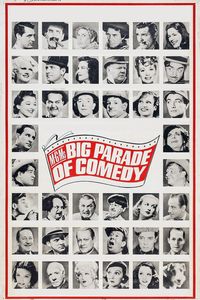
    (On Cable TV, August 2020) Anticipating That’s Entertainment! by a decade, The Big Parade of Comedy is director-anthologist Robert Youngson’s idea of a comedy clip show, digging in MGM’s archives to present a few choice bits. The clips limit themselves to the 1920s-40s and take a star-centric structure to present its material. Youngson favours lengthier excerpts rather than montages, which makes sense whenever the clips have gags that build upon the previous ones. Les Tremayne narrates the film in the characteristic fashion of the times. I was surprised to see no less than three fairly long excerpts from the somewhat lesser-known Hollywood Party, one of them (with Abott and Costello, as well as Lupe Velez), I actually appreciated more upon a second viewing due to the nodding between Abbott and Costello. Obviously, your taste for comedy will dictate what segments are funniest – I can watch the Marx Brothers and William Powell as Nick Charles all day long, but the Three Stooges and Laurel & Hardy are a harder sell. Still, comedy is comedy, and watching The Big Parade of Comedy is almost more fun as a reminder of great comedies I’ve seen lately, whether it’s Two-Faced Woman, The Cameraman or The Philadelphia Story. It won’t replace the original films, but it’s decently entertaining.

  • The Heavenly Body (1944)

    The Heavenly Body (1944)

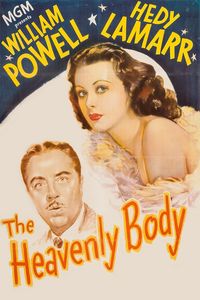
    (On Cable TV, August 2020) Star vehicles have been a feature of Hollywood forever, and for all of the flak they can get, they’re often a direct delivery vehicle to see likable actors doing what they do best. Taking this into account, there are two reasons to watch The Heavenly Body, and they’re Hedy Lamarr and William Powell. They play a disaffected couple – he, an astronomer, spends far too much time at the observatory, making her feel neglected. When an astrologer portends that she will find happiness with someone else, she loudly declares her intention to leave the marriage, leaving him frantic to resolve matters. Things are complicated by the arrival of a handsome air-raid warden, hastening his efforts just as the culmination of his professional career is coming fast. Powell is in a class of his own as the protagonist, his obvious gift for sophisticated comedy outstripping the somewhat loose script. There’s some fun in exploring astronomy as a plot driver — there’s even a nice special effect shot featuring a comet crashing into the moon. The rest of The Heavenly Body is a bit of a paint-by-number production, although it does harken to the late-1930s comedies of remarriage in pulling apart a couple only to have them reunite at the end. Not a great movie by any means, but a good show for Powell and Lamarr fans.

  • Number Seventeen (1932)

    Number Seventeen (1932)

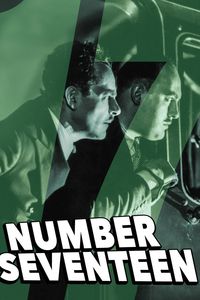
    (On Cable TV, August 2020) As I’m digging deeper and deeper in the Hitchcock filmography, I’m starting to reach the bottom tier of his work, and Number Seventeen is clearly one of them. Despite a few intriguing moments, this is a film that doesn’t quite cohere. It looks, at first, like one of the single-setting style exercises that Hitchcock would keep exploring later in his career: the action is mostly centred around a staircase in a large house. But this isn’t true for the entire film, as things eventually move toward a speeding train. Throughout, we’re left mystified by poorly motivated characters, a tone that half-heartedly reaches for comedy at times but not at others. Number Seventeen lacks the spark that distinguished Hitchcock thrillers, even early ones, from most other contemporary thrillers. Oh well – they can’t all be first-rate, and it’s not as if he hasn’t done much better after that…

  • Huang jin xiong di [Golden Job] (2018)

    Huang jin xiong di [Golden Job] (2018)

    (On TV, August 2020) I was in the mood for an action movie, and Golden Job delivered on that itch. The story of five “brothers” carrying off dangerous assignments as a team, the film quickly twists the dynamic inward as one of the men betrays his ersatz family for the sake of a very large gold shipment. The narrative arc is very melodramatic, but it’s not a bad backdrop for the action scenes that are the film’s raison d’être. While Golden Job is not a great action movie, it’s a good enough one. Using rough CGI for demented stunts and more successful seamless shots, it’s a film that has a charge of action every ten-to-fifteen minutes, and has sufficiently different ones so that things don’t fall into a morass of undistinguished movement. (A common failing of many martial arts films.) There are a few good stunts and shots here and there, although it firmly upholds the tradition of action movies giving very little thought to the collateral damage of the smashed or exploded cars along the way. Some of the film is directed a bit too bluntly, but veteran action choreographer Kar Lok Chin doesn’t do all too badly. Acting-wise, it’s an ensemble cast, but Ekin Cheng does have the plum role as “Lion,” while Jerry Lamb is distinctive as “Mouse.” (I’m told that much of the main cast is the same as an earlier action film series, but I don’t think that this is an explicit sequel, despite the expansive backstory suggested. And, of course, the casting coup doesn’t quite work if you’re not aware -or don’t remember—the earlier series.) Visually, Golden Job does travel around the world for its set-pieces, adding slightly to the interest. Still, it probably doesn’t reach out of the action genre – I have a feeling it’s going to be one of those films that works well enough during its running time, but quickly decays in memory. Still, I’d rather have my action movie itch scratched for the moment than to be left wanting.

  • All Fall Down (1962)

    All Fall Down (1962)

    (On Cable TV, August 2020) While director John Frankenheimer is best known for his action movies, he does have an almost-parallel filmography of character-driven drama films. Take, for instance, All Fall Down, released the same year as the far better known The Manchurian Candidate – it’s a relatively low-stake family drama, featuring a charismatic but self-destructive young man who drags down his family into misery. Unusually enough –and you can credit the literary origins of the film –, All Fall Down rarely revolves around that young man, inelegantly named Berry-Berry (the repetitiousness of it becoming an unintentional gag at some point in the film) and played by a very young and charming Warren Beatty. Much of the film is clearly from the point of view of his younger brother, undertaking a journey to the realization that his older brother is to be pitied rather than idolized or harmed. We also have their parents, divided over their older son’s behaviour, and an older woman who becomes the crux of the brothers’ irreversible rift. There is some intense melodrama to the twists and turns of All Fall Down that hasn’t aged particularly well, and having a handsome but dangerous central character is always a cause for mixed impressions. There are some good performances here – aside from Beatty, there’s Angela Lansbury as a misguided mother, Eva Marie Saint as the girl that divides the brothers, and Karl Malden as a father drinking himself to death. For all of Frankenheimer’s skills in directing, he couldn’t quite manage to improve on the screenplay’s least believable elements enough to improve the credibility of the film – it all seemed like an elaborate plotting exercise, moving pieces around without quite thinking about whether it made sense. I eventually tired of Berry-Berry, and wanted him unable to hurt any more people ever again, no matter how we got there. All Fall Down does hold more interest than expected as drama, but it does feel a bit hollow when all is said and done.

  • The Story of Mankind (1957)

    The Story of Mankind (1957)

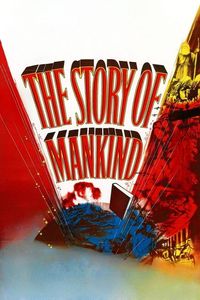
    (On Cable TV, August 2020) Oh, what a mess. Any movie that punches so hard through my suspension of disbelief that I start asking why it exists has already lost. In the case of The Story of Mankind, here we have a science-fictional “alien judgment” framing device looking at the history of humanity as an excuse to have small historical sketches conveniently casting as many known actors as possible. It’s hard to resist a film that had Hedy Lamarr, three of the Marx brothers, Vincent Price, Peter Lorre, Dennis Hopper (!) and Cesar Romero, but just wait until it begins and you’re served sketches that are neither funny nor profound, skipping ahead history to serve the usual bromides, with stunt casting that doesn’t really use the actors to their fullest extent – even the Marx Brothers appear in different scenes, and don’t play to their strengths. (I was waiting for the Groucho scene… I should have skipped it.) The film being directed by Irwin Allen, I half-suspect that the idea was for a grandiose statement with state-of-the-art special effects. Instead, we get sketches comparable to a high-school production, and a constant back-and-forth between trying to make a statement and trying to make jokes. The Story of Mankind is almost fascinating in its hideousness, but I really can’t recommend it as anything but a curio.

  • May (2002)

    May (2002)

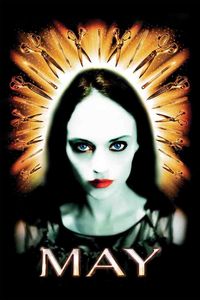
    (In French, On Cable TV, August 2020) While I can’t say that I loved May, I can recognize in it an attempt to deliver something like a slasher horror movie without necessarily wallowing in the same clichés as most movies of the genre. The base story will be familiar to horror fans, as a lonely young woman snaps after heartbreak and starts killing out of a lack of affection. But under writer-director Lucky McKee, the execution is somewhat different. For one thing, it does take a long time for May to fall into horror. Despite a bloody opening shot and several portentous moments, much of the film’s first half focuses on its lead character and her crippling loneliness – it’s an affective character study in that it creates sympathy for the (eventually) mass-murdering heroine that lasts long after she has settled for violence. Angela Bettis can be cute as the lead character, and there’s Anna Faris in a small role for those who enjoy seeing actors in pre-stardom roles. There’s some affection for the protagonist throughout, and a final shot that actually brings some comfort to her… and to the audience that still somehow cheers for her. May is not revolutionary or transcendent, but it’s different enough to be worth a look for those jaded, disaffected horror fans.