Reviews

  • Les misérables (2019)

    Les misérables (2019)

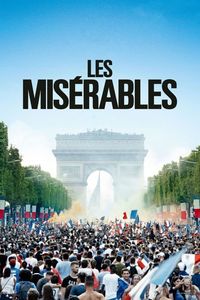
    (On Cable TV, August 2020) Centuries after Victor Hugo wrote (and partially set) Les misérables in the Paris suburb of Montfermeil, there is still plenty of misery to go around the area. Dominated by low-income immigrant families, it feels like a powder keg about to explode from the very first moments of this contemporary take on Les misérables. As the story focuses on a new policeman aghast at the casual abuse of power from his colleagues, and then the young men often targeted by police action, we viewers start dreading the inevitable violence that is sure to follow. It starts with what could be a comical incident in another context: proprietors of a travelling circus complaining that a baby lion has been stolen by local youth. The cops take on the case, but by this time we’ve been familiarized with how things really run in the area, what with overlapping circles of authority from police, the city, an informal “mayor,” criminals and youth gangs. As a young man plays around with his new drone, the theft of the lion club keeps escalating – and when the apprehension of the young thief goes badly and leaves the teen unconscious with a slashed face, the cops realize that everything they’ve done has been recorded. There is a nice pause in the action at the beginning of the third act that can lull us into thinking that everything is going to be all right, but that’s not when Les misérables is going: by the time the film concludes with a crescendo of urban violence, we know why and how everyone is involved, and the valid grievances of everyone. I don’t particularly like the ending, which seems indecisive rather than provocative – but the ramping up to that point is very well handled. The capable technical execution of writer-director Ladj Ly gives considerable credibility (and menace) to the scenes of urban unrest, and the last few minutes are a complete nightmare of being stuck in the middle of a small riot. Alexis Manenti gets the flashy role as the impulsive, abusive policeman, even though Damien Bonnard is the nominal protagonist and audience stand-in. The story is messy (like the neighbourhood) and not quite satisfyingly resolved, but the result is gripping and surprisingly even-handed in its depiction of all actors involved. It’s a strong representation of contemporary France that does not reflect all that well on how they got there – it’s not by accident if the 2005 Paris riots are explicitly mentioned.

  • Death Wish 4: The Crackdown (1987)

    Death Wish 4: The Crackdown (1987)

    (On TV, August 2020) Paul Kelso is back once more… to kill and kill again. While the opening (a dream sequence in which Kelso easily guns down a few stereotypical rapists only to see himself killed) does seem promising in exploring the moral consequences of being a vigilante, the rest of Death Wish 4: The Crackdown soon dispenses with the fiction of depth, and goes gunning hard. This time, the excuse is drugs. Tons of drugs, flowing around Los Angeles and killing (because you need a victim) the daughter of Kelso’s current paramour. It doesn’t take much more than that to send Kelso shooting through the Los Angeles underworld once more, mowing down mooks on the trail of the big mob boss. Architect by day and bloodthirsty murderer by night, Kelso has to face corrupt cops and deliver lame quips along the way to fulfill the requirement of this Cannon production. I obviously wasn’t intending to enjoy the film when I sat down to watch it – I was doing more or less out of completionism obsession, having seen four of the five instalments and having number 4 right there on the DVR. I did have a moderate amount of fun questioning the perspective of Kelsey being a complete psychopath within a movie trying to excuse his actions, but that’s not a whole lot. Much of Death Wish 4’s execution is bland and unremarkable, erring on the side of a low budget and simply moving pieces until it’s time for the next shootout. Charles Bronson looks old and tired here, clearly getting a paycheque but not much artistic fulfillment from going through the same motions with even less justification. The ending is mean-spirited enough to justify having the protagonist put a rocket through the villain, providing at least one highlight for the film. In retrospect, Death Wish 4 does make the craziness of the third instalment feel even more enjoyable: this fourth film has nothing more than a few preachy clichés to say about the scourge of drugs as window-dressing to some righteous serial killing for the protagonist.

  • City Slickers II: The Legend of Curly’s Gold (1994)

    City Slickers II: The Legend of Curly’s Gold (1994)

    (In French, On TV, August 2020) Whatever made the success of City Slickers is certainly revisited in its sequel… except mechanically and in diluted fashion. It’s not a real surprise to see Jack Palance come back to join Billy Crystal and Daniel Stern once again as they head out west. While the first film had all the clichés (or rather: familiar elements) of a cattle drive, City Slickers II goes for the clichés (or rather: familiar elements) of a treasure hunt. It works all the way to an upbeat conclusion, but there are quite a few plot cheats along the way, from a final revelation about this being a manufactured reality that is belied by previous events, and then another backflip in order to provide the kind of feel-good conclusion that its earlier twist prevented. Eh, whatever: once again, the real fun is in seeing Crystal and friends match squints with Palance and the indignities of the wild west so far away from the urban canyons of Manhattan. Palance himself has the panache of a veteran movie star, while Crystal is up to his usual standards. City Slickers II is indeed a slickly made film with a big-enough budget to shoot visually interesting scenes out in the far west, but it does mechanically move through its unconvincing plot and doesn’t have much to go in terms of having the characters develop their relationship – the best it can do is welcome a third partner played by Jon Lovitz, who doesn’t turn out to be quite annoying as first feared. That’s not a lot, although if you just want a few chuckles against a western backdrop, City Slickers II is not that painful of an experience.

  • Hardware (1990)

    Hardware (1990)

    (In French, On Cable TV, August 2020) We all have our own list of movies to see, gathered over the years and passing interests along the way. I must have had Hardware on my own notional backlog since the early-1990s, as it was (at the time) one of the movies that most exemplified the nascent early-Internet cyberpunk style. (If this is incomprehensible to you, well, you weren’t reading the message boards at the time.) It took twenty-five years of not-so-assiduous searching, but I finally saw it. I can’t say that Hardware was worth the wait, but no matter – at least I’ve seen it now. Part of the problem is that there have been better movies on similar topics since then – whatever imaginative quality that the film may have had in the early 1990s has been outstripped several times over. What we’re left with is a woman-stalked-by-a-killer-robot story that’s strongly reminiscent of an entire subgenre. Writer-director Richard Stanley relies a bit too much on dated music video aesthetics, but it does help hide the relatively low budget of the production. At least Hardware does have the saving grace, underneath the CRT computer graphics and trash mechanical aesthetics, of competent execution. There are a few twists and turns in the story and while much of the film is bathed in darkness, the climax is set in a brightly lit shower that allows the robot design to shine. While the result isn’t particularly good by today’s standards, I can see what captured the imagination of my fellow cyber-geeks back then – it’s about as early-1990s cyberpunk dystopia as it gets, and that wasn’t quite the norm at the time, even if it has become somewhat of a cliché since then.

  • Patterns (1956)

    Patterns (1956)

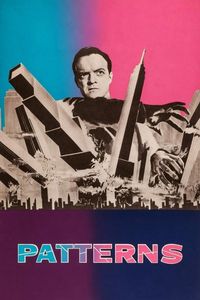
    (On TV, August 2020) I really wasn’t expecting, as I sat down to watch Patterns, to have such a shining illustration of how things have not changed in business between the mid-1950s and now. Redress the sets, change a few technical details with Internet mumbo-jumbo, and this tale of corporate office intrigue would fit right in 2020. Van Heflin stars as a young executive brought to headquarters after performing brilliantly in a satellite office. His mentor is a high-level executive whose hard-nosed attitudes run against his second-in-command’s desire to reconcile business with humanity. Torn between two influential superiors, the protagonist illustrates the constant tug-of-war between those two contrasting attitudes, with the prize being membership in the Manhattan business community. As I said – Timeless themes, bolstered by a no-nonsense execution by director Fielder Cook, working from a screenplay by the legendary Rod Serling. There’s some interesting examination and cross-examination of business ethics here, somewhat undermined by the eventual epiphany that the only people out of the rat race are the dead. Nonetheless, the script does have a compelling moment-by-moment rhythm to it, and it climaxes in a fantastic (if not entirely realistic) confrontation between the protagonist and his former mentor. We think that the world has changed, especially in offices, but the surprising timelessness of Patterns belies the claim.

  • The Midnight Meat Train (2008)

    The Midnight Meat Train (2008)

    (On Cable TV, August 2020) There’s a bizarre mixture of elements in The Midnight Meat Train that entertains as much as it frustrates. At first, we may or may not be in psychological thriller territory as a Manhattan photographer (Bradley Cooper, in a pre-stardom role) takes pictures of people who then die or disappear in the subway. Is he to blame? The police seem to think he’s a person of interest, even as we’re shown the violent actions of a butcher (Vinnie Jones, suitably menacing) who seems to be using a subway car as his own abattoir. Fantasy or delusion? The excessively gory nature of the story is in-keeping with the origins of the script in a splatterpunk Clive Barker story, even if it certainly should have been toned down. The mystery as to whether this is happening or not is resolved in the last fifteen minutes of the film with a plot development so extreme that you’re allowed a few minutes (in the form of a meaningless fight) to digest it. It’s certainly… out there. Whether it works is to be debated, as the film takes a hard-supernatural turn that the beginning of the film may not have properly foreshadowed. Still, it does transform The Midnight Meat Train from a routine psychological thriller(ish) to something far more interesting to discuss.

  • Fubar II (2010)

    Fubar II (2010)

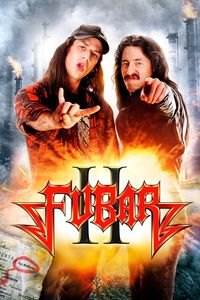
    (On Cable TV, August 2020) From 2003 to 2013, the Canadian Dream was quite specifically located in Fort MacMurray, Alberta. That’s where the oil patch boom led to the creation of tens of thousands of well-paid jobs with few educational requirements. People moved across the country to sign up for oil crews, and quickly made more money than they knew what to do with (well, except to buy a big pickup truck). The bust followed the boom, but it’s amusing to see Fubar II make good of the craziness that was going on at the time. As we rejoin our likable metalhead loser protagonists from the first Fubar, it’s clear that they could use a bit of money. So, when a friend talks to them about the Eldorado up north, they pick up everything (which isn’t much) and leave, quickly finding good jobs. But they’re clearly not as good as the jobs, and before long one of them is actively looking at workers’ compensation through self-injury while the other hooks up with a woman who has apparently slept with half of the cast. No, the Fubar protagonists aren’t going to cover themselves in glory in this new adventure, and that’s more or less the point of it. Fortunately, even the handheld camera work puts us in Fort MacMurray during the big boom, and if you like the characters, then you’ll enjoy the slightly bigger budget and slightly stronger plot that goes along with this new instalment.

  • Into the Sun (1991)

    Into the Sun (1991)

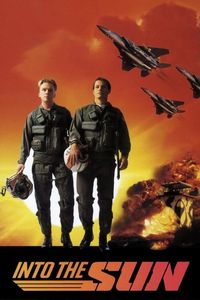
    (In French, On Cable TV, August 2020) I don’t specifically have anything against movies that twist genres midway through—done properly à la From Dusk Till Dawn, it can be a memorable experience in itself. Done badly, or without conviction, it ends up being like Into the Sun, a too-low-budget comedy that plays with the idea of a professional fighter pilot being tasked with showing his job to a Hollywood actor looking for inspiration for his new role. So far so good: it gets a few laughs. The first half-hour of the film feels midway between Top Gun and Hot Shots!, which is a very strange tone to take, both too serious and not serious enough. Things take a bad turn when our protagonists are shot down over enemy territory (in a rather unconvincing sequence), leading to a prolonged ground sequence that’s far from being as amusing as the beginning of the film. There aren’t many casual laughs to be found in the heroes being captured and tortures, and it doesn’t help that Hot Shots Part Deux would cover much of the same ground far more successfully a few years later. Into the Sun disintegrates during that last half, unable to make the most effective use of its actor turned soldier (See: Tropic Thunder) or its soldier swayed by the actor. Good idea, disappointing execution: a film’s premise going unfulfilled.

  • Alien Nation (1988)

    Alien Nation (1988)

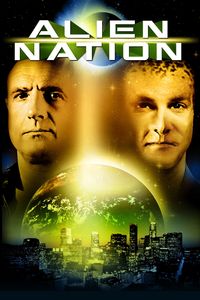
    (In French, On Cable TV, August 2020) The Science Fiction genre has a long history (especially in print) of using murder mystery narratives in order to illustrate a future society: it’s a great way to examine what makes a society tick, allow the detectives to meet various people and show a science-fictional device as a wrinkle in the investigation or the crime. Conversely, Hollywood has an equally long history of using science-fictional environment as mere backdrop for a thoroughly ordinary plot that could have worked just as well in contemporary settings. The difference between the two is subtle but significant: in one case, the plot enhances the genre, while in the other the plot is irrelevant to the genre. Seasoned SF fans clearly prefer the first—there’s even a dismissive expression from the Turkey City Lexicon, “Abbess phone home” to call Science Fiction that could have been anything else. Alien Nation straddles the line between the two in such a way that can often look like one or the other. One way of looking at it is that Alien Nation takes us in a decently imagined “near future” of 1988, in which a ship of aliens has landed on Earth and been assimilated in American society. They have their own language, biology and physical capabilities, and much of the film’s first half-hour is spent illustrating those changes through the early stages of a murder investigation, complicated by the pairing of the first alien policeman with an investigator (James Caan) resentful since aliens killed his partner. The metaphor for immigrant integration really isn’t subtle here, from the title onward. Still, that first half-hour is probably the most interesting thing about Alien Nation, as the aliens have their own alphabet and language, live in ghettos (with their own strip clubs), and love drinking sour milk recreationally. But then the film loses interest in taking refuge in “ordinary story labelled SF” territory: The mismatched-cop duo clearly cribs from racial integration films, and as the story advances, we’re left with a cops-against-a-monster conclusion that strips away nearly anything that had been interesting about earlier worldbuilding. (Not to mention basic questions: why would an alien species so vulnerable to saltwater choose to stay in a coastal town?) At least Caan has a decent role as the human cop, while Mandy Patinkin is unrecognizable as his alien partner. You can gauge the interest of Alien Nation’s premise and underlying concept in the long list of TV movies and novels that were produced as spinoff—the idea was so good that it couldn’t be left alone. But the film itself merely achieves a middle-of-the-road cop drama and nothing more. That’s not too bad, but it could have been better.

  • Sweet Charity (1969)

    Sweet Charity (1969)

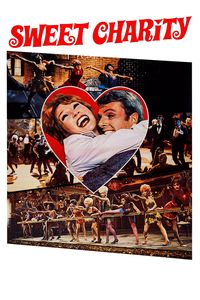
    (On Cable TV, August 2020) I hope no one ever asks me to write a book about Hollywood musicals, because one of the middle chapters will be called, “How Bob Fosse destroyed the musical and yes, it’s all his fault.” I exaggerate slightly for comic effect, but not by much: Fosse was the leading director of musicals during the 1970s’s New Hollywood (probably the worst decade for musicals) and nearly everything I’ve seen from him I have disliked. [September 2020: I take that back! Lenny and Star 80 are decent, while All that Jazz is a really good musical.] His approach made musicals grow up, but in retrospect that was a terrible idea. Sweet Charity is a case in point, bringing together many things that I dislike. Fosse adapted his own Broadway show based on Nights of Cabiria (a film I dislike) having cast Shirley Maclaine (an actress I dislike) and wallowing in a dark cabaret style (an approach I dislike) to end with a bittersweet ending (another choice I dislike, so we’re not doing well here). I’ll grant that Maclaine is a lookalike for Giulietta Masina (further dislike), but otherwise, eh, why even bother. While the film manages a few comic moments and hums the familiar tune of “Hey, Big Spender,” it’s remarkably unfunny as a comedy, tinged with freeze-frame melancholy as it follows a girl with few stable prospects in a big city designed to eat such people alive. (One welcome exception: the wonderfully weird and high-energy number featuring Sammy Davis Jr.) Even the ending, which initially seems destined for a bright and colourful happy finale, ends up pulling the rug under the protagonist’s feet. (I can’t help thinking that for classical musical fans, this is a cruel case of “this is why you can’t have nice things” and no, I don’t care if it follows the original stage musical.) The dark and moody cinematography of the film is very New Hollywood, a now-dated style which isn’t a good match for the exuberant joie de vivre of the classic (and timeless) Hollywood musical. I don’t exactly dislike the film (especially on a curve, as there are Fosse movies that I actually hate, starting with Cabaret) but in many ways Sweet Charity is just close enough to the glory days of the Hollywood musical (I mean—it was released the same year as the far more enjoyable Hello, Dolly!) to feel like a grotesque perversion of the form. It flopped in 1969, and I don’t think it’s any more likable today.

  • The Opposite Sex (1956)

    The Opposite Sex (1956)

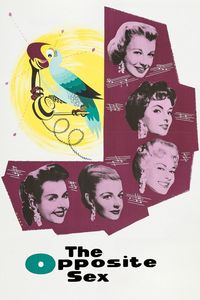
    (On Cable TV, August 2020) Knowing that The Opposite Sex is adapted from the same novel that led to 1939’s classic The Women, and having a look at its great cast, and watching its roaringly cynical start in which a woman speaks tartly about other women, you could be forgiven for having high expectations for it. Alas, the reality is a bit more pedestrian: The script settles into a lower-pitch struggle between women arguing about men. It’s certainly watchable, but there are many missed opportunities to do better. Bizarrely enough, I’m against the decision to include male characters in the film—The Women showed how to do it well, and they don’t add much to the arguments between the female protagonists. The musical comedy nature of the film is hard to grasp, considering that seasoned signer Dolores Grey barely sings, and noted triple-threat Ann Miller doesn’t dance nor sing. While the bon mots can be biting here and there, the script settles into a routine pace as the film advances: the women complain about men to other women, then complain about other women to yet other women. At least there’s more to see than to hear—I watched The Opposite Sex because of Ann Miller and was slightly disappointed in this regard, but that disappointment was more than nullified by seeing a lot of a young and radiant Joan Collins. Many other second-string notables populate the cast, from June Allyson, Joan Blondell, Ann Sheridan and Leslie Nielsen in a very serious role. Also worth noting is the garishly oversaturated Technicolor, which for some reason doesn’t really feature a lot of greens but does push the MGM Technicolor style about as far as it could go. Somehow less modern than the 1939 version, this mid-1950s romantic drama isn’t that bad by itself, but there are a lot of questionable choices made here knowing what else could have been done with this material and these performers.

  • $ aka Dollars (1971)

    $ aka Dollars (1971)

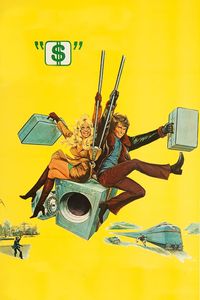
    (On Cable TV, August 2020) More promising than successful, Dollars is certainly watchable, but there’s a sense that a few tweaks would have helped it tremendously. It does have the tremendous advantage of starring a young Warren Beatty (charming) and Goldie Hawn (also charming), so there’s clearly a high floor to how bad this can be. Plus, it features a complex heist narrative where an intricate crime leads to a just-as-intricate game of crosses and double-crosses, as the previous owners of the money they’ve stolen chase them to get it back. It all takes place in rarely-seen picturesque Hamburg, further adding to the unusual appeal of the film. With all of those ingredients, it’s hard to imagine where Dollars goes wrong, but it does. For a lighthearted caper comedy, it clearly overdoes the very, very, very long chase sequence that forms most of the film’s second half—taking out half of it would have improved the rest, already overlong at 120 minutes. It’s also, less clearly identifiably, a film that doesn’t have the added spark that such films require: it’s not light on its feet, it’s not particularly romantic, it’s not sustainably clever (even if the heist itself is ingenious). You can argue that its story choices (notably in a second half that separates the protagonist and turns into repetitive wintertime chases) are not conducive to the kind of expected patter and romantic tension and that’s fair—but Dollars is still the kind of thing you watch and wonder why it’s not better given all of the elements at its disposal.

  • Shlock (1973)

    Shlock (1973)

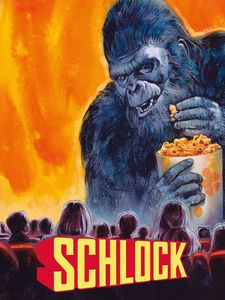
    (In French, On Cable TV, August 2020) Serendipity can be a cool thing, and so it is that Cable TV scheduling happenstance led to me seeing the first of John Landis’ films (Shlock) less than a week after seeing his last (Burke & Hare). While Landis’ career never really recovered from the on-set deaths during the making of The Twilight Zone: The Movie, the first ten years of his career were a cascade of highly imaginative comedies, with ultra-low-budget Shlock to set the tone. A parody of 1950s monster movies that almost retroactively serves as a lampoon of terrible 1970s creature features and 1980s slashers, Shlock is about a prehistoric creature (Landis in an ape suit) terrorizing a small Southern California town, alternately harming or helping characters. It’s meant to be parodic, so there are plenty of references to 2001: A Space Odyssey, cheap banana jokes and satire of 1970s TV reporting. It would be an exaggeration to call the result any good, but there are a few laughs here and there, and anyone can recognize Landis’ comic invention, so closely would the tone be replicated in later, bigger-budget movies. It’s definitely a curio, but not a bad one for Landis fans.

  • Kansas City Confidential (1952)

    Kansas City Confidential (1952)

    (On TV, August 2020) Considering how often film noir and heist movies have been remade, remixed and ripped off, it’s a weird feeling to find a classic Hollywood crime film that almost feels original. I settled down to watch Kansas City Confidential convinced that I was in for another 1950s noir heist film, but it turns out that the film is far more concerned with the tortured aftermath of its opening robbery than the crime itself. Better yet—this is almost a film in which the criminals must chase down the police to solve the crime. The mastermind’s brilliant idea to hire criminals for his crimes and frame an average man for it spectacularly backfires when said everyman becomes obsessed with uncovering the real culprits. Crisply shot and featuring actors with the tough faces and rough voices required for the material, Kansas City Confidential is a well directed by Phil Karlson. It plays with notions of injustice and hope even as its less-than-honourable characters jockey for a pile of cash. Lee van Cleef is notable in a small role, but the best performance here goes to John Payne as an ex-con trying to bring justice. The production values aren’t all that high, but as far as film noirs go, Kansas City Confidential is fun to watch and, surprisingly, still a bit original seven decades later.

  • Night Train to Terror (1985)

    Night Train to Terror (1985)

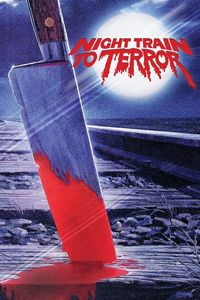
    (In French, On Cable TV, August 2020) There are two ways to talk about Night Train to Terror—the first being a surface viewing of the film, the second informed by the making of the movie. The first is almost purely experiential, as you come away from the film with an amazed sense of disbelief at what you’ve just seen. It takes only a few moments (as what’s supposed to be a horror film segues into a cheap pop-music video and then a chat between God and Lucifer) to realize that something is horribly wrong with this film, and the rest does not disappoint. Incoherent editing propels us further and faster in a story that seems to be missing any kind of connective material, rushing to gratuitous nudity and extreme gore while leaving basic narrative behind. Twenty minutes later, we go back to the pop-music band, and then God and the Devil as they start introducing another story with the same rapid-fire incoherent approach to grand-guignol material. And then on to a third story. While Night Train to Terror is obviously an anthology story, it’s still markedly less controlled than most similar films. Despite the rushed nature of the storytelling, the budget shown on-screen (as we have far many more setting changes and narrative progression) seems disconnected from the low-budget production values. The choppy editing doesn’t help in maintaining continuity, but the schlocky nature of the gore and nudity tries its best to distract us from a storytelling void. (It doesn’t succeed.) The film ends shortly afterward with a desperately unconvincing train derailment, leaving us amazed (but not in a good way) at what we’ve just seen. The nature of the film becomes a bit clearer once we read about its production history, as Night Train to Terror is really a re-edited stitching of three unreleased full-length horror films with an added framing device. Suddenly, it becomes clearer why the budget seems inconsistent with the visuals: it’s three films’ worth of material badly boiled down into one, with crucial narrative material left out in favour of gore effects and nudity scenes. (And if that’s amazing, wait until you follow the link to take a look at disgraced screenwriter Philip Yordan’s career.) Still, no number of explanations will do justice to the sheer experience of seeing the film and going “wow” at the amazing incompetence on display. Night Train to Terror is far best experienced as a group, as everyone will already be there for the therapy session afterward.