Reviews

  • Boksuneun naui geot [Sympathy for Mr. Vengeance] (2002)

    Boksuneun naui geot [Sympathy for Mr. Vengeance] (2002)

    (On Cable TV, June 2020) The good news about Sympathy for Mr. Vengeance is that it’s the first in writer-director Park Chan-wook’s Vengeance trilogy (which also features the much-better Oldboy and Lady Vengeance), and it’s an intricately plotted, carefully detailed, unusually well-directed film. The bad news is that never mind its objective qualities—I disliked it intensely, even bordering on loathing. Your mileage may vary because mine is based almost entirely on the film killing off a young girl as a mid-film plot point. I just can’t deal with that kind of cruelty right now. Not that things really get better after that, because Sympathy for Mr. Vengeance steadily becomes a ludicrous high-drama filled with gruesome and grotesque violence far beyond what the story needed. It’s certainly interesting in some ways, as the director works obliquely and never quite approaches matters in conventional ways to show what’s going on. But that doesn’t excuse the dirtiness left by the film—by the time nearly everyone dies at the end, the only judgment is that they all deserved it.

  • Sex Kittens go to College (1960)

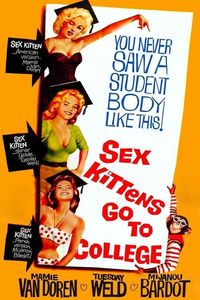
    Sex Kittens go to College (1960)

    (On Cable TV, June 2020) Don’t get your hopes up, filmgoers: Not only is Sex Kittens go to College’s title better than the film itself, it’s also better than anything you could expect from an early-1960s sex comedy. It’s a dumb film about a smart girl, meaning that Hollywood’s flawed conception of intellectualism is also in full deficient display. There’s evidence of cheap lazy filmmaking everywhere: the production values are so low that the film feels like a TV show; a robot and a computer are used as magical devices; insistent sound effects and music highlight just how little is left to subtlety; and a grimacing monkey is obviously the cherry on top of that disappointing sundae. The only highlight here is Mamie von Doren, who plays the brainy blonde-with-a-stripper-past than anchors the film—she’s not that good (she feels like the Monroe duplicate that she was known for), but she’s better than most of the other actors, and has a vivaciousness missing from the rest of the cast. While the title of Sex Kittens go to College and the promise of a cute innocent early-1960s sex comedy may entice you, keep your expectations as low as you can manage them—there’s a lot less to this film that can be suggested.

  • Motel Hell (1980)

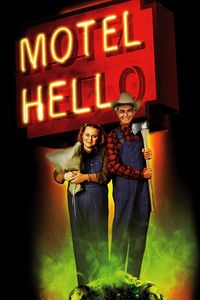
    Motel Hell (1980)

    (In French, On Cable TV, June 2020) Bleh. The problem with comedies about terrible things is that they’re still about terrible things, and so even if Motel Hell pretends to be a comedy about psychopathic hillbilly cannibals, it’s still a film about psychopathic hillbilly cannibals. It is more gross than funny and it’s not particularly funny in the first place. The only thing worth liking here is seeing and hearing Wolfman Jack in a supporting role. Otherwise, the low production values and dubious sense of humour about horrifying matters severely limit the appeal of Motel Hell. Never mind checking out—it’s better not to check in in the first place.

  • The Man Who Loved Redheads (1955)

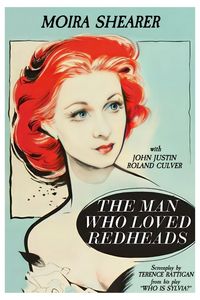
    The Man Who Loved Redheads (1955)

    (On Cable TV, June 2020) It’s hard to resist the appeal of a title like The Man Who Loved Redheads (I feel called out), but there is something quite unusual about the film. It’s about one man’s life-long obsession with a specific woman (a redhead, obviously), so much so that, even as a married man, he keeps having affairs with women who remind him of her. Where it gets interesting is that the four women he woos over the film’s decades are all played by Moira Shearer. What’s more, the film has a very present narrator (one who asks questions to passersbys, and who tells us that there’s nothing to know if he doesn’t know) as well as a sense of wry humour that gets pretty funny at times, even despite the film’s frequent slow patches and immoral centre. Amusingly enough, one of the characters played by former ballerina Shearer is… a ballet dancer, which gives director Harold French an opportunity to stage an out-of-place ballet paying homage to her previous role in the classic The Red Shoes. Despite running the risk of turning into a shaggy dog story, The Man Who Loved Redheads’ ending is interesting from a narrative perspective — as a way to exorcise the protagonist’s obsession but also to show how meaningless it was.

  • Mil gritos tiene la noche [Pieces] (1982)

    Mil gritos tiene la noche [Pieces] (1982)

    (In French, On Cable TV, June 2020) There were a lot of slasher movies in the early 1980s, and most of them were unmitigated garbage, ripping off a trend with so little distinction that they become undistinguishable from one another. Pieces is one of those—yet another slasher set on campus, this time with a chainsaw as the showpiece murder weapon. Multiple clichés abound, with perhaps the only thing distinguishing this film from so many others being the stronger-than-usual giallo influence (the film is Italian, but set on an American campus with American actors) leading to a result that’s slightly crazier and self-aware than many other similar films. Pieces certainly doesn’t waste any time nor subtlety in establishing and maintaining the psychosexual aspect of the killer’s motivations—killing your mom with an axe because she threw away your porno puzzle does seem excessive, but I’m clearly not the kind of person who would write a slasher in the first place. The film ultimately veers toward body horror rather than “simple” kills, but the constant misogyny is even more pronounced than usual for slashers, and the execution is really nothing worth noticing. Pieces can be of historical interest if you’re looking to perfect any understanding of early-1980s slashers and their hybridization with giallo, but otherwise it’s not worth it.

  • Volition (2019)

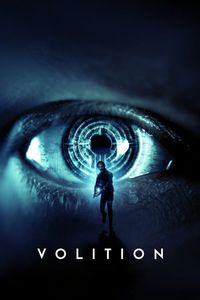
    Volition (2019)

    (On Cable TV, May 2020) I do believe in being a little bit more indulgent with low-budget genre films—they’re not competing on the same level as the blockbusters, and the good ones try to excel within their own ambitions, according to the means at their disposal. So it is that Canadian low-budget science fiction film Volition does start with the clever concept of having someone see flashes of their future and act accordingly. Although our protagonist, who has become a small-time criminal, believes that there’s nothing he can do to avoid the flashes he’s shown. Never mind the “huh, he never seriously tried to change it?” angle—elementary movie literacy is enough to have a good idea of where this is all going. Once the shooting and the dying start, our protagonist gets additional motivation and revelations. Unfortunately, Volition becomes a far more standard time-travel film once it leaves the carefully restrained clairvoyance angle behind and starts meddling with bigger ideas. Then it becomes another time-travel thriller about fighting predestination, and retreats in pretty much every time-travel cliché in the book—albeit with a moderate amount of wit along the way. I wish it all led to a better or more remarkable result, but Volition can’t escape its own slight disappointment: It’s not bad, but there’s less to impress here than was suggested at first.

  • … E tu vivrai nel terrore! L’aldilà [The Beyond] (1981)

    … E tu vivrai nel terrore! L’aldilà [The Beyond] (1981)

    (In French, On Cable TV, June 2020) While American horror movies of the early 1980s were too often stuck with knife-wielding psycho slashers, you could look at Europe and often Italy for variety—for better or for worse! Often set in the United States, Italian horror movies went crazy in ways that could be disgusting or entertaining, often in the same movie. In The Beyond’s case, writer-director Lucio Fulci goes to New Orleans in order to deliver a haunted house story that easily bubbles in all directions to include ghouls, a cursed book, sacrifices to a painting, and a portal to hell. Narratively, it’s a mess—a wild mishmash of nightmarish set-pieces loosely strung together along a haunted-hotel premise. It’s not a tight movie nor a very good one (spiders don’t work that way!), but it’s far more interesting than the psycho slasher movies or the era. More care has been spent on the gore effects (including a surprising number of people melting) than the plot, but even with the hooey that doesn’t fit together, The Beyond does create an interesting surprise-bag atmosphere where anything and everything can happen next. Despite a few strong female characters, don’t get attached to any of them—they’re not well developed, and the unusually haunting ending does them no favours. Normally, I wouldn’t like something like The Beyond—too scattered, too gory, too focused on visual shocks than narration. But I happened to see it after too many identical early-1980s American slashers, and it certainly feels more imaginative than other films of the time without quite falling into the nihilistic meanness of some other Italian horror films of the period (specifically the zombie films)—it’s not much, but it’s better.

  • Secret Beyond the Door… (1947)

    Secret Beyond the Door… (1947)

    (On Cable TV, June 2020) Fritz Lang directed many thrillers during his Hollywood career, and while there are better ones than Secret Beyond the Door…, it’s a film that mashes together some very interesting influences. The link between the Bluebeard legend and the domestic thrillers of the 1940s seemed inevitable, considering the peril that a new husband may represent for his new wife. The result is far more melodramatic than many of Lang’s more straightforward thrillers, what with the overdramatic narration, strong musical cues and an undisguised subject matter. Stylistically, it tries to blend together the soft touch of domestic thrillers of earlier years (Suspicion, Rebecca) while going to noirish stylistic elements. It does get almost ridiculously intense, as the woman (and the audience!) is absolutely completely resolutely certain that the husband is out to kill his new wife like his previous ones. But calm down—it’s not going to go there, not really. The ending provides the thrills and the romantic resolution, wrapping up a movie that may be just a touch too strident along the way, but still manages a rather good impression.

  • Three Coins in a Fountain (1954)

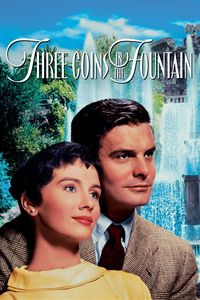
    Three Coins in a Fountain (1954)

    (On Cable TV, June 2020) From roughly 1951 to 1965, the American movie industry frequently headed to Rome as part of “Hollywood on the Tiber” era—motivated by financial incentives and the presence of a decent studio complex, Hollywood churned out a bunch of sword-and-sandal historical epics… and a few contemporary movies set in Rome as well. Three Coins in a Fountain isn’t the first or most famous of those (Roman Holiday got there a year earlier and remains better known) but it does offer an entertaining look at the love life of a trio of expatriate Americans in Rome, as fate -or the Trévi fountain- has very different plans from what they have in mind. This is a romantic comedy, so you have to go along with the overwrought complications and contrivances of the form. Fortunately, the gorgeous colourful atmosphere of early-1950s Rome—especially set against romance—is well worth a look beyond the plot: thanks to director Jean Negulesco, there’s an atmosphere quite unlike any other here, and it’s like taking a trip back in time and place to drink it all in. The treatment of the expatriate life remains credible and not always all that common. It’s all rather charming, even if calling it a “comedy” has more to do with the upbeat ending than any kinds of jokes and laughs along the way.

  • Roadgames (1981)

    Roadgames (1981)

    (In French, On Cable TV, May 2020) As far as atmospheric concepts go, Roadgames scores an impressive success in setting much of its narrative on Australia’s south-eastern highway—a place of near-endless distances and nowhere to go as it crosses a vast desert. On this unusual backdrop, writer-director Richard Franklin sets a serial-killer thriller in which a truck driver works with a hitchhiker to unmask a serial killer who, they suspect, is travelling in the same direction as they are. It’s ludicrous and yet it sort-of-works in an ozsploitation kind of way. Having Stacy Keach as the hero-trucker protagonist is fine, but having Jamie Lee Curtis as the sidekick does work very well. Roadgames is dirty and grimy and doesn’t quite always live up to its own premises (the budget doesn’t help) but the concept is interesting and the execution is halfway decent. Even those not usually interested by serial-killer movies may be charmed by the film’s ever-moving setting and the impact this kinetic backdrop has on the narrative.

  • Can you Keep a Secret? (2019)

    Can you Keep a Secret? (2019)

    (On Cable TV, May 2020) For an in-demand actress like Alexandra Daddario, it’s not a bad idea to star in a high-concept romantic comedy—especially if it’s the kind of romantic lead that allows her to show comic chops. But the film has to work in order to best showcase her, and Can you Keep a Secret? does wobble hard on its way to a conclusion. The high-concept here is that the lead character spills all sorts of embarrassing secrets to a stranger who is later revealed to be her new boss. Oops. But while that’s not a bad premise, the development doesn’t go anywhere interesting after that—the comedy becomes a humourless romance the longer it focuses on the two lead characters. For Daddario, it’s not much of a role—sure, she’s in nearly every scene, but it’s a generic “young professional woman” part that anyone her age could have played without much distinction. This is not unusual for romantic comedies, except that her friends (played by Kimiko Glenn and the wonderful Sunita Mani) run circles around her not only in terms of comedy (as is usually the case with rom-com friends) but also turn in far more distinctive performances. It doesn’t help that Can you Keep a Secret? has a bizarre mixture of dumb only-in-movies characters acting like idiots, with occasional moments of reality and curious compassion. The idiot-plotting gets tiresome, especially as the film occasionally wants to be taken seriously as a commentary on honesty in relationships. In the end, Can you Keep a Secret? may please romantic comedy fans and Daddario aficionados, but it’s certainly not good enough to be a breakout hit fit to make new converts.

  • Ana Maria in Novela Land (2015)

    Ana Maria in Novela Land (2015)

    (In French, On TV, May 2020) I suppose that the high-concept was so irresistible that it had to be done at some point: Why not a cute romantic comedy in which an obsessed telenovela fan switches places with the star of her favourite series? In the hands of writer-director Georgina Garcia Riedel, Ana Maria in Novela Land does tap into some of the insanity and stylistic excesses of the stereotypical telenovelas. It does help that it stars Edy Ganem, a preposterously attractive and likable lead actress who looks completely at home in the hyper-sexy nature of telenovelas. While it may not completely deliver on the premise, it’s pleasant enough to watch and is even (like its inspiration) occasionally racy within the confines of the rating. There are a few very interesting casting choices in supporting roles—Elizabeth Peña’s last role, Luis Guzman as the heavy and Sung Kang as a Korean soap opera star. A few quirks and moments don’t quite make cohesive sense—bathroom, zombies, musical segments and Korean soap—which reinforces the feeling that while this is not bad, it’s also a bit scattered and unfocused in how it approaches its premise. A measure of Ana Maria in Novela Land’s imperfect success is to be found in the film’s length feeling overlong even at barely 89 minutes. Still, it’s watchable enough.

  • Gisaengchung [Parasite] (2019)

    Gisaengchung [Parasite] (2019)

    (On Cable TV, May 2020) What makes an instant cinema classic? What is the difference between an ordinary film and a great film? Those are the types of questions we ask in seeing Parasite—a spectacular blend of plot, character, cinematography, directing, themes and other virtues any great film can have. It certainly takes a gifted filmmaker—in this case writer-director Bong Joon-ho cashing in a reputation forged with an already long list of notable films with one that tops them all. It takes a premise simple enough to hook—in this case, a lower-class family progressively taking over the services for an oblivious upper-class family. It takes a great set and atmosphere—in this case a hypermodern house that’s practically a character in its own right. It takes a thick overlay of thematic interpretations to accompany the narrative—here, among other things, a critique of class exploitation and capitalism. It also takes narrative twists and turns—but telling too much of those would rob viewers of the film’s specific pleasures. Suffice to say that Parasite is exhilarating filmmaking, and it brings something new to the cinephile’s table with its collision of tropes, deep irony, unusual story and class satire. It’s slightly more slow-paced than I would have liked at first, but it steadily gains steam as it goes along. I don’t quite agree with its Best Picture Academy award for a trivial reason (The Oscars aren’t about cinema, they’re about Hollywood) but that shouldn’t take away from the conviction that Parasite is one of the films that people will remember from the 2010s.

  • Kiss of Death (1995)

    Kiss of Death (1995)

    (In French, On Cable TV, May 2020) The first thing anyone will notice about Kiss of Death is—holy moly, what a good cast of actors: David Caruso (back when he thought TV stardom led to a cinema career), Samuel L. Jackson (looking young!), Nicolas Cage (as a crime lord!), Helen Hunt, Stanley Tucci (with some hair!), Michael Rapaport, Ving Rhames… I mean, that’s interesting. The second thing one notices after the credits is—wow, this was a completely unremarkable crime thriller. Directed in solid but unspectacular fashion by Barbet Schroeder, it’s an update to the 1947 film noir classic that transposes the story in the 1990s, but doesn’t really do anything all that exceptional with it all. It’s not uninteresting—at the very least, you can say that it’s watchable without trouble. But it’s not anything more: moments where the film is overwrought (thank you, Nicolas Cage) almost give a glimpse into what this Kiss of Death could have been with more verve from everyone. In its current state, though, it’s having a really hard time distinguishing itself from the middle of the pack of 1990s crime thrillers: admittedly a good decade for those, but not an excuse for a film that doesn’t quite reach its objectives.

    (Second Viewing, In French, On Cable TV, July 2021) I know, I know – it makes absolutely no sense that I would see Kiss of Death for a second time in a year when there are far, far better movies that I have either not seen or seen only once. But as seasoned reviewers will tell you: no movies are as hard to review as the indifferent ones. You can be eloquent about the great or good movies; you can be acerbic about the bad or the terrible ones, but those movies firmly in the middle? Good luck even remembering them. So it is that I decided to have a second go at the 1995 version Kiss of Death, largely because I’d just seen the original 1947 one, and there was the remake playing again right now. Alas, I don’t have much to report – the remake is just as featureless and forgettable as the first time. The casting remains interesting, what with David Caruso, Samuel L. Jackson, Nicolas Cage, Helen Hunt, Ving Rhames, and Stanley Tucci (in the awkward balding phase of his career). And while the cast slightly elevates the material (with particular mention to Nicholas Cage, who’s given the unenviable task of measuring up to Richard Widmark’s iconic performance in the original film) it’s really not enough to distinguish what remains a somewhat humdrum mid-1990s thriller. I can understand the desire to strike a mark away from the original noir classic, but in setting out to do its own thing and update the material, this remake forgoes the psychotic vileness of the antagonist, the strong atmospheric cinematography and the impending feeling of doom for the protagonist. (The happy-ish ending is not a surprise like it was in the original, but par for the course of such thrillers.) What we’re left is largely undistinguishable from so many other thrillers of the time, executed with mere competence but no real flair. I’m reasonably confident that I’m going to forget nearly everything about this remake within days, so you may get a third viewing in the next few months.

  • The 9th Life of Louis Drax (2016)

    The 9th Life of Louis Drax (2016)

    (On Cable TV, May 2020) Any viewer with a fondness for genre-busting will have a great time in watching The 9th Life of Louis Drax, which never completely settles for one genre when several will do the trick. At first a medical mystery (as a doctor cares for a boy in a coma), then a romance (as the doctor begins a relationship with the mother), then a murder mystery (as a body is found), then maybe horror (as a creature makes its way into the hospital), then again maybe just pretentious literary devices (as the boy in a coma narrates everything and the film is adapted from a novel). Considering that it’s directed by Alexandre Aja, whose best-known films are all in the horror genre, The 9th Life of Louis Drax is a glossy, off-kilter, visually stylish blend of very different things. The casting won’t make it any easier, as we see actors known for a variety of genres all have small and big roles, from Jamie Dornan, Oliver Platt (in a serious role), Molly Parker (as a police officer), Barbara Hershey, to Aaron Paul. If the point is to keep viewers guessing, then great—but the continuous hesitation in picking one of several genres may test other viewers’ patience. It’s also an ambiguity that places far more emphasis than usual on the ending to solve the nature of the story itself, more so than a film that delivers on its premise throughout. Is this magical realism? Is it psychological thrills? The 9th Life of Louis Drax ends up more perplexing than anything else—maybe a realistic tale but one told with so much storytelling style that it feels supernatural.