Reviews

  • The Hoax (2006)

    The Hoax (2006)

    (In French, On TV, April 2020) Howard Hughes’ life is expansive and fascinating enough that several movies can be made about him without necessarily stepping on each other’s topics. The Hoax is Hughes-centric without even featuring Hughes himself, as it’s about the efforts of writer Clifford Irving to create a wholly fictional Hughes autobiography and being richly rewarded for it. Richard Gere comfortably stars as Wallace, a writer who turns conman when he thinks he can get away with it. It all goes swimmingly until Hughes himself emerges from his late-life silence to shut down all speculation that he wrote the book, kill the book’s publication along the way and send Irving to prison. (Amusingly enough, you can now purchase Clifford’s Hughes “autobiography” as an ebook.) Con stories are at their best with chutzpah and this one has a lot of it. Well-constructed and generally executed with style, The Hoax fills the gaps of its narrative with early-1970s pop music, snappy editing and a sustained rhythm. In an era where truth is devalued, I would normally have issues with making a hero out of a serial liar, except for one thing: The Hoax does not present the real story. It adds layers of conspiratorial and political intrigues that are far-fetched at best—so much so that Irving himself (who died in 2017) expressed his strong disapproval at this fictitious portrayal of his life, much like Hugues himself did to bring down the charade. The irony is so delicious that it must be savoured. What we’re left with is a film that, like Irving, doesn’t know when to quit—The Hoax could have been a perfectly charming comedy about a lie spinning out of control, but then it reaches for a darker third act filled with government conspiracies and evermore ludicrous speculations. Too bad—but it’s still generally worth a look, if only as an introduction to both Hughes and Irving.

  • Shadow Wolves (2019)

    Shadow Wolves (2019)

    (On TV, April 2020) Any movie that plays on Canada’s APTN has some kind of Native-American connection, and so I perhaps expected a bit too much out of Shadow Wolves. It does start promisingly by presenting a fictionalized version of the authentic Shadow Wolves law enforcement unit operating in the Tohono O’odham Nation in Arizona. A First Nations action movie? Sure, at least at first when it introduces the anti-smuggling and tracking operations of the unit. It feels slightly different from the usual straight-to-video low-budget action films, with just enough specific atmosphere to keep things interesting. Alas, that feeling doesn’t last: Before long, the story gets going in a far more familiar direction—an alliance between terrorists and narcotraficantes out of right-wing fever dreams (oh no, nuclear bomb!), plus a designated (white) protagonist coming from outside the Shadow Wolves group and an England-based subplot. It quickly becomes far less interesting than promised—whatever distinctive traits the film could have developed are slowly strangled by the clichés of low-budget DTV action films. As part of that subgenre, Shadow Wolves slightly exceeds expectations in matter of pure execution: writer-director McKay Daines is a better director than writer, and he gets good production values and mildly effective action scenes out of his budget. Alas, the script does feel like a contractually obligated action film, and it forgets what it could be doing by focusing on Indigenous-led action. Sure, having Graham Green in a supporting role is always cool (and the actresses do look nice) but it’s not enough. Too bad—Shadow Wolves could have been quite a bit better had it played on its titular distinctiveness.

  • Twice Upon a Time (1983)

    Twice Upon a Time (1983)

    (On Cable TV, April 2020) The least you can say about animated film Twice Upon a Time is that it’s a near-delirious story executed in a way that’s still distinctive even today. The almost-incomprehensible plot is a whimsical reflection on the pace of modern life blended with improv comedy (in an animated film, yes), fantasy elements and dubious humour. But never mind the plot, because the style is where it’s at—echoing Terry Gilliam’s interludes for Monty Python and anticipating Flash-based animation by a decade and a half, the animation style of the film is obtained by having animations move pieces of paper over a large illuminated board, allowing a mixture of stock photography, live action, character animation and everything in-between. The voice acting, by sets of comedians directed to do improv, is iconoclastic and seldom tonally consistent. Often absurd and definitely strange, this is one film with a very weird sense of humour. Accordingly, it was a major flop upon theatrical release, and its post-theatrical life is a mixture of bootlegs, unauthorized showings and dual competing versions (one family-friendly, the other one not so much) I’m not sure I’d recommend Twice Upon a Time, but it’s certainly a must-see for animation scholars. If you can find it—and thank goodness for TCM Underground.

  • The Man with a Cloak (1951)

    The Man with a Cloak (1951)

    (On Cable TV, April 2020) Two Classic Hollywood genres crash into each other in The Man with a Cloak: The historical drama and film noir. I mean—why not? Part 1948 costume drama, part historical fantasy involving the fate of Napoleon’s France being played out in Manhattan by Edgar Allan Poe, specifically through the vast fortune of one of the film’s characters. Alas, many people are after that fortune, and the film takes a sombre turn when wills, poisons and deaths come into play. While it takes a while to heat up (frankly, the beginning is just dull), The Man with a Cloak does get nicely dramatic after a while—all the way to a knock-down drawn-out fist-fight at the end. This being said, I suppose that most twenty-first viewers will have a look due to Barbara Stanwyck (always magnificent) in one of the lead roles, alongside Joseph Cotton as a mysterious investigator and Leslie Caron playing a visiting Frenchwoman. It’s not quite correct to call The Man with a Cloak a pure film noir, but in addition to borrowing plot elements from the genre (and a bit of gothic mystery), it also tries to ape many of its stylistic features—albeit to middling effect, as director Fletcher Markle wasn’t exactly a gifted stylist. Still, it does add a bit of atmosphere to a film that can certainly use it. The film’s final revelation feels more like a joke than a serious twist, but there it is. The Man with a Cloak is hardly a great film, but it does offer something slightly different from either pure costume drama or film noir. Plus, hey : Stanwyck.

  • The Panic in Needle Park (1971)

    The Panic in Needle Park (1971)

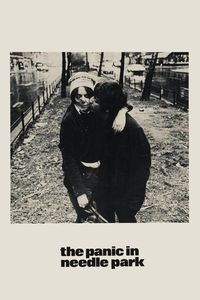
    (On Cable TV, April 2020) If you put it in a historical context, The Panic in Needle Park comes at an unsettling time in American history: fresh off the idealism of the 1960s, and yet confronting the scourges of rising violence, urban blight and increasing drug addiction. The film focuses on that last issue (with the others being not too far away), with Al Pacino in his first leading role, Kitty Winn, and a supporting role for Raul Julia in his screen debut. The story is simple and sordid, following two self-destructive drug addicts as they fight with the world and themselves. Typical of the early 1970s New Hollywood (even if entirely shot in New York City), it’s an incredibly gritty film, wallowing in the despair of Upper West Side poverty. Addiction soon turns to prostitution, violence, arrest and other problems, and the film doesn’t sugarcoat the consequences, nor does it offer much of an optimistic conclusion. It’s dated to the point of being a time capsule in terms of cinema and topic matter—almost a documentary, which is helped along by the film’s cinema-verité approach. Some of the scenes of drug injection were so shocking at the time that they earned the film an X rating not solely based on nudity or violence. Accordingly, The Panic in Needle Park is not fun at all to watch, but it’s generally less exploitative and more interesting than many of the more outlandish urban violence movies of the time.

  • Bombshell: The Hedy Lamarr Story (2017)

    Bombshell: The Hedy Lamarr Story (2017)

    (On TV, April 2020) The story of how a beautiful movie star invented Wi-Fi is now well-known enough to be part legend and part truth. While Bombshell: The Hedy Lamarr Story helps detail much of what happened, it does err a bit too much on putting the modern foundations of western civilization on Lamarr’s shoulders. Much of the film is about Lamarr becoming a movie star—her early career in Europe, immigration to the United States, success as an actress, and the legendary beauty that opened up many doors, whether they were professional or romantic. Since Bombshell is a hagiography, it doesn’t really mention how Lamarr’s films have not endured—Like Brigitte Bardot, she’s a movie star whose individual films aren’t that good, and unlike Bardot, she doesn’t have a signature film that people can point to and say, “This is what Lamarr was about.” Still, Lamarr was reasonably popular during World War II and if her life had been limited to her filmography, she still would have been an interesting topic for a film. But there’s more, obviously—thanks to contacts in the arms-dealing world (via her then-husband) and a musician friend, she co-patented a technique to hop between frequencies. This concept eventually became a building block for a host of later radio technologies, including the modern Wi-Fi protocol. Since Bombshell is all about Lamarr, it does draw a very thick, short and exaggerated line from Lamarr’s idea to modern-day Wi-Fi routers, ignoring the smorgasbord nature of technological development. The beauty-with-the-brain story is too hard to resist, though, and so is the tragically-victimized-woman narrative. In the third act of the film, we go over Lamarr’s less-than-impressive decline over the next five decades—how she married six times, wasn’t able to successfully transition away from the bombshell movie persona and how she eked a meagre living in difficult circumstances. The film definitely soft-pedals Lamarr’s increasing litigiousness and crankiness in later years, as well as her penchant for petty crimes such as shoplifting—although, amusingly, one of the targets of her lawsuits, Mel Brooks, ends up delivering one of her strongest defences when interviewed for the film. Still, Bombshell is equally dedicated to making a saint out of its oppressed heroine, blaming society-at-large for her use of drugs, her poverty, and her increasing obscurity until she and her achievements were essentially rediscovered during the 1990s. (Makes sense: I first heard about Lamarr in 1996 when her portrait won a CorelDraw contest—something that led to another lawsuit.) At the very least, Bombshell lays out the three main poles of interest in Lamarr’s life in compelling fashion, with several interviewees, including Peter Bogdanovich, Jeanine Basinger, Robert Osborne, her children and Lamarr herself in archival footage. It’s informative, compelling, emotional, somewhat authentic and filled with good archival footage. It’s, in other words, most of what you need to know about her. Where I’ll diverge from the usual good words, however, is in regretting that writer-director Alexandra Dean took the easy hagiographic way to cover the material, going for the cheap yet unarguable “genius woman underestimated because of her good looks” tragedy angle when there’s a lot of material unsaid or unexplored that would make this a more complex tale. But no—Lamarr is at the centre of the universe in Bombshell, so much so that it’s a wonder she’s not portrayed installing home routers.

  • The Beast from 20,000 Fathoms (1953)

    The Beast from 20,000 Fathoms (1953)

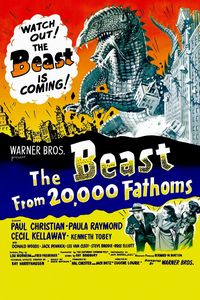
    (On Cable TV, April 2020) Historically, The Beast from 20,000 Fathoms is important because it bridged the gap between King Kong (which had a very successful re-release in 1952) and later kaiju/monster films such as Godzilla and Them! Fortunately, it happens to hold up pretty well as a movie for newer audiences as well. The story is archetypical monster-movie stuff (but emerged here first)—a nuclear explosion wakes up a monster who heads for a major metropolitan area, but stops at various points of interest in-between before the urban demolition. Harry Harryhausen provides the effects, adding a sheen of charm and characterization to the stop-motion material. Generally speaking, it’s a well-handled script with conventional but well-handled plot progression. The third-act rampage through New York City is a highlight, not only of this movie but of 1950s Science Fiction films in general—it’s surprisingly effective even with the dated special effects. Unlike many of its many imitators, the scope is ambitious and there are a lot of moving parts to The Beast from 20,000 Fathoms, all of which help ensure that it remains a head above many of its imitators—Gojira excepted, obviously.

  • League of Exotique Dancers (2015)

    League of Exotique Dancers (2015)

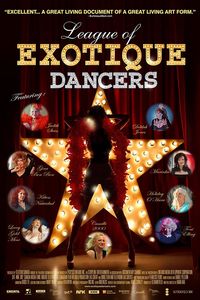
    (On TV, April 2020) The relatively upbeat documentary League of Exotique Dancers takes the examination of a retrospective revue of the same name as a springboard to ask the question—what happens to burlesque dancers late in life? The best-known of them, interviewed here, is Kitten Natividad, due to her association with the movies of Russ Meyer (as well as a, ahem, pair of memorable appearances in both Airplane! and Another 48 Hours—you know what two scenes I’m talking about). But more than a dozen women are interviewed here, reflecting on trailblazing stretching back into the 1950s. None of the women interviewed here regret their past (naturally, since they’re dancing onstage again as part of the revue) and all have settled into relatively quiet post-dancing lives. Writer-director Rama Rau offers a retrospective look at the history of Las Vegas dancing, and how its heyday ended when it got more vulgar with time. While all the women featured here are beyond the age most commonly associated with dancing, most of them still have It, whatever It is (mostly attitude). While you can approach League of Exotique Dancers as a bit of the ooh-la-la salaciousness of burlesque, it quickly leads viewers to serious discussions about money, racism and discrimination but also the fun and the empowerment (sometimes, as they had no other options) of burlesque dancing. Every interviewee is very likable, and once the credits roll, viewers will realize that this is, more than anything else, definitely a film about aging gracefully, even in one of the professions least likely to acknowledge it.

  • Beyond a Reasonable Doubt (1956)

    Beyond a Reasonable Doubt (1956)

    (On Cable TV, April 2020) Director Fritz Lang ended his American career with late noir Beyond a Reasonable Doubt, and it’s not a bad way to go out. It does have a lot of things I like—a newspaper setting, an author as a protagonist (played by Dana Andrews), a cynical view of humanity, and a corker of a final twist. The high-concept premise (framing oneself for a murder in order to expose the insanity of capital punishment) initially looks like the dumbest possible idea anyone could ever have, but it’s somewhat redeemed by a few more twists and turns along the way. It’s definitely noir, and that ending certainly highlights it. If I keep talking about the final twist, well, there’s a reason for it: it’s contrived, but it makes Beyond a Reasonable Doubt go from interesting to spectacular in only a few beats, and then wraps it all up after a mere 80 minutes.

  • 24 Hours to Live (2017)

    24 Hours to Live (2017)

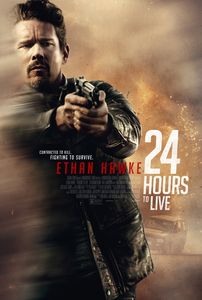
    (In French, On TV, April 2020) Work long enough as a leading man, and you’re bound to star into all sorts of movies. While Ethan Hawke is not the first name that comes to mind as “Science fiction action hero,” his filmography is so long that there are a few action movies in there, and 24 Hours to Live is the one in which he plays a dead assassin brought back to life but only given another… yup… 24 hours to live. Rather than meditate on the failings of his life and make amends, he instead embarks on a rampage of revenge, chaining one action sequence after another. If the film has a highlight, it’s not the plot—soporific despite what could have been a modestly effective high-concept premise, 24 Hours to Live loses itself in its own narrative and that’s too bad considering how forgettable it all is. Where director Brian Smrz does better is in the execution of formulaic action sequences: Able to stretch his direct-to-video budget though the bang-for-the-buck of shooting in South Africa, he manages to package a few better-than-average action sequences in a worse-than-average narrative, effectively making it a draw. 24 Hours to Live is still a direct-to-video low-budget production, but it’s not as terrible as most of them.

  • The Man with the Golden Arm (1955)

    The Man with the Golden Arm (1955)

    (On Cable TV, April 2020) From the first moments of The Man with the Golden Arm, as we see Saul Bass’s opening titles and director Otto Preminger’s name, we’re reminded of the later Anatomy of a Murder and promised a serious taboo-breaking black-and-white drama. The film does not disappoint. It features Frank Sinatra as an ex-convict who’s struggling with not relapsing into drug addiction. That’s unusual enough as a topic matter for 1955, but what sets the film apart, even today, if that it treats addiction like a disease, and the addict as a victim. The humanization of the protagonist is made easier through Sinatra’s sympathetic screen persona, in a role that wouldn’t have been the same with any other actor. (Also notable: Kim Novak, and Arnold Stang’s great performance as a friend of the protagonist.) While it does take some time to get going, The Man with the Golden Arm does offer a fascinating atmosphere of low-down mid-1950s Chicago, with smoke-filled card joints, strip clubs (sort of) and seedy apartments. What the film does better than many others, then or since, is showing how difficult it can be to break out of a bad past, transforming the story from a crime thriller to a social drama. Sure, Sinatra and/or Preminger’s name will draw viewers in, but the story itself is quite engrossing once you give it a chance to put all of its pieces in place.

  • The World, The Flesh and The Devil (1959)

    The World, The Flesh and The Devil (1959)

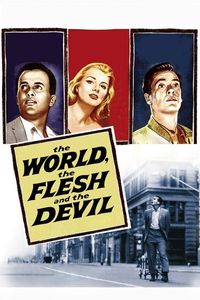
    (On Cable TV, April 2020) What an interesting film. Decades before I am Legend, here is The World, The Flesh and The Devil featuring one black man (Harry Belafonte) alone in post-apocalyptic New York City, except that he meets a white woman (Inger Stevens) at the beginning of the second act and they fall in love except when another man enters the picture (Mel Ferrer) at the beginning of the third act and then the action gets downright primal. Often meditative, but simply eloquent by the choice of featuring a lead black actor (playing an engineer, no less) romancing a white woman as the (potentially) last two people on Earth, this is a film worth remembering for its explicit acknowledgement or racism and mental illness due to isolation. Belafonte was Sidney Poitier before Poitier, and he gets to show his charisma and singing abilities here, either by himself in the early minutes of the film, alongside Stevens later on, or in an increasingly antagonistic relationship with Ferrer late in the film. Some haunting shots of late-1950s Manhattan, completely empty of people, are good for a frisson or two. The ending doesn’t quite satisfy—it seems to push things to a breaking point, then draws back for less than convincing reasons. But at least it’s an ending everyone can live with.

  • It Chapter Two (2019)

    It Chapter Two (2019)

    (On Cable TV, April 2020) To clown a phrase; there are a whole lot of conclusions in this conclusion to the It diptych. At a staggering two hours and forty-nine minutes (for a horror film!), It Chapter Two clearly sets out to provide the ultimate definitive adaptation of Stphen King’s novel and succeeds despite some middle-act fatigue. The story skips forward twenty-seven years after the events of the first film, as the killing cycle begins again and the Losers, who won a temporary reprieve in Chapter One, are called back to Derry to finish Pennywise once and for all. If there’s one thing to be said about this film, it’s that this is big-budget high-grade horror: Director Andy Muschietti gets to use plenty of good special effects in the achievement of the film’s vision, also making an effort to dig into thematic concerns (about memory) and go beyond the obvious scares to deliver something a bit deeper. Having A-grade actors also helps, with Jessica Chastain and James McAvoy providing most of the dramatic heavy lifting, with Bill Hader as the self-recognized comic relief and some fine work by others, such as Isaiah Mustafa and obviously Bill Skarsgård as Pennywise. The meta gets thick once Stephen King shows up as “The Shopkeeper” in order to criticize his stand-in writer for bad endings and the adaptation of The Shining. But, as good as It Chapter Two can be in bits, pieces, intentions and means, the overlong duration eventually takes its toll, leading to exasperation during the schematic setup of the film, and then again during the ending that can’t stop ending. On the other hand, there’s nothing more on the other side of that ending: it’s refreshing to see a horror film that dares do a definitive conclusion without any hint of a follow-up. While it has its issues, this wrap-up to the It series is a success: it knows what to adapt from the original novel and what to forget (readers know what I’m talking about), and the result is likely to be the best adaptation of that novel we’re likely to get.

  • Jing wu men [Fist of Fury] (1972)

    Jing wu men [Fist of Fury] (1972)

    (Tubi Streaming, April 2020) It’s sobering to realize that most of Bruce Lee’s feature-length filmography (aside from a few very early efforts) is a mere six films, from a supporting turn in Marlowe to Game of Death—and even that last one is a posthumous salvage job. In this list, Fist of Fury is arguably his breakout feature. Given that the plot takes us to Japanese-occupied Shanghai in 1908, much of the film’s running time is about historical context, setting up the fight sequences between a Chinese dojo and a Japanese one. There is some perceptible nationalistic material considering how the Japanese invaders are depicted not only as enemies, but perfidious, cheating ones. Considering this, it’s fine if any North American viewer finds much of the film duller than expected—it’s immersion in an unfamiliar era, and we’re here to see Lee fight, not talk. It doesn’t help that the film is a prime example of early-1970s Golden Harvest Hong Kong martial arts film—it’s technically rough, grainy and sometimes amateurish. Still, writer-director Lo Wei wisely steps back to see Lee do his thing during the fight sequences, and they make the film come alive. Watching the film, it’s obvious why Lee commanded such charismatic respect—he dominates fight sequences, putting personality where other films would have just run with the combat. Various techniques work at maximizing the coolness factor of Lee’s fights, whether it’s slow motion, overprinting, multiple bosses to defeat, tense moments in which nothing happens in-between the fights, and so on. There’s a bit of romance to round out the whole—and more nudity than I expected. Clearly, this is Lee’s showcase, even if I found Enter the Dragon significantly more memorable. The English dub is not particularly good, but it was the only option available. Jackie Chan briefly appears as an extra in one of his earliest roles. The freeze-frame ending ends up being elegiac, considering what would soon happen to Lee.

    (Second Viewing, Amazon Streaming, May 2021) It only took a look at the biographical documentary I Am Bruce Lee to get me rewatching Fist of Fury. It’s not disrespectful to note that this isn’t quite the best Lee showcase: this was an early film to feature him as lead, and writer-director Lo Wei didn’t necessarily how to best showcase his talents. Lee is clearly the hero with some impressive moves, but the camera doesn’t quite capture him as well as later films. It’s also worth noting that the overall plot of the film, going back to early-twentieth-century China to depict their struggles against foreigners, would become nearly a cliché in the following decades, as it formed the backbone of numerous martial arts epics. Fist of Fury is also noticeably grimmer than other Lee films—or other martial arts films, actually—with a freeze-frame ending right before things turn bad. Still, Lee remains remarkable here as a young Chinese martial art student who comes to fight against Japanese intruders. His wiry physicality remains impressive and while the film is rough in presenting its action sequences, there’s no mistaking his raw talent. The film remains a reference for Lee fans for a reason — not the best, but still an impressive showcase. The only problem is the same as when I contemplate the rest of his filmography — I can’t help but wonder what else Lee could have done had he lived longer. Fist of Fury is an impressive first draft, but it’s far from being the ultimate depiction of what he was capable of.

  • Sleepaway Camp (1983)

    Sleepaway Camp (1983)

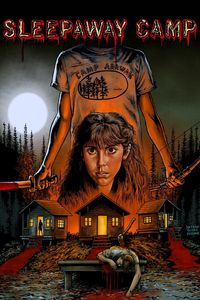
    (Tubi Streaming, April 2020) I’ll admit it—I didn’t go into Sleepaway Camp totally blind. I knew that there was a twist, and even remembered much (but not all) of it. Knowing this, I spent much of the film wondering whether the twist was enough to raise it above the many, many standard summer camp slasher movies that multiplied in the early 1980s. At first, I had a hard time believing that it would—Sleepaway Camp may eventually have shock value, but it does not have cinematic quality. The opening sequence is a flurry of shots that never seem to connect together, along with character relationships that aren’t that clear yet. The following sequence will make you question whether the film is going for a specific style or if it’s simply incompetent, with an overdone performance by Desiree Gould that highlights the titular CAMP. Things don’t necessarily get better once the action moves back to the camp, but they sure get less interesting: Our heroine (in what is actually a remarkable performance from Felissa Rose) is unresponsive to the point of catatonia, and the murders soon fall into the usual dull rhythm of slasher movies. Even my hazy memories of the twist were enough to get me to guess the killer—which isn’t all that hard, even though you run into basic physical problems in most of the kills. Still, there are, from time to time, touches of very stylized sequences—one of them being far less homophobic than you’d think, another being unusually sadistic in its cosmetic instrument of death. Sleepaway Camp doesn’t rise above its slasher nature for much of its duration… but then comes the ending. The shocking, bombastic, now-transphobic ending. The reason why the film’s final minutes dominate any discussion of Sleepaway Camp isn’t as much for its narrative merits: while it does justify the camp performance of one character, it also introduces basic believability problems that almost entirely destroy the narrative. No, the ending is a piece of work because the film revels in its glory for what feels like half a glorious minute, rubbing the viewers’ faces in the full-frontal freeze-frame evidence and insisting that we “SEE? SEE? THAT’S HOW SCREWED UP THIS IS!” Whew. Not a good movie. Not even a good twist. But I guarantee you that you won’t forget Sleepaway Camp the way you’ve already forgotten about so many other summer camp slasher movies.