Reviews

  • Blurred Lines: Inside the Art World (2017)

    Blurred Lines: Inside the Art World (2017)

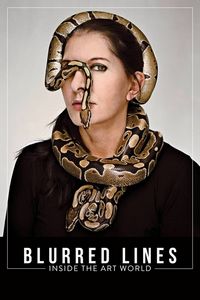
    (On TV, April 2020) I don’t know a lot about art, but I have vivid memories of reading Don Thompson’s The 12 Million Dollars Stuffed Shark and look at that—he’s one of the several experts interviewed by director Barry Avrich in Blurred Lines: Inside the Art World. It’s a documentary that gives us a snappy but fascinating 94-minute overview of the modern art world, with a heavy emphasis on the eye-watering prices that some of the best-known artists fetch. You can draw a fairly clear line between the money people and the art people throughout the film as it studies various components of that universe. The money people shrug and consider art as possession (although they acknowledge that regulating the market is practically impossible when every piece has its own distinctive history), while the artistic people are a bit embarrassed by the amount of attention that the money brings to the field. Still, there are tons of great shots here, an overview of many major players in the field and a timeline of significant events in the past few years. Blurred Lines doesn’t package everything in a transcendent story (Avrich’s subsequent Made You Look is better as a visual arts documentary) but it’s a rather good overview of the subject—frankly, I was disappointed that it had to end, because I probably could have enjoyed 15–30 minutes of it.
  • Made You Look: A True Story About Fake Art (2020)

    Made You Look: A True Story About Fake Art (2020)

    (On TV, April 2020) My knowledge of visual art is pitiful, but I’m always enthralled with books, articles and documentaries about the modern art world. While Made You Look: A True Story About Fake Art focuses on the Art fraud scandal that led to the closure of New York City’s venerable Knoedler art gallery, it’s also a lens through which we can gauge the dynamics and the insanity of the contemporary art world, where fakes may be so rampant that people choose not to ask too many questions. Meticulously, director Barry Avrich introduces what we need to know in order to understand this incredible story, then carefully allows talking heads to explain and comment on the multi-year fraud, all the way from a talented Chinese forger to unethical middlemen to celebrated dealer Ann Freedman, who convinced herself that what was too good to be true… was, in fact, not true. It’s quite a feat to describe all of this in scarcely more than 90 minutes, but Made you Look also wants to explain what happened, bringing in an expert on confidence games to explain how these outlandish schemes work from a psychological viewpoint. There’s even some fun to be had, as two heavyweight art figures start contradicting themselves in separate interviews, edited rapid-fire. I strongly suspect that much of my fascination with art forgeries is pure schadenfreude at seeing so-called smart and rich (never forget the rich) people being fooled like rubes—greed is not specific to lower classes, explicitly says the film. It also doesn’t help that art investment is, frankly, a status symbol that is almost entirely incomprehensible to IKEA-is-good-enough rubes like me. Experts being fooled, institutions being brought down, people fired—if you’re looking for a happy ending here, there’s little to be found: nearly everyone who was forging and misrepresenting has fled the United States, were indicted, or had lawsuits brought against them. Stepping away from the story a bit, it’s striking that it is, again, is an indictment of untruth in the information age—as with so many other things, people lying and getting rewarded for it at a time where we expect much better. As for the conclusion of Made You Look—of course the guilty rich go free and unpunished.

  • The Human Factor (1979)

    The Human Factor (1979)

    (On Cable TV, April 2020) Maybe you want to watch director Otto Preminger’s last film. Maybe you’re interested in a quasi-domestic British film about the mundanity of espionage. Maybe you want to gawk as a young Iman (and who wouldn’t?) In any case, your path has led you to The Human Factor. It starts on a surprisingly dull note, with subtle British spycraft jargon, side glances, cryptic language, elliptical dialogue and a dark outlook on national betrayal—everything is beige and boring even during the colourful strip club sequence in which Preminger gets to show nudity after spending so many films wishing he could. It all feels like substandard Le Carré, his cerebral style being unusually susceptible to bad adaptations. At least there’s Iman: She looks terrific, of course, and while she’s not a gifted actress, this is probably the best performance she’s ever given. The Human Factor, as it develops and improves, belongs to the subtle low-key school of murky British counterespionage, which may not be to everyone’s taste—certainly, when compared to much better examples of the form, this one feels lifeless and far too long for its own good despite being adapted by Tom Stoppard from a Graham Greene novel. Non-Iman actors are quite good, though, what with David Attenborough, Nicol Williamson and Derek Jacobi. The third act gets slightly better as it heads to Africa via flashbacks, to tackle issues of apartheid and interracial relationships in a more vital fashion. After idling for most of its duration, The Human Factor eventually, finally, builds up to a decent conclusion. It’s a bit too late, you’ll say, and I’ll agree—Some serious retooling would be required to make this a more interesting film, but Preminger did not succeed with this one.

  • The Killer Shrews (1959)

    The Killer Shrews (1959)

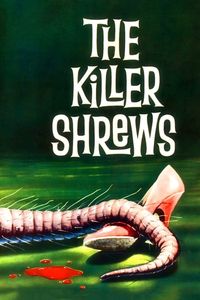
    (On Cable TV, April 2020) From The Killer Shrews’ first few bombastic moments, we’re clearly in 1950s B-grade horror movie land. There’s an interesting story behind the film, as it began as a small-scale independent regional production that was eventually distributed nationwide—and then revived by “Mystery Science Theater 3000” in the 1990s. That last fact, however, may prove more salient to modern audiences—it’s just not a good movie. Much of the first hour is spent managing the film’s budget by featuring lengthy dialogue in a living room, while the special effects were terrible even by 1959 standard. Still, it’s a time capsule of 1950s monster movies, and those are more exemplary the worse they are. The Killer Shrews is not good, but it’s not as terrible as it could have been either.

  • God Told Me To (1976)

    God Told Me To (1976)

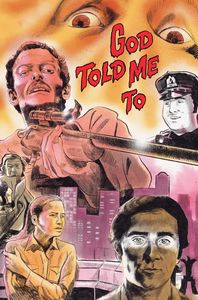
    (Criterion Streaming, April 2020) I’m several decades late coming to this conclusion, but in between Q, The Stuff, Maniac Cop, the Phone Booth/Cellular story diptych and now God Told Me To, Larry Cohen was a really interesting story teller. Not the smoothest, not the most accomplished and not really the one who was best served by directors (even when he was himself directing), but they all have something unusual and often interesting to say. God Told Me To does begin with what seems to be an intriguing but familiar premise: several strangers going on mass murder sprees, ultimately claiming as a motive that “God told me to.” As our cop protagonist investigates, things initially seem to point toward the kind of religious horror film that we’ve seen before. But then there’s the last half-hour of the film, which goes in an entirely different direction (albeit one foreshadowed by the prologue) to deliver something a bit scattered, a bit unsatisfying but so wild and crazy that no other movie since then had dared replicate. (Well, except maybe in the X-Files’ salsa blend of tropes.) I’m not going to claim that God Told Me To is good—but it’s certainly intriguing, engaging and then crazy enough to be memorable. I did like Tony Lo Bianco’s performance in the lead role, even though any actor would be driven crazy by the script’s wild turn toward the end. There’s a convincing argument to be made that Gold Told Me To best plays as a series of strong scenes not very gracefully being held by a mad collage of contradictory ideas, but compared to a lot of downbeat SF movies of the 1970s, it still holds up as being more than the usual clichés.

  • Area 51 (2015)

    Area 51 (2015)

    (In French, On Cable TV, April 2020) Five years later, the only thing anyone remembers about Area 51 is that it was writer-director Oren Peli’s underwhelming follow-up to the Paranormal Activity series. After four years on the shelves (as per the final credit card clearly stating that the film has a 2011 copyright notice), Area 51 got scathing notices, dismal box-office results and no cultural impact whatsoever, landing Peli in the so-called director’s jail from which he hasn’t emerged. (Don’t cry for him—he’s making bank out of producing endless Paranormal Activity and Insidious sequels.) It has a promise that could have been interesting, as it follows a few young conspiracy theorists as they infiltrate… you’ll never guess it… Area 51. Alas, it’s all executed found-footage-style, which sounds even worse now than in 2015. The best kinds of found-footage horror movies use the form to heighten the realism of a story, but in this case, it only serves in making it seem much smaller and contrived. It doesn’t help that Area 51 merely riffs off the usual clichés of found footage and alien abductions all the way to a trite ending, not making much out of its science-fictional setting. The characters are annoying and the sets are so dark that you wonder how it’s supposed to be real. Accordingly, it’s hard to care even in what the film intends to showcase as its big moments. Some of Area 51’s concepts are good, but the execution simply irritates more than it succeeds. No wonder everyone forgot about it.

  • The Eyes of Orson Welles (2018)

    The Eyes of Orson Welles (2018)

    (On Cable TV, April 2020) I’m usually a good audience for documentaries, but The Eyes of Orson Welles lost me along the way. In theory, the idea of exploring Orson Welles through his private art (drawings, sketches, paintings) is intriguing—but then writer-director Mark Cousins takes a very stylized approach to the topic by narrating the film as if to Orson, penning thoughts and wrapping up movie excerpts, location footage, an interview with one of Welles’s daughters, and so on. I will defend that choice on novelty alone, but it is intrusive and showy to an unusual degree. As a film-length musing on a beloved subject, it’s immensely detailed: Cousins weaves in and out a dizzying number of very pointed comments about Welles’s life that clearly show his understanding of his topic. But while I can appreciate the intent, I had a surprising amount of difficulty in remaining interested. (Lack of closed captions on a noticeable Irish accent did not help.) It gets wilder: Cousins wraps a critique of his own work by having Welles (via impersonator) answer back at the end of the film. By that point, though, I was pining for dull and boring objective documentary rather than what The Eyes of Orson Welles ended up becoming. A disappointment, then, although I suppose that some will like it more than I did.

  • Justice League: The New Frontier (2008)

    Justice League: The New Frontier (2008)

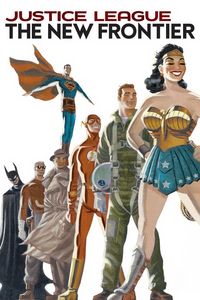
    (On Cable TV, April 2020) One of the most interesting things about the creative freedom allowed to the DC Animated Movie Universe are the occasional leaps into alternate realities that play with familiar characters. In Justice League: The New Frontier, the film adapts the classic Darwyn Cooke run of the Justice League being credibly transposed in the 1950s. It’s not unpleasant to watch, but it’s familiar, rushed and busy. While I’m not that big of a DC comics fan, I do have a nice slip-cased edition of The New Frontier (Why? Because of how Cooke draws his women characters, that’s why) and I’m slightly disappointed by the adaptation. It can’t quite play by the same codes of the original, nor sustain Cooke’s very distinctive visual style. But worse is how The New Frontier tries to condense a silver-age-style story into a far-too-fast 75 minutes focused on plot. This is a film that could have used 15 more minutes of atmosphere and character development in order to let the plot breathe and the 1950s styling make more of an impact. One word of warning to casual fans: the pace at which the film goes means that it does assume a lot of knowledge about the characters: that works for some of the more familiar ones, but not so much for the niche characters. In the end, well, The New Frontier is serviceable but not particularly satisfying, and a significant step down from the comics run itself.

  • It’s Always Fair Weather (1955)

    It’s Always Fair Weather (1955)

    (On Cable TV, April 2020) A very strong selling point for It’s Always Fair Weather is that it reunites a good number of people who worked on Singin’ in the Rain: Director Stanley Donen, choreographer-star Gene Kelly, dancer-actress Cyd Charisse, and so on—this was, after all, one of the “Freed Unit” musicals handled with impeccable craftsmanship by people who knew what they were doing. The lineage from Singin’ in the Rain to The Band Wagon to It’s Always Fair Weather is not only obvious—it’s playful and very much self-aware. There is a lot to like here: Many distinctive musical numbers (trashcan tap-dancing, roller-skate tap sequence, boxing-ring serenade), innovative filmmaking (decade-passing montage, triple-split screen), some cultural commentary (poking at the advertising culture of TV, with a live-confession climax that must have felt far more innovative back then), clever musical touches (such as the brilliant use of Blue Danube as an internal musical number) and a far more wistful tone than you’d expect from a 1950s movie musical. Plus, well, there’s Cyd Charisse—her green dress is wonderful, her first long scene in a taxi is a delight, and those are only two of the reasons why she gets here one of her most substantial roles—singing, dancing, comedy and romance, almost as much as in Silk Stockings. It’s not exactly perfect—the missed opportunity to make this a sequel to On the Town still rankles—but sometimes, even its flaws are endearing. The wolf-whistling bit, for instance, is awful by today’s standards, but it’s so dated, so overdone (and kind of cute) that it becomes hilarious. The 1950s were a very strong decade for musicals, and the production history of It’s Always Fair Weather suggests that this was the beginning of the end of an era at MGM, with slashed budgets and less interest in the result. No matter—I’m ranking this film high on my list of top 1950s musicals, and if it signals the end of an incredible streak, then it’s a pretty high note on which to go out.

  • Marked for Death (1990)

    Marked for Death (1990)

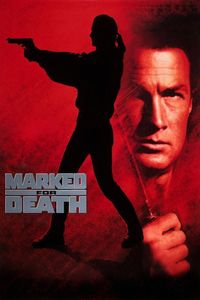
    (On TV, April 2020) In his third movie Marked for Death, Steven Seagal takes on Jamaican drug dealers because, hey, the endless body count has to come from somewhere, right? Dating from the time when Seagal’s films were still professionally made and theatrically released, this is still a somewhat average circa-1990 B-movie action thriller: don’t get your hopes when people will tell you that “it’s better than average Seagal” because the floor on those movies as a whole is incredibly low. Considering that the film takes on Jamaican voodoo-dealing criminal gangs shooting up an all-American city, it’s about as stereotypical as you can imagine, and occasionally even more so. Seagal eventually takes the fight back to the entire island of Jamaica for good measure. The Seagal persona is almost, but not completely solidified at this point of his career—although, amusingly, there’s a point when he gets in a tight spot and is still slim enough to slip through. It’s not all boring, but the rewards are rare and slight—the decent car chase midway through is notable largely because it’s a break from Seagal stone-facing his way through endless fights.

  • Just Before Dawn (1981)

    Just Before Dawn (1981)

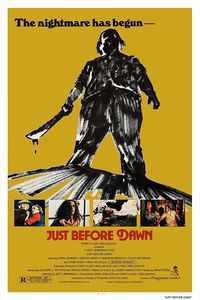
    (In French, On Cable TV, April 2020) The only thing worth noting about run-of-the-mill slasher Just Before Dawn is the location—set deep in a northwestern forest, it evokes feelings of folk horror more than urban (or summer camp-set) slasher films. But it’s still a kill-based slasher (no matter writer-director Jeff Lieberman’s protests) with an ever-dwindling cast until the Final Girl does her thing. Whatever ambitions or distinctions it may have held are lost in an absolutely undistinguished morass of 1980s slasher ennui. Not even Jamie Rose as a cute redhead can make it better. Frankly, Just Before Dawn is a pain to get through, and not solely because it’s so similar to other movies in the subgenre.

  • Harold and Lillian: A Hollywood Love Story (2015)

    Harold and Lillian: A Hollywood Love Story (2015)

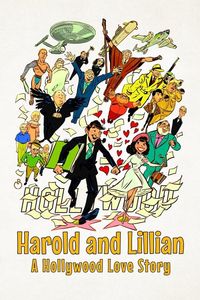
    (On Cable TV, April 2020) The best documentaries are not always about obvious topics, and so the oddly endearing Harold and Lillian: A Hollywood Love Story gives us a glimpse at a couple that occupied two crucial but little-known positions in the studio system. Lillian Michelson was a film researcher, providing archival material and answering questions that enhanced the reality that the film wanted to recreate. Meanwhile, Harold Michelson was a storyboard artist, working with great directors to also bring to life the vision behind several well-known films. Together, they married, worked, raised kids and celebrated (at the time of the film) sixty years of marriage. The blend between Hollywood nitty-gritty detail and romance strengthens both aspects of the film. What’s remarkable here is that, through the Michelsons, we’re not looking at famous directors or actors, but at the crucial behind-the-scenes work required for a team to make a movie. Hollywood history may only remember the names above the marquee, but it rests on the competence and professionalism of thousands of capable craftsmen and artists who helped enable the collaborative nature of moviemaking. In many ways, the film goes about its business like most others—archival footage, interviews with known names, and so on. But it’s the topic that distinguishes Harol and Lillian from other documentaries—such as using very cute storyboard drawings to illustrate the couple’s married life. Looking at storyboards both validates and questions the singular vision of a director—the reality of it isn’t quite so clear-cut as the director coming up with every single detail. Along the way, we get insights into Hitchcock’s process in making The Birds, and a look at The Graduate that outlines the fidelity of the storyboard to the finished him. Appropriately enough for its two stars, the film is frequently very funny, heartwarming and also a bit wistful in contemplating a pair of careers that spanned the end of the studio system into the new Hollywood and beyond. Harold and Lillian is not what I’d call an essential film, but it’s clearly something that will make Hollywood history fans happy.

  • Bulletproof (1996)

    Bulletproof (1996)

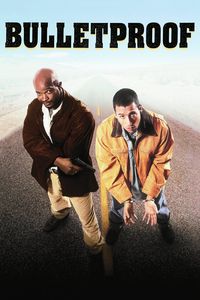
    (On TV, April 2020) In Adam Sandler’s career, Bulletproof still stands away from his comfort zone—sure, it’s a comedy, but it’s also an attempt to melt Sandler’s comic sensibilities with an action movie and the result is closer to a comedy incompetently attempting action than a true hybrid. There are clear signs nearly everywhere that the production did not have the means to execute its ambitions—action, people and dialogue don’t always match, exposing significant production shortcomings. Young Sandler does have some charm, but most of the film can feel like a contest to see just how abrasive Sandler could be. While Damon Wayans occasionally acts as a foil, there’s a limit to just how he and James Caan (playing his usual brand of heavy) can restrain him. Shorter than I expected at 90 minutes, this buddy comedy with antagonistic leads is mildly amusing, which is just about what it was aiming for. Soundtrack trivia: I found Bulletproof’s main theme using cues that sounded distractingly like the Red Hot Chili Pepper’s “Rollercoaster”… is it just me?

  • Tiny Shoulders: Rethinking Barbie (2018)

    Tiny Shoulders: Rethinking Barbie (2018)

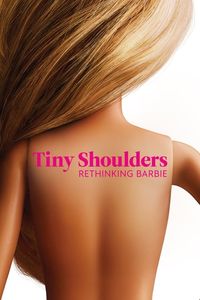
    (On TV, April 2020) The title of Tiny Shoulders: Rethinking Barbie says it all. At first glance, it’s a documentary about the Barbie doll and how successful it was—a somewhat commonplace approach for hagiography. At second glance, it’s also a documentary that acknowledges the negative messages carried by the Barbie archetype of unnaturally tall and curvy blondes. Which leads to a third glance that wrestles with complex questions of cultural influence, influence and representation. As the title says, are we simply placing too much weight on a plastic doll’s shoulders by making it stand for everything that’s wrong about cultural sexism? The documentary does get candid access to the Barbie creative team at a crucial junction in the doll’s history (trying to remake its image after a sales slowdown), and that does open it up to suspicions of being a corporatist hagiography. The discussion is often framed as Barbie creators reacting to criticism, but Tiny Shoulders does work best at showing how everyone, from the documentarian to the self-reflective interviewees and the Barbie creators themselves, has fully absorbed the debate about Barbie—this is a modern documentary that’s aware of the state of the discussion about its topic. The result is quite up-to-date, and the titular tiny shoulders are revealed as being those of the very humanized self-doubting women (and a few men) entrusted with Barbie’s future. The result is not a puff piece, not an anti-Barbie piece, but somewhere in the informed, nuanced, slightly-sympathetic middle. In the trenches with the Barbie staff, a war-room sequence takes us in the trenches of media response to the relaunch of different Barbie body types in 2014ish, complete with last-minute stress prior to launch. (Among other virtues, Tiny Shoulders will warm the heart of anyone who’s ever been involved in a long-term project.) Alas, the follow-up story to this film is murkier—the curvy dolls earned a huge amount of media attention upon release, but have since then been largely sidelined in favour of a return to the basic body type… even if more diversity has remained. (According to the latest results, Barbie sales have rebounded, plateauing from 2015 to 2017, and increasing from 2017 to 2019… right as the new Barbies body types gave way to a return to form.) Still, Tiny Shoulders offers a revelatory look inside the management of brands at an era where a slight misstep can threaten a multi-generational brand. It’s not necessarily just for Barbie fans.

  • The Stratton Story (1949)

    The Stratton Story (1949)

    (On Cable TV, April 2020) I must be overdosing on James Stewart’s movies, because there’s an impression of heavy déjà vu that hangs over the entire length of The Stratton Story and never quite goes away. Stewart as a baseball player? Yup, seen that before. Stewart in a biopic? Seen that before. Stewart playing loving couple with June Allyson? I certainly saw that already. The duality of Stewart is that he can do no wrong playing a humble likable character hailing from the heartland. Yet, at the same time, he never becomes anything else but James Stewart—he doesn’t disappear in the character as much as he makes the character him. This is fun to watch if you’re a fan of the actor, but the problem is that he forces the production to become “a Jimmy Stewart film.” Which may be for the best, given that The Stratton Story is otherwise a by-the-numbers biopic in the classical Hollywood mould, full of homegrown wisdom, conflicts between the family farm and the baseball field, terrible odds to overcome and a comeback hailed as a triumph. It’s easy to watch… but maybe harder to respect.