Reviews

  • Star Trek: Generations (1994)

    Star Trek: Generations (1994)

    (Second Viewing, On Blu-ray, December 2019) My memories of Star Trek: Generations were not good, but it took a while for me to remember why. The first hour-or-so of Generations is not bad, especially if you’re watching it shortly after the previous instalments. After a decent prologue that sees Kirk sacrifice himself once again, the focus of the series switches to the second series, the entire cinematography of the Trek series gets a visual upgrade and we’re back in the comfy aesthetics of The Next Generation. Plus, there’s Gates McFadden and Marina Sirtis to look at. From a movie perspective, the series also gets an upgrade from 1980s to 1990s techniques, with much-improved special effects, better camera movements and a less stage-bound style. There’s even a good (if repetitive) space battle midway through. The early signs of the film’s problems are in the lacklustre script—Finally giving Data his emotion chip leads to scenes that go for cheap humour over wittiness, and as the plot of the film snaps into focus, it’s obvious that this is the least of the film’s Big Ideas that are wasted away. By the time Generations is over, Kirk is dead, the Enterprise-D is destroyed and Data has emotion … except that the scales are so small that it’s hard to reconcile the majesty of those ideas and the way they’re tossed off. The entire thing climaxes on … a metal platform in the middle of a desert—not exciting! The passing of the torch between both iconic crews, years in the making, ends up being a disappointment. With twenty-five years’ perspective, the Enterprise has been destroyed roughly five times in thirteen Trek movies—to the point when it’s now feeling like a cheap trick more than a momentous occasion. In fact, if we’re going to reflect on Generations in retrospective, it’s hard to avoid thinking that the TNG crew has only had one good movie in four attempts—while I’m upgrading Generations slightly in my mind, it’s still well under First Contact, and quite above the abysmal Insurrection and Nemesis. There were, of course, a few other factors harming the TNG movies—Paramount was almost paralyzed in fear of doing anything too crazy in the movie series with DS9 and Voyager running in parallel, and that may explain the timid and self-defeating lack of panache in those instalments. Generation at best manages a draw between good and bad, mostly because whatever is good (and let’s not deny the fun of having William Shatner and Patrick Stewart teaming up) is in service of a throwaway plot. It’s half-successes like Generations that lead otherwise well-meaning people to fanfiction.

  • Twin Peaks: Fire Walk with Me (1992)

    Twin Peaks: Fire Walk with Me (1992)

    (Criterion Streaming, December 2019) Because I’m a sucker for punishment and the life of a movie reviewer is meaningless without pointless challenges, I started watching Twin Peaks: Fire Walk with Me completely cold. I knew it was a follow-up to a TV show which I hadn’t seen, I knew it was classic David Lynch even though I don’t particularly like classic David Lynch, and I made no effort to brush up on the Twin Peaks mythology even though I knew that it got strange. To say that I was confused is putting it mildly. Halfway through Fire Walk with Me, as the film switched from off-beat cop comedy to something far more sinister, I gave up and pulled up the Wikipedia plot summary, links to the Twin Peaks storyline and whatever other hand-holding I could stand. My watching experience improved significantly after that, although I was pleasantly surprised that Fire Walk with Me is generally self-sufficient if you learn how to ignore the weirder moments. There is a definite story being told here, even through the pointless digressions, leisurely pacing, and awkward insertion of characters who, I’m presuming, pop up from the TV show. I even enjoyed some moments of the film—mainly the first fifteen minutes, with its deadpan depiction of two policemen venturing in hostile territory for an investigation. There is a sequence featuring a dancing woman (and later interpretation) that pokes fun at Lynch’s own propensity for hermetic symbolism, and it does feel like a welcome bit of comedy in an otherwise increasingly tragic film. Lynch isn’t my cup of tea, obviously, but to end Fire Walk with Me with a virtual draw rather than outright loathing can be called a bit of a victory for both of us. On the other hand, I’m nowhere closer to even wanting to watch the TV show in either its original 1990s seasons or recent revival edition. There are pointless challenges, and then there are masochistic endeavours.

  • Mowgli (2018)

    Mowgli (2018)

    (Netflix Streaming, December 2019) Life is so unfair. If Mowgli had shown up out of nowhere, boldly showcasing impressive animal CGI characters and its significantly darker take on the classic Rudyard Kipling book, I’m pretty sure that it would have been better received and at least released in theatres to show its generous budget. But life is not fair, and Mowgli took so long to be completed (launched in 2012, shot in 2015, released in 2018 after many delays) that it got scooped by Disney’s 2016 The Jungle Book (launched in 2013, shot in 2014, released in 2016)—which featured even-better animal CGI characters and a slightly darker take on the Kipling book. In other words, Mowgli got left holding the bag, and feeling like a runner-up in the race it began. Warner Bros understood that, and sent the film off to Netflix after a perfunctory theatrical release for award contention. After seeing the result, comparisons are inevitable and usually to Mowgli’s disadvantage—despite slick direction from motion-capture legend Andy Serkis, impressive CGI and a grounded take on the material, Mowgli simply doesn’t feel as good as the other movie. The CGI animals don’t have the polish of the Disney film, the script doesn’t have the same finely honed touch of the Disney film and the tone is far too dark compared to the Disney film. Life is not fair: I’ll be among the first to say that Disney’s monopolistic dominance of the American box-office is a terrible thing, and that there should be vigorous competition from other studios. But if I can offer some humble guidance to anyone obviously not listening, the point should be to avoid taking on The Mouse on its own turf. Do something wildly different, something that Disney will not do rather than to offer something that feels like a reheated leftover. Mowgli, to be blunt, doesn’t have the spark that it needs to distinguish itself, and it had the rotten luck of betting on elements done better in the most directly comparable film. It’s not fair, but there it is.

  • Extinction (2018)

    Extinction (2018)

    (Netflix Streaming, December 2019) There is a surprisingly fine line between an intriguing premise and a dumb idea, and Extinction boldly vaults from one to another. Twists make sense if they answer questions rather than create new ones, and they work even better if the rest of the film works well without the twist. Alas, Extinction is the kind of movie that paints itself in a corner, with only the twist to save the day. It does pain me to acknowledge that it doesn’t work—I do like Michael Peña and Lizzy Caplan a lot, but they’re not particularly served well here. Peña is stuck in an intentionally dumb character (the twist partially but not satisfactorily explains why), while Caplan struggles in an intentionally shrill and unlikable character. But actors and their characters are the least of this premise-driven film, in which a standard alien invasion story is upended to be revealed as something else. That could have been intriguing, except that the revelation only makes the first half of the film feel increasingly dumb—and the longer you spend trying to justify the twist, the less sense it makes. Even acknowledging that movies aren’t built on logical consistency, there is something particularly insulting in Extinction’s premise that just doesn’t work. Even if you grant it one or two willing suspension of disbelief, there are still two or three move unresolvable issues that torpedo any attempt to make sense of it. It especially doesn’t work well considering that the conclusion of the film is about as stupid as anything else I’ve seen this year. I should probably add details, because anyone reading this capsule review probably won’t believe me. But Extinction frankly exasperated me, and I don’t want to spend any more time with the movie even in reviewing it. It’s just dumb, unsatisfying and if I’m clueless enough to revisit it in the future then I’ll deserve to re-experience my disappointment all over again.

  • Star Trek VI: The Undiscovered Country (1991)

    Star Trek VI: The Undiscovered Country (1991)

    (Second Viewing, On Blu-ray, December 2019) There will always be a very special place in my heart for Star Trek VI: The Undiscovered Country, for reasons almost entirely unconnected to its quality as a movie—it was the first movie I decided to go see in theatres, along with a bunch of friends. Given that I saw maybe a handful movies in theatres before I was sixteen (growing up lower-middle-class in a small Eastern Ontario town with the nearest movie theatre twenty kilometres away meant that I only started “going to the movies” once I had my driver’s license), I will always consider Star Trek VI: The Undiscovered Country the movie at which point I started seeing new releases in theatres rather than on TV. At the time, my love for Star Trek ensured that I would assess the movie as terrific—but as it turns out, writer-director Nicholas Meyer’s work still holds up as one of the best of the Trek movies. It’s not quite as tight as The Wrath of Khan nor as funny as The Voyage Home, the plot has its dubious moments, and it’s often far too obvious about its humour, its Shakespearian references or links to circa-1990s geopolitics, but The Undiscovered Country is about as good as TOS Trek ever gets—there’s some good material here between the characters, core values of the series and movie-grade production values (despite some dated early-1990s CGI) to make this a very decent swan song for the Original Crew. The plot blends series-altering changes, a murder mystery, galactic politics, humour, courtroom drama, a prison break, a rather good space battle with a triumphant finale and some welcome character evolution in having Sulu captain his own ship. The core trio of the series (William Shatner, Leonard Nimoy, Kelley Deforest) takes a bit too much space, but there are a few guest stars such as Christopher Plummer (hamming it up Shakespeare-style) and Iman to keep things interesting. To modern viewers, I suspect that the film will feel a bit stodgy—compared to modern aesthetics (as demonstrated by the 2009 Star Trek reboot, for instance), it does feel a bit stage-bound, a bit made-for-TV especially now that TV often has higher production values. Still, for those who were sixteen in 1991, I still found a lot to like in this revisit to The Undiscovered Country.

  • Delicatessen (1991)

    Delicatessen (1991)

    (Criterion Streaming, December 2019) To fans of writer-director Jean-Pierre Jeunet’s later movies, his debut feature Delicatessen is an early but very familiar demonstration of his unique talents. From the get-go, it’s obvious that the visual polish of the story will be astonishing—it not only takes place in a fantastical setting, but Jeunet’s predilection for unpredictable directing—hopping from closeups to slow revelations of the scene, expressionistic depictions and visual jokes. There is also, crucially, a refusal to stick to an expected tone. For a movie whose plot is based on accepted cannibalism, Delicatessen is far funnier, far more sentimental, and quite a bit less repulsive as one would expect. Jeunet doesn’t forget who’s the hero to cheer for and who’s the villain to hiss at, and with Dominique Pinon playing an earnest young man moving into an apartment building where new guests are often butchered and sold to other tenants, we have a moral centre to cheer for. It also helps that Marie-Laure Dougnac couldn’t possibly be cuter as the young woman who ends up taking a liking to the hero. Strange visuals are backed by an equally important attention paid to the soundscape of the film. From the first twenty minutes, two primarily sound-driven sequences affirm that this is the kind of movie that benefits from a keen ear. The result is weird, highly enjoyable, often spectacular. Delicatessen has aged admirably well, or perhaps not at all—the advantage of Jeunet’s off-beat but polished approach is it stands out of time, feeling as fresh in 1991 as in 2019. It’s quite a movie, and it’s almost essential viewing to anyone with a yearning for a complete audio-visual movie experience.

  • Star Trek V: The Final Frontier (1989)

    Star Trek V: The Final Frontier (1989)

    (Second Viewing, On Blu-ray, December 2019) I’m not going to pretend that Star Trek has always been smart or good, but Star Trek V: The Final Frontier plumbs the depths of the series. Very few things work in this very episodic instalment. At the time, real-world factors such as a budget cut, a writer’s strike, a special effects house unable to deliver and the heavy-handed influence of William Shatner in the director’s chair meant that the project was already off to a rocky start. But that’s downplaying the wobbly foundation of the film in a script with an inane premise (let’s go see… God?) and keeps compounding this nonstarter mistake with one dumb sequence after another. Never mind the surprisingly unconvincing special effects—watching the film, I kept being reminded how stupid the whole thing was through one false note every few minutes. This is the movie that has Pioneer 10 used as target practice by a cartoonishly evil Klingon, an ensign carrying a circa-1989 laser printer on the bridge, flirting between Uhura and Scotty, Uhura doing a half-naked fan dance to distract enemies, Scotty knocking himself out on a very visible beam somehow in the middle of a corridor … it just doesn’t stop. Those may be minor issues, but the point is that the overall story of Star Trek V, with its complete lack of thematic foreshadowing of the search for God announced more midway through, just makes it impossible to like the film either at a high or low level. Even the halfway-interesting moments (such as the unusually dramatic scene between McCoy and his father) are in no way earned by the rest of the film and feel either pretentious or hilarious. (And I won’t even discuss the comic relief.) As an individual movie, Star Trek V was bad enough that it has been essentially ignored by its follow-ups: the central idea of going “to the centre of the galaxy” in a blink blatantly flies in the face of later-Trek positing an entire series on being too far from home. Even the use of the various alien races seems drastically off-key, with little to distinguish the Vulcans from the Romulans from the overly typed Klingons. It’s just a mess, and it clearly shows the even=good/odd=bad pattern of the early Trek series. I will, however, reluctantly concede one thing: As irritating as Star Trek V can be, it perversely kept my interest throughout, which is more than I can say about later instalments such as Insurrection or Nemesis.

  • Legend (1985)

    Legend (1985)

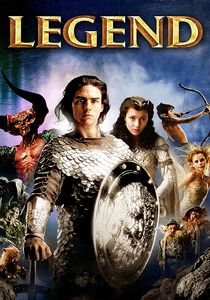
    (Cineplex Streaming, December 2019) Coming toward the end of the 1980s fantasy boom, Legend has the hallmarks of a Ridley Scott production: The story is serviceable at best, but the visual polish of the film is almost enough to make us forget about the narrative. Tom Cruise stars as a young man searching for a princess (Mia Sara, unremarkable) that has been kidnapped by a demon (Tim Curry, intensely remarkable). Clearly executed with a fairy-tale tone, the film is first about images and secondarily about everything else: the characters are usually archetypical (with a few twists), the dialogue is out of fantasy central, and the episodic structure gets stronger the closer we get to getting things done. Still, it’s worth a look for anyone looking at the way 1980s fantasy films were able to work around practical special effects limitations, or how Curry can chew scenery with big horns, or how a rather young Tom Cruise did in such a production.

  • The Dark Crystal (1982)

    The Dark Crystal (1982)

    (On Blu-ray, December 2019) Over the years, The Dark Crystal has developed a reputation that probably outstrips its actual value. As part of the early -1980s fantasy boom, it does earn points for trying to do something different and more original than simply filing off the numbers from a fairytale or simply reusing the tropes of heroic fantasy. Here we have a substantial amount of worldbuilding, a sympathetic hero at the opposite end of the muscle-bound Conan, and some interesting variations on the classic light-versus-dark fantasy ur-plot. By betting on puppet-driven actors (there isn’t a single human character here, although from time to time we do feel a jarring feeling in watching actors in suits), writer-director Jim Henson is able to be more ambitious about his world and the characters in it. Additionally, it’s easy to develop an odd kind of affection for the puppet characters of the film, as toothy as their fluffy exterior may not suggest they are. The story itself is nothing special, although it does conclude with an interesting fusion between light and dark rather than outright confrontation. No, the fun of The Dark Crystal is in the visuals, the originality and the sense of comfort that even its peculiar vision offers. It has aged remarkably well in this CGI age, mostly because it has chosen to be stylized from the get-go rather than try to approximate realism with special effects that it could never achieve at the time. The vision on-screen is the one they were aiming for, and the result (along with a less macho take on fantasy) is still quite charming.

  • The King of Comedy (1982)

    The King of Comedy (1982)

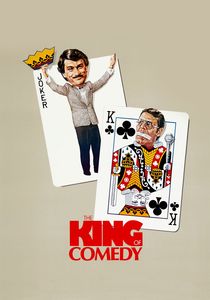
    (Google Play Streaming, December 2019) The tricky paradox of dark comedy is that you can manage to handle everything perfectly from a technical viewpoint, only to have audiences shrug and dismiss the result. It’s part of the deal—dark comedy pushes people out of their comfort zone and they don’t have to like it. That’s how I feel after watching The King of Comedy: I can’t fault director Martin Scorsese’s work here—he gets the material’s ironic darkness, executes it as well as it can be, and delivers a pretty good New York City movie as part of it. Robert de Niro is at his iconoclastic best as a psychopathic loser who hatches a plan to get his spot on a major TV show. Jerry Lewis and Sandra Bernhard also do well in the other main roles. But at the end, The King of Comedy plays its cards: the audience feels their heart sink as they realize that the psychopath is actually pretty funny, and that he gets rewarded for his actions. That may be just a bit too much to take, and perhaps just as dispiriting now than it was forty years ago. Great movie—but I’ll use my reviewer’s right to shrug and dismiss the result.

  • Cool Runnings (1993)

    Cool Runnings (1993)

    (In French, On TV, December 2019) There’s one theory of comedy that states that it comes from the surprise of matching two disparate ideas, and if you agree with that then it’s easy to see why Cool Runnings is amusing even from its premise. What if tropical Jamaica decided to field a bobsled team at the Winter Olympics? It’s not that ridiculous a premise (Jamaica has often competed in the winter Olympics, albeit not competitively—but you can see how athletes can adapt their physical abilities to other sports if they can train where there’s ice and snow) but such nuances are not the kind of material that Cool Runnings goes for—it will spend the strict minimum amount of time to justify its premise (loosely inspired by real-life events) and no more. Far more of a comedy than a sports movie, this is not about the Jamaican team winning against impossible odds, but never giving up all the way to an honourable finish. Helmed according to a strictly competent formula by Jon Turteltaub, the film hits its targets and makes good use of its element. The Jamaican atmosphere is convincing, and the use of reggae music does pleasantly permeate the film. As a Canadian, I was surprisingly pleased by many specific elements of the film. True to its inspiration, it takes place at the 1988 Calgary Olympic games, leading to the curiously nostalgic sight of an old-school Coles airport bookstore. John Candy also stars as a disgraced coach in one of his last films, leading further Canadian credentials to the results. While Cool Runnings is very much in the safe mainstream comedy film tradition, it does everything right, is funny when it counts and has the good sense to go for uplifting underdog inspiration as its climax. Not a great film, but one that can be watched easily enough by the entire family.

  • Eighth Grade (2018)

    Eighth Grade (2018)

    (Netflix Streaming, December 2019) To be unusually candid, I see Eighth Grade as a horror film rather than a coming-of-age drama, and it has everything to do with being a father who will have to confront the issues raised by the film within a few too-short years. I wouldn’t want to romanticize growing up in a small Eastern-Ontario town in the 1980s, but I don’t quite feel that the urban 2020s are going to be any easier. Yes, there’s more diversity, awareness and acceptable role models. On the other hand, we now have social media reflecting the worst of human impulses, teens aspiring to meet dangerous expectations, easily accessible depictions of sex, violence and abuse … it’s enough to make any parent feel inadequate despite trying our best. Few would have expected young comedian turned writer-director Bo Burnham (who rose to prominence on YouTube) to deliver a nuanced, sensitive, heart-wrenching take on the topic but here we are: Eighth Grade is the film of the moment when it comes to depicting modern eighth graders. They have access to the most extensive set of tools ever assembled for self-expression, but they can be bullied through their phones, manipulated into dangerous behaviour and terrified to the point of debilitating anxiety and depression. As excruciatingly uncomfortable as Eighth Grade can be to watch (remember me calling it a horror film?), at least it’s ultimately a sweet, kind-hearted film. Its very likable heroine (an uncommonly natural performance from Elsie Fisher) eventually makes it through, taking correct decision when her back is against the wall—the not-so-fun part are the events that drive her to that position. It does an amazing job at being of the moment: if you believe (as I do) that creators often get stuck on a specific year and spend the rest of their careers harkening back to that time, it’s refreshing to see a perspective that fully integrates the world as it feels right now, and not as something like “the 1980s, with cell phones.”  I may not want to see Eighth Grade again, but I probably will—it’s a tough world out there, and my daughter is going to need all the help I can give her.

  • Gallipoli (1981)

    Gallipoli (1981)

    (Google Play Streaming, December 2019) It’s important for a variety of perspectives and people to be reflected in cinema, and that also goes for war films—considering the inherent propaganda in depicting armed conflict and the difficulty of understanding such massive undertakings as a battle, it’s essential to diversify. I don’t think, for instance, that Hollywood would have ever tackled World War I in the same way Australian filmmaker Peter Weir does in Gallipoli, for instance. The film focuses on two friends who find themselves acting as couriers during the battle of Gallipoli. A surprising portion deals with pre-war adventures for the protagonists, giving a credible peek into life in rural Australia in the 1910s—another topic unlikely to be portrayed in Hollywood. But the point of the film is the crucible that war becomes for those young men, and the large-scale (pre-digital) depiction of the fighting at Gallipoli. In the vein of most 1970s war film, it has an unapologetically anti-war tone, with loss of innocence (not to mention loss of life) being a major component, along with a critique of British command. A young Mel Gibson is quite good in one of the lead roles, offering a more modern counterpart to lead Mark Lee’s more idealistic character. I’m not a big fan of some jarring moments in the soundtrack incorporating synth-based music alongside a more orchestral score, but that’s a common-enough complaint for movies of the time. Fortunately, it doesn’t affect much of Gallipoli, which remains not only an interesting war film but also a top pick in the Australian movie pantheon even decades later.

  • Excalibur (1981)

    Excalibur (1981)

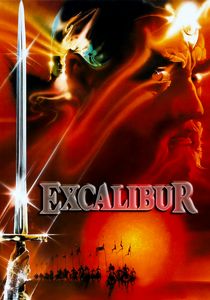
    (Google Play Streaming, December 2019) Coming at the intersection of Arthurian legend and the early-1980s fantasy film boom, Excalibur chooses to hold nothing back in presenting the knights of the round table in a decidedly fantastic context. Helmed by John Boorman, the film goes for maximal rule of cool—even limited by the special technology of the time, it’s meant to be spectacular with shiny armoured suits, grander-than-life soliloquies and a strong magical element. The cinematography makes great use of its Irish location, and the local casting means that this is not only one of Liam Neeson’s earliest screen credits, but also an early big-screen showcase for Gabriel Byrne, Ciarán Hinds and Patrick Stewart. Nigel Terry does well as Arthur and so does Nicol Williamson as Merlin, but it’s Helen Mirren who looks simply spectacular as Morgana Le Fay, eclipsing even Cherie Lunghi as Guenevere. The result is more impressive as a collection of nice scenes and images than a coherent plot—although my lack of enthusiasm for the Arthurian myth-making may be showing here. Still, I had a reasonably good time watching Excalibur in its overblown grandeur—it has its own strengths that manage to overcome many of its limitations.

  • Outlaw King (2018)

    Outlaw King (2018)

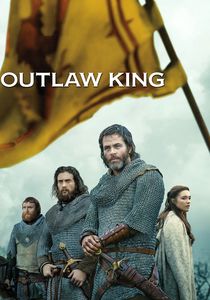
    (Netflix Streaming, December 2019) There are days when watching even a decent historical film is simply too much, and Outlaw King had the bad luck to land on such a day. I tried getting interested in this fictionalized retelling of Robert the Bruce’s history, but it just didn’t work. Grimy, realistic, dirty and unpleasant to a fault, this is a film thanks spends quite a bit of time setting up and then showing medieval-era battles … which end up being somewhat anachronic. Chris Pine is not bad in the least role, but the film around him is heavy to the point of choking almost any vitality out of it. Normally, I’d float the idea of a re-watch sometime in the future, but my interest in such a thing is roughly negative at this point, especially considering the two-and-a-half-hour length of the result. There’s little in Outlaw King that breaks out of the generic brown-and-blue feeling of similar historical epics, even if you’re in a better mood.