Reviews

  • Nowhere to Run (1993)

    Nowhere to Run (1993)

    (In French, On Cable TV, June 2019) As dull and featureless as most Jean-Claude Van Damme movies of the early-1990s, Nowhere to Run doesn’t have much to offer to those who aren’t already fans of the actor. Here we have van Damme as an escaped ex-convict (but not the bad kind of ex-convict, obviously) taking up the protection of a widow and her two children against unscrupulous real-estate developers in a rural setting. To be fair, Robert Harmon’s direction does have a few moments, especially in the action sequences. Still, that’s not much—There’s more fun in chuckling at Belgian van Damme pretending to be from Québec, or seeing an unusually cute Rosanna Arquette go through the motions of a rote role. There really isn’t much to gnaw on in the movie, even for action-movie fans—it’s fairly dull stuff, with few surprises in execution. Van Damme was averaging nearly a movie and a half per year in the early 1990s (not an easy feat considering the rigours of an action role), and Nowhere to Run has the bad luck of being sandwiched between the far-better Universal Soldier and Hard Target. In other words, don’t worry too much if you forgot about it—you’re liable to forget about it moments after watching it again.

  • The Serpent and the Rainbow (1988)

    The Serpent and the Rainbow (1988)

    (In French, On Cable TV, June 2019) Knowing that The Serpent and the Rainbow is a horror movie taking place in midt-1980s Haiti, I was expecting the worst—and for the most part I got what I was expecting: the portrayal of a nation torn between petty dictatorship (The Duvalier regime fled the country midway through the shoot, prompting a move to nearly Dominican Republic) and old-school pre-Romero voodoo zombies. In the middle of it comes a white scientist (Bill Pullman, mildly likable) investigating the voodoo drug that turns people into zombies—for pharmaceutical science! What he encounters in Haiti is a nightmare gallery of characters either in service of a terror-based regime complete with genital torture, or all-knowing in the ways of voodoo. What may have been plausibly deniable as drug-fuelled realism turns ambiguously supernatural in time for the ending, with a villain defeated by lost souls freed from their restraints and a hero whose mind can now do telekinesis. No, The Serpent and the Rainbow (very loosely adapted from a true story) does not deal in subtleties. That’s too bad—As a French-Canadian, I have a real affection for Haiti, and I wish the country was portrayed in a somewhat more credible fashion once in a while. On the other hand, and I’m not that happy about it: now that the film is thirty years old, there is some value in it having captured the terror of the Tontons Macoutes and the Duvalier family of despots. The Serpent and the Rainbow is on somewhat firmer ground when dealing straight-up scares: Director Wes Craven knows what he’s doing, and while the hallucination shtick gets obvious early on, he still gets to build a few intriguing images and suspense sequences along the way. The film does also benefit from solid work from Zakes Mokae as a villain, Brent Jennings as a morally chaotic contact, and the very cute Cathy Tyson in the thankless role of the doctor/damsel-in-distress. As distasteful as the stereotypical portrait of Haiti can be, it does add quite a bit of atmosphere to The Serpent and the Rainbow and helps it stand out from blander horror movies of the time.

  • The Grinch (2018)

    The Grinch (2018)

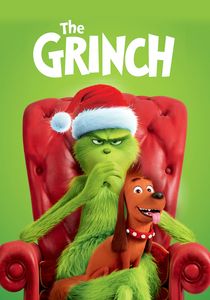
    (On Cable TV, June 2019) When it comes to Christmas movies, I’ve grown accustomed to as much repetition as Christmas songs—replay them, remake them—I must have seen five different version of A Christmas Carol during December 2018 alone. So, I’m not overly bothered by seeing a third version of The Grinch—I (surprisingly!) didn’t care all that much about the 1968 Boris Karloff one, and was only cautiously positive about the 2000 Jim Carrey one. The reason why this version of The Grinch isn’t as useless as most remakes is that Dr. Seuss’s colourful imagination is far better suited to computer animation than live-action (as shown by at least two other CGI-Seuss features), and so there’s a lot of material for the 2018 version to explore. The result is surprisingly … pleasant. The characters aren’t as grotesque as the live-action version, and directors Scott Mosier and Yarrow Cheney clearly have a lot of fun finding madcap details to stuff in the thin original story. Benedict Cumberbatch’s performance as the Grinch is fine, but it’s a more daring choice to use Pharrell Williams as the narrator. The musical cues are also interesting, going for a slightly newer sampling (“Christmas in Hollis,” Brian Setzer Orchestra’s “Jingle Bells,” Pentatonix, etc.) than the classics. Some of the slapstick gags are genuinely amusing, and the film does manage to shift the Grinch’s opinion of Christmas in a not-too-sappy way (although the ending does drag on a bit). I suspect that seeing the film in June, away from the glut of Xmas madness, may have helped more than hindered. It’s always risky to predict what Christmas film will endure or not, but there’s a good chance that The Grinch will get a lot of play over the next few years. Considering how enjoyable the film is, that’s not necessarily a bad thing.

  • The Good Son (1991)

    The Good Son (1991)

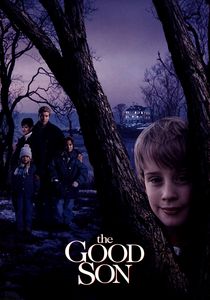
    (In French, On TV, June 2019) There are a few plot devices that irritate me no end, and the bad seed trope is certainly one of them. You know the one because it’s so familiar: the evil amoral sociopathic child, able to pretend that s/he’s the sweetest while killing pets, going after siblings (usually successfully, at least at first) and making our young hero look like the culpable one. You have certainly seen something like this before. Well, The Good Son has it all, albeit with the added wrinkle that the bad seed is McCauley Culkin, taking his Home Alone character and pushing it comfortably into the realm of premeditated murder. Against him is a very young Elijah Wood, trying (unsuccessfully) to convince adults around him that his cousin is irremediably bad and that he’s coming after them next. The ending is elegant in its own fashion (although abrupt), but much of the film is spent in hackneyed thriller territory, with musical stings telling us exactly how to feel about what we’re seeing, and all subtlety being extinguished. The young psychopathic antagonist is maximally detestable, and The Good Son hammers on that theme for roughly an hour out of its total slim running time. Repetitive and irritating—now there’s a recipe for unpleasant watching.

  • The Weight of Water (2000)

    The Weight of Water (2000)

    (In French, On TV, June 2019) I came to The Weight of Water with expectations that were far too high. As one of the few movies I still hadn’t seen from director Kathryn Bigelow, I was really looking forward to it. Bigelow has a long track record of entertaining movies, but The Weight of Water is something else. Despite a murder mystery and a cast headlined by Sean Penn and Elizabeth Hurley, it turns out to be a disappointing bore. The premise has to do with a modern photographer investigating a centuries-old murder mystery, with the movie flashing back to the earlier era to show us what happened. Or may have happened, or what they wished had happened—it’s that kind of film where the first act goes so deep into fantasy that anything may happen and it would be infuriating if we hadn’t stopped caring well before that point. The narration across two centuries doesn’t really bring anything together, the drama seems to repeat itself endlessly even in a relatively short picture and the film is far duller than the director’s reputation may suggest. The irritating overblow cinematography does nothing to make the film any less lifeless or uninteresting. Yes, I dozed off at some point and didn’t feel I had missed anything—I certainly did not feel as if I had to rewind and re-watch. I’m glad I’m a bit more of a Bigelow completist now, but not that happy about The Weight of Water itself.

  • Half Magic (2018)

    Half Magic (2018)

    (On Cable TV, June 2019) It must be fun to live in Los Angeles and somehow convince people to give you money to make a movie. You can hire your friends, have best-of-industry technical production equipment and crew, shoot in one of the most picturesque cities in the world and do all of that while still going to sleep at your place at the end of the day. No wonder so many actors try their hands at it eventually. With Half Magic, we have Heather Graham writing, directing, and starring in a vehicle for female empowerment in the trenches of Tinseltown. Ribald, raunchy (but never naked), the R-rated movie has a little bit more on its mind than the kind of overblow sorority girl antics of the better-known women-centred examples of the genre—it spends on-the-nose energy talking about women’s place in Hollywood, empowerment, bad boyfriends, and modern dating. It seems as if Graham had been away for a while, but this is a good return for her, a complex and likable role—plus, while the film won’t necessarily win directing awards, she’s effective behind the camera. Comic digressions include a commentary on changing slasher movies. Los Angeles looks great as a backdrop to a romantic comedy, and so does Stephanie Beatriz in dominatrix gear. The female empowerment message is conventional at this point, but it’s still relevant … even if, at other times, it does feel like hammering a well-known point. Half Magic doesn’t quite go all the way to address its potential: In many ways, it does feel like the kind of film, locally shot, that actors do to create a portfolio for themselves, and it’s not a bad example of the form. Still, it’s fun, breezy, takes a different perspective and gives decent roles to a few underused actresses.

  • Barb Wire (1995)

    Barb Wire (1995)

    (Second Viewing, In French, On Cable TV, June 2019) I don’t know if it classifies as an old shame or a still-canny move, but I remember watching Casablanca on VHS in 1995 and then immediately going to the movie theatre to watch its sort-of-remake Barb Wire. This is a film that doesn’t waste a moment after its obligatory exposition to show us Pamela Anderson in a striptease routine. But wait! She’s not just the lead attraction, she’s also the owner of the club (and also bounty hunter, because accounting is boring), stepping in the Humphrey Bogart role. The insistence on Canadian freedom (and Canadian dollars as the real currency) is endearing—although, let’s face it, in all scenarios where the United States has gone crazy enough that people seek refuge in Canada, it’s not likely that it will respect national frontiers. Still, one wonders if the French-Canadian element is why Plastic Bertrand plays in the club. The Casablanca comparisons only go so far—this remains a fairly dumb action movie, with lame quips (“Don’t call me baby”) and one succession of dull action sequences after another. In retrospect, the mid-nineties jejune pretentiousness of a run-down world with everyone sneering at each other in tougher-than-thou fashion gets tiresome more quickly than you’d think—one really longs for the black-and-white atmosphere of the real wartime Casablanca after a while. This being said, the portrait of Nazi-inspired American hard-liners is good for a few contemporary chills that weren’t necessarily there in 1995. (Do note that watching a dubbed version of the film unusually makes it a better one, as the woman dubbing Anderson is a far better actress who can paper over her vocal deficiencies.)  The action sequences are all dull nonsense overedited to cover up the low budget and lack of directorial vigour. Let’s really not read too much into female empowerment of a film chiefly using Anderson as a pin-up, but do notice that there are far more female characters on the side of the rebellion and, unless I missed anything, none on the oppressor’s side … suggesting a deeper feminist intention to Barb Wire than one would be willing to believe.

  • The Client (1994)

    The Client (1994)

    (In French, On TV, June 2019) It’s been so long since I read John Grisham’s The Client that I don’t really remember most of the plot, so you can say that I had an almost entirely new experience with the film adaptation. Here, a teenager having witnessed something of interest to the police and the mob is taken under a tough lawyer’s wing as she tries to negotiate a way out while outwitting both sides. If The Client works, it’s because it’s a sufficiently different riff on familiar tropes—in this case, the kid’s protector trying to protect her charge from overreach by the FBI at the same time as a very real threat from the mob. Susan Sarandon is quite good as the lawyer, flawed enough to have something to gain from the adventure. Meanwhile, Brad Renfro has a decent turn as a resourceful teenager caught between a few bad options. Tommy Lee Jones shows up as a senior FBI officer, while Mary-Louis Parker has a small role as a despondent mom. Director Joel Schumacher keeps things moving swiftly, not getting in the way of the plot-driven film. Grisham went on to write more interesting novels, but this film adaptation does the job and may seem more interesting in retrospect, as medium-budget mid-90s thrillers of the kind exemplified by The Client got much rarer in 2010s multiplexes.

  • Virtuosity (1995)

    Virtuosity (1995)

    (In French, On Cable TV, June 2019) I suspect that both Denzel Washington and Russell Crowe would consider Virtuosity to be one of their early shames. At times, the film does stink of mid-1990s funk and silliness, what with its then-spectacular-now-terrible computer graphics, fascination for virtual reality and careless overuse of such SF tropes as artificial intelligence and nanotechnology. At its heart, it’s nothing more than a cop-versus-criminal-nemesis chase dressed up in near-future plot refinements—it should work better as a crime thriller than a serious extrapolative work, except that what keeps it interesting are the SF plot devices, as half-heartedly developed as they are. (Circa-2019 viewers will be struck as how many of Virtuosity’s plot devices would also be covered in Westworld’s first two seasons, including a solid-state storage device for artificial intelligences and recreating virtual simulation to interrogate said AIs.)  Of course, what was gosh-wow for mainstream viewers back in 1995 is old hat to a far more technologically savvy 2010s audience. Still, there’s a certain inadvertent charm to see how the era then portrayed the future—shared with such Virtuosity contemporaries at The Net and Hackers, or to director Brett Leonard’s own The Lawnmower Man. Extrapolation aside, the film itself is an uneven suspense thriller—director Leonard occasionally finds ways to keep his action sequences moving, most notably through the use of helicopters in the rooftop finale. Still, perhaps the thing that most will remember from the film is the acting—Washington’s stoicism returns full force after a bit of an unusual prologue, while Crowe snacks on the scenery as an exuberant villain-of-villains with superpowers—and a (badly executed) musical fixation that partially explains the film’s title. In the background, William Fichtner is instantly recognizable, whereas only committed Kaley Cuoco fans will identify her in a child role performance. The ending has the unfortunate distinction of dragging on for an added ten minutes after the climax between the two protagonists—a more skillful screenwriter (or a film more resistant to the lead actor’s script tampering, as documented in an interview with Kelly Lynch) would have restructured that last half-hour to end on a higher note and effectively rearrange its best ideas. Virtuosity is not really a good movie, but let’s not try to pretend that it’s now without some interest even in the ways it now looks ridiculous. (After all: you needed to explain emoticons in 1995 because it was still obscure to older people. You still need to explain it in 2019 is because it’s obscure to younger people raised on emojis.)

  • A Star is Born (2018)

    A Star is Born (2018)

    (On Cable TV, June 2019) There are a couple of levels on which the 2018 version of A Star is Born can be appreciated. Perhaps the least interesting one is to take it at face value without any knowledge of its lineage or production history: As a story in which an aging rock star discovers a promising young talent and nurtures her to stardom while his own career fades. The music is exceptional, the chemistry between the two leads is off-the-chart, the plot moves efficiently between the set-pieces and it wraps up on an elegiac note that consciously brands the film as high drama. It’s enjoyable and perhaps even a bit rare in an environment that doesn’t give much of a chance to mid-budget romantic dramas. But, of course, 2018’s A Star is Born is not merely just any romantic drama—it’s the fourth (or fifth) version of a traditional Hollywood story played and replayed every twenty years since the mid 1930s, unexplainably skipping over the 1990s. Compared to previous versions (and I’ve seen all of them, including the two versions from the 1930s), this 2018 version is closest to the 1976 one, taking inspiration in rock and pop music rather than Hollywood—expanding the 1954 version’s idea to take on musical aspects to broaden the story’s appeal proves correct once more, and the male lead’s characterization owes a lot to Kris Kristofferson’s performance. The female lead is something a bit new—more organic to the story than Streisand was in her own pet project, but more likable than Garland in 1954. I think it’s probably my favourite version of the story, currently running slightly above the 1934 and the 1976 version. (Not being a Garland fan, I’m lukewarm about the 1954 one.) Much of this liking has to do with the strengths of both leads—previous versions have often short-thrifted the male lead in favour of the female upstart, but this version is more even-handed, and heightens the ending tragedy by making it feel inevitable. And that, in turn brings us to the third level of appreciation for 2018’s A Star is Born—one informed by a torrent of contextual material about the making of the film and its lineage. You can quite admire writer-producer-director-star Bradley Cooper’s decision to pause a highly successful acting career for two years in order to put together the project, learning musical chops along the way to deliver an incredibly convincing performance as an aging rocker on the decline. Or you can talk about Stefani “Lady Gaga” Germanotta’s quasi-revelatory performance as a skilled dramatic actress in addition to her undeniable vocal musical talents. (I say quasi-revelatory because even casual Gaga fans have long known that there was quite a bit of depth beyond the pop-star image.) You can also talk about the real-life chemistry of the two leads, the way Sam Shepard’s growl was integrated in the plot, or the integration of new technology in an old story—in short, there are levels of meta-textuality here that would be worth discussing even if the film itself wasn’t any good. Fortunately, this take on A Star is Born is actually quite decent, and defies expectations by one-upping several of its predecessors.

  • Throw Momma from the Train (1987)

    Throw Momma from the Train (1987)

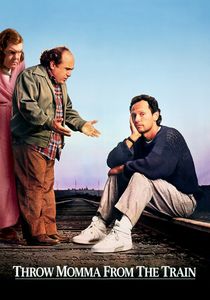
    (On TV, June 2019) At this point, I’ve seen enough of Danny DeVito’s movies as a filmmaker (The War of the Roses, Duplex and Death to Smoochy come to mind) to understand his very dark and twisted sense of humour. In that context, Throw Momma from the Train becomes understandable, perhaps even inevitable. Its main idea is to recreate the premise of Hitchcock’s Strangers on a Train, except as a comedy. Two men with problems, wishing for someone else to take care of it. Except, well, there are complications: One of the men doesn’t quite understand that you don’t always really mean it … and so on. Billy Crystal isn’t bad as a writer with a grudge against his ex-wife, but it’s DeVito who steals the show as a dull-witted mama’s boy who pushes the absurd plot in motion. Don’t fret if you haven’t seen Strangers on a Train: The film explicitly refers to its origins, and only riffs on the premise: the movies are otherwise nothing like each other. It’s not a bad comedy, even though DeVito can be grating, and Anne Ramsey is deliberately irritating (impressively so, though). The dark laughter accumulates until a not-so-dark ending, leaving everyone happy along the way.

  • Legal Eagles (1986)

    Legal Eagles (1986)

    (In French, On Cable TV, June 2019) I don’t think anyone would remember Legal Eagles today if it wasn’t for Daryl Hannah and Robert Redford, but that’s kind of the point of casting stars. The premise of the film has Redford and Debra Winger as competing lawyers who somehow agree to investigate the case they have in common—a sombre painting robbery that turns out to have links with the death of an artist killed eighteen years earlier. As our romantic pair bickers themselves into a healthy romantic tension, we’re free to enjoy the sight of middle-aged Redford at his most charming self, extremely cool even when slightly bumbling. Meanwhile Hannah plays the seductress with dull practice, leaving Winger as the film’s MVP as a combative attorney. Consciously written to feel like a 1940s belligerent romantic comedy, Legal Eagles is definitely middle-of-the-road stuff: there’s a substantial plot, but it’s a star vehicle almost designed to leave viewers with a pleasant feeling that soon evaporates—I’m not sure anyone can recall the details of the narrative even a week later. Still, fifty-year-old Redford is a joy to watch, and the film moves through the motions of its plot so confidently that it does give the impression of going somewhere even despite the banter. I quite liked it, but I can’t guarantee that I’ll remember why in a few months.

  • High Plains Drifter (1973)

    High Plains Drifter (1973)

    (On TV, June 2019) At first, there is a bafflingly familiar quality to High Plains Drifter that may make you question why the film exists, so closely does it feel like half a dozen other Clint Eastwood westerns. Here we have a loner coming to town, shooting a few people up to no good, and asked to stick around to protect the town from a bigger evil. But even at the same time, there’s something not quite right with the movie, something that sets it apart: Our protagonist rapes a woman in the film’s first ten minutes and before long we understand that the villagers are clearly plotting among themselves to keep a secret from the hero. High Plains Drifter gets weirder the longer it goes on, as more secrets are revealed and the “innocent” villagers’ true allegiances are revealed. Throughout it all, we also realize how there’s a strong probability that the film is not entirely realistic. The dark-red climax gets positively occult as evidence of supernatural happenings accumulate. Noteworthy for being one of Eastwood’s first solo directing efforts (clearly inspired by Leone and Siegel), the film includes—of all things—what could be interpreted as one of cinema’s earliest first-person-shooter sequences. While the film may or may not belong to the supernatural horror genre, it’s the explanation that makes the most sense and interest given the clues given by the film. Eastwood fans may want to compare High Plains Drifter with Pale Rider, which seems to come to a similarly ambiguous situation from the other side of the good/evil coin.

  • The Secret Life of Pets 2 (2019)

    The Secret Life of Pets 2 (2019)

    (In French, in theatres, June 2019) I was oddly charmed by the first The Secret Life of Pets—I could identify with some of the more sentimental material about humans and their pets in between the more obvious jokes and fast-paced action sequences. As a result, sequel The Secret Life of Pets 2 doesn’t quite have the same element of surprise going for it, and may stretch the sauce a bit too thin. For a very long time, the film feels episodic: despite the promising prologue, it feels like a filler episode between weightier instalments. It takes until the third act, and the coalescing of the three subplots, before the film regains its coherence and feels like a single film again. While the result is not bad, I have a feeling that by stretching the story past its previous boundaries (by going to the farm, by including non-pet animals) it loses sight of the emotional connection to house pets that the first film maintained so well. At least, in the Illumination Studios tradition, there are the silly jokes to fall back on: The Secret Life of Pets 2 ends with Kevin Hart as a rabbit singing “Panda,” so at least there’s that to look forward throughout the film.

    (Second viewing, On UHD, July 2021) Don’t you hate it when subplots metastasize and take over a film? A second look at The Secret Life of Pets 2 suggests that the script was rushed, and the point of the series was lost along the way. Numbers may help: The Secret Life of Pets was released in 2016, while its sequel came out three years later, which is not a lot of time to get even an 86-minute animated film done from the ground up. With that kind of rush, you can’t expect a sober reworking of material at all stages, and the time constraints show most clearly at the script level. While the first film kept a tight focus on pets and their relationship with humans (culminating in a return-home montage that still gets me to this day), this second film goes off in three different directions, not always aligned with the core strength of the premise. The one subplot that works best on an emotional level is the one that develops the characters from the first film, as our dog protagonist learns to deal with his owner’s marriage, pregnancy and young son – suddenly, there’s an expansion of the emotional themes of the first film, and you can see some progress along the way. I’m not that fond of that subplot’s setting on an upstate farm (diluting the concept of pets through livestock), but I like where it starts and where it ends. I’m also marginally tolerant of the subplot involving other animal characters getting into crazy adventures with other pets, in this case a Pomeranian forced to go undercover as a cat to retrieve a toy from a crazy cat lady apartment – it fits neatly with the “secret life” aspect of the story, and it’s got the biggest laughs of the film while giving something to do to the ensemble cast still stuck in New York City. It’s the third subplot that gives off airs of not having been completely polished, as a rabbit character with delusions of super-heroism goes chasing after a cub tiger being abused by a circus owner. That’s the part of the film that seems to come from a different series, about as far away from the “pets” aspect of the series as possible. It’s the subplot designed for thrills rather than emotion or laughs, and while it does deliver an action-packed climax, it’s a disappointing tag that feels as if it was added early in production to round off the film’s short running time, and couldn’t be replaced or improved given the film’s target release date. Oh, The Secret Life of Pets 2 is not terrible by any means: the animation’s good, the jokes land and the characters are recognizably themselves. But the added spark from the first film is not always there, and here is such a stark difference in intent from the three subplots that the structural artificiality of the result is highlighted. Kids will like it, but adults may not have as much fun.

  • Lone Wolf McQuade (1983)

    Lone Wolf McQuade (1983)

    (In French, On TV, June 2019) There is something true in the assertion that once you’ve seen a Chuck Norris film you’ve seen them all, and it’s certainly not going to be disproven by the generic Lone Wolf McQuade, where a rather great title can’t hide that this is Norris playing the same Norris. This time, he’s a rebellious Texas Ranger who (what else) is on the trail of an evil drug lord. He carries a .44 Magnum. He has a pet wolf. The drug lord is played by David Carradine. The love interest is played by the very cute Barbara Carrera. I’m not sure that there’s anything of substance to add to those facts. As directed by Steve Carver, the film is slightly more cinematographically ambitious than many of Norris’s other movies, clearly going for a Leone-type modern western in the American southwest. Still, Lone Wolf McQuade doesn’t have a whole lot to care about: There are few surprises here, although the sometimes-blunt execution does have a rough-hewn charm. Norris fans already know if they’re going to like it.