Reviews

  • The Yearling (1946)

    The Yearling (1946)

    (On Cable TV, April 2019) While I’m not one to turn up my nose at black-and-white films anymore, I get almost unaccountably giddy every time I see 1940s films in colour—the garishness may feel off, but it makes the films feel more alive than many of their contemporaries—and that’s particularly the case with pictures largely shot outdoors such as The Yearling. The subject matter remains unusual, focusing as it does on seventeenth-century Florida homesteaders as they work their way through isolation, the death of most of their children, withholding of parental affection and the adoption of a baby deer as a pet. While the plot itself is meandering (something to blame on the source novel) and rests on shaky foundations for modern parents, the film’s animal scenes quite impressive: the bear sequence alone still holds up. Young Gregory Peck is fantastic in the lead role. Still, the highlight is probably the great outdoors cinematography—much of the film was shot on location, and that clearly shows on screen. (Amusingly or not, legend has it that there was a previous attempt to film The Yearling at the same place four years earlier with Spencer Tracy, but It had to be dropped due to the bugs, the heat and Tracy’s distaste for the material.)  I’m not that fond of the result, but The Yearling certainly remains unique.

  • The Heiress (1949)

    The Heiress (1949)

    (On Cable TV, April 2019) For all the flack that golden-age Hollywood often gets for its happy endings and predictable plots, it could throw us a curveball occasionally, and The Heiress is certainly proof of it. Olivia de Havilland is somehow cast as a plain girl, albeit one with a rich father and an unusually persistent suitor. There are plenty of questions to ask about his motives and you may think you know where it’s going, or at least hope you do—but the film’s conclusion is merciless in summing up the film’s plot threads. This is a romantic drama with an emphasis on the second word. Montgomery Clift makes the most of his image as a romantic lead, while de Havilland tones down her own sex-appeal to pass (not so successfully) as plain. The Heiress does feel a bit long at times, stretching out moments that would be handled much faster nowadays. Still, there is a classic Hollywood glamour quality to the images, and heft to the entire film (weighted down by the ending) that other lighter stories may not have—no wonder it was nominated for a Best Picture Academy Award and won four Oscars. It’s easy to watch despite the heavy tone. The conclusion may not make romantic fans happy, but it’s still, in its own way, a small triumph over adversity.

  • Biloxi Blues (1988)

    Biloxi Blues (1988)

    (Second Viewing, On Cable TV, April 2009) I have a strong nostalgic attachment to Biloxi Blues, and it has a bit more to do with fond memories of watching it (in French) as a teenager at my grandparent’s house. Years later, it turns out I remembered more of it than I would have believed, and yet not enough to make this re-watch uninteresting. Of course, the other part of my nostalgia for the film has to do with the very deliberate attempt by the film at inducing it. It is, after all, an affectionate romanticized memoir of author Neil Simon’s army training experiences at the end of World War II, and the film is dedicated to comforting us with a nice portrait of the time. Despite the drama of a barracks environment, everyone is well-mannered (even the villain isn’t that villainous, even the disagreements aren’t that disagreeable), the fashions are impeccable, the world makes sense and the ending explicitly claims that those were the best years of the author’s life. Compare and contrast this with the near-contemporary Full Metal Jacket for the proof. Matthew Broderick here stars as an intellectual New York writer thrown in the mix of a group of young men not like him, facing down none other than a young and wiry Christopher Walken as his drill sergeant, and many colourful characters at his side. There is a resolute lack of surprises in Biloxi Blues—the drill sergeant will pick on someone and punish the group for them, the prostitute has a heart of gold, the villains get their ironic comeuppance—and yet it’s that lack of surprises that makes the film what it is. Visually, Biloxi Blues isn’t much—the strength of the film, borne out of its theatrical origin, is in dialogue and interpersonal conflict, but it does pull some stops when it needs to: The opening and closing shot have some lovely helicopter shots of a train crossing bridges, and those shot help a lot in establishing the romantic nature of the film even if they probably cost a significant chunk of the film’s total budget. While certainly less overly funny than Simon’s other works, Biloxi Blues is comfort cinema at its purest as far as I’m concerned … but you had to watch it as a teenager to experience the same. The French dialogue is markedly inferior to the pugnacious original, but it does add to my nostalgia factor.

  • The Equalizer 2 (2018)

    The Equalizer 2 (2018)

    (On Cable TV, April 2019) I’m not sure that anyone but the producers of The Equalizer were asking for a sequel, but I can understand the undeniable attraction of seeing people get beaten up for righteous reasons, and Denzel Washington’s possible insistence to set up a sufficient college fund for his kids. This sequel coasts a very long time on Washington’s natural charm and presence. It takes a while to get going, although it does make up for lost time by a rather remarkable climactic sequence set in a hurricane-swept coastal town. The climax does feature a terrific sense of geography, meticulously established through some careful scene-setting by Washington acolyte director Antoine Fuqua. The way to get there is a bit more laborious. It’s fun to be in Boston, fun to have a showdown in suburbia, fun to see a Malibu being used for car-smashing mayhem, fun to spend a bit more time with an unusually stoic hero even by Washington’s standards. This is a first sequel for the actor (and the director) but there’s nothing essential to it—at best, it allows viewers to revisit an easy character to put in action scenes, and if the point of the movie seems to be the action scenes (as they’re the best sequences of the film) then it’s a vehicle to an end. The subplots do get intrusive, especially when they slow down a film that should be all about leanness (in keeping with its spartan character) and forward propulsive pacing. Still, The Equalizer 2 gets a pass from me—I think I’m going to remember those set-pieces a while longer than the first film which, to be honest, only had the Home Depot sequence going for itself.

  • The Devil’s Rejects (2005)

    The Devil’s Rejects (2005)

    (In French, On Cable TV, April 2019) I don’t deal well with the kind of grimy fly-infested grand-guignol horror that seems to be Rob Zombie’s stock-in-trade as a director. It’s a style that seems pointless to me, performatively disgusting in ways that don’t actually mean anything. As you’d expect, my reaction to The Devil’s Reject is not sympathetic. It’s an exceptionally unpleasant film, except that “unpleasant” would mean having some kind of reaction whereas this is more akin to overwhelmed ennui: So, the heroes are unrepentant murderers, the police are even worse monsters. And… then what? The direction is all over the place with freeze frames and slow motion, while the characters are well beyond parody and hard to take seriously. As shown by an out-of-place scene with a reviewer spouting off useless trivia, Rob Zombie clearly doesn’t like movie reviewers, so he shouldn’t be surprised that movie reviewers don’t like him back. The Devil’s Rejects does have great music, though. The accompanying documentary, 30 Days in Hell, is quite a bit of fun: it’s a making-of documentary that’s actually longer than the main feature, and it cleverly takes us through every single day of shooting alongside the actors and the crew shooting the film as they resolve the production’s problems on an ongoing basis. It actually makes the feature itself more endearing: it’s harder to dislike a film once you better appreciate the work that goes into making them.

  • The Great Gatsby (1974)

    The Great Gatsby (1974)

    (In French, On TV, April 2019) As someone who’s lukewarm about F. Scott Fitzgerald’s The Great Gatsby but enthusiastic about the first half of the 2013 Baz Luhrmann adaptation, I was curious to see what the sometimes-derided 1974 film adaptation had to offer. Clearly, it couldn’t touch the CGI-fuelled exuberance of the Luhrmann version, but did it have its own strengths? As it turns out, director Jack Clayton’s earlier The Great Gatsby is far more mannered, significantly more realistic, but not distinctively dissimilar from other versions of the story: Love and lust on Long Island, and the unbolting of a man’s statue. I may dislike flapper fashions, but the party scenes are fun and the story moves through the expected beats. The film isn’t without its own stylish elements: There’s at least one good scene transition reusing symbolic imagery. Despite a remarkable cast (Robert Redford! Mia Farrow!)  The actors aren’t particularly remarkable, but the atmosphere is. Otherwise, it’s pretty much the same thing, done mid-1970s style. There is some humour: I had to laugh at the line “I’ll travel somewhere, to Montréal maybe.”  The ending does feel drawn-out, however, going on much longer after the final shocking events of the climax. Still, as an adaptation, I can see how The Great Gatsby managed to portray some tricky material, and how it clearly could be improved upon.

  • Young Guns II (1990)

    Young Guns II (1990)

    (On Cable TV, March 2019) You don’t have to be a genius Hollywood executive to figure out why Young Guns II exists—the first film was a smash hit, most of the good-looking actors were available for a sequel and what’s a little retroactive modification of the first film’s happy ending if it can lead to a new story? Not that this sequel can be accused of being overly precious with its returning characters—by the end of the film, it’s clear that a hypothetical Young Guns III would have required outright resurrections in order to work. A bit of effort is put into the framing device and narration, adding just a bit more interest to the results. Pop music enthusiasts will also note that the film spawned two hit singles that many people can still hum today: Jon Bon Jovi’s “Wanted: Dead or Alive” and especially “Blaze of Glory.” As with the first film, the focus here isn’t as much on the story than the actors being glossily photographed—it’s a great showcase for actors who would go on to have decent careers, such as Emilio Estevez, Kiefer Sutherland, Lou Diamond Phillips and Christian Slater. An equal-opportunity fan-service machine, the film may feature mostly male actors, but it doesn’t miss an occasion to show mild female nudity either. In between the actors, pop music and numerous sequences featuring heroics, one-liners, explosions and guns, it’s an action western for young and excitable audiences that wouldn’t be caught watching an authentic 1950s western. It’s quite a bit of fun even despite the downer ending.

  • Ladyhawke (1985)

    Ladyhawke (1985)

    (On Cable TV, March 2019) While Ladyhawke is certainly part of the 1980s fantasy film boom, it does have a few distinguishing elements to help it stand out from the crowd … good and bad. Let’s mention the bad one first: a music score of pop synthesizers, completely incongruous to the kind of orchestral score that fantasy films usually get. If you can get past that (not an easy feat considering that it wallpapers the film), the rest of the film is not too bad. There’s a very pleasant tactile feel to the physical effects, in ways that newer fantasy films so reliant on CGI can’t quite match. Michelle Pfeiffer has an interesting role as a short-haired heroine. Matthew Broderick is almost a walk-on extra in his own movie, helping two bigger heroes. There’s some romanticism to the star-crossed lovers fantasy premise, fated never to meet due to them being transformed in animals whether it’s day or night. It’s all directed with some competence by Richard Donner, no stranger to SFX spectacles in the analog era. Ultimately, it’s the narrow scope of Ladyhawke’s fantastic premise that makes it work—it’s not too ambitious relative to its ability to show the story on-screen, and that makes it work better than many fantasy films of the time.

  • 10 (1979)

    10 (1979)

    (In French, On TV, March 2019) If you’re looking for where that picture of Bo Derek in cornrows and bikini comes from—it comes from 10. If you’re looking for the origins of Maurice Ravel’s Boléro reputation as a naughty piece—it also comes from 10. If you’re wondering about movies in which an older man obsessively stalks a significantly younger woman—yeah, OK, 10 didn’t come up with that, but it’s certainly blatant about it. What worked in 1979, however, isn’t necessarily so warmly greeted decades later—the shtick of having a middle-aged man instantly fall for the bride of another man, to the point of following them on their honeymoon doesn’t get many laughs nowadays. In fact, 10 feels like an obnoxious film about a middle-aged white man going through a midlife crisis by lusting after a teenager. It’s very much a sex comedy from comedy veteran Blake Edwards, except that the laughs now feel forced. Pratfalls and goofs from a character can be endearing or annoying depending on our attachment to the character but here, despite Dudley Moore’s natural charm, he just comes across as a lout. I don’t think such a film as 10 would be acceptable today, and that’s welcome progress.

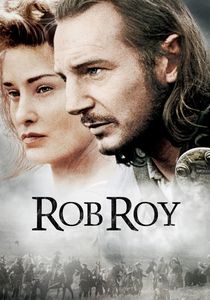
  • Rob Roy (1995)

    Rob Roy (1995)

    (On Cable TV, March 2019) Is Rob Roy the underrated Scottish epic drama of the mid-1990s? Yes. All the attention goes to Braveheart, but (dare I say it?) I preferred Rob Roy. In the subgenre of non-Englishmen being persecuted by Englishmen, it also spends a lot of time doing Scottish mythmaking, but feels more honest about it. The landscapes of Scotland are beautifully photographed, and while Michael Caton-Jones may not a particularly flamboyant director, he gets it right when it counts. His touch helps ensure that the film’s execution trumps its standard material. One element that helps Rob Roy a lot is Liam Neeson’s extraordinary performance—a role only he could play in combining his imposing physical presence with his exceptional dramatic skills. The straightforward revenge plot isn’t surprising, but it’s sufficient for the purpose of myth-making, and it all leads to a very impressive climax. The final sword-fight is a high point of action filmmaking, especially when compared to most other instances of showy sword-fighting in films—this isn’t flynning as much as it’s a credible, painfully physical sequence that still stands as an anthology piece. It’s not the entire reason to see Rob Roy, but it certainly helps cap off a well-made film that withstands comparisons with its Oscar-winning counterpart.

  • The Accidental Tourist (1988)

    The Accidental Tourist (1988)

    (In French, On TV, March 2019) From its multiple award nominations, it’s clear that a lot of people liked The Accidental Tourist when it came out. Decades later, it still holds up … as long as you’ve got some tolerance for grieving dramas that hinge on the middle-aged male protagonist being rescued by an eccentric woman. It’s focused on the life of a travel guide writer going through a very rough patch following the death of his son. His wife leaves, his dog bites and he breaks a leg. One more verse away from being in a country song, forced into the care of his sister, he connects with a dog trainer who takes a strong interest in him. Despite many questionable decisions taken by the protagonist, coincidences are there to help him in the end. What saves The Accidental Tourist, in general, from becoming an undistinguishable mainstream drama is its quirkiness—a protagonist who job it is to write about travel advice, an unimaginably over-the-top trauma that propels the entire plot, an off-the-wall romantic interest, a protagonist going crazy with grief in very interesting ways—this is both a standard kind of drama with oversized details. It’s a messy journey, but ultimately a satisfying one. William Hurt and Geena Davis make for an interesting couple of actors, especially given the richness of the material that the story provides them. It all amounts to something more palatable than it may seem at first glance—even if there’s something a bit off-putting about so much attention placed on a middle-aged man being comforted out of his issues by a free-spirited woman.

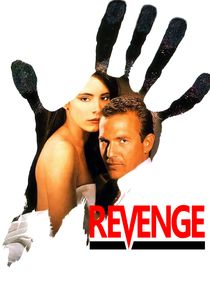
  • Revenge (1990)

    Revenge (1990)

    (In French, On TV, March 2019) At first, I was amazed that there was a suspense film from director Tony Scott that I didn’t know about, especially considering that it features not less than Kevin Costner and Madeline Stowe (and Anthony Quinn, and John Leguizamo, and Miguel Ferrer). Then I watched Revenge and understood why the film hasn’t endured—it’s an average, melodramatic romantic thriller, somewhat saved by impeccable cinematography (Scott’s strongest point) but never escaping a plot that hinges on the dumbest of dumb decisions. To wit: it begins in Top Gun land (brother Ridley Scott actually helped with this sequence) as our protagonist is a freshly retired fighter jet pilot who heads over to Mexico to reside at a friend’s estate. That friend (Quinn) turns out to be a drug lord with a temper and a lovely younger wife (Stowe). Showing the kind of bad judgment unique to puffed-up actors doing a vanity project, our protagonist soon begins a relationship with the young woman and everything goes well until the ending where they live happily ever after. No, wait—that was another movie. In this one, the affair goes badly, precipitating a back half entirely devoted to revenge even if, let’s face it, both of them ignored decades of film noir warnings and really asked for it. If I’m not impressed, it’s for a reason: the inevitable attraction, seduction, revelation and punishment, leading to the titular revenge are intensely predictable—even if the melodramatic ending goes beyond what we’d find over-the-top. Some of the film is buoyed slightly by Costner and Stowe’s charm and Scott’s stylistic approach, but it’s otherwise stuck in common elements and lack of distinction. No wonder few people ever mention it today—even in Scott’s filmography, it’s sandwiched between Beverly Hills Cop II and Days of Thunder and the contrast couldn’t be more to Revenge’s disadvantage.

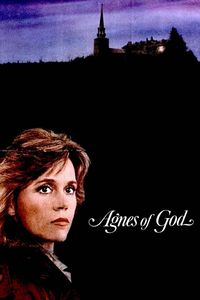
  • Agnes of God (1985)

    Agnes of God (1985)

    (On Cable TV, March 2019) There are films that you hear about, forget and rediscover later. The title “Agnes of God” did remind me of something, but didn’t know what exactly. I still recorded it without knowing why. It’s while watching it that I realized that I had completely forgotten the film’s strong Montréal connections: helmed by Canadian-born directing chameleon Norman Jewison, the film is not only set in Montréal with recognizable French-Canadian accents everywhere in the background, but it’s clearly, visibly shot in Montréal with its mid-1980s city logos and cars and slushy winters. Meg Tilly is quite good here in the title role, especially considering that we never see anything but her face and hands. Elsewhere in the cast, both Anne Bancroft (as a mother superior) and Jane Fonda (as a hard-driven psychiatrist) get great roles. All the Anglophone actors can be easily spotted by the fact that their French is phonetically pronounced mush. Narratively, the ambiguous ending is a forgone conclusion the moment the film sets up its characters—we know it’s going to end up with a could-it-be-rational-or-could-it-be-not, in order to make everyone happy (it’s the default conclusion of any religious-or-reality movie). Still, the journey is interesting, and it’s worth noting that the three lead performances in the film are all from women—the men are supporting characters at best. Despite a muddy yet predictable conclusion and a somewhat esoteric and difficult subject matter, Agnes of God is frequently interesting—for the acting, for the setting, sometimes for the drama itself. I’m not sure I’m going to forget it again.

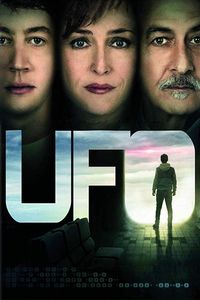
  • UFO (2018)

    UFO (2018)

    (On Cable TV, March 2019) I’m not a sympathetic viewer for undigested ufology, but UFO’s main strength lies somewhere else, somewhere I’m more than willing to follow: A scientific procedural thriller, in which an incredibly bright mathematics university student pulls at the thinnest threads in order to figure out a scientific mystery. Writer-director Ryan Eslinger turns in quite a cerebral film, with no action and arguably no antagonist either. But it’s a clever suspense movie in which the question is whether the protagonist will figure out the mystery, with equations and conceptual breakthroughs being what he needs to get there. Alex Sharp turns in a Miles-Tellerish lead performance (that’s a compliment) as the obsessed student, with some assistance by Gillian Anderson and David Strathairn. The low budget of the film is used effectively by a script that knows that its strength lies elsewhere than big-budget spectacle filmmaking. I quite enjoyed it despite my misgivings about presenting this as a true-ish story—it’s best to ignore the weak woo-woo attempts to link it to “real” events and enjoy it as a purely fictional thriller. In that light, it reminded me not only of my own computer science university days, but of the pleasure I got then from reading hard-SF short stories tackling first contact from a mathematical-as-universal-language perspective. I really can’t claim that I completely followed all of UFO’s heady concepts, but I knew enough to follow along and to appreciate that the film doesn’t treat its audience as idiots. There’s some noticeable but clever foreshadowing throughout, and I enjoyed it quite a bit more than the more ambitious but also more pretentious wave of low-budget Science Fiction that we’ve seen lately. Hard-SF readers should get quite a kick out of it.

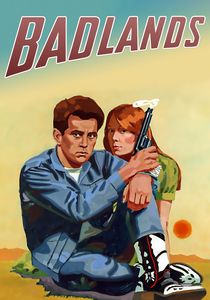
  • Badlands (1973)

    Badlands (1973)

    (On Cable TV, March 2019) There were a surprising number of high-profile “romantic criminal couple on the run” movies during the New Hollywood period, with seemingly everyone (including Spielberg!) taking a shot at it. Badlands is Terrence Malick’s debut feature and it fully embraces the subgenre, while being perhaps a bit more entertaining for Malick completists than the impression left by his later features would suggest. A summary of the story sounds like genre material: a girl meets a guy who ends up killing his dad and then go on the run together, killing more people along the way. From Gun Crazy to Bonnie and Clyde to Natural Born Killer (and others!), this is an American archetype. But Malick makes everything sophisticated rather than trashy by using voiceovers and a kind of languid pacing that never abandons the small-town atmosphere even as the bodies pile up. Badlands spends a lot of time in rural America in ways rarely seen in other movies, adding credible 1950s details in ways that stick in mind, whether it’s recording physical records at coin-operated machines or filling up a car from leaking gas stations. Sissy Spacek and Martin Sheen both star, with Sheen looking uncannily like his sons would two decades later. I really expected to dislike the film, based on my reactions to later Malick films, overall lack of appreciation for New Hollywood and familiarity with the subgenre… but I didn’t. It eventually won me over slightly, thanks to the period detail and flourishes such as a climactic car chase. It certainly helps that Badlands isn’t as bleak as other films of the subgenre, most of which can’t be bothered to be more imaginative than to have their leading couple go down in a hail of bullets. Malick is definitely after something else here, and the film thrives on that intention.