Reviews

  • Guess Who (2005)

    Guess Who (2005)

    (On TV, July 2018) I may not be a big fan of the original Guess Who’s Coming to Dinner (which has aged poorly in some respects), but I can certainly respect the fact that it dared tackle a then-difficult subject with some wit and poise. Decades later, we’re thankfully past the point where interracial relationships are scandalous—but that doesn’t mean that a race-switched remake had to go so strongly for dumb comedy. Of course, with Bernie Mac and Ashton Kutcher, you get what you pay for. At least a pre-stardom Zoë Saldaña looks great in an underwritten role. To be honest, Guess Who isn’t so bad once you get past the sacrilege factor: Kutcher does have his charm, Mac is a strong presence, and the comedy is so strictly formula that it’s guaranteed to be acceptable for a wide variety of focus group members. (I jest, but at least one scene goes a bit farther than it needed to in having Kutcher tell a few racial jokes to a black audience, and them finding them pretty funny—at least until the last one goes over the edge.)  The rest of the film is merely fine, and errs more often on the side of romantic comedy rather than racial commentary. Which is understandable enough given the soft-sell approach it takes. Every era gets the movies it deserves, and so the mid-2000s got their mostly innocuous race-relationship movie.

  • Extremely Loud & Incredibly Close (2011)

    Extremely Loud & Incredibly Close (2011)

    (On Cable TV, July 2018) Contemporary reviews of Extremely Loud & Incredibly Close were fairly clear and unanimous: this was schmaltz of the highest grade, cynically manufactured to bait audiences and perhaps even the Academy Awards. As a jaded reviewer, surely I didn’t need to watch it and so decided not to. (I was also busy with a newborn.) But what if it worked? Years later, running down the list of Oscar-nominated pictures I hadn’t yet seen, I ended up starting Extremely Loud & Incredibly Close with low expectations and a considerable amount of built-in reluctance, leaving it in the background as I was doing something else. It really doesn’t help that the opening moments of the film hammer the premise home: Here’s the semi-autistic kid of a good man who died in 9/11, and he’s still having trouble coping. Buzzword bingo.  From a conceptual standpoint, the film is still disastrous and a masterwork of manipulation. But as it unfolded and I kept interrupting what I was doing to pay attention to the film, I realized that the execution of the whole preposterous thing was gradually seducing me into accepting its reality. It helps to have good actors—Tom Hanks and Sandra Bullock are exactly the screen persona that the posters promise us, but then there’s Max von Sydow, Viola Davis, John Goodman and Jeffrey Wright in small roles. But the real draw of the film is Stephen Daldry’s inventive direction, which takes us into the dynamic mind of its young protagonist, and treats the edges of the screen as mere suggestion—there’s a lot of image blending here, flights of fancy from strict realistic mimetism and to see this after a few weeks spent deep in classic film was a reminder of how the state-of-the-art in terms of direction has considerably evolved over the past decade, with unprecedented ability to make reality malleable. Of course, the film is far too often too much for its own good: Daldry piles on the weepy triggers by the end of the film and if some of them work, the others feel far-fetched. I’m almost sure that my reaction in 2018 is far more positive that if I had seen the film in 2011—at the time, the film was pitched as a sure-fire Oscar candidate, tied to the tenth anniversary of 9/11 and still playing with raw wounds. Seven years later, well, the first kids without direct memories of 9/11 are finishing high school, we have more pressing urgencies to think about and the film has retreated into semi-respectability as “one of those Oscar nominees”. As a result, it now feels like a discovery more than an imposed viewing and that does make quite a difference. I wouldn’t go so far as to say that the film needs a critical revaluation (I mean: it is still schmaltzy), but it’s probably quite a bit better than critics said at the time.

  • Black Christmas (1974)

    Black Christmas (1974)

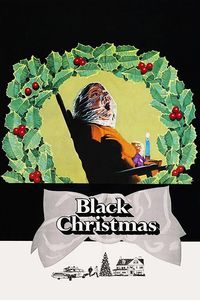
    (In French, On Cable TV, July 2018) Perhaps the most noteworthy detail about Black Christmas is the date at which it was produced—1974, four years before Halloween (to which it has a clear kinship) would popularize exactly the kind of film that Black Christmas is both in subject matter, attitude and technique. Some of the filmmaking is limited by its low budget, but most of it reflects almost shot-for-shot the kind of films that slasher horror filmmakers would churn out for years after John Carpenter’s success. A made-in-Canada success story, Black Christmas does feel in advance of its time, although it certainly does not escape from its own subgenre. This being said, there are performances here by Margot Kidder, Keir Dullea and a young Andrea Martin, plus an energetic directing style from Bob Clark. Unusually (and unsatisfyingly) enough, the film does not reveal the identity of the killer nor punish him, reinforcing its futility. Alas, the flip side of anticipating the slasher subgenre is that it can and does feel like more of the same … which doesn’t help if you don’t like the kind of movie that it launched. 

  • The Bride of Frankenstein (1935)

    The Bride of Frankenstein (1935)

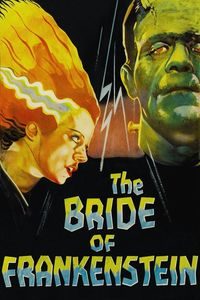
    (On Cable TV, July 2018) When they say that The Bride of Frankenstein is one of the best sequels ever made, they’re not kidding: Even if the original Frankenstein is not a bad movie, it’s so familiar that it can feel underwhelming. While the cultural impact of The Bride of Frankenstein is significant, much of the film feels fresher, more challenging and more imaginative than its predecessor. There are some brilliant special effects here and there, the story is far more morally ambiguous (I mean—the monster is likable, but he actually kills a young girl!) and it doesn’t merely go through the motions of the Shelley story like the first one does. There’s a clear articulation of a mad scientist rivalling Frankenstein, making the stakes ever more complex. This being said, I was surprised to find out that despite the iconic nature of the titular bride, she only shows up for a few moments—and her plot purpose seems to be to reject Frankenstein so that he’s motivated to go kill himself. Hmmm. Nonetheless, I had a much better time watching The Bride of Frankenstein than its predecessor, and its unusual nature is a significant part of it.

  • Frankenstein (1931)

    Frankenstein (1931)

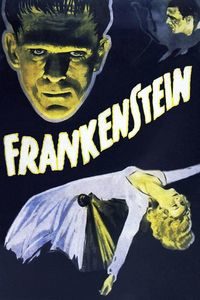
    (On TV, July 2018) The great things about the handful of classic Universal Monster movies is that they’re iconic enough to be worth a watch at any time. The not-so-great thing about them is that they’re so iconic that they’ve been remade, ripped off, sequeled, and nodded at so often that we often know exactly what will happen even if we’ve never seen the movie. So it is that this 1931 version of Frankenstein is pretty much what we’d expect from a Frankenstein film. There’s Bela Lugosi in traditional makeup, there’s the mad scientist, there’s the lightning-powered machinery, there are the villagers … it’s extremely familiar and while it’s good, I don’t think there’s any surprise to it. I still enjoyed watching it, but I’m having trouble actually finding anything worthwhile to say about it.

  • The Stepford Wives (1975)

    The Stepford Wives (1975)

    (On Cable TV, July 2018) One of the problems about watching originals after their remake is that the remake is often, despite other problems, more in-tune with current tone and attitudes. So it is that the 2004 remake of The Stepford Wives took a tongue-in-cheek tone to better distinguish itself from the original’s cultural ubiquity. After all, it’s not as if the idea of replacing wives with obedient robots can be taken seriously, right, right? I found the remake unsatisfying for many reasons, but the choice of tone seemed defendable. So, going back to the original, it’s a bit of a surprise to find that the concept is played here absolutely straight—as a slow-burning horror movie in which, yes, wives are replaced by obedient robots. I found the horror to be found not so much in the replacement (although that black-eyed simulacrum toward the end—eek!) as in the eagerness of so-called husbands to replace the one they’ve chosen to marry. The other big change of pace between remake and original is, well, the change of pace—this 1975 version is incredibly slow by today’s standards, and doubly so when you consider that is spends its time building to a punch that is already familiar: characters take forever to get to what we already know even before watching the film. Taking everything together, I enjoyed the original The Stepford Wives far less than I was expecting. It hasn’t aged gracefully at all (even in its portrayal of mid-1970s affluent small towns) and is often a slog to get through. Can we ask for a remake of the remake?

  • Cleopatra Jones (1973)

    Cleopatra Jones (1973)

    (On Cable TV, July 2018) Blaxsploitation movies will always have a special place in my cinephile’s heart, and Cleopatra Jones feels like a particularly fine example of the form: not overly known, yet featuring pretty much everything we’d expect from the subgenre and sporting a terrific heroine in the lead. Tamara Dobson stars in the title character, a glamorous undercover agent for the US government. Coming back home from an anti-drug foreign intervention, she gets to clean up her neighbourhood from dealers with a fair amount of kung-fu. But the plot isn’t the point of a film fostering black solidarity against drugs, promoting ways to work within the system to resolve troubling issues and doing so with an overwhelming sense of style. Dobson is so spectacular that she doesn’t need to disrobe to appeal to audiences—her sheer presence and fashion sense are enough. It’s almost satisfying to hear the characters in the film echo the same conclusion: “Black is beautiful” indeed. From a contemporary perspective, there is often a disconnect between the historical near-hysteric reactions to Blaxploitation movies from conservative circles and the film we see from today’s perspective—especially notable here is how staid and law-abiding the film feels, with a standard anti-drug message and some complementarity between Jones and the White establishment—some racist cop antagonists aside. Cleopatra Jones doesn’t feel particularly subversive nor dangerous, but that does give it a very specific charm even today.

    (Second viewing, On Cable TV, October 2022) I don’t have a lot to add about this second viewing of Cleopatra Jones – the film is still a very enjoyable piece of blaxsploitation, Tamara Dobson is still awe-inspiring, and the not-quite serious tone of the film is still quite a bit of fun. What’s perhaps new this second time around is me having a better appreciation of what Shelley Winters was up to at that stage of her career, and how her villainous role clearly plays into some of the psycho-biddy films roles she had just recently completed.  That adds a layer of interest to the film and proves my theory that all film plays on at least two levels – what you see on-screen, and the broader meta-narrative that surrounds every film, sometime in fascinating intersectional ways.

  • Paths of Glory (1957)

    Paths of Glory (1957)

    (On Cable TV, July 2018) There are movies that are going to be seen no matter their subject matter, simply by dint of being part of someone’s filmography. You can watch Paths of Glory because it’s one of Kirk Douglas’ better roles as an officer stuck between loyalty to his men and duty to his superiors. Or because it’s one of Stanley Kubrick’s most humanistic movies, with great battle sequences and a powerful ending. Or you can watch it because it’s a terrific film, at once indignant about war and decent in its depiction of characters forced in impossible circumstances. Some sequences already showcase Kubrick’s film mastery: The lengthy uninterrupted shot through WW1 fortifications is a thing of beauty, and the editing of the film is top-notch even by contemporary standards. It has endured today not simply because of its pedigree or its exceptional performance, but perhaps because its perspective on war—as an incredible waste that makes monsters out of everyone including the most principled—stands sharply at odds from other war movies of the era. Blending it with a legal drama (even a pseudo-legal drama) adds more opportunities to explore its theme than a strictly combat-focused film would have. Comparisons with other war movies of the era are instructive. Well worth watching today, Paths of Glory is the film where the Kubrick magic starts happening and it still stands as one of the director’s strongest features.

  • The Blob (1958)

    The Blob (1958)

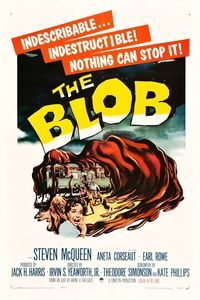
    (On Cable TV, July 2018) To put it bluntly, The Blob is not a good movie. And yet it endures even today, frequently showing up on retro movie channels and ranking high on the list of quintessential fifties movies. Part of it is certainly due to this being Steve McQueen’s first film—a 28-year-old actor playing a much younger teenager trying to save his town from alien invasion. McQueen being McQueen, the film largely revolves around his innate charisma, and it’s not a bad thing to see him as young as he gets in movies. The titular Blob almost steals the show … but not quite. Special Effects limitations being what they were, this is a fifties sci-fi horror film that is definitely not horrific even as some characters get dissolved by the alien menace. (The amusing title song is worth a listen.)  Aside from MacQueen and a rather droll tone, The Blob is perhaps most remarkable as a gentle visit to mid-fifties small-town America, where the grocery store and the local movie theater are important landmarks and the local police chief harbours small grudges against specific people. It’s not good, and perhaps it still works because it never was. A rather inconclusive ending takes on a new meaning sixty years and one climate change crisis later.

  • Shanghai Express (1932)

    Shanghai Express (1932)

    (On Cable TV, July 2018) There’s a remarkable amount of exoticism on display in Shanghai Express, which follows a few characters are they board a train from Pekin to Shanghai and get caught up in the Chinese civil war. Trains are good for taking characters a long way while remaining in manageable locations, and so the movie does feel far more expansive than its limited sets suggest. (Although there is one notable outdoors sequence showing the train leaving Pekin.)  Notably helmed by Josef von Sternberg before the Hays Code crackdown began, Shanghai Express features a courtesan as heroine, opium dealing, forced sex, civil war dealings and one big murder. Marlene Dietrich is spectacular as the morally compromised “Shanghai Lily”, with a then-rare leading role for Asian-American performer Anna May Wong. While the first half of the film is a bit melodramatic and seems content to see its ensemble cast just chat away, the film gets far more interesting as a thriller once the train is stopped by government forces and the characters are kicked out of their comfortable berths. Great cinematography helps propel a morally ambiguous subject matter that still feels decently modern. It wraps up satisfyingly, which is true for the film as a whole: Made in 1932 but almost just as interesting today, Shanghai Express is a welcome reminder that the basics of cinema were all understood even as early as the early thirties.

  • The African Queen (1951)

    The African Queen (1951)

    (In French, On Cable TV, July 2018) If you’re even a casual fan of classic cinema, The African Queen is a must see, even for no other reason than it features Humphrey Bogart and Katharine Hepburn playing off each other in familiar roles—Bogart’s kind-hearted rogue, and Hepburn later-career matriarch. The story takes place deep in Africa during World War I, as a Canadian adventurer (Bogart) rescues an English nun from German attack. Escaping to friendly territory is not a certainty, especially when their tiny boat is faced with the threat of a German warship blocking their way. The adventures build up to a pretty good finale. While the innovation of shooting much of The African Queen on-location deep in Africa has paled a bit for today’s audiences, the results are clearly appreciated on-screen with a film that looks quite a bit more realistic than many of its studio-shot black-and-white contemporaries. (Legend has it that most of the crew suffered greatly from the shooting conditions, except Bogart and director John Huston who mostly drank alcohol rather than water.)  Bogart got an Academy Award out of the film (a lifetime achievement reward in all but name) while Huston and Hepburn got nominated for their efforts. The result is a product of its time, but The African Queen has aged rather well and significantly better than many other films of the time.

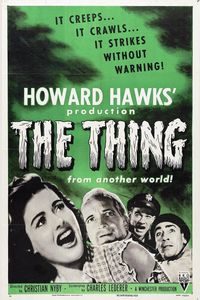
  • The Thing from Another World (1951)

    The Thing from Another World (1951)

    (On Cable TV, July 2018) As far as reputations go, The Thing from Another World is most famous for being the predecessor to John Carpenter’s The Thing—both adapted from the same John Campbell short story, both about finding a murderous alien encased in ice. But whereas Carpenter’s 1982 movie was a conscious exercise in terror, The Thing from Another World is a far gentler affair, a thriller in which a man-in-a-suit is electrocuted before posing too much of a threat. But a softer version of the same story doesn’t necessarily mean that the film is without its own merits. From the surprisingly effective opening title card, The Thing from Another World is a surprise example of good execution. The technical details ring true, there are a few scenes of substantial impact (the overhead shot of the melted ice being one) and the pacing is more effective than expected. While the nearly all-male-and-white cast isn’t particularly distinguishable, there’s an amiable sense of teamwork to the story (quite a contrast with the 1982 version!) and Margaret Sheridan brings a touch of warmth and humanity with her banter with protagonist-pilot Kenneth Tobey. It’s not all good (the parallels with Soviet invasions and the mad-scientist shtick have not aged well), but The Thing from Another World is generally better than most of the alien-invasion SF movies of the fifties. Christian Nyby reportedly directed, although many agree that legendary producer Howard Hawks played a large role in the film’s production. This may explain the sophistication of the end result despite a trite premise—and a film that still works reasonably well even today.

  • 12 Angry Men (1957)

    12 Angry Men (1957)

    (On Cable TV, July 2018) Some movies struggle with the burden of their reputations, but 12 Angry Men ably supports its considerable acclaim. The concept is terrific (twelve men in a sequestered jury decide whether to condemn a young man to death) and the execution does justice to the premise. While clearly a film from the fifties (all-male, all-white cast), it still crackles with dramatic energy and great performances. The way the audience is gradually made aware of the case though conversations and questions is intriguing, and the way no less than twelve characters are sketched in less than 100 minutes is also impressive. Henry Fonda is the star of the film as the lone holdout juror who eventually gets everyone to change their minds, but each actor gets a piece of drama to distinguish themselves. It’s interesting how 12 Angry Men, from a judicial perspective, is both inspiring and horrifying—while the film has a strong message to send about the civil importance of jury duty, it also depends on the jury acting in terrible ways—investigating the case themselves, then building presumption upon presumption. Still, we’re here for the drama more than the lecture, and there is a lot to like in the individual scenes that mark the turning point for each character—particularly satisfying is the sequence in which jurors tell another incredibly racist one to shut up now that he’s had his say. 12 Angry Man is tightly wound-up, with every facet of its background (most notably the weather, and the fan starting to work once the jury shifts) integrated in the plot. It’s quite a movie, and it’s still well worth watching sixty years later.

  • Black Narcissus (1947)

    Black Narcissus (1947)

    (On Cable TV, July 2018) I’m not quite sure what I expected from a forties “nuns set up a school/hospital in the Himalayas” film (something with nuns and Nazis?), but Black Narcissus exceeded my expectations to deliver something I couldn’t have imagined. It is about nuns setting up a school/hospital in an abandoned building at the base of the Himalayas. But it is also about a man setting off erotic jealousy among the nuns, and Englishwomen thinking themselves at the vanguard of civilization being utterly defeated by India. It ends up with a nun casting off her habits, putting on lipstick, attempting the seduction the only white man within walking distance and trying to kill her superior. Considering that his film was made in 1947 England, you can imagine that it did push a few boundaries. Black Narcissus was ahead of its time in at least another aspect—the Oscar-winning colour cinematography is impressive, with bright colours and subdued tones orchestrated in a conscious effect. The film wasn’t shot on location despite impressively deceptive trompe-l’oeuils. Oh, there are certainly a bunch of issues with the film. Shot and released shortly before Indian independence, the film is redolent with colonialist rhetoric, and features at least two performers in brownface. (Much as I’d like to praise Jean Simmons for her role, there’s no getting around that she’s a white girl playing an Indian girl under layers of makeup.)  Still, as noted, the ending finds the British nuns retreating from India, completely defeated. More interesting is the romantic triangle between two nuns (Deborah Kerr and Kathleen Byron) and a local fixer played by David Farrar. Byron is particularly striking once she removes her robe and goes on a rampage toward the end of the film—an authentically shocking moment that almost pushes the film toward horror. By the end, Black Narcissus delivers quite a bit more than what we could have expected from post-war English movies. It’s quite a surprise, and thanks to Jack Cardiff’s cinematography it’s still worth a look today.

  • To Catch a Thief (1955)

    To Catch a Thief (1955)

    (On TV, July 2018) Cary Grant, Alfred Hitchcock, Grace Kelly and the French Riviera—what more could you ask from To Catch a Thief? Hitchcock here lets go of relentless suspense in order to favour a breezy romantic comedy involving jewels thefts and a former master burglar trying to clear his name. Grant is effortlessly charming as the retired cat-burglar and he sets the mood for the rest of the film. Kelly is blander than expected, although it’s amusing to see her strut around the Riviera given her later position as the Princess of Monaco. John Williams (who always looks like John Cleese to me) also gets a good supporting role as an insurance man helping out the protagonist. Set against the sunny seaside scenery, this is a bit of a departure of Hitchcock, who doesn’t really try for suspense (even when the film could have called for it, such as the final sequence) as much as romantic banter and gentle crime. The atmosphere is well executed and the result is good sunny fun. To modern audiences, To Catch a Thief does have a bit of awkward fifties-style staging—most notably in the nighttime villa burglary sequence, not to mention the quasi-omnipresent rear-screen projection. But, as with the unnatural colours and high-class characters, this is part of the package: watch the film, travel back in time.