Reviews

  • The Phantom of the Opera (1925)

    The Phantom of the Opera (1925)

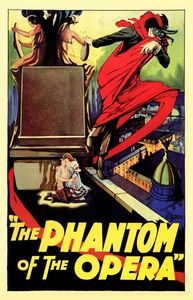
    (On TV, July 2018) Even for sympathetic cinephiles like myself, watching silent movies can often feel like an imposed chore. Some of the 1920s dramas can be a test of anyone’s patience with lengthy running time made even worse by title cards, with overdone acting, primitive cinematographic grammar, hackneyed stories and outdated social mores. But there are exceptions—comedy movies à la Buster Keaton work on a purely physical level, and genre stories still work on pure plot and ideas. So it is that The Phantom of the Opera may have most of the problems of 1920s silent cinema, but it still works because it tells a familiar story with enough grace and style that it’s hard to resist. You probably know the plot if only because Gaston Leroux’s novel has been remade once in 1986 as a massively successful musical (can you hum the title tune? I’m doing so right now), which was then turned into a 2004 movie. But the original still has a kick of its own—relatively fast paced at less than two hours, it also features Lon Chaney as The Phantom (watch out for when he takes off the mask!) and a period atmosphere that still feels quite enjoyable. The big romance at the heart of the plot is timeless, and it’s actually fun to see the phantom wreak havoc in the Paris Opera House. There aren’t that many silent movies that still carry this much pure non-comic entertainment power. On a historical level, this very first version of The Phantom of the Opera is also notable in that it was enough of a financial hit that it motivated Universal Studios to launch a number of horror projects that eventually led to the classic “Universal Monsters” franchise—The Phantom of the Opera is sometimes mentioned as part of the franchise, although they’re usually talking about the 1943 version in doing so rather than the now-public domain 1925 one. (And if you want to get a glimpse at the complex horrors of silent-film preservation, have a look at the later half of the film’s Wikipedia page. Geez.).
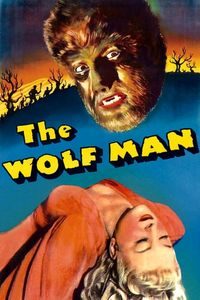
  • The Wolf Man (1941)

    The Wolf Man (1941)

    (On TV, July 2018) The 1941 original version of The Wolf Man is rightly considered one of the big-five Universal Horror monsters (alongside early-thirties Dracula, Frankenstein, The Mummy and The Invisible Man), so it’s a bit of a surprise to find out, throughout the film, how much of it seems to differ from our codified understanding of the werewolf monster. This film (scripted by legendary SF writer Curt Siodmak) does bring together werewolves and silver, but not necessarily shape-shifting under a full moon—which is a later innovation. As with many Universal Monsters foundational texts, there is a substantial romantic component at work here, and a cinematography that bridges between German expressionism and American film noir. Lon Chaney Jr has quite a presence as the titular wolf man, anchoring a potentially silly story into something with romantic gravitas. The film has surprisingly good makeup and special effects, though they come in fairly late in the movie. Despite some mythology weirdness compared with the contemporary version of the werewolf monster, The Wolf Man did create much of the myth and so remains a mandatory viewing for horror fans—fortunately, it happens to be a decent movie still.

  • The Lady Vanishes (1938)

    The Lady Vanishes (1938)

    (On TV, July 2018) Alfred Hitchcock made a number of rather good movies in 1930s Great Britain before moving to Hollywood, and The Lady Vanishes does have the hallmarks of many of his later movies: An intriguing premise, a train, some romance, a substantial psychological dimension, comedy, thrilling elements, an action-packed conclusion and a musical leitmotif. The film opens at a leisurely pace (with an opening sequence that features a zoom-in on a building that appears impossible in a pre-helicopter, pre-CGI age … until we realize it’s a scale model), introducing the passengers on a train trip in European countries. The plot gets kicking once our protagonist realizes that a sweet old lady has gone missing from the train and that everyone she meets swears that the lady was never there. They’re lying, of course, and the cover-up soon leads her to a far more dangerous situation. The ending gets out of the train but not in any kind of safety as bullets fly in the middle of the woods. The abrupt ending nonetheless managers to wrap everything up with a laugh. It still works rather well today because Hitchcock’s style defined modern thrillers and his willingness to use genre elements means that the suspense has travelled well throughout the decades. Margaret Lockwood and Michael Redgrave make for a cute couple, especially as they pair up to uncover the mystery. This being said, I suspect that Hitchcock students will get the most out of The Lady Vanishes by pointing out how it contains themes and tropes that the director would re-use over his career.

  • The Ladykillers (1955)

    The Ladykillers (1955)

    (On TV, July 2018) If you’re looking for an exemplary British black comedy, you could certainly do much worse than The Ladykillers, a deliciously dark story in which five professional criminals team up for a heist that covers every eventuality … except for their little old lady landlord. Their combined resourcefulness is no match for the bumbling ineptitude of their boarding house host, especially when they make her an unwitting part of their plan. While the heist initially goes well, things get more complicated when she discovers the plot and wants no part in it. The criminals then make one fatal mistake: they decide to kill her. But nothing will go as planned. You can guess who remains standing at the end. Katie Johnson stars as the little old lady to be killed, but the star here is Alec Guinness as a mastermind clearly outwitted, while Peter Sellers has an early role as one of the criminals. My memories of the 2004 Coen Brothers remake are far too dim to be useful, but the original British film is decent enough in its own right—perhaps predictable, but no less satisfying for it. It does help that the film was shot in colour even in mid-fifties UK, giving us a funhouse glimpse in the rather gray life of fifties London, stuck between WW2 and the Swingin’ sixties. This is now remembered as one of the best productions to come out of the original post-war Ealing Studios, as well as one of its last before the Studio was sold to the BBC in 1955. It remains a decently amusing film. 

  • Cars 3 (2017)

    Cars 3 (2017)

    (In French, Outdoors theater, July 2018) Pixar’s hitting the sequel profit-making button a bit heavily these days, and while Coco and Inside Out are welcome reminders that they’re still able to do original material, Cars 3 comes in the middle of a production schedule that includes Monsters University, Finding Dory, The Incredibles 2 and Toy Story 4. Following up on the widely reviled Cars 2, however, this third instalment does feel like an apology of sorts. Going back to its American racing pedigree, Cars 3 makes most of its references to the first film, as if the second hadn’t happened. Mater is wisely relegated to a supporting role, the film foregoes any foreign trips and a big theme is one of modernity versus history. Our protagonist spends much of the film trying to recapture his racing mojo after an early-movie blowout, and the plot mechanics are an excuse to go back to Appalachia for some stock-car chassis-crunching action, plus a look at the pioneers of American racing. It generally works, even though it’s wise to avoid getting hung up on the details: The ending sequence hinges on one of the most outrageous cases of rule-lawyering that I can recall—even kids are liable to be dubious about it. I suppose that the film’s emphasis on aging, retirement and passing the torch is also more liable to reach the parents than the children in the audience. As is almost de rigueur with Pixar films, the visual polish of the film is as good as contemporary CGI can be—the background is often photorealistic, while the characters themselves are immensely detailed. Much of the world-building remains as nonsensical as the rest of the series (It even becomes infuriating the longer you think about it), so it’s best to approach Cars 3 as a caricature rather than detailed fantasy. The result is, all things considered, not too bad—thankfully much better than the second film, to the point where it’s more or less as good as the first (which, admittedly, remains among Pixar’s weakest). As atonement, it was worth Pixar’s effort.

  • Stagecoach (1939)

    Stagecoach (1939)

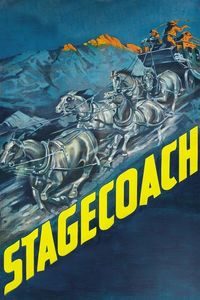
    (On TV, July 2018) It’s absolutely normal to see Stagecoach and feel as if we’ve seen all of this before: While there were a lot of westerns in Hollywood history before Stagecoach, this John Ford film may have been one of the first notable examples of using the Western as a vehicle for drama and social commentary, helmed by a big-name director and starring well-known actors. As a result, Stagecoach ended up being the first of many: First true John Wayne starring role. First Western that earned sustained critical attention. First Western still worth viewing today, if only to establish the classical western formula before the deconstructionists took over. It has the problem of its qualities: being a straight-up well-executed western, it’s unbelievably racist toward Native Americans depicted as savage hordes. Its portrayal of gender roles is, well, what it was. The cavalry comes to the rescue unironically. On the other hand, the device of uniting different characters for a journey in a tightly enclosed space is a classic (allowing for dramatic friction and commentary outside the scope of a typical western) that has withstood the test of time rather well. Wayne isn’t too annoying as the designated hero of the film and it’s easy to see how his persona would become immensely popular as wider audiences were exposed to him through this film. Stagecoach is a classic western and as such today exemplifies them at their conventional rather than transcend the genre like so many other later westerns would do. It’s worth a look, if only as a yardstick against which more subversive westerns would be compared to.

  • The King and I (1956)

    The King and I (1956)

    (On TV, July 2018) So, so very boring. I should be sorry for saying so, but there it is: Despite liking all three lead actors a lot (Yul Brynner, Deborah Kerr, and especially Rita Moreno) and liking musicals a lot, and not being completely unreceptive to mid-fifties filmmaking, I found The King and I very long, very dull and unable to go beyond its familiarity. It doesn’t help that the film’s outlook on colonialism is, well, from the mid-fifties (if not earlier, given the film’s lineage to a Broadway production, then to a book, then to real-life experience). I’ll point out that my not liking a musical is not a surprise when the musicals are based on a Broadway/Hammerstein source—I find Broadway adaptations not as interesting as musical developed directly for the screen, and Hammerstein to be humorless. Otherwise, as The King and I demonstrates, it usually ends up being an unimaginative restaging of a theatrical production with very little in terms of purely cinematographic art. It doesn’t help that the source material is almost entirely devoid of anything looking like humour or playfulness.   On the other hand, many of the individual components of the film are just fine. The scenery and costumes are terrific. Brynner is fantastic in the royal role, while Kerr and Moreno are also very good in their roles. And yet, I just couldn’t get or remain in the film, occasionally perking up at some of the better numbers but otherwise thinking “I’ve seen this already with Jodie Foster and Chow Yun-fat”. 

  • Universal Soldier (1992)

    Universal Soldier (1992)

    (Second viewing, on TV, July 2018) I have dim memories of seeing Universal Soldier on VHS back in high school, and I particularly remembered the farm-set climax. I thought it was a below-average film then, and a second viewing doesn’t necessarily improve things. Jean-Claude van Damme is a gifted physical performer (and he was near the peak of his physical form in 1992), but his career was badly damaged by a string of second-tier, nearly undistinguishable action movies. Universal Soldier manages to be a bit more memorable than the others by dint of its science-fiction high concept, having a strong antagonist (Dolph Lundgren), featuring better-than-average action direction by Roland Emmerich, and starting with a great early sequence at the Hoover Dam. Still, it doesn’t really become anything but a generic action thriller in which two muscled guys beat each other up. A tepid romance doesn’t really distinguish itself despite Ally Walker’s attempts to bring some humanity back into a superhuman film. I may remember it now because I was around and part of the film’s target audience at the time, but I didn’t exactly love it then and I can barely even tolerate it now. I suspect that without its easy narrative hook, the film would have not led to any profile-raising sequels and would be long forgotten today. Who else but van Damme fans remember near-contemporaries Double Impact or Nowhere to Run? Exactly.

  • Flash Gordon (1980)

    Flash Gordon (1980)

    (On TV, July 2018) Oh wow. I’m not sure you can actually describe Flash Gordon without sounding certifiably insane, so wholeheartedly does it commit to its campy style. 1980 was like a parallel universe when seen through the campy mind of director Mike Hodges, and I’m not sure where to start in order to give you a taste of the film’s built-in ludicrousness. Maybe Queen’s soundtrack with its eponymous FLASH! (Ah-ah-Aaaah) ? Maybe the prologue where a bored supervillain decides to destroy the Earth out of spite? Maybe the hero, a football star thrown in galactic conflicts? Maybe the unrepentant use of musty clichés such as the scientist and his daughter? Maybe the gaudy visual design of the film? Maybe Max von Sydow and BRIAN BLESSED hamming it up, along with such notables as Timothy Dalton and Topol in other roles? Maybe choice quotes along the lines of “Flash, Flash, I love you, but we only have fourteen hours to save the Earth!”  I don’t know. Flash Gordon has a messy production history, and the fairest assessment you can make of it was that Dino de Laurentis thought it was a good idea to resurrect a 1930s comic strip, except that the people tasked with writing and executing the project found the thing so ridiculous that they left the throttle firmly struck in the “parody” setting and the result got away from them. Or they all played along. No matter how you see it, Flash Gordon is a terrible big brash loud movie that feels as if it’s an hours-long hallucination. I wouldn’t mind seeing it again.

  • Dracula (1931)

    Dracula (1931)

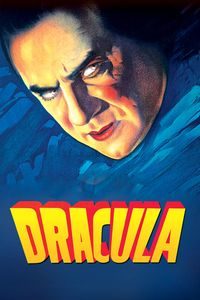
    (On TV, July 2018) It’s amazing to realize how much standard Halloween iconography (“Halloween” being used here as “mainstream watered-down portrayal of horror”) can be traced back to a handful of 1930s Universal movies. In-between The Wolfman, The Mummy, Frankenstein, The Invisible Man and Dracula (released in 1931–1933, except for The Wolfman in 1941), you have the five classic monster archetypes and the associated iconography. A ridiculous amount of what has become associated with vampire movie portrayals is owed directly to Bela Lugosi’s portrayal of Count Dracula, down to the exaggerated vocal performance (equally taking from the theatrical and silent movie acting styles) and quotable material. It means that Dracula is still worth a look today … but those very same qualities also make it an overly familiar borderline-dull experience. Much like Frankenstein, the film moves through an intensely well-worn plot that was made just as well earlier (Nosferatu) and much later (Bram Stoker’s Dracula). That certainly does not make it a bad film (its legacy can still be found everywhere come late October), but it does nibble at some of the basic enjoyment of watching a film to see what’s going to happen: In this case, we know exactly what will happen and that makes it more like a repertory piece—even to first-time watchers! I’m still glad I saw it, but the rough early-1930s production values mean that if I’m going to watch something based on Bram Stoker’s original novel, I’m going to volunteer the rather entertaining Coppola version.

  • I Walked With a Zombie (1943)

    I Walked With a Zombie (1943)

    (On Cable TV, July 2018) Our post-Romero definition of a zombie is significantly different from the classical old-voodoo-school zombie, so don’t be misled by I Walked With a Zombie’s title: This is about Caribbean drugs-and-maybe-magic zombies rather than the living dead. But it goes a little bit farther than that—sometimes described as “West Indian Jane Eyre”, the film turns out to be far more interested in family conflict than jump scares, with a nicely textured result that’s equally psychological horror and foreign xenophobia. The atmosphere of the film remains quite unusual, and it does have a notable dramatic engine underlying the horror component. There are also a few cute surprises in the opening segment: A script by noted SF&F writer Curt Siodmak; a disclaimer about persons “living, dead or possessed”; and an opening scene “set” in my native Ottawa, with snow falling outside the window to set the plot in motion as a Canadian nurse (Frances Dee, looking good) is sent to the Caribbean to take care of an invalid patient. The film has aged well except when it hasn’t—as you can suspect from the production year of the film and the Caribbean/voodoo premise, there’s quite a bit of racism in the way the black characters (some of them eating what looks suspiciously like fried chicken) are portrayed—although, by the same token, they are shown as having some agency and power, even if it’s scary-to-white-people power. Overall, though, even those issues make I Walked With a Zombie interesting in its own right. Director Jacques Tourneur keeps things moving and imbues the production with a quality that was not a given under producer Val Lewton’s supervision. It could have been much, much worse, as a look at most contemporary horror films would show.

  • A Bad Moms Christmas (2017)

    A Bad Moms Christmas (2017)

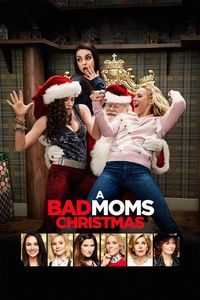
    (On Cable TV, July 2018) Considering the stress and obligations that the Christmas season places on mothers, it’s no wonder that A Bad Moms Christmas would take on the season to be merry as its follow-up excuse to show moms behaving badly. (It’s even a mini-trend, considering that Daddy’s Home 2 mines the same holiday and intergenerational issues.)  While Mila Kunis, Kristen Bell, and Kathryn Hahn remain the lead trio of the film, the added interest here comes from seeing their moms (Christine Baranski, Cheryl Hines, and Susan Sarandon) descend upon their hometown for the holidays. The themes of the film consequently shift from women/men relationships to mothers/daughters, magnified by the pressures to make Christmas as perfect as possible. A Bad Moms Christmas is formulaic, uncomplicated, intensely predictable in at least two ways (following the conventions of both R-rated women’s comedies and Christmas movies) and not particularly difficult to watch thanks to the actresses involved. The direction zips by, relying once again on snappy editing and pop music. There really isn’t much more to say about it—fans of the first film will be fine with the follow-up, enthusiasts of women-behaving-badly R-rated comedies will get their six-month fix, and nobody will remember the film next year. (Even as a Christmas movie, I don’t see A Bad Moms Christmas as having any staying power—it’s far too dependent on the non-Christmas prequel.)  I watched it, I laughed a few times, and that’s it.

  • Hawaii (1966)

    Hawaii (1966)

    (On TV, July 2018) Box-office success is fleeting, and you just have to go back fifty years in Hollywood history to find Hawaii, then the second-biggest-grossing movie of the year and now almost entirely forgotten by history. Adapted from a single chapter in James Michener’s eponymous novel (far too long to entirely adapt to the big screen), it’s about the adventures of a missionary trying to settle in wild Hawaii with his new bride. If you’re expecting a rousing adventure story, though, temper your expectations: The film is heavy on religious fervour leading to dumb decisions leading to characters dying—to the point where the film’s religious credentials become almost suspect. The ending is particularly bittersweet. It has not aged particularly well: the movie is ponderous, moralistic, scarcely entertaining to watch and clearly belong to the Old Hollywood era that would be annihilated barely a year later. Max von Sydow and Julie Andrews star as the lead couple, but neither of them are particularly well used. It technically qualifies as an epic film by dint of taking place over decades and a staggering 186 minutes, but there isn’t much spectacle nor complex plot in the film. Frankly, it’s an ordeal to watch these days—although the treatment of the Hawaiian population and myths is slightly more respectful than you’d expect. What will reviewers think of today’s box-office hits in fifty years?

  • Hotel Transylvania 3: Summer Vacation (2018)

    Hotel Transylvania 3: Summer Vacation (2018)

    (In French, In Theaters, July 2018) There is so little to say about Hotel Transylvania 3 that it leads directly to asking why the film was needed. There isn’t much more here than, indeed, a vacation episode with a little bit of romance for the lead character. The film spends almost no time at the titular hotel, instead taking refuge on an ocean liner for monsters and various stops along the way. There’s some antagonism between Dracula and the Van Helsing family, a dance-music-dominant finale, and an opponent-to-lovers arc (well, as much as can be included in a kids’ movie). Returning director Genndy Tartakovsky keeps thing running with more or less the same level of energy than his previous two instalments, with Adam Sandler once again turning in a better-than-usual voice performance to anchor the piece. As a film, it’s okay—not good, not bad, just sufficiently in-between to be acceptable family entertainment. I’d complain about missed opportunities in not going with a bigger idea, except that I’m not sure there is a bigger idea to be had—the Hotel Transylvania series is looking as if it’s settling in for cruise control and much more of the same. At least it’s not painful to watch, which is already better than many other kids’ movies these days.

  • High Society (1956)

    High Society (1956)

    (On Cable TV, July 2018) Considering the high esteem with which I hold The Philadelphia Story (Hepburn! Grant! Stewart!), you may think that I wouldn’t be so happy about its musical remake High Society. But that’s not the case! I like musicals, and High Society is a great musical, justifying its existence by doing things that the original film couldn’t do. The fun starts early as the film features Louis Armstrong and His Band introducing the setting in song before turning to the audience and winking, “End of song, beginning of story.”  I like my musicals self-aware, and the tone thus having been settled, we’re off to the races as Grace Kelly, Bing Crosby and Frank Sinatra end up forming the triangle at the centre of the story. Kelly plays her princess-like role well enough—not up to Katharine Hepburn’s level, but the irony level is off the chart considering that this would be her last film before becoming a member of the real Monaco royalty. Crosby and Sinatra are effortlessly charming as usual—“Who Wants to Be a Millionaire?” is sensational, and “Now You Has Jazz” has Armstrong taking centre stage for a welcome encore. The film is at its weakest when running through the motions of repeating its inspiration, and at its strongest when it goes off in song and dance numbers. I really enjoyed it—especially as a musical.