Reviews

  • Me and Earl and the Dying Girl (2015)

    Me and Earl and the Dying Girl (2015)

    (On Cable TV, April 2016) The first few minutes of Me and Early and the Dying Girl set expectations that the rest of the film struggle to match. I started the film intending it to be a background watch, stopped what I was doing to give it my full attention, then gradually drifted away to do other things. It starts in full grand quirky-comedy mode, as a sarcastic high-school loner tells us about his life, and how he’s almost forced to befriend another student diagnosed with leukemia. Glimpses at classic movie parodies virtually ensure that it is friendly to art-house audiences. But as the cancer theme becomes heavier, the protagonist becomes more annoying (lying to the audience doesn’t help) and the film starts spinning in well-worn plot tracks. From a decent companion to The Fault in Our Stars (which found decent humour and tragedy in similar material), Me and Earl and the Dying Girl becomes more detached and less relevant. It ends with a shrug (albeit a more annoying one than usual) after a strong opening, and it’s that sense of steadily lowering expectations that sticks more than any virtues that the film has. There are good touches of whimsy and strong emotions in director Alfonso Gomez-Rejon’s work, and I certainly look forward to what’s next from him. But I can’t help but be disappointed in Me and Earl and the Dying Girl: even watching without expectations, I felt let down by its second half.

  • The Big Short (2015)

    The Big Short (2015)

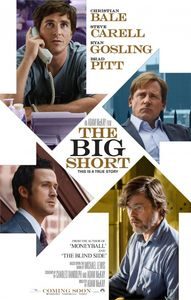
    (Video on Demand, April 2016) Hollywood is known for dumbing down everything, but the positive spin on dumbing-down is “vulgarize”, and The Big Short does it exceptionally well. Explaining the financial crisis of 2007–2008 through the perspective of traders who bet on the collapse of the US housing bubble before everyone else, this is a film that sets out to explain an exceptionally complicated topic to broad audiences, using every means at its disposal. Other than a clever script that creates dramatic tension out of real events, this includes frequent asides to the camera, sardonic narration and nakedly didactic celebrity appearances. (“And now to explain mortgage bonds, here’s Margot Robbie in a bubble bath.”) The result is nothing short of astonishing: The Big Short lays out its explanations clearly, entertainingly and doesn’t make many mistakes along the way. Even readers of Michael Lewis’s original book will be impressed at the amount of detail that writer/director Adam McKay manages to include in slightly more than two hours. For McKay, The Big Short is an impressive step forward that builds upon his work on The Other Guys’ end credits sequence to deliver a film that is outrageous and infuriating in the best sense of the words, while remaining a far funnier film than either Anchorman movies. (The helps that the film has a sly sense of stealth humour, from playing “Crazy” in the background of an insane explanation, showing how regulators jump in bed with banks, or how an assessor wears blindness-inducing glasses—removing them just in time to deliver some harsh truths.) This being said, the laughs in The Big Short aren’t from jokes as much as they’re from sheer bewilderment, that so-called smart people would be so astonishingly stupid. Or short-sighted, or greedy: As befits a complex catastrophe, the motivations in The Big Short are as complicated as synthetic CDOs. Even the protagonists aren’t too sure what to feel when they win by betting against logic, tradition and the respectability of the American economy. Steve Carell (as the outraged moral centre of the film) and Christian Bale both impress in roles that deviate a bit from their screen persona (to the extent that Bale has a screen persona, that is), with able supporting performances by Ryan Gosling and a barely recognizable Brad Pitt. It’s not a stretch to claim The Big Short as a public service—the limpid way it manages to explain the madness of an entire system is populist rage fit to justify mass entertainment as the modern jester. While not every trick it attempts works (McKay’s direction seems too deliberately off at times), it’s a fine, even impressive piece of cinema, as much for its ambitions than for how it achieves them. It makes a more than fitting companion to films such as Margin Call and Inside Job.

  • Misconduct (2016)

    Misconduct (2016)

    (Video on Demand, April 2016) I may have seen Misconduct a mere three days after its simultaneous theatre-and-VOD release, it still felt like an old-school thriller in many ways. The cast certainly recalls days gone by, with headliners Anthony Hopkins and Al Pacino showing up for a few menacing scenes despite the lead role going to the rather bland Josh Duhamel. At times, the film’s twisted-but-straightforward plotting recalls a quasi-endless number of basic thrillers that used to fill cineplexes back when they weren’t obsessed with franchise instalments. Occasionally, there is a Hitchcockian vibe to the way the images and audio cues are used to alarm viewers. But little of it amounts to much more than a derivative, competent thriller. It’s not without its good moments: Hopkins and Pacino are at ease in roles that suit their persona. First-time director Shintaro Shimosawa can stage a few decent set pieces, although the film doesn’t quite sustain its energy throughout. The plot is a big bowl of nonsense: It works best when it quickly moves over its dullest moment (the beginning is particularly intriguing, at least until it becomes a framing device), but it trips over its own plot threads. The result isn’t bad: strictly speaking, there’s much worse out there with the availability of cheap thrillers on streaming and on-demand platforms. But Misconduct doesn’t amount to much, especially considering the calibre of its two best-known actors. At best, it makes for undemanding evening entertainment.

  • Kal Ho Naa Ho [There May or May Not Be a Tomorrow] (2003)

    Kal Ho Naa Ho [There May or May Not Be a Tomorrow] (2003)

    (Netflix Streaming, April 2016) I’ve said it before, but let’s have it again for emphasis: Three hours is forever for a romantic comedy, but that’s the way Indian cinema rolls, so it’s best to go along with it. As much as I liked Kal Ho Naa Ho in its best moments, the film halts half an hour before it actually ends, and the tonal whiplash of the movie, while integral and intentional actually takes away from the film’s comedy in its final poignant moments. Obviously, I liked Kal Ho Naa Ho far more as a romantic comedy than as the weepy tear-jerker it becomes later on. The film begins well with what feels like a modern directorial approach, as it dynamically introduces us to our heroine Naina (Preity Zinta, far more likable with glasses than without) living in New York, eschewing love while trying to tolerate a dysfunctional familial situation. Soon enough, two men are also introduced: stable friend Rohit (Saif Ali Khan, overshadowed by his co-stars) and fizzy stranger Aman (the ever-spectacular Shah Ruck Khan), who seems to be living in a different reality. Throw in the dance numbers, comic moments, emerging love triangle and multiple subplots and you’ve got the making of a typical Indian Masala movie, albeit one refreshingly set in New York and shameless about showcasing the city’s landmarks as the backdrop to its scenes. Kal Ho Naa Ho is at its most likable when it plays through the romantic comedy side of its checklist, fuelled by good pacing, decent comedy, incredibly likable actors, great New York scenery and terrific dance numbers. That energy flags in the film’s last half-hour, as incredibly preposterous plot strings are tied, leading to an intensely predictable conclusion that seemingly takes forever to unfold (and occasionally trips over itself in extraneous subplots). Still, even despite the less-amusing material and the lengths, Kal Ho Naa Ho is great good fun and it’s accessible in a way that many Indian movies aren’t.

  • Eliza Graves aka Stonehearst Asylum (2014)

    Eliza Graves aka Stonehearst Asylum (2014)

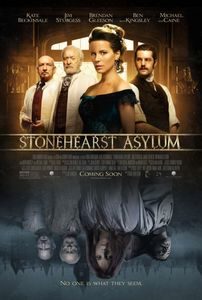
    (On Cable TV, April 2016) There isn’t much in Stonehearst Asylum that’s startlingly new, but the result is well executed enough to make anyone wonder why the film hasn’t received more attention. As is usual with nearly all movies revolving around an asylum, the question of who’s sane and who isn’t weighs heavily on the plot—and seeing Ben Kingsley in a role similar to the one he played in Shutter Island doesn’t do this film any favour. There is a bit of a plodding rhythm to the movie, with a second half that seems a bit empty once the film’s Big Revelation is explained a third of the way through. (There is another Big Revelation toward the end, but it feels almost meaningless.) Still, what makes Stonehearst Asylum so interesting as an unassuming late-night cable-TV discovery is polish and atmosphere. The surprisingly good cast helps: Alongside an always-effective Kingsley, we get Michael Caine in a smaller part than expected, Kate Beckinsale looking pleasantly glamorous despite being in an asylum, David Thewlis playing the heavy and Jim Sturgess as the everyman protagonist doing his best to avoid overshadowing nearly everyone else. The 1899/1900 period setting is effectively rendered by Brad Anderson’s direction, the Victorian-era asylums offering plenty of opportunities for atmospheric visuals. The cinematography is clean and crisp, adding to the visual polish of a thriller than may not be exceptionally thrilling, but certainly has an appeal of its own. It wouldn’t be helpful to expect too much from Stonehearst Asylum: The film runs on low-grade thrills compared to some similar movies. But it plays much better than expected from a film that was a commercial failure and practically went straight to video.

  • Open Windows (2014)

    Open Windows (2014)

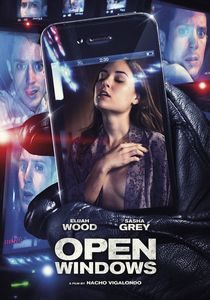
    (On Cable TV, April 2016) Anyone who has been paying attention to my reviews knows that I have a weakness for gimmicky thrillers that try to do something new. Open Windows may not be completely original in choosing to show its action as if from a computer screen (a segment in V/H/S/2 did it a year before, Unfriended did it again a few months later), but it’s certainly unlike any other thrillers out there, and its willingness to try something new (no matter how ludicrous those things may be) is nothing short of refreshing. Here, the action begins quietly enough, as a young man (Elijah Wood, effectively nebbish) sits in a hotel room, preparing to meet a beloved actress after winning one of those “dinner with a fan” contest. But things get more complicated when someone contacts our hero and makes increasingly disturbing requests, hacking various devices to provide intimate access to the actress’s life. It escalates from there, all the way to tasering, torture, SWATting, car chases, massive explosions and a few hackers messing with each other’s plans. All seen through a laptop screen, even though the camera pans and the owner of the laptop isn’t as clear as you’d think. The actress is rather well-played by porn-star-turned-mainstream-actress Sasha Gray, and Open Windows gets extra points for irony by making viewers feel dirty and ashamed of watching her undress. Of course, it’s not a good idea to go into the film expecting any realism: Aside from the impossible technology featured throughout the film, the plot piles on preposterous developments until anyone’s suspension of disbelief topples. This makes the third act feel far less involving than if the film had stuck to more believable plot points, but that’s part of the film’s charm in a way. I’m good with crazy, especially if it’s crazy-new, and Open Windows cleverly scratches that itch. Some of the imagery used late in the film approaches techno-impressionism, and writer/director Nacho Vigalondo’s script has some awe-inspiring moments and structural elements built into it. It’s too bad that it’s not under just a bit more control, with some superfluous plot twists excised in favour of a cleaner ending. But I’ll take what I’ve got, especially considering that the film flew under the radar of mainstream moviegoers and found itself a little niche on Cable channels. It’s quite a bit better than one would expect, and in-between this, Grand Piano, Pawn Shop Chronicles and Maniac, Elijah Woods is developing quite a bit of a filmography as the go-to lead actor for crazy thriller high-concepts.

  • Exposed (2016)

    Exposed (2016)

    (Video on Demand, April 2016) What if you called for a police thriller and a psychological drama showed up? That was my first reaction after seeing the underwhelming Exposed, but after reading up on the film it turns out that the reverse is a pretty good explanation for what actually happened. Originally conceived as “Daughter of God”, a psychological drama with a minor police subplot, Exposed was radically restructured to put emphasis on the police subplot, leaving the rest of the film sticking out incongruously. (The director even took his name off the results.) It shows almost from the first few minutes, which presents what turns out to be a not-particularly objective sequence before the rules of the film have been set. The rest of the film feels a few frames away from a horror film, but turn out to have a rational explanation as long as your definition of “rational” includes hallucinations, twisted psyches and a gritty detour to the lower rungs of what humans are capable of doing to each other. It shouldn’t be surprising if the result ends up being a mess, and not a particularly likable one. The editing drags on, cuts weirdly and doesn’t do itself any favours with a deliberately off-putting mindscape even as viewers are conditioned to expect a straightforward police thriller. It really doesn’t help that Exposed ends abruptly, without tackling any of the consequences of what’s coming to the characters after the movie ends. A few good things do remain in the wreckage: a clean-cut Keanu Reeves isn’t a bad thing to watch (although his character doesn’t get any payoff from the cut-short ending). This is the first time I’ve seen Mira Sorvino show up in a movie in a long time, and the years have been kind to her, enabling her to play a minor role with far more gravitas than she would have been able to do a decade ago. But it’s Ana de Armas who shines in the lead role, doing well with a difficult character. Otherwise, the film just feels odd, and not in a deliberate way. The shift from police investigation to psychological horror could have worked with more forethought (I’m thinking about The Tall Man as an example) but here the film shows clear signs of production improvisation and it doesn’t take a tour through the film’s troubled production history to see the results of such tinkering on-screen.

  • Friday after Next (2002)

    Friday after Next (2002)

    (On DVD, April 2016) By their third instalment, comedy series usually understand their chosen comic groove, and need to evolve in order to survive. Friday after Next shows both by reprising the stoner-buddy dynamics of the first two films, but transplanting the action again, this time to a strip mall and then the protagonists” apartment. Written, co-produced and starring Ice Cube, this third instalment isn’t all that different from the first two, but it does slip and stumble more often. Most noteworthy would be a homosexual assault sequence that feels out of place in the generally amiable Friday universe—fortunately, Terry Crews” career recovered from that misstep. (There’s also an abuse-toward-the-elderly gag that really doesn’t play well.) Otherwise, the film does set up a number of promising plot possibilities, but somehow fails to make the fullest use of it. From the thieving Claus to the denizen of the strip mall, to a third half-hearted love interest in as many movies, Friday after Next often seems to be going through the motions without focus or wit, occasionally recapturing the tone of the series but just as often losing it for no good reason. It’s a disappointment despite a decent number of laughs, and it may reflect what happens when a series becomes a bit more complacent than self-assured. It’s still not a bad film (if you’re watching the DVD set, don’t stop at the second disc), but it could have been more even without trying to be different. A fourth Friday film is shooting even as I write this review—let’s hope it’ll conclude the series on a more positive note.

  • Next Friday (2000)

    Next Friday (2000)

    (On DVD, April 2016) The Friday series moves from the hood to the burbs in this bugger-budgeted follow-up, and the result may not necessarily be better overall, but it’s certainly funnier. Ice Cube stars as a young man who, following the events of the previous film, finds himself exiled to a cousin’s house for his own protection. Of course, mayhem both awaits and follows as Latino gangbangers live next door, and the first film’s antagonist is in hot pursuit. Slicker, slightly grander and more consistently funny than the first film, Next Friday may not have the hood/comedy juxtaposition effect running for it, but it’s a decent comedy in its own right. The laughs are there, the crazy characters abound, the rhythm is sustained (easily improving upon the first film’s laid-back approach to plotting) and the conclusion feels as if it gracefully ties up its plot threads. Mike Epps does well in a film that asks him to substitute for Chris Tucker, while Lisa Rodriguez does surprisingly well in a role that doesn’t require much more than being held in the centre of the male gaze so obvious to the film. Next Friday isn’t an overly ambitious film, and whatever social commentary value it has comes organically from Ice Cube’s perspective, but it’s a decent-enough film as a silly comedy and that’s all it needs to be.

  • Friday (1995)

    Friday (1995)

    (On DVD, April 2016) If Friday is a minor classic of its genre, it’s largely because it managed to ride the ’hood-movie trend of the mid-nineties and turn it into a stoner comedy without betraying its origins. Famously co-written by NWA-founder/Boyz n the Hood lead actor Ice Cube (who also stars in the film), Friday doesn’t mean to be anything more or less than a day in the life of the ’hood, celebrating the absurdity of its environment while looking at it fondly at the same time. Much of the film is surprisingly retrained to a single street, with the two protagonists of the story (Cube and Chris Tucker in an early role) sitting on their porch and watching the world coming to them. Soft drugs are consumed, with amusing consequences. Much of Friday, especially its first half, is laid-back, almost amorphous in the way it accumulates plot elements. Fortunately, it all leads to something in the end. There is some suspense in the film, but most of its violence (including a shootout) is handled with comedy in the form of intentionally awkward pauses and character quips. Friday remains most noteworthy for showcasing a young Ice Cube in a comic role, something that would occur again with some regularity in the course of his career, but also was the debut feature film for F. Gary Gray (who would later get a reputation as an action director, and direct Straight Outta Compton which portrays Ice Cube writing Friday). Meanwhile, John Witherspoon seems to be acting in his own kind of demented universe, to further comic effect. Despite its obviously low budget and slack pacing, Friday is still enjoyable today—see it alongside Boyz ’n the “hood for maximum contrast.

  • Sunflower Hour (2011)

    Sunflower Hour (2011)

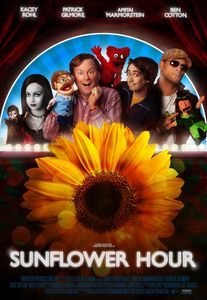
    (On Cable TV, April 2016) There is an interesting premise at the periphery of Sunflower Hour, looking at the behind-the-scenes shenanigans at a children’s TV show. There are plenty of comic opportunities here to contrast public/private wholesome/naughty behaviour. Unfortunately, that’s not what writer/director Aaron Houston aims to do in presenting a mockumentary-for-adults about an audition process in which four people are asked to join a children’s TV show as puppeteers. The characters are insipid, oblivious and irritating: Disappointment sinks in fifteen minutes in the film as it becomes obvious that we’re going to spend the following hour with them. But what’s worse is Sunflower Hour’s chosen tone, vulgar and smarmy and often depressing. (There is a difference between bawdy and gross, and Sunflower Hour picks gross six times out of seven.) The end sequence of the movie had me saying ‘ew’ at least twice, and even appreciating the film as a black comedy does nothing to erase the revulsion of some of those moments. On the other hand, pretty much everyone gets what they deserve at the end, and half a dozen jokes land. Of the actors, Amitai Marmorstein and Kacey Rohl are easily the most sympathetic, but Patrick Gilmore steals the show with his reprehensible antagonist. Still, that’s not much of a result, and I confess that part of why I kept watching Sunflower Hour until the end is a quasi-horrified apprehension at how far the film was willing to go. There are some nasty things lurking at the bottom of Canadian movie channels to satisfy ‘Canadian content’ requirements and if Sunflower Hour is better than some of the literally unwatchable ones, it will stay still obscure for a reason.

  • Mousehunt (1997)

    Mousehunt (1997)

    (In French, On DVD, April 2016) There’s been a glut of kids movies with CGI animal characters lately, but an early (and enjoyable) prototype of the form can be found in 1997’s Mousehunt, in which an exceptionally intelligent mouse goes to war against two brothers trying to renovate an old house. While the film does feature a handful of CGI creatures (usually easy to spot), most of the mouse scenes are shot using real trained mice, and the result, in all of its limitations, is surprisingly enjoyable. It helps that Mousehunt features some real good physical comedy, and earns a number of honest laughs along the way. Nathan Lane and Lee Evans are fine as the brothers battling against insolvency and a smarter-than-they-are mouse, but Christopher Walken has a very good small role as an exterminator who finds his match. Still, the star here is director Gore Verbinski’s efforts at orchestrating mayhem as the war between the mouse and the humans escalates to pure chaos. There’s quite a bit of wit to the way the film is put together, balancing entertainment with a darker-than-necessary tone. Much of the film can be seen coming in advance, but there are enough small surprises here and there to keep things interesting and funny. For some reason, Mousehunt doesn’t seem to have endured all that well twenty years later, which is a shame given how it combines humour, action and small furry creatures appealing to kids, while having just enough cleverness and suspense to appeal to adults. (One note, though: the opening cockroach scene is disturbing to young kids. Heed the PG rating, especially given the small much-darker hints in the dialogue.) It’s quite a bit better than you’d expect … or possibly remember.

  • Holes (2003)

    Holes (2003)

    (Netflix Streaming, April 2016) For a film clearly aimed at kids, Holes does manage to keep up an engaging mixture of mystery, fantasy and comedy—not to mention weightier themes of destiny, racism and juvenile incarceration, delivered with a tone akin to magical realism. Shia Labeouf, in his feature-film debut, plays a young teenager sent to a desert detention camp after a freakish coincidence—except that his entire family is accustomed to those freakish coincidences given a long-running curse. Quirky characters inhabit an awe-inspiring mystery (why make kids dig thousands of pits in an old desiccated lakebed?) and by the time our teenage heroes are done unravelling the case, we’ve jumped into a few generations’ worth of conflict, prophecies and opportunities for redemption. There’s an admirable continuity in the way the film goes from specific tactile sensations such as digging under the sun to much-bigger themes such as predestination. Holes isn’t without flaws, but it works in different ways that most other movies aimed at its age cohort, and as such sustain a fair amount of scrutiny by older audiences.

  • Love & Mercy (2014)

    Love & Mercy (2014)

    (On Cable TV, April 2016) By now, fictionalized music biographies have settled into such a rote pattern that any deviation from the form is liable to make the result look better. Love & Mercy is certainly part of those exceptions to the norm: Chronicling the life of Beach Boys member Brian Wilson, it chooses to focus on Wilson’s life at two different eras, and to have Wilson played by two different actors in those eras. Sixties Wilson is played by Paul Dano, and chronicles not only how Wilson came up with the iconic Pet Sounds record, but also how, at the same time, his life was spinning out of control due to undiagnosed mental health issues. Twenty years later, John Cusack plays Wilson as a recluse, manipulated into social exile by a misguided (possibly malicious) psychiatrist and gradually finding a path back to good mental health via the intervention of a good woman. Both eras are shot differently, 16 mm cameras helping set the sixties era, while the eighties are portrayed as considerably bluer and flatter. The result is unequal, but there are a few good moments: Dano’s portrayal of Wilson is mesmerizing, never more so than when the movie dares to re-create his production of “Pet Sounds” in the recording studio. Meanwhile, Cusack gets to step away from his screen persona of late. The file goes back and forth between its two eras, and in doing so creates an interesting portrait of a tortured musical genius who ends up earning his way back to inner peace. Director Bill Pohlad skilfully balances a number of daring elements in Love & Mercy, and the result is more interesting than the usual musical docu-fiction.

  • Star Wars: Episode VII – The Force Awakens (2015)

    Star Wars: Episode VII – The Force Awakens (2015)

    (On Blu-ray, April 2016) It’s not that The Force Awakens is un-reviewable—it’s that there’s so much to say that a full review would take a few pages, encompass the recent business state of Hollywood, meander on commodified nostalgia, indulge in insufferably nerdy nitpicking, and yet deliver an assessment not that far removed from “wow, competence!” This is a capsule review, so let’s start cracking: My first and biggest takeaway from The Force Awakens is that I’m not 7 years old, watching Star Wars on French-language broadcast TV and being so amazed that I can’t say anything bad about it. The Force Awakens is far from being perfect, and it doesn’t take much digging to find it crammed with problems. Even on a first view, I’m not particularly happy that thirty years later, The Rebellion hasn’t managed to establish a workable government and seems stuck in an endless echoing battle against evil. (Heck, they still haven’t changed their name, apparently.) My mind boggles at the economic or political absurdities of what’s shown on-screen, and the moment I start asking questions about basic plot plausibility is the moment I start making a lengthy list of the amazing coincidences, contrivances and plain impossible conveniences that power the plot. The jaded will point out that director J.J. Abrams has never been overly bothered by plotting logic and The Force Awakens certainly bolsters this view. Worse, perhaps, is the pacing of the film, which often goofs off in underwhelming ways rather than go forward. Then there’s the way this return to the Star Wars universe seems unusually pleased in echoing the first film’s elements, all the way to another who-cares run through a Death Planetoid’s trench. On the other hand, echoing is forgivable when the point of this film is to reassure everyone that the soon-to-be-endless Star Wars franchise is safe now that Disney took it away from George Lucas. In that matter, The Force Awakens is a success: it feels like classic Star Wars, from the visuals to the music to the elusive atmosphere of the first three films. Sometimes, a bit too much so: The decision to shoot the movie on actual film introduces film grain issues that sometimes vary from shot to shot, which is enough to drive anyone crazy. (Witness the Rey/Finn shots in the cantina…) Star Wars clearly isn’t as much about story than characters and set pieces, and that’s also where The Force Awakens succeeds: Harrison Ford seems timelessly charming as Han Solo, while John Boyega, Daisy Williams and Oscar Isaac are also easily likable in their roles. (Boyega and Isaacs are effortlessly cool, but Daisy Williams has a more delicate role as a stealth superhero.) Adam Driver has a tougher job as the intriguing Kylo Ren, riffing but not copying the series’s iconic villains. Then there are the set pieces, which often work despite shaky logic, implausible premises and nonsensical engineering. Coring a new planet-killer out of a planet may not strike anyone as the best plan, but it’s good for some fantastic images and at some point, that’s what really counts. Especially when, in the end, we’re left satisfied that this seventh Star Wars film is better than the prequel trilogy, and are left looking for more. Mark these words: There will now be a Star Wars movie every year for at least a decade and probably more. This one’s special, but don’t be surprised if it doesn’t age well once the sequels start piling up.