Reviews

  • Belle (2013)

    Belle (2013)

    (On Cable TV, October 2015)  There is often a tension, in modern-made period films, between the most idealized aspects of the era being presented and the modern values we wish they’d embody.  Classic examples include Victorian Britain, as confronted with their terrible record on human rights; Antebellum Southern United States and slavery; the suburbs of the nineteen-fifties and the place left to women.  (Heck, any historical period in Western history featuring anyone who wasn’t a straight white male.)  But it’s occasionally possible to find a topic that manages to address both kinds of wish-fulfillment, and that’s something that Belle accomplishes quite well.  The story of a half-black woman raised as an equal in a rich British families in the late 1700s, Belle builds its dramatic tension based on what we expect from such an era, and resolves them by showing ordinary people acting decently.  Here really isn’t much more to that: the film’s big conflict is solved by revealing a panting (a real-life painting, as it turns out).  As far as progressive-values film go, it’s basic but enjoyable – the period garb look fantastic, Gugu Mbatha-Raw is lovely in the lead role, director Amma Asante does well and Tom Wilkinson continues a highly successful string of good supporting roles.  Belle doesn’t need to be much more than be amiable and look good, and it does that well. 

  • Blue Ruin (2013)

    Blue Ruin (2013)

    (On Cable TV, October 2015)  It takes a while to warm up to Blue Ruin.  The near-wordless beginning, after all, sets up a beach bum undertaking revenge against the killer of his parents.  The micro-budget aesthetics of the film can be rough, and it’s clear that writer/director Jeremy Saulnier isn’t interested in telling the kind of story we’re used to: the protagonist is singularly inept at any kind of revenge, and even when he manages to kill his target, it turns out to be the wrong person.  But almost imperceptibly, Blue Ruin draws viewers in and makes strengths out of its initial hiccups.  In time, the careful rhythm of the film becomes an asset, and the protagonist’s struggles become real.  More crucially, Blue Ruin is about how revenge fantasies can go wrong and spin out of control, creating an even bigger mess along the way.  That’s almost a daring idea at a time where revenge movies are a dime a dozen, some wronged shmuck reinventing themselves as pure killing machines in time for a satisfying justice right before the end credits.  Blue Ruin consciously avoids that kind of power fantasy by making revenge messy, unpredictable, ugly and filled with consequences.  The script is remarkably clever, managing to deliver its anti-vengeance message while providing a relatively satisfying ending.  The stripped-down low-budget cinematography becomes satisfying after a while, and the result in an unexpected success.  Blue Ruin is well-worth seeing, especially if revenge fantasies are starting to grate.

  • The Mortal Instruments: City of Bones (2013)

    The Mortal Instruments: City of Bones (2013)

    (On Cable TV, October 2015)  Young Adult contemporary fantasy has now entered its degenerate phase.  I’m not talking about the now-uncountable examples of “first film in the franchise” that will never lead to a second installment.  But I am talking about the way they grind up the same material, recycling plot lines, structure, character archetypes and story beats until they all blur into an undistinguishable mush of sameness.  Furthermore, what I’m definitely trying to avoid is discussing how I’m trying to write this review a few weeks after seeing The Mortal Instruments: City of Bones without remembering much about it.  The Wikipedia synopsis of the plot vaguely brings up a few images but I’m not sure if they’re from this film or any of the other similar films in that subgenre.  Lily Collins is fine as the protagonist, but the role is so generic that any other thin brunette under the age of 35 should have been able to do just as well.  What I definitely remember is that The Mortal Instruments: City of Bones is too long in the way that dull movies simply last forever without a point.  Cynically assembled and executed without particular flair, The Mortal Instruments: City of Bones is headed straight for memory oblivion.  The process is already well underway in my own mind.

  • Citizenfour (2014)

    Citizenfour (2014)

    (On Cable TV, October 2015) The Edward Snowden saga is still fresh enough that it doesn’t quite seem worthy of a documentary just yet.  But Citizenfour is something slightly different: It doesn’t try to propose an all-encompassing theory as much as explore a pivotal moment in time.  Documentarian Laura Poitras was actually there when Snowden first physically met with journalist Glenn Greenwald to explain his cache of documents.  The documentary itself is raw, presenting an intimate you-are-there account of the meeting between the two men.  It’s not meant to be an all-encompassing exposé of the current surveillance state, but it’s certainly eloquent in doing so by small moments, whether it’s Snowden typing a password under a cloak to defeat visual surveillance, or having their meeting disrupted by mysterious interruptions.  Snowden himself comes across as a smart, humble, justifiably paranoid young man, driven by strong moral principles.  Reaction to Citizenfour will probably hinge on viewers’ opinion of the Snowden leaks, but at this time, while Snowden is still effectively exiled in Russia and the full magnitude of his revelations still have to be felt, Citizenfour is a great first draft of history.

  • The Darjeeling Limited (2007)

    The Darjeeling Limited (2007)

    (In French, On Cable TV, October 2015)  I didn’t start liking Wes Anderson’s films until Fantastic Mr. Fox and Moonrise Kingdom, and my exasperation at his first few films had led me to skip The Darjeeling Limited until now.  Alas, it turns out that The Darjeeling Limited owes a lot more to Anderson’s first few films than the latter, more accessible ones.  Here, we’re back to the precious twee sensibilities of his early career, with an overly complicated family relationship being overshadowed by showy cinematography and a strange sense of humor that feels odd if you’re not in on the joke.  It does actually work, albeit in occasional moments: The camera works is especially good in comedy scenes, whipping from one character to another.  Occasional lines are droll, while the Indian scenery is different enough to be interesting.  The film also has the good sense to end on Joe Dassin’s insanely-catchy “Les Champs-Élysées”, which is good for a few days’ worth of sporadic humming.  On the other hand, it’s hard not to feel that the film runs too long, especially during the third act as the characters disembark the Darjeeling.  But tight accessible films weren’t (and maybe still aren’t) Anderson’s specialty — it would take until his last few efforts for other qualities to take over and make for great films.  Hopefully, The Darjeeling Limited is the last time Anderson’s bad quirks would overwhelm his better ones.  Bilingual viewers may want to note that seeing the film in French makes an odd film even more delightfully odd given the original’s script’s francophilia.

  • It’s Complicated (2009)

    It’s Complicated (2009)

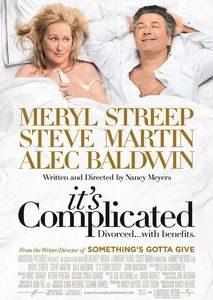
    (On Cable TV, October 2015)  Doesn’t Alec Baldwin make a splendid shmuck?  That kind of performance seems to be the main justification for It’s Complicated, an otherwise amiable film to the point of not being of much interest.  Director Nancy Meyers once again turns her attention to Rich White People’s problems (as in; hiring an architecture firm to supervise the construction of a kitchen addition) before resigning herself to showing some conflict.  It sort-of-works if that’s the kind of film you’re looking for, or if you simply want to enjoy the film on superficial acting performances, lifestyle aspiration or simply the idea of people having very small problems.  To its credit, It’s Complicated has a bit of sense in its conclusion, and can depend on Meryl Streep to sleep-walk through an unchallenging role, while Steve Martin is blander than expected in a stealth romantic hero role (he does get a split-second “wild and crazy guy” moment, though.) and Alec Baldwin is almost delightfully slimy.  Jon Krasinski also gets one or two good moments, but otherwise It’s Complicated is a film on auto pilot, almost too nice to be interesting.

  • The Bounty Hunter (2010)

    The Bounty Hunter (2010)

    (On Cable TV, October 2015)  I may be seeing too many movies lately, because it seems to me that I’d already seen The Bounty Hunter before even seeing it.  I suppose that having Jennifer Aniston and Gerald Butler play close to their usual screen persona doesn’t help, nor does a basic by-the-number hybrid plot between romance and gentle crime comedy.  It feels a lot like the latter One for the Money, or like most movies in which Butler plays a likable cad, or all movies where Aniston simply recites lines in her endearing personality-free way of hers.  There isn’t much to distinguish The Bounty Hunter from countless other similar films, and if the result does have an acceptable forward narrative rhythm (as in; it doesn’t feel as it’s too much effort to watch it once it starts), that doesn’t necessarily translate into much more than a very marginal recommendation, mostly to those who think that they’ll enjoy that same kind of material. 

  • The Wedding Ringer (2015)

    The Wedding Ringer (2015)

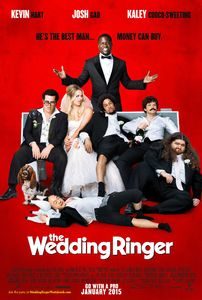
    (On Cable TV, October 2015)  I remain astonished at Kevin Hart’s gift in consistently transforming what would be an obnoxious persona into solid comedy gold.  In The Wedding Ringer, for instance, he takes up a hustler role specializing in grand-scale deception and somehow makes it funny.  The basic plot has something to do with faking best men for a groom without much of a social life, but the real point of the film are the comic set-pieces, the characters, and seeing Kevin Hart speak as fast as possible.  It shouldn’t work (and, at times, it doesn’t) but Hart is at his best and manages to elevate the rest of the material.  Compared to him, most other actors are a bit dull, including Josh Gad as the nominal lead of the story.  Some plot points are fuzzy (such as the overheard conversation that crystallizes the film’s ending, which barely makes sense) but the set-pieces are fun.  There isn’t much more to say about the film: It’s fun, hits more or less the right spot for anyone expecting that kind of comedy and it even pays itself a short homage to The Usual Suspects.  That could have gone much worse. 

  • Malèna (2000)

    Malèna (2000)

    (In French, On TV, October 2015) Something strange and unpleasant happens during Malena, which starts as the story of a boy’s infatuation with what’s quite obviously presented as the most beautiful woman of his small WW2-era Italian village.  The first chunk of the film feels endearing and nostalgic, light and only creepy in the way that young men think back about their first big crushes.  The subjective nature of the story being told can sometimes take almost absurdly comic turns (Such as when Malena turns every male head, causes car crashes, sends men in uncontrollable lust) and the gentle rhythm of the film suggests a far different film that the one we then get: Because as soon as Malena becomes a war widow, her situation in the small village society becomes untenable: out of desperation, she turns to prostitution with the fascist elites, something that turns her life into living hell once they are ousted from power.  The tragedies don’t stop there, as further cruel twists pile on and definitely sour the film.  In retrospect, the story told in Malena is predictable in its own way… just not the one that the film initially suggests.  This narrative rug-pulling aside, Malena does leave an impression.  Few other actresses than Monica Bellucci could credibly pull off a “most beautiful woman in the world” kind of role, but she makes us believe.  The film is usually shot well, clearly mixing subjective sequences and fantasies with the rest of the story, often cruel and mean-spirited.  It could have been more enjoyable had it stuck to is comedy beginning, but that’s quite obviously not the story that was meant to be told.

  • Yip Man (2008)

    Yip Man (2008)

    (Netflix Streaming, September 2015) I’m definitely not as good an audience for martial arts films as I was a decade ago, because even if I can recognize Yip Man as a good example of the form, accomplished in its fights yet with something more on its mind than a simple succession of combat demonstrations, I can’t muster much enthusiasm for it.  Set largely against the backdrop of the Japanese occupation of China before and during WW2, Yip Man is, more than anything else, a showcase for the affable and quiet power of Donnie Yen, who plays the title role as a charming but utterly competent martial arts instructor.  The fights grow in ferocity, from playful sparring to bone-crunching mortal combat.  The cinematography is too-often similar, though, and some of the narrative points aren’t made with any subtlety at all.  A comparison with The Grandmaster, which focused on the same character’s story, is almost instructive: While The Grandmaster led nowhere, it did seem to do so in far more lavish style, and as a result may linger in memory a bit longer than Yip Man even if its narrative flaws were deeper.  I actually liked Yip Man; I just expected that I’d like it even more than I actually did. 

  • The Bling Ring (2013)

    The Bling Ring (2013)

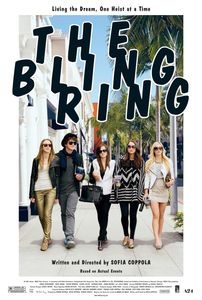
    (On Cable TV, September 2015)  I started watching The Bling Ring with fairly low expectations, pulled in by director Sofia Coppola’s name and not much else.  But as the film advanced, I felt pulled in opposite directions; fascinated by the true story told relatively faithfully by the film, and exasperated at the way it was being told.  The premise itself is a mesmerizing mix of modern technology, celebrity obsession and dumb teenage antics as a few fashion-obsessed high schoolers get the insane notion that they can just walk into celebrities’ homes and take what they want from their overfilled closet.  The amazing, never-would-have-believed-it-if-it-wasn’t-a-true-story part is… it works.  They find out Paris Hilton is out partying in a foreign country, find her house using Google, poke around the doors and windows until they find an unlocked way in (or a key under the mattress), party in her rooms, pilfer a few high-end items… and repeat the heists a few times.  They flash their new wares and piles of cash on Facebook, party on, wear designer clothes, brag a bit, get caught on video with fewer consequences than they’d expect.  It feels like a collision between two or three things that wouldn’t have existed a decade before, and there’s a bit of quasi-parental affection in the way the films look at its teenage hoodlums, who are more greedy and careless than outright evil or stupid.  There is a good kernel of interest here, and one that makes the film stick in mind even a few days later.  Unfortunately, The Bling Ring doesn’t exactly manage to do justice to its own subject.  The cinema-vérité approach get dull quickly, the over-bright bleached cinematography calls attention upon itself without having much of an effect, and worse of all the film feels very long even if it doesn’t exceed 90 minutes.  There is, granted, an aesthetic at play here that escapes me, as nice as it is to actually see the interior of Paris Hilton’s house.  While the film hints at interesting ideas and offers the potential for a deeper thematic critique (or, heck, just a deeper exploration of its characters), it feels unsubstantial, unfulfilled, even a bit too superficial in the way it approaches its subject.  Despite being light on moralism (although that segment where the police raids the protagonists’ houses is heavy enough to make parents have fits of anxiety), The Bling Ring disappoints more than it enlightens, and seems to set itself up for bad reviews by misusing the material at its source.  Perhaps a wider deviation from the real events may have helped the film feel more substantial.

  • Treasure Planet (2002)

    Treasure Planet (2002)

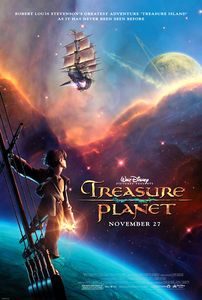
    (Video on Demand, September 2015)  Of Disney Animation Studios’ fifty-odd animated features, some have become classics, while others languish as footnotes.  Fifteen years after release, it looks as if Treasure Planet is not going to be much more than a curiosity alongside much stronger works such as Tarzan and Lilo & Stitch.  That doesn’t make it a bad film, though: By 2015 standards, Treasure Planet gets extra points for a quasi-steampunk science-fantasy atmosphere that blends the plot of Robert Louis Stevenson’s Treasure Island with just enough science-fiction details to make it interesting.  There are spectacular vistas, amusing details, clever anachronisms –this isn’t meant to be a serious SF film, after all, but a Victorian boy’s adventure transplanted in a deliberately retro notion of space.  It works pretty well at what it tries to do –it’s entertaining in its own right, occasionally thrilling and sweeping in scope.  The Long John Siler character is an interesting blend of antagonist and mentor, a bit of welcome complexity in Disney films.  On a technical level, there’s a lot to like about the integration of 2D characters with 3D environments: it’s remarkably successful and does expand the scope of the film quite a bit.  Treasure Planet, one notes, was a box-office bomb, its total revenues nowhere near equalling its lavish 140$M budget.  That may help explain why the film remains a less-known title even today… which means that it remains under-exposed and ripe for re-discovery even for those who think they know quite a bit about Disney movies.

  • Deliver Us from Evil (2014)

    Deliver Us from Evil (2014)

    (On Cable TV, September 2015) I’m not sure there’s anything objectively wrong about Deliver us From Evil, but neither can I say that there’s anything exceptional about it.  While there is some interest in tackling demonic possession as seen from the perspective of a hardened NYPD veteran, the film soon heads for familiar pastures, and doesn’t really get to show anything worthwhile.  Eric Bana does fine work as the cop protagonist, with Olivia Munn and Joel McHale turning in short yet credible dramatic presences, but all of them are overshadowed by Edgar Ramirez’s compelling turn as an unusual priest facing ultimate evil.  Director Scott Derrickson follows-up his much superior Sinister with a decent atmosphere (grimy and dark and realistic and, alas, rather dull), but the script is too derivative to be particularly interesting.  Too long at nearly two hours for the rather slight amount of substance it contains, Deliver Us From Evil ends up being a middle-of-the-road hybrid between police procedural and demonic possession horror, something that works well enough to escape mediocrity, but not enough to leave an impression.

  • Tokarev aka Rage (2014)

    Tokarev aka Rage (2014)

    (On Cable TV, September 2015) Nicolas Cage plays in a lot of movies these days, but their quality and satisfaction aren’t always guaranteed.  In Tokarev, the problem is as much conceptual as one of execution: For a film designed to question the idea and the easy thrill of pure vengeance, it’s handled in a fairly pedestrian manner, with a terrible event a few minute in that never allows the viewer to relax into even the superficial entertainment of a story well-told.  The protagonist repeatedly ignores warnings sent his way to abandon his path of vengeance and the conclusion is merciless in showing the futility of his misguided quest.  Unfortunately, what could have been a role ripe for the kind of Cage lunacy (or rather; Nouveau Shamanic) that we’ve come to enjoy from him even in terrible films turns into a sedate and restrained performance, but one that is in no means justified by the rather mediocre fil surrounding him.  (Compare to The Frozen Ground or Dying of the Light, where the restraint actually meant something in-context.)  Otherwise, there really isn’t much to say about Tokarev: it unspools, feels a bit lacking, does pack an unpleasant punch of a conclusion but it’s not really the kind of film to sit back and enjoy.  It seems so determined to make a point that it doesn’t seem to be concerned about making the journey worth undertaking.  While Tokarev may be a good counter-point to a lot of revenge-driven films, it’s not very well-served by its development.  File this one on the bottom shelf of the Cage filmography.

  • 7 Days in Hell (2015)

    7 Days in Hell (2015)

    (On Cable TV, September 2015)  At 45 minutes, this HBO sports mockumentary barely qualifies as a feature film, but to its credit, it doesn’t try to outstay its welcome.  The joke seems simple enough: In 2000, two tennis players end up playing a seven-day match at Wimbledon.  But from a Very Serious introduction featuring a mixture of comedians and real-life sport personalities giving mock interviews (and being inspired by the real-life 2010 three-day Isner-Mahut Wimbledon match), 7 Days in Hell soon turns sillier and sillier, leaving reality far behind as it portrays fantasy portraits of Sweden, raunchy streakers, an aggressive Queen Elizabeth II and more deadly violence than you’d expect in tennis matches.  It’s not always even nor focused (there’s a curious diversion about Swedish courtroom cartoons that’s not unfunny, but seems completely out of place) but it’s decently amusing, even as it turns darker toward the end.  Andy Samberg is pretty good as a wild-man of tennis, while Kit Harington has a remarkable turn as his dim-witted opponent.  Sports personalities such as Serena Williams and Jim Lampley (this is an HBO production after all) help blur the line between reality and mockumentary, but both John McEnroe and David Copperfield get a few good laughs on their own.  The absurdity of the humor is only topped by its crudeness, but it works and at 45 minutes 7 Days in Hell feels like something that will get a few more re-plays than longer traditional films.  Best of all; you don’t need to know much about tennis to enjoy it.