Reviews

  • Sweeney Todd: The Demon Barber Of Fleet Street (2007)

    Sweeney Todd: The Demon Barber Of Fleet Street (2007)

    (In theaters, December 2007) Count on Tim Burton to deliver an odd mixture of musical comedy and gory horror. This story of a serial murdering barber and meatpie-making accomplice is pure goth opera, with spraying arterial blood and ghoulish nutriment. Johnny Depp and Helena Bonham Carter don’t have particularly impressive voices, but it’s the visuals, the atmosphere and the deep unease of the film that make it such a memorable experience. As with many musicals, the plot is predictable and the songs can stop the action dead in its tracks; unlike many musicals, most viewers will remembers the visuals long after they can recall the songs. It’s certainly a unique experience at a time where Hollywood is often accused of timid audience-pleasing, Sweeney Todd takes odd chances and if the result isn’t something to be watched over and over again, it’s a definite curiosity… for strong stomachs.

  • The Gold Coast, Kim Stanley Robinson

    Tor, 1988, 389 pages, C$4.95 mmpb, ISBN 0-812-55239-3

    The United States stuck in a series of small wars, everyone terrified of terrorists, commercial sprawl taking over parks and natural preserves, California mired in gridlock sixteen hours a day, defence industries becoming all-powerful, teenagers swapping meaningless sex and designer drugs. Sounds like today’s world?

    Too bad, because Kim Stanley Robinson wrote it as a dystopia twenty years ago.

    The second volume in his “three Californias” trilogy of alternate futures, Kim Stanley Robinson’s The Gold Coast isn’t meant to be a fun or glorious place: The portrait of the world it portrays is one of a hothouse running out of control. Stress is destroying people from within, society has gone trigger-happy in several non-metaphorical fashions, there is no end in sight and hope is dim. As the novel unfolds, it’s unclear whether something big is about to happen, or if -worse- nothing ever will.

    A young man named Jim McPherson is the nexus of the story, but The Gold Coast goes beyond him to present a kaleidoscopic view of the world in which he lives. The viewpoint regularly shifts to his family, his friends, and the people that they encounter along the way. Along the way, Robinson’s prose acquires a choppy, manic quality that reflects the way the world is over-revving. McPherson think of himself as a poet, but what he does is chop up word fragments and think it’s art. Nothing in his life is working: He’s not too bright, not too skillful, not too close to his father. His friends are his only source of happiness, and even that is being generous since no one can understand what he’s up to. When he gets the chance to help a small home-grown terrorist group, it’s a welcome distraction more than a political statement.

    Meanwhile, Jim’s overworked father is being pressured by his manager to lead a crucial weapon development effort for his corporation. An honest engineer, he finds himself trapped between complex rules of Pentagon weapon procurement and a boss that consciously flirts with psychopathology. Despite a superior product and honest estimates, he is soon hanging on to a losing bid.

    None of this sounds particularly promising on paper. It’s not even particularly heavy in SF concepts. But in Robinson’s hands, it quickly becomes compelling material. Pentagon bureaucracy has never been more mesmerizing. Slice-of-life plotting has seldom been more engaging. Even as The Gold Coast threatens to leave without delivering a story, the portrait of the world created by Robinson and the way he describes what happens to his characters is enough to make us care. There’s actually a certain perverse elegance in the way he sets up a portrait so intensely nihilistic that the ending, when it does shift the status quo for a few characters, comes as a welcome surprise. It’s not made of earth-shattering insights (in a crooked game, the only way to win is to walk away), but it’s a ray of hope in a novel that didn’t seem predisposed to them.

    There’s a good deal of echoing material to be found between this novel and The Wild Shore, Robinson’s previous “Three California” book. “Uncle Tom” is clearly meant to stem from the same person as the Tom in the previous novel, though in a different alternate world. Both novels show a willingness to avoid the easy clichés of dystopia, even allowing characters to find a measure of happiness in terrible environments.

    Meanwhile, Robinson scholars will note that the young McPherson shares a number of similarities with the author himself. As we discover who writes the long historical interludes about Orange County’s urbanization, the links become apparent.

    It may be too easy to find parallels between the novel and the way this world has turned since 1988. Sharp-eyes readers will note that the Cold War is alive and well in the book, and that some pieces of slang (such as “allies”) don’t fit well. But that’s missing the point: as we’re sliding into 2008, the world of The Gold Coast remains immediately understandable to us, and what it has to say about it remain just as relevant to us today. The Gold Coast has weathered the past two decades admirably well. Too well, actually.

  • National Treasure: Book Of Secrets (2007)

    National Treasure: Book Of Secrets (2007)

    (In theaters, December 2007) It’s not high cinema, and it’s not even great genre entertainment, but National Treasure 2 manages to hit the same sweet spot than its predecessor in terms of contemporary adventure, historical lore, Nicolas Cage craziness and sarcastic quips. As this adventure trots around Washington, Paris, London and Montana, it’s hard to resist being swept up with this infectious brand of blockbuster slickness. There are a number of clunkers in the mix (Ed Harris sleepwalks through the film with a Southern accent; some of the early setup is laborious; Geek-boy isn’t as geeky, nor as amusing, as in the first film) and the action scenes don’t work as well as they should, but then there are a handful of scenes that redeem the entire thing: The “book of secrets” concept is rich in possibilities, the London car chase is fun and the series’ overall passion for history is a refreshing change of pace from the usual brand of mass-market anti-intellectualism. The biggest problem with the film is that it occasionally suggest how much better it could be with just a few tweaks: An action-minded director, a more memorable female lead and a screenwriter with more attention for coherence could have brought much more to the film. But while we’re waiting for National Treasure 3: Page 47, there’s still plenty to like here. It’s a perfect end-of-year chaser after so many self-important Oscar-bait motion pictures.

  • Mensonges et trahisons et plus si affinités… [Lies And Betrayals] (2004)

    Mensonges et trahisons et plus si affinités… [Lies And Betrayals] (2004)

    (On DVD, December 2007) Romantic comedies from a male point of view are unusual by definition, but this one has a little more than curiosity going for it: As a thirtysomething ghostwriter undergoes a life crisis in pursuing an old flame at the expense of an existing relationship, the film’s first act is hilariously funny, with numerous crash-cuts, fantasy sequences, flashbacks, bons mots and cutting dialogue. (But then again, I’m always partial to writer protagonists.) For a while, it feels like a film that can do no wrong. Alas, that feeling disappears with a car crash of monumental coincidence, and a descent from comedy to melodrama. There are still a few really good sequences here and there (including a fantastic montage of a writer at work), but the romantic resolution feels cheap and easy, and it comes along with a wildly implausible climax to anyone who knows anything about publishing. (A novel written and published in less than a year? No way!) Still, Edouard Baer is appealing as the protagonist, and the rest of the cast (some of whom will be familiar even to French-Canadian viewers) does good work. Not bad, though probably not a hidden gem begging for translation.

  • Karmina 2 (2001)

    Karmina 2 (2001)

    (On DVD, December 2007) I suppose that there’s a market for everything, including French-Canadian suburban vampire comedy. This weaker follow-up doesn’t have the grandeur and universal appeal that the original Karmina had (and Yves Pelletier’s grandstanding is more annoying than ever before), but it still has a number of giggles and smiles going for it. The script keeps going places that would be unthinkable for mainstream American fare (including infidelity and mass murder from the so-called protagonists) and the technical qualities are up to acceptable standards. I suppose that non-French-Canadian audiences will have a hard time understanding any of it, which either works in favour of the film, or makes you wonder why anyone would take that kind of financial risk with a film that’s basically unsellable in foreign markets. Oh well; at least there’s a bit of a thrill in seeing vampires arguing over suburban concerns. And Isabelle Cyr’s in it, which is a recommendation enough as far as I’m concerned.

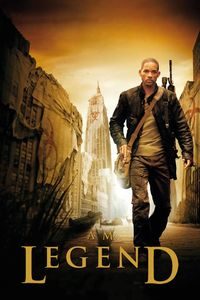
  • I Am Legend (2007)

    I Am Legend (2007)

    (In theaters, December 2007) This isn’t the first time half a rotten movie is bolted to half a good one, but it never gets less frustrating. What’s good here: Will Smith as a haunted man who may be the last person alive on Earth; the portrait of a plague-emptied New York three years after catastrophe; some details of post-apocalyptic survival. What’s not so good: Nonsense ecosystem; suicidal details of post-apocalyptic survival; inconsistent monster behaviour; Smith not convincingly going nuts. What’s truly wretched: Anti-Enlightenment fear-mongering and pseudo-religious appeasement used as an excuse for incompetent storytelling: “Let’s go to Vermont, because God told me to.” The film is most successful on a visual level, looking at one of the most convincing post-apocalyptic vision in a really long time. But as soon as you start asking questions (the “line of sunlight”, the awful coincidences explained as divine intervention, the behaviour of a so-called researcher who can’t figure out the effect of cold on the virus any sooner; the conspicuous absence of chilly Canada as a haven), the film doesn’t just fall apart: it reassembles itself as a cheap manipulative sop to the dumber members of the audience. Enjoy the first fifteen minutes, fast-forward through the next hour and stop once the protagonist rams monsters with his SUV.

  • The League of Extraordinary Gentlemen: Black Dossier, Alan Moore & Kevin O’Neill

    America’s Best Comics, 2007, 208 pages, US$29.99 hc, ISBN 978-1-4012-0306-1

    This is quite a remarkable… thing.

    It’s not a novel, and not quite a comic book. It plays games with the reader and works better as a multi-format trans-genre kick than a cohesive narrative. It’s certainly a paean to the mad genius of Alan Moore, but I doubt that it will be fully understandable by anyone but him. It’s a stunning, almost electrifying demonstration that publishing is still, in this digital era, a process that results in a tangible object. It makes you wonder why such playful pieces of multi-format meta-fiction aren’t more popular. In short, I’m pretty excited about it, but I’m not sure if my recommendation will convince anyone else, or if I will even be able to convey why I’m so enthusiastic about The League of Extraordinary Gentlemen: Black Dossier despite its flaws.

    The first thing to understand is that this is definitely a book best read by those who have followed, dissected and obsessed over the first two volumes of Alan Moore’s The League of Extraordinary Gentlemen comic book series. (Never speak of the movie. There was no movie. If you think there was a movie, you are wrong.) The first volume was about construction in showing how a group of special characters was brought together in an alternate Victorian-era England to combat a terrible menace. The second was about destruction in detailing how the League, in fighting the Martian invasion, fell apart after violent squabbling between its members.

    This third volume is about reconstruction, or maybe deconstruction. We still begin in London, but the plot has moved forward, past the second volume’s description of the “further adventures of the League” and into the nineteen-fifties. Very different nineteen-fifties, taking place shortly after the ten-year reign of the Big Brother regime. As the book opens, Wilhelmina Murray (now sporting a fetching shade of blonde) allows herself to be seduced by an arrogant so-called “spy” named Jimmy. But there’s more to this than a tryst with an unflattering caricature of James Bond: Before long, Wilhelmina and companion Allan Quartermain have knocked him out of commission, and used his access to the MI6 files to retrieve a “Black Dossier” filled with information about the Leagues over the centuries. The rest of the book is spent reading over their shoulders as they study the dossier and try to escape from London to another realm entirely.

    But the plot is not the point. The point is allowing Moore to reposition the series’ mythology in anticipation of the next entry in the League’s saga. Readers may have thought that Moore had said it all when his concluded his second tome with an atlas of the League’s discoveries, but it turns out that he was just scratching the surface: Once Black Dossier is over, it becomes obvious that he has redefined his imaginary world to include everything imaginary.

    Part of this freedom can be explained by the fact that Black Dossier was never serialized as a series of comic books: It was conceived and delivered as a single unit, and that has allowed Moore and illustrator Kevin O’Neill to take dramatic liberties with the format of the book. Beyond the usual comic book pages, the titular black dossier is presented in a dramatically different sections that would have been impossible to fit in the usual comic mass-market booklet: A naughty sequel to Fanny Hill is presented on thick linen paper, a Big-Brother-era “Tijuana Bible” is presented on cheap postcard-sized pulp stock… and that’s not even discussing the amount of nudity that O’Neill has allowed himself to draw in a book that won’t be carelessly picked up by the superhero crowd. (My edition of Black Dossier came shrink-wrapped. Other editions reportedly have uncut pages for the naughtier bits.)

    I could say that nothing can prepare you for the last surprise, but that’s not true: The book comes bundled with a pair of 3D glasses for an excellent reason. Wilhelmina and Allan’s last stop is the legendary Blazing World alluded to in the second volume, here portrayed in deliciously amusing red-and-blue 3D over seventeen detail-crammed pages. Jokes and vertiginous details abound, and everything ends on a meta-speech (delivered by a thinly-disguised Moore avatar) about the importance of fiction in shaping reality.

    And I’ve skipped over some of the best bits, such as the detour via a British spaceport, the lost Shakespeare play featuring the beginnings of the first League, the leggy presence of Emma Peel and a hilarious tale in which P.G. Wodehouse’s Bertram Wooster comes face-to-face with the League and a Lovecraftian horror.

    It’s hard to be too disappointed with this grab-bag of brainy fun, but I can make a good case that Black Dossier‘s appeal is far more cryptic than its predecessors. Big Brother aside, the cultural references are more opaque and the on-line companions are more essential than ever before. The slight chase story is a pleasant framing device for including all of the fun stuff, but it’s still a disappointment after the more interesting plots of the first volumes. There’s also a clear sense that this is an intermission, that the real third volume of The League of Extraordinary Gentlemen is still to come.

    For established fans, this is unlikely to be a problem. This is more of the stuff we’ve liked so much, and it definitely whets the appetite for another volume. The inclusion of more daring pieces, the carefully crafted design of the book, the extra freedom that Moore has enjoyed in making this book as a single unit are all exciting portents of things to come as the graphical novel weans itself off the tyranny of monthly periodical distribution. But these are esoteric areas of excitement, so it wouldn’t be surprising if Black Dossier feels incomprehensible to newcomers. But that’s all right; newer readers should start at the beginning (remember: the movie doesn’t exist), bookmark Jess Nevin’s site and they’ll become converts in no time.

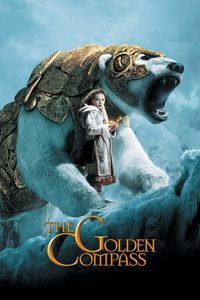
  • The Golden Compass (2007)

    The Golden Compass (2007)

    (In theaters, December 2007) There are time when even a sub-standard adaptation can serve an original novel, and this is it: Throughout the film, as disjointed elements appeared on screen without much of an explanation, I kept thinking that I should rather be reading the book than watching the film. Oh, it’s not as if the movie is without merits: the special effects are fine, the images are arresting and the polar bear wrestling match really gives the bass speakers a workout. But the film feels disjointed, as if half the necessary explanations had been left on the editing room floor. Nicole Kidman looks as if she doesn’t even want to be in the film. At least the bare bones of the original story’s anti-dogma stance have been preserved, along with the main plot and enough hints to suggest much more. The flavour of the fantasy universe shown here is also a welcome departure from the quasi-clichéd medieval setting that most fantasy films seem stuck to. Could have been worse, I suppose.

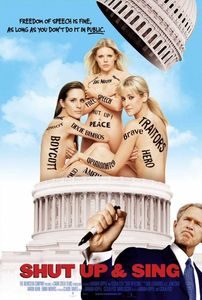
  • Shut Up & Sing (2006)

    Shut Up & Sing (2006)

    (On DVD, December 2007) Three years after the storm of controversy that was heaped on an all-girl country band that dared joke about president Bush, this documentary chronicles both the controversy and the follow-up as the Dixie Chicks suffers from the fallout, refuses to “make nice” and rebuilds a career after a highly visible boycott. It feels like a triumph: not only have events (and the rest of the population) caught up with their opinions in the three intervening years, but they emerge from the ordeal with a brand-new audience and a renewed fire for their music. As a band documentary, it’s fascinating, as the controversy touches upon every aspect of modern showbiz, from publicity to marketing strategy to show ticket-selling. As a (mercifully brief) musical, it will have even non-country fans humming along. But it’s as a political documentary that Shut Up & Sing really shines, as it explains and dissects the ways the musical group was attacked by right-wing interests, and give enough rope to the protesters to make them look like complete idiots. (The tag-line of the film, “freedom of speech is fine as long as you don’t do it in public”, is adapted from a quote from a protester.) Though a documentary favourable to the group, it doesn’t make them saints: behind doors, they struggle visibly with the controversy, toy with how to appease the crowd, call psychics for reassurance and are often associated with less-appealing fans. But they endure, and what’s missing from the Blockbuster-branded DVD release may just be an epilogue about the critical and commercial success of their more accessible comeback album, and their newfound fandom far outside country music.

  • The Brother From Another Planet (1984)

    The Brother From Another Planet (1984)

    (On DVD, December 2007) Think of this film as a meeting of two archetypes: “Obscure low-budget film that earns a steady amount of praise over the years” and “alien comes to Earth to reflect back on humanity’s foibles”. Of course, those two often come along with “overrated film praised by people who just want to look smart” and “boring story we’ve seen too many times already”. The 1984 vintage of the film is more visible in the torpid pacing and the muddy image quality than in the older technology surrounding the characters. The dialogues sometimes work and sometimes extend in infinity without any hope of a timely end. While some details of the film still feel fresh and relevant nearly twenty-five years later (the men in black, the social criticism), most of it now feels overlong and underplotted, more a stunt in bleeding-heart “let’s just be friend” film-making than a conventionally satisfying movie. Cinephiles will note that the film is directed by John Sayles (who would go on to bigger and better movies) and that it stars a young Joe Morton (who would re-appear in another small SF film named… Terminator 2)

  • The Narrows, Michael Connelly

    Little Brown, 2004, 427 pages, C$10.99 mmpb, ISBN 0-446-61164-6

    Count the pages to excitement: It doesn’t take three chapters in Michael Connelly’s The Narrows before everything is set in motion once again: The Poet is alive, Terry McCaleb is dead, Rachel Walling is stuck in a backwater assignment and Harry Bosch can’t stand retirement. Yes, it’s time for another Connelly reunion, as he meshes characters from three (and eventually four) of his sub-series. This one is for the fans, or more accurately everyone who’s ever wondered what would happen if a tough guy like Harry Bosch was let loose against a criminal mastermind like The Poet. Or what would happen if Rachel Walling met Bosch.

    This being a Connelly novel, though, it’s never quite as straightforward as a classic joint assignment. The two characters almost exist in universes of heir own, and this sense of mismatched gears is reinforced by the alternating narrations used from one chapter to the next: Bosch, still on his own after turning in his LAPD badge, narrates the events from his perspective as he did in Lost Light, whereas Walling’s (and the Poet’s) chapters are told in Connelly’s straightforward third-person prose. As in the previous book, the first-person narration brings us a bit too close to Bosch. At times, we can almost feel Connelly work twice as hard to hide facts from readers stuck in Bosch’s head. Needless to say, the alternating narration dramatically illustrates the difference between the two agents… even when they happen to work toward the same goal.

    One thing is for sure: Harry gets a lot of mileage from his Mercedes-Benz SUV as he tries to stop the Poet from killing again: The clues he inherits from Terry McCaleb lead him to destinations not too far away from Las Vegas, which proves handy given the revelations at the end of Lost Light. Bosch even holds a temporary apartment near McCarran International Airport, where he crosses paths with a character from another of Connelly’s novels. (Not that the fan-service stops there: Connelly indulges in even more meta-referential fun when he mentions that McCaleb’s funeral had been attended by Clint Eastwood.)

    Bosch eventually meets Rachel Walling at a surreal dig site in the Nevada desert, where six bodies are buried near a boat. The find isn’t accidental: The Poet is up to his usual games, leaving just enough clues to make the chase exciting. A small town where brothels outnumber convenience stores is next on their tour of Poet clues. Then, inexorably, it’s back to Los Angeles, where Connelly pulls out all the stops in staging a rain-drenched climax in the torrential waters of a flooded Los Angeles River. A twist in the epilogue can be read as a callback to a similar kick at the end of Bosch/McCaleb’s previous joint investigation in A Darkness More Than Light.

    Along the way, there are the expected number of complications for Bosch. Bosch tumultuous personal life has always been less convincing than his investigations, and The Narrows is no exception to the rule. Given his past romantic history, it’s not a surprise if he manages to screw up again with his ex-wife, and get close to Walling a few pages later.

    But once the big-budget theatrics of the climax are done, what’s left? For all of its fan-pleasing goodness, The Narrows does feel like a let-down. It doesn’t have the standalone heft of The Poet. It requires a pretty thorough knowledge of the Connellyverse. Bosch himself easily overshadows Walling, leaving little for her to do except react to both Bosch and the Poet. The antagonist himself feels lightweight, a serviceable villain fit to be bashed around by Bosch. Even if the separate pieces are crafted as carefully as ever, the patches and joints required to fix everything together threaten the impact of the work as a whole. What worked so well in A Darkness More Than Night was the contrast between two detectives, a partnership that could only end with both of them realizing they wouldn’t be able to work together again. The Narrows retreads the same territory, but also belies it by a bit of posthumous hand-off. Yet it doesn’t offer a strong enough rationale for Bosch and Walling to do business together, let alone tackle the fleeing Poet.

    In interviews, Connelly has said that The Narrows was written partly to conclude dangling threads, partly to conclusively settle the fate of The Poet and partly -we presume- to mark the end of Terry McCaleb’s arc as a character. But like many ageing authors, Connelly’s desire to link his entire universe together may prove to be more self-indulgent than worthwhile.

    But even hobbled by its predecessors, The Narrows is still a better read than most crime thrillers on the market today. Connelly’s writing remains sharp and his eye for procedural details is as fascinating as ever. Since Bosch allows himself to be talked back into more LAPD work during the course of the novel, there’s no reason to believe that the next book won’t be a return to form.

  • Improbable, Adam Fawer

    Harper Torch, 2005, 447 pages, C$10.99 mmpb, ISBN 978-0-06-073678-1

    Before even discussing the content of this novel, let’s first congratulate the designers of the mass-market paperback edition of the book for making me pick it up. I’m not exaggerating: I must have passed over the trade paperback of Adam Fawer’s Improbable a dozen times, but it just took one look at the lenticular 3D full-page mass-market cover to convince me that I had to have this book in my collection. It’s a beautiful curiosity, and a hit whenever I show it to other people.

    But the novel, you say, what about the novel?

    Well, the novel itself is just as unusual as its cover: A present-day suspense from a popular fiction imprint that’s really science-fiction in disguise, with enough hard mathematics to quality as hard-SF yet over-plotted like an overgrown thriller.

    We realize early on that protagonist David Caine is an exceptional young man, even if his gambling problem earns him the attention of the local mob in the first chapter. His formerly-promising academic career derailed by debilitating epileptic episodes, his ability for calculating probabilities is no match for a run of bad cards and so Caine agrees to an experimental treatment in the hopes of paying back his massive debt and regaining some measure of control over his life. But the treatment has unforeseen effects: before long, Caine can calculate the future with enough precision to make predictions, and change his actions based on what he foresees. And as other forces take an interest in his newfound talents, he comes to realize that there are much, much bigger secrets out there…

    In order to explain its unlikely premise, Improbable features more exposition scenes than you’ll find in a typical hard-SF novel. Statistics and quantum mechanics don’t come easily to the vast majority of people, after all, but Improbable features a few delicious exposition scenes (including one literal lecture) to explain it all. Don’t worry: They’re a delight to read, even for those with or without significant mathematical backgrounds.

    Where the novel falters, actually, is in the overabundance of more familiar thriller elements. There are, at some point, over four different organizations tracking down Caine, including an improbable number of double-agents and mercenaries. It gets confusing, and the novel wastes far too much time keeping those strands moving when it should be concentrating on its more unique elements.

    But those elements indeed make up for a memorable reading experience. Probabilities and quantum mechanics have been a staple of Science-Fiction literature for a long time, especially when used as a way to meditate on fate, predestination and the nature of choices available to us. One of the most memorable moments in Greg Egan’s Quarantine involved a chapter beginning in a different universe than the one resulting from the previous chapter. In a more fantastical setting, Jasper Fforde’s Lost in a Good Book played plotting games with decreasing levels of entropy. More recently, the last act of Elizabeth Bear’s Undertow offered a scene in which various possibilities were described before consciously settling upon one outcome. Without suggesting any filiation, Improbable has a number of equivalents scenes, including a spectacular moment in which Caine sees the probabilities in disposing of a powerful explosive. Smaller, less spectacular demonstrations of improbability also carry their own conceptual kick, such as a series of events leading to a non-stop train ride from one destination to another. Isn’t it cool when the novelist can fiddle with his plotting in plain view of the audience?

    On the other hand, some elements overplay their welcome. A lengthy sequence tying a lottery win into a grander plan for humanity feel forced and a bit sadistic for the victims of the events. The slingshot ending inevitably delves into mysticism, a twist which may not be entirely earned by the overwrought thriller mechanics of the rest of the novel.

    A tighter plot would have clarified the importance of other elements and made the reading experience more satisfying, but Improbable‘s sheer originality and genre-bending audaciousness make it good enough to recommend even with those flaws. The lenticular paperback cover isn’t just a gimmick: It’s a fairly good indication that there’s something unusual under that cover.

    (On the other hand, don’t be surprised if the cover actually makes it harder to read the novel: I don’t consider myself a particularly tactile person, and yet I found the sensation of the plastic strips under my fingertips far too close to numbness for my tastes, and ended up holding the novel by its first few pages in order to read without distraction.)

  • The Electric Church, Jeff Somers

    Orbit, 2007, 465 pages, C$14.99 tpb, ISBN 978-0-316-02172-2

    It’s possible to read far too much in a new publisher’s first book. In ten years, no matter what kind of critical reception awaits Jeff Somer’s The Electric Church, few people will even remember that it was the first title ever published by the US imprint of Orbit, the legendary UK SF publisher now replacing Warner Aspect on the North American continent after complex corporate shenanigans. The novel will ultimately stand on its own: we shouldn’t read too much in its failings.

    It just wouldn’t do to dismiss US Orbit as a bread-and-butter publisher of conventional genre fiction based on a single data point, right?

    It’s particularly unfair since Somer’s novel is unusually susceptible to external factors. In this case, I ended up reading The Electric Church too soon after Richard Morgan’s Black Man, and the similar territory covered by both novels (as “tough-guy Science Fiction”) made it hard not to make comparisons, usually to Somers’ detriment. While The Electric Church novel is not unsuccessful, it’s a surface read that seems to remain content with shoot’em-up heroics and cardboard dystopia.

    So let’s try to focus on just this novel rather than burden it with expectations of what it means for the future of genre publishing in general.

    The Electric Church largely takes place in the kind of dystopian future that can be appreciated only with gen-X cynicism and a thirst for fighting the power: After blurry social upheavals, most of New York has reverted to a city-wide blend of anarchy and authoritarianism, with criminals trying to fight their way through life and avoid being trapped by the debilitating weight of the central authority. Rich and happy people presumably exist elsewhere, but those might as well be abstractions for protagonist Avery Cates, a professional assassin who has survived an increasingly unlikely life in the streets of Manhattan.

    As the novel begins, Cates narrowly escapes a police raid, reflects upon his sorry life and runs afoul of the titular Electric Church, a growing cult that promises eternal life to its recruits at the cost of their individual selves. Hints abound that the conversion process may not be entirely voluntary if ever the Church sets sight on a specific recruit. Cates soon gets the chance to dig deeper in the Church after getting a particularly dangerous assignment from an even more dangerous client.

    The rest of the story is a familiar riff on caper crime drama and hardboiled heroics, with the recruitment of helpful rogues, early reconnaissance skirmishes, ever-rising stakes and dramatic shootouts. As Cates comes closer and closer to his targets, the body count rises and the guns get bigger. An increasing number of assassins crowd the cast of characters as The Electric Church leaves behind low criminality in favour of high insurrection.

    I’ll give it as much: The style is deliciously noir and the pacing steadily pushes forward. Somers, through Cates-as-narrator, isn’t afraid to be hardboiled to the point of self-parody and it certainly gives a distinct flavour to the prose. The short chapters (written for serialisation) make for easy reading, and the plot is efficiently structured around its twists and revelations.

    On the other hand, this is all very familiar material, without much depth or originality. The setting seems taken from the “it’s a good future for being a bad person” bin and smacks more of teenage video-game alienation (with guns and authority figures to shoot down) than any serious attempt to piece together an extrapolated future. Science-fiction as a backdrop to gunfights rather than a way to explore issues. It takes all kinds, I suppose: Most casual readers shouldn’t care as long as the entertainment value is there (and it is), but crankier readers who have seen this type of material many times before may feel their eyes glaze over. Superior alternatives like Morgan’s Black Man only deepen the dissatisfaction.

    But I’m measuring the novel against unrealistic standards. Giving The Electric Church what it deserves without unfair comparisons, it’s a promising debut from a writer who’s got potential as long as he shakes off the more derivative aspects of his fiction. The prose is enjoyable, the characters are generally well-drawn and if the plot owes too much to familiar genre mechanics, it’s executed with competence. I may not be particularly looking forward to the upcoming direct sequel The Digital Plague, but I’ll pay attention whenever Somers breaks away from that particular dystopian future.

    [June 2008: As feared, The Digital Plague is more of the same: While the adventure is slightly less linear, it kills off most of the secondary characters and ends up being tiresome. The prose style is still more interesting than the actual story, which promises much for Somers as soon as he gets out of the Avery Cates rut.]

  • The Wild Shore, Kim Stanley Robinson

    Ace, 1984, 371 pages, C$2.95 mmpb, ISBN 0-441-88870-4

    As an avid reader, I obsess about things that are completely meaningless to the rest of the world. I wonder, for instance, about how tastes change over time. About how genre familiarity destroys some books and enhances others. About how it’s possible to be unimpressed by an author, only to re-discover him years later with surprise and pleasure. Even if my tastes have remained largely unchanged over time (sometimes to my dismay), authors like Kim Stanley Robinson give me reason to hope that I’m become a better reader.

    I wasn’t overly impressed, eleven years ago, with his first short story collection The Planet on the Table. But as the years went on, I found more and more to like in his fiction, until he became a standby in my list of authors to buy on sight. I don’t think I would have appreciated The Wild Shore as much ten years ago; I may even like it more in another ten. Who knows what else I’ll know by then?

    For instance, The Wild Shore is best appreciated with a knowledge of post-apocalyptic fiction. Here, a nuclear attack has devastated the United States sixty years prior to the events of the novel, plunging the country in a primitive collection of city-states carefully monitored by foreign powers. We eventually discover that the lack of advanced technology is not an accident: bad things from space tend to happen to anyone who attempts to re-develop advanced technology on American soil. The Japanese keep patrols on the west coast to make sure that things stay under control.

    This state of affairs soon proves unbearable to young Henry, who emerges from a generally content childhood in Orange County, California, with ideas on how to fight foreign influence. Dragged in an emerging war between neighbouring cities and the Japanese overseers, Henry sees a bit of the world, undergoes a number of adventures and grows up a bit. There’s not much more to the plot, but it’s competently portrayed.

    The Wild Shore remains Kim Stanley Robinson’s first novel and structurally it’s not quite as tight as it could be. Among other annoyances, the novel includes several chapters of a travelogue by an American travelling around the world, which take away from Henry’s tale. The attack that destroyed America isn’t particularly believable (3000 suitcase nukes?!?), and some passages rely heavily on coincidence, such as Henry’s unbelievable luck in meeting his friends after a nautical odyssey.

    But the book is more interesting when it’s measured against so much of the nuclear post-apocalyptic sub-genre that formed such a part of SF in the seventies and eighties. In The Wild Shore, the American nationalists who want to rebuild America to its former glory are misguided. Indeed, the first surprise of the book is in seeing how pleasant Henry’s life seems to be. This first volume is meant as the “post-apocalyptic” element of the trilogy, but things aren’t always as bleak at they appear.

    (The quarantine of the United States by other countries is seen as a necessary evil, and that particular idea finds a justified resonance in Robinson’s follow-up volume The Gold Coast. Among other things, Robinson has intended The Wild Shore to be part of an unusual trilogy: Three views of the future, set in California’s Orange County, more or less independent from one another. )

    In terms of prose, though, it’s easy to recognize in this first novel the same prose style (not entirely dispassionate, not entirely exempt from showy cleverness) that would follow during most of Robinson’s career. The Wild Shore is hardly a perfect novel, and the nuclear theme may not be entirely credible today, but it’s a fine book and a good portrait of the author as a budding utopian. I’m glad I read it today rather than years ago, and I’m looking forward to the day where I’ll be able to re-read it with even greater pleasure.

    [March 2008: And now I know something I didn’t when I read The Wild Shore: its kinship with Jack London’s “The Scarlet Plague” (1912). Thanks to Donald Alexandre for pointing out the parallels at an ICFA presentation.]

  • Hard As Nails, Dan Simmons

    St. Martin Minotaur, 2003, 357 pages, C$9.99 mmpb, ISBN 0-312-99468-0

    It’s a widely-held belief that Dan Simmons can excel in any genre he chooses to write. While that’s not always true, it’s hard to find counter-examples. (In hindsight, his foray in techno-thriller, Darwin’s Blade, was enjoyable but ultimately ridiculous thanks to an accumulation of talents in its protagonist.) With Hard as Nails, Simmons at least keeps proving that he can write a hard-boiled mystery series as well as anyone.

    This is private investigator Joe Kurtz’s third adventure, and it’s just as harsh and unpleasant as Hard Case and Hard Freeze. Buffalo-area Kurtz’s life so far has been filled with shootouts and broken bones (his and others), so we know that Hard as Nail is going to remain true to form when the novel begins with “On the day he was shot in the head, things were going strangely well for Joe Kurtz.”

    Both Kurtz and his parole officer end the first chapter at the hospital, badly wounded. But Kurtz wastes no time in getting pampered by the American medical system: he self-checks out a few pages later, popping aspirins and putting himself on the case. It’s not as if he’s got too few enemies to suspect: in between decades of lousy behaviour, a stint in prison, and the events of the first two novels, Kurtz is going to have more trouble finding out who doesn’t want to kill him. Especially given how most of those who don’t want to kill him always add “…yet.” to their reassurances. By mid-book, headache-ridden Kurtz has been promised death so many times that it looks as if his first-chapter survival was just one more bit of bad luck.

    It wouldn’t be a Kurtz book without multiple antagonists, and so Hard as Nails multiplies the complications, landing Kurtz in the cross-hairs of rival criminal gangs, a mafia princess, the police and a serial killer who enjoys what he does. Recurring paid assassin “The Dane” is soon added to the mix. If you think that Kurtz will need an army to make it to the end of the book, well, you’re not wrong.

    The muscular nature of hard-boiled mysteries is ably reflected in the author’s no-nonsense prose, which charges forward without fuss or fanciness. Simmons is a professional, and he knows when to stick to efficient prose: At a snappy 357 pages, Hard As Nails is a pleasure to read and a remarkable page-turner.

    It’s also, obviously, a bit of a mess. There’s a price to pay for outrageous plotting, and Hard As Nails often goes over the top. As in Hard Freeze, the mixture of straightforward mob crime drama and grotesque serial killer mystery remains a challenge to manage efficiently, and it’s the serial killer angle that ultimately exasperates with self-conscious labels such as “The Artful Dodger” given to the serial killer in question. There’s also a tendency for the plot to become so complex that readers will stop trying to piece it together and just accept what happens, shrug, and go on. It would also be best for new readers to read all three Kurtz novel in short order in order to keep in mind all of the various bit players in Kurtz’s life. It may be no accident if the ending comes as a bit of a melodramatic deus ex machina that cuts through complications with a precise kill, exactly like the end of the second volume.

    All of which may explain why, five years after publication, Hard As Nails remains the last volume in the Joe Kurtz series. I presume that Simmons’ well-demonstrated desire to keep writing new things is at play here (Hard as Nails was followed by the SF dyptich Illium/Olympos, then by the horror-thriller The Terror), but genre fatigue may also be a factor when it looks as if every single hardboiled plot device has been crammed in those first three books.

    But even if this ends up being the last Joe Kurtz adventure, the result is a generally enjoyable third volume in an equally good series. Joe Kurtz has taken more damage than anyone would reasonably expect: A little rest can only do him good.