Reviews

  • The Scar, China Miéville

    Del Rey, 2002, 638 pages, C$28.95 tpb, ISBN 0-345-44438-8

    Perhaps the most astonishing thing about China Miéville is how he manages to delight both highbrow critics and all-average readers by writing… monster books. Despite the critical acclaim, the superb prose and the strong characterization, Miéville has built his reputation on Perdido Street Station , a monster-hunt book, and followed it with The Scar… another monster-hunt book.

    Granted, lumping both books in the cheap horror genre bin is disingenuous. It fails to do justice to the craft of Miéville’s writing, the wild invention of his setting, the attention paid to his characters or the touch of humour and tension he weaves into his novels. There is nothing in common between, say, Perdido Street Station and Dean R. Koontz’s Phantoms, even if both feature nightmare-sucking giant moths. Miéville’s stuff is an odd blend of horror intrigue in a fantasy setting approached as a science-fiction world. Add to that the requisite action and adventure, and you’ve got yourself a total entertainment package.

    Billed as a sequel to Perdido Street Station, The Scar is more of a subsequent story set in the same universe. It begins in the aftermath of the events of the first novel, as linguist Bellis Coldwine flees the city of New Crobuzon in fear for her life. Following the unsettling events described in Perdido Street Station, friends of Isaac Dan der Grimnebulin have started disappearing as government operatives start taking far too much interest in what they might know. An ex-lover of der Grimnebulin, Coldwine decides to take matters in her own hands and flee by sea to a far-away colony. But stuff happens, her ship is boarded by pirates and she finds herself shanghaied to Armada, a floating city where she is left free… but unable to get away.

    There’s more. Much more. A gigantic sea creature. A race of man-sized mosquitoes. Vampires, humanoid cactaes, remade men, spies and other horrors and marvels. Much as he did with Perdido Street Station (and, presumably, King Rat), Miéville continues to stretch the definition of urban fantasy in all sorts of directions. This time, The Scar takes place mostly at sea, bringing along plenty of echoes from other nautical adventures even as it delights in describing the inner working of a very special city made out of ships loosely tied together. New Crobuzon it ain’t, but it’s certainly a neat idea. Miéville has a skilled eye for description, and if The Scar does something surprisingly well, it’s to survive the absence of New Crobuzon (perhaps the central character of Perdido Street Station) by presenting us with another creation that’s just as fascinating.

    As with all good horror stories, The Scar also features its quota of fascinating moments, from descriptions of the city to ominous hints about the monster at the bottom of the tale. If you hunger for well-written fantasy that doesn’t try to lose all of its readers along the way, this is the one.

    There’s also plenty of good things to say about the characters of the novel. The anchor is, of course, dry and intellectual Bellis Coldwine, who acts as a reluctant narrator to the events of the book. While a solitary person, she also comes in contact with a number of Armada’s other inhabitants, from fellow ex-New-Crobuzoners to Armada natives. Her uncanny knack for being at the right time at the right moment isn’t entirely accidental.

    If the novel has an annoyance (beyond a number of lengthy passages; skip the all-italics chapters), it’s the unconventional form taken by the ending. In some way, it flinches and shies away from the objective of the quest. In others, it depends on an arbitrary authorial decision, a decision that torments even the characters as they ask “of all the chances that this could happen…” It is potentially annoying without being too much so; you can actually read it, say “huh, neat”, be satisfied by the revealed visions of what didn’t happen and avoid disappointment. Maybe Miéville has something else in mind for one of his next books. Maybe we’ll re-visit The Scar some day.

    In the meantime, there’s more than enough stuff here to keep us entertained. Miéville’s talent at writing top-notch pulp fiction is just as good here than in the novel that established him as a major writer, and few will be disappointed by this follow-up. The writing is delicious, the characters are worth our interest and the narrative is packed with fascinating asides. What are you waiting for? An excuse to flee the city?
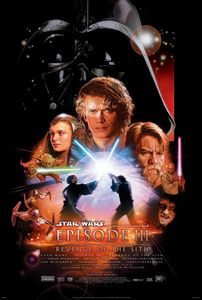
  • Star Wars: Episode III – Revenge of the Sith (2005)

    Star Wars: Episode III – Revenge of the Sith (2005)

    (In theaters, May 2005) Good? Bad? Does it really matter when it’s a film labouring under such expectations? A bridge between the much-maligned Episodes II and the classic Episode IV, Revenge Of The Sith just needs to be satisfactory. Which it is, but just. George Lucas’ shortcomings in matters of dialogue have been obvious before, but they’re even more glaring here, with wince-inducing romantic material and lines that don’t end up meaning what the writer intended (“Good relations with the Wookies, I have”: Thanks for an instant fan punchline, George!) He doesn’t fare much better with the overarching elements of his script either: the grandiose “fall of the republic” is too simplistic to be believable, and so is Anakin’s conversion to the dark side. The most tragic part of the story, though, is the shabby way it disposes of Padme (the luscious Nathalie Portman, now with added curls) as a porcelain doll who can’t live without her man. As a director, Lucas is doing better than ever with the way he moves the camera around (though one may wonder about the positive influence of his special-effects people or the rumoured involvement of Steven Spielberg), even though his grasp of actors remains as shaky as ever: Ian McDermid and Ewan McGregor do well, but Hayden Christiansen looks and sounds like a petulant brat who mumbles a lot. (“Darth Vader: The Sullen Teenage Years”). Fortunately, Lucas doesn’t come up with everything in the film, and so the design work and special effects remain as deeply impressive as ever: ILM truly brought their A-game to this film, with particular praise heaped upon the first twenty minutes of the film, the epitome of what a “Star Wars!” film should feel like. I have my doubts about other elements of the film (such as the inconsistent use of Force powers), but bitching about “Episode III” is no better than beating a dead horse. Revenge Of The Sith manages to satisfy what we expected from a film whose ending we already knew, but no more.

    (On DVD, December 2005) You know, this film is a whole lot better with the commentary track turned on. I may still not think too highly of the dialogue or the pedestrian fashion with which George Lucas capped off his wholly unnecessary trilogy, but the special effects are nice and there’s interesting design touches here and there. With the multi-source audio commentary, you can at least give points for effort and technical prowess as the filmmakers explain what they intended to do with even the silliest sequences. Fittingly, the best thing on the DVD may be “Within a minute”, an exhaustive making-of documentary covering what goes into making only one minute of the finished film. Neat concept: there doesn’t appear to be a single production team left untouched by the end of it. A fair number of other targeted featurettes complete the portrait. Star Wars fans already know that the DVD is the essential missing part of their collection going in between volume II and IV; others may want to wait until the inevitable cash-in box set.

  • Breakfast of Champions, Kurt Vonnegut, Jr.

    Delta, 1973 (1999 reprint), 302 pages, C$21.00 tpb, ISBN 0-385-33420-6

    (Experienced as an audio book, as performed by Stanley Tucci) Caedmon, 2003 , 6.5 hours (unabridged): ISBN 0-06-056497-0

    Meet Kilgore Trout, perhaps the worst SF writer in the known universe. Meet Kurt Vonnegut, Jr., creator of perhaps the worst SF writer in the known universe. Meet Dwayne Hoover, a man at the end of his sanity, uniquely predisposed to mistake Kilgore’s stories for the awful truth. Meet the town of Midland CIty, a city in the mid-west where the id of America is hideously exposed. Meet a bunch of characters without secrets to you, the reader, thanks to him, the writer.

    By now, Breakfast of Champions is a minor classic of American literature, and Kurt Vonnegut one of its undisputed demigods. This novel shows why he’s held in such high esteem: Breaking every rule of conventional fiction, it still manages to entertain and remain relevant more than thirty years after publication. It helps that it’s often laugh-out-loud funny in a deadpan fashion.

    In some ways, it’s the story of a successful middle-age man going mad. In others, it’s a road trip by a rotten SF author throughout the wasteland of twentieth-century America. It’s about Vonnegut, it’s about modern culture, it’s about life as lived by those strange human creatures. And so on.

    While the comparison may send some Vonnegut fans into early graves, there’s some similitude between his stylistic quirks and the type of prose favoured by later writers such as Chuck Palahniuk. In Breakfast of Champions, three recurring motifs quickly become apparent.

    The least significant of those is the recurring enumeration of items, habits, names, quickly followed by “…and so on.” Vonnegut himself explains the significance of that particular quirk in-text, but it does bring to mind similar prose tricks in other authors.

    That Vonnegut would himself (as the author) comment on that recurring pattern of writing is in itself an example of a stylistic trick. Vonnegut sometimes (presumably) slips into autobiography with this novel, establishing parallels between his live and elements of his characters, but that’s not the least of the author/work transgressions in this book. Vonnegut tells the reader, in advance, what’s going to happen and why. He plays with the omniscience of the narrator if it was a toy, telling us things about his characters and their surroundings just for the heck of it. Near the end, he practically disengages from the story, allowing us to read about the author commenting his story rather than the story itself.

    This, in turn, feeds into the constant sense of detachment exhibited in the novel. Cultural detachment, especially. He chooses to tell the story almost as if he was narrating to an alien in one of Trout’s stories. Facets of early-seventies pop-Americana are laboriously explained, with constant reminders that however weird it sounds, that’s the way things were there and then. Early readers of the novel must have felt the dissonance with pleasure. Thirty years later, it acquires another layer, as we readers born after the novel’s publication date have become, in a sense, aliens to the period thus described. Those laboriously explained cultural markers become historic footnotes required to understand the universe being described.

    It all amounts to, well, a lot of fun. Deliciously weird, and not without its dark sarcastic laugh-aloud moments, Breakfast of Champions demands a certain energy from its readers, but rewards them richly. I have often been bemused by Vonnegut’s work, but seldom less than satisfied. The pattern holds true here. Plus, any novel starring a science-fiction writer (even if he’s the worst one in the universe) gets mad props in my ratings.

    I experienced the novel as an unabridged audio-book as performed by character actor Stanley Tucci. I didn’t do so by choice (I was suffering from the after-effect of eye laser surgery, hence being unable to read “real” books), but it was certainly an occasion to experience Vonnegut’s prose and not rush through the book. As a result, several of Vonnegut’s recurring motifs became clearer, and the steady ploughing ahead of the “story” was most clearly felt. I also loved Tucci’s voice performance as Kilgore Trout, as he infuses the character’s speaking cadence with an oddly likable mischeviousness. A perfect reflection of Vonnegut’s own text.

    [December 2005: …but not a perfect reflection of Vonnegut’s book, which includes a number of naive illustrations that add another layer to the narrative.]

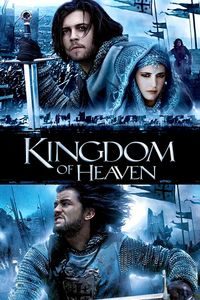
  • Kingdom Of Heaven (2005)

    Kingdom Of Heaven (2005)

    (In theaters, May 2005) It strikes me that with the latest historical epics, the only worthwhile question is “how’s the Big Battle?” In this case, director Ridley Scott has been handed a juicy target: The Crusades! The siege of Jerusalem! Armies against armies! It’s how we get to that point that just isn’t as interesting: Here, we follow a humble blacksmith-farmer as he improbably learn to be a knight, does everything right and ends up leading an entire population against the attackers. Slow at first, Kingdom Of Heaven finds its footing on the Holy Land: Protagonist Orlando Bloom becomes a gentleman-farmer, somehow becomes the favourite of both a king and his sister (in entirely different ways!) and quickly earns the respect of his fellow knights. Still, the film remains of shaky interest until the third act. One can blame the plot shortcuts on the rumoured cutting of several scenes, but it’s hard to imagine that a longer version could improve on the pacing of this lumbering monster. I suppose that we should be thankful that the end Big Battle is, indeed, worth the 90 minutes leading up to it. It’s not a bad film. At least it skilfully navigates a path between warring faiths without resorting to cheap racism. (Indeed, the most compelling character of the film is Ghassan Massoud’s Saladin) But Kingdom Of Heaven remains a bit slow, a bit improbable, a bit ordinary. Ridley Scott is a gifted director, but he seems to have phoned in this one. But really, in historical epics, why ask for much more than one Big Battle?

  • Aliens (1986)

    Aliens (1986)

    (Fourth viewing, On DVD, May 2005) This is one of my all-time favourite films, and even a Xteenth viewing fails to dispel its magic. On a script level, it’s written with attitude and skill: usually billed as an action film, it nevertheless contains only three pure action scenes, with the rest of the film being dedicated to buildup, tension and stark terror. The last act grabs by the throat and never lets go. Fantastic stuff, ably supported by excellent performances and generally excellent special effects. Perhaps the most accomplished special-effects film of the pre-digital era, Aliens has survived admirably well to the passage of time and increased technical sophistication. (I have some issues with the back-projection work, but that’s pretty much it. Oh, and the 1.78 aspect ratio, but even James Cameron regrets that today.) Great, great film; the epitome of what a sequel should be. The “Alien Quadrilogy” box-set special edition is packed with supplementary material, including a good audio commentary, tons of documentaries and -hurrah!- an extended special edition that’s even better than the original. See it now and see it again soon!

  • Alien (1979)

    Alien (1979)

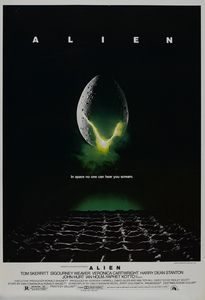
    (Third viewing, On DVD, May 2005) What is left to say about this film? It’s a classic, well-designated as such. Fantastic atmosphere, impeccable technique, excellent premise, savvy execution. As a child of the MTV generation, I still think it’s a touch too slow, but given how older critics tend to beat me up when I say such things, I may just qualify that with a “maybe”. The “Alien Quadrilogy” box-set edition offers a truckload of supplementary material, including an all-inclusive set of documentaries that will tell you all about the film, and a rather good audio commentary featuring most of the relevant players. An essential SF/Horror film, and the basis of a great series.

  • Shutter Island, Dennis Lehane

    Harper, 2004, 400 pages, C$8.99 mmpb, ISBN 0-380-73186-X

    (Experienced as an abridged audio book, read by David Strathairn) Harper Audio, 6 hours (abridgment approved by the author): ISBN 0-06-055417-7

    I have always been dubious about audio books. Why waste X number of hours listening to someone reading a book when you can spend even less time reading the perfectly serviceable paper original? Given my speed of reading, my dislike for abridgements and my right to flip forward or backward whenever I like, audio books always come up short when compared to the real thing.

    But what happens when you can’t read? Faced with the prospect of at least a week of reading downtime following an impending laser eye surgery, I decided to use audio books as a lifeboat, a way of keeping sane at a time where I wouldn’t even be able to see properly. My first selection was Dennis Lehane’s Shutter Island: I could use a good crime thriller as an easy “read”, and I thought I knew what to expect after Lehane’s Mystic River.

    Oops.

    The setup for Shutter Island is immediately familiar. It’s 1954 and Teddy Daniels, a US Marshall, is on a boat headed from Boston to Shutter Island, an isolated strip of land with a lighthouse and an insane asylum. Daniels and his partner are there to investigate the disappearance of Rachel Solando, a murderous inmate who somehow managed to slip away from her cell. But as the investigation evolves, things aren’t as they appear on Shutter Island: Things don’t match, people lie, strange clues accumulate and Daniels begins to suspect that there’s a lot more to the story than just a missing patient. What’s more, it all seems to involve him.

    The days following an operation involving painkillers are, so put it nicely, not entirely rational. Your first impulse is to sleep, and so you pass the next day or two in bed, slipping in and out of slumber. Now add to that a paranoid thriller in which Dennis Lehane does M. Night Shyamalan and you’ve got a recipe for one seriously weird “reading” experience.

    I usually speed-read thrillers at a pace of nearly two hundred pages per hour, so being restricted to a narrator’s cadence can be both maddening and revelatory. Lehane can write, that’s for sure: His turns of phrase and the way he sets up his scenes are interesting, and I’m not sure I would have gotten as much out of the prose had I ended up reading the book the traditional way. On the other hand, things can get a bit too long. Six hours to listen to a book I’d read in 120-150 minutes? In most circumstances, I’d say no thanks.

    It’s made even worse by the lop-sided way the plotting is handled. After a fantastic build-up, the Big Twist is revealed at around the end of the third cassette, leaving one more cassette to go. That last cassette is spent listening to the intricacies of The Twist, even as we readers don’t need to be convinced. Then, just as you think all is wrapping up, there’s another fifteen minutes of needless flashback as Lehane laboriously explains the real story, a real story that we readers didn’t need to be told after all of the clues left throughout the novel. This may be an area where the abridgment may be at fault (It’s possible that the last quarter of the novel was left untouched), but I doubt it: It’s likely that Lehane, as a rational mystery writer, is ill-equipped to handle twists best suited to fantastical stories.

    But even with this problem, Shutter Island is a fine paranoid thriller, with enough buildup to hold the reader’s interest throughout. Definitely not the same thing as Mystic River, but that’s not a problem.

    As far as the audio book is concerned, I truly enjoyed David Strahairn’s narration: He manages to give distinctive intonations to most characters, up to a point where you wonder why they didn’t simply give in and make this a radio play. While being oddly pleased by the experience, I’m sticking to my original opinion: While audio books are better than no books at all, they’re no replacement for the real thing.

  • Alien³ (1992)

    Alien³ (1992)

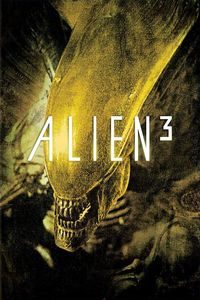
    (Second viewing, On DVD, May 2005) I didn’t like Alien 3 on first viewing, and it’s not another viewing with thirty minutes of special edition material that will enhance my opinion of the film. Sequels are usually launched with the implicit premise that the built-in audience is buying the tickets in exchange for familiar characters and premises. This film ignores this implicit agreement and spits in the face of everyone looking for a little bit of Aliens magic. But even more sadly, it doesn’t offer anything worthwhile as a replacement: muddy criminal monks, all alike, being eaten one by one. Ripley becoming a hollow shell of a character. There may be intriguing visuals here and there, but there’s scarcely a memorable scene in the entire film (well, except for the lava pit back flip), nothing that would want you to see the film another time. Let’s not even try to find a good character in this mess. Sad, humourless, dull and depressing, with nary any viewing pleasure. And there’s scarcely any innovation in terms of the Alien mythology. Fortunately, director David Fincher’s career survived this mess and went on to better things. The “Alien Quadrilogy” box-set special edition includes tons of documentary detailing in obsessive detail the flawed development process that made the failure of the film a foregone conclusion. Heck, even the commentary track participants spend some time discussing their disappointment. Fincher is nowhere to be found as a primary participant to the supplementary material: We don’t wonder why. We just wonder why the film was allowed to exist.

  • Airplane! (1980)

    Airplane! (1980)

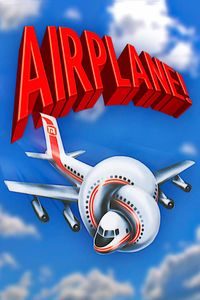
    (Third viewing, On DVD, May 2005) The daddy of the “spoof comedy” subgenre still remains extremely funny today, but it’s a fair thing to say that it hasn’t aged as gracefully as one could have hoped for. Part of it has to do with the intentionally derivative intent of the film, based on cultural icons and conventions that aren’t as prevalent today. Part of it has to do with the way the “rules” of this type of comedy have been re-used in latter films. Finally, part of it may have to do with the low budget of the production, with all of the noticeable shortcomings that implies. I still think it’s one of the most fabulous comedies ever (and a significant childhood icon; I remember seeing it on a rented laserdisc player!), but Top Secret! remains the champ in the sub-genre. The DVD contains a remarkably frustrating audio commentary track. Maybe half of it is interesting.

  • Airplane II: The Sequel (1982)

    Airplane II: The Sequel (1982)

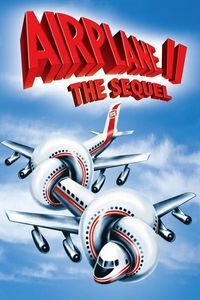
    (Third viewing, On DVD, May 2005) If even you happen to watch this film right after its prequel, you will be shocked -shocked!- at how many gags are lifted wholesale from the first film. This may not be a surprise when you consider that none of the guiding lights of the original signed on to do the sequel: When in doubt, the apprentice steal from the masters. The plot is just a touch more coherent and the production values are obviously superior to the original, but many of the jokes are repeated quasi verbatim and there’s an odd calculation to the entire production that makes it surprisingly artificial. Still extremely funny, of course, but do yourself a favour, and avoid too-close contact with the original. The DVD, sadly enough, is a bare-bones edition: Wouldn’t you love an audio commentary by William Shatner?

  • Toast, Charles Stross

    Simon & Schuster, 2004, 227 pages, C$37.10 hc, ISBN 0-7432-3591-6

    Well, this is it: the state-of-the-art of the science-fiction genre at the turn of the twentieth century. Perhaps even its future. While other authors are reluctant to face the new possibilities offered by the information revolution, Charles Stross not only embraces strange new tomorrows, but revels in them. Lives in them, one could say. The result of this vision is Toast, a brilliant anthology of short fiction that doubles as one of the best example of what cutting-edge SF has to offer.

    If you’ve never read anything by Stross before, be prepared for some concept overload. The title of the book says it all; if the only thing you can think about when you say “toast” is lightly-burnt bread or banquet platitudes, then you may not be the ideal public for this book. Stross’ hacker-jargon “toast” is all about severely damaged hardware or humans shell-shocked by change. Much like your brain once you’ll be done with this collection.

    It starts out with a bang, with “Antibodies”, one of the neatest stories of the past decade. Here, a yawn-inducing statement (“someone’s come up with a proof that NP-complete problems lie in P!”) ends up being the harbinger of the end of the world. Our narrator knows this because he’s from somewhere else. Too bad; he had such hopes for this universe.

    Other standout stories in the volume include “Big Brother Iron”, a computer-heavy follow-up to George Orwell’s 1984 in which the day-to-day job of sysadmins makes them natural revolutionaries. Clever, much like “Extracts From the Club Diary”, a series of letter chronicling the evolution of a very special group of addicts. Both of those stories skirt the edges of strictly science-fictional content, but their detail-heavy execution, packed with concepts and consequences, is straight from the Science Fiction school of thought.

    Direct echoes of Stross’ longer-work resonate through the collection. “Bear Trap” is loosely set in a variant of the Eschaton universe explored in Singularity Sky and Iron Sunrise. “A Colder War” is recognizably from the same imagination that came up with The Atrocity Archives, though in a much darker vein. The same fascination for the H.P. Lovecraft mythos carries through material like “A boy and his god”, a light-hearted story where the title really says it all.

    Stross has been an active member of SF fandom for decades (you can find mentions of him in David Langford’s Ansible as far back as October 1984) and it may be no accident if two of the stories in the book take the form of convention reports. “Dechlorinating the Moderator” is amusing if not quite believable, but “Toast” is the stuff pure SF is made of: at a convention of technical enthusiasts, boredom may be the first stage of transhumanity.

    It’s not all so cutting-edge, mind you. “Yellow Snow” (1990) has visibly aged, set in an obviously cyberpunk setting with a few extra twists. Not bad, not dull, but its kick now has more to do with nostalgia than anything else. A similar fate is reserved for “Ship of Fools”, a Y2K story that probably worked well when it was published in 1995, but seems overly talky now that this particular crisis has been worked out. The last line is a lovely inside-joke, but it’s a slog getting there.

    To be fair, both of those stories are singled out by Stross himself in his fantastic introduction “After the Future Imploded”, a presentation piece that reads like a manifesto for current SF writers. If you’re not convinced that this is an author on the leading front of the SF field, this essay will remove your last doubts. Stross knows the genre, understands what it can be used for, and not-so-secretly delights in the possibilities at his fingertips.

    Toast may not be widely available in bookstores, but in terms of impact it’s a welcome throwback to the heady days where single-author short-story collections ruled the SF world. Here we’ve got a collection of excellent stories, unified by a unique vision that masters the tools of the Science Fiction genre and it willing to nudge it forward. It’s heady, brainy, funny stuff: another success for Charles Stross.

  • Man of the Hour, Peter Blauner

    Warner, 1999, 478 pages, C$10.99 mmpb, ISBN 0-446-60541-7

    Sometimes, a book just takes you by surprise: It’s either much better than you’d expect, or you gradually realize that your expectations were completely out of line. With Peter Blauner’s Man of the Hour, it’s a little bit of both. While not flawless, this novel manages to be quite good in a very difficult dramatic register. A cursory glance at the back cover blurb may lead you to believe that it’s another thriller in which an average all-American man manages to battle terrorists intent on destroying western civilization. The dramatic reality of the narrative is quite different.

    It’s become something of a cliché to say that the modern heroes are the public sector workers doing their best to maintain security and rationality in today’s world. Policemen, soldiers, firemen doctors, nurses, teachers, all toiling along day after day without ceremonies or awards. Blauner seems to have taken this axiom to heart as he was plotting his novel: Protagonist David Fitzgerald has maybe the toughest job in the world: teaching English in a racially-diverse Brooklyn high school. The novel opens on him as he tries to reach his students, wondering how many of them he can save.

    Of course, it turns out that he can’t save them all. In a bit of dramatic irony, the antagonist of the novel ends up being a ex-student of his: Nasser, a confused young man lost between an America he find repellent and fundamentalist role models pushing him toward more and more dangerous acts. Manipulated by opportunists cloaking themselves in hollow jihad rhetoric, Nasser sets in motion a series of events by planting a home-made bomb in a school bus.

    By sheer luck, David is there to save the day, in plain sight of television cameras. But even as he becomes a media darling, the fickle nature of his celebrity starts to shift. Suddenly, he’s suspected of planting the bomb himself. His personal problems erupt, his reputation is irremediably damaged and during that time, another bomb is being prepared…

    The least one can say is that there’s a lot of stuff to deal with in Man of the Hour: the nature of media celebrity, the plight of immigrants, the challenges of being a teacher. Soon, it’s obvious that this may be a bomb-driven plot, but it’s not a thriller as much as it’s a drama with some built-in excitement. Blauner sets out to write a social drama, not a shoot-em’up.

    What’s more, it’s seldom boring. Blauner writes with a eye for the telling detail, and he never shies away from bringing down his characters yet another notch. In one of the novel’s most darkly funny moment, David is not only disgraced, reviled and betrayed, but even his camping trip outside the city turns to disaster as his tent is flooded and he is forced to seek refuge with the FBI agents tailing him. The entire novel is peppered with short, sharp scenes that do much to keep our interest in the narrative.

    Similar care is taken to make even the antagonist a curiously sympathetic figure. Nasser may stand against everything America has to offer, but we come to understand the pressures that can lead someone to that point. There is a terrible and visceral scene, early in the novel, in which he points to everyday items and scream his disgust to David. It’s one of many moments that remain in mind long after finishing the novel.

    Similar memorable scenes and relationship evolve between the teacher, the antagonist and the young woman uniting them. What’s not so good is the relatively weak ending that caps off the entire novel. While it works more or less well, it’s too convoluted, too drawn-out and doesn’t work as intended. The epilogue brings another sour note, though this one is purely intentional.

    But the last fifty pages aside, Man of the Hour is a fine example of an accessible novel that explores human issues with a dash of thriller mechanics. It’s compelling reading, features strong characters and occasional memorable moments. I don’t think you can ask much more from that type of book.

  • Candle, John Barnes

    Tor, 2000, 248 pages, C$8.99 mmpb, ISBN 0-812-58968-8

    There are certain archetypal stories in SF, and one of them is the one about the hero of a corrupt society who, after being asked to destroy the rebels undermining the evil empire, discovers that the rebels are right and then changes allegiances to fight against his former masters. Revolution happens and the credits roll. It’s a good story, a familiar story and, by now, pretty much a cliché (unless you’re writing a screenplay, in which case a good EQUILIBRIUM is worth about ten adaptations of classics like The Time Machine)

    As it turns out, it’s also the story at the core of John Barnes’ Candle. At a time in the mid-nineties, Barnes seemed poised to take over the SF world and become one of its foremost writers; big books like A Million Open Doors (1992) and Mother of Storms (1994) demonstrated a writer with a good grasp of SF tools, an interest for complex socio-political issues, an accessible writing style and a willingness to shock readers once in a while. Then, something happened. I’m not sure what. The unpleasantness of some of his fiction may have rubbed off a few readers, along with the streak of sadism that ran throughout 1995’s Kaleidoscope Century. Maybe it was Barnes’ excursion in the “men’s adventure” category with the “Timeline Wars” trilogy. Maybe it was Barnes’ personal life, which reportedly took a turn for the worse at that time and may have contributed to the grim conclusion of 1998’s Earth Made of Glass.

    Whatever it was, Barnes never again regained the reputation he once enjoyed. The jury certainly isn’t out, and I’m woefully behind the times when it comes to his 2000-2005 production, but sarcastic fare like Gaudeamus could either be a work of genius or a genuine catastrophe. We’ll see when we get there: In the meantime we’re here to discuss Candle, its thin plot and how it demonstrate my thesis of an author that is capable of much more.

    Loosely set in the same “Meme Wars” (or “The Century Next Door”) universe, Candle presents the story of one Currie Curran, expert rebel hunter living the good quiet life… until the central intelligence controlling Earth requests his services one last time: There’s a last rebel to capture, one last individualist not plugged into the network. The rebel is the last and the best of them, but given how Currie himself was one of the best, well…

    It doesn’t take long for the expected beats to fall into place. The track. The chase. The capture. The long monologue in which the rebel isn’t so bad after all. The extended flashback in which the whole future is explained. A bit more action. The counter-twist. The final action sequence. The conclusion.

    Some of the book approaches parody, what with those two manly heroes talkin’ to each other’s ears like the studly cowboy type they are, complete with the colourful vocabulary and the false rural accents. Most of the book is deathly dull, as it merely goes through the motions of a well-worn narrative. The conclusion isn’t particularly surprising, especially if you’re there reading and shaking your head in dread that “it can’t be that simple”.

    But there are flashes of interest. The description of the Meme Wars (in which ideas literally take over humans and fight themselves) may be filled with wavy hand-wringing and gratuitous violence, but it’s a shining novella-length piece of world-building in an otherwise conventional novel. It’s by far the most interesting passage of the book, once again showing that while Barnes may be dormant, there’s still plenty of stuff for him to kick around. There is some material here and there about the tension between individuality and community, but after fifteen years of hard-core SF reading, I’m asking for a “get out of philosophical discussion for free” card when it comes to those issues: been there, thought about it, nothing new under the sun.

    All in all, Candle may satisfy some lenient readers and entertain even the toughest critics, but it’s not much more than yet another average SF novel. The problem is that we know that Barnes is capable of a lot more. And we’re waiting to see him rise once again.

  • The Miocene Arrow, Sean McMullen

    Tor, 2000, 416 pages, C$21.95 tpb, ISBN 0-312-87547-9

    Awww, crap.

    It’s like being at the premiere for the sequel to a much-beloved movie of yours. The entire cast and crew of the original film is back; the trailers looked fantastic; the premise sounds interesting; early word hasn’t been awful. And then, as the movie unfold, you realize that even if it’s not too bad -and may even be more polished than its predecessor- it’s nowhere near as much fun as the first in the series.

    Welcome to Sean McMullen’s The Miocene Arrow, second volume in the Greatwinter Trilogy and sequel to the very interesting Souls in the Great Machine. Once more, we’re two thousand years into the future, following humanity as it finally breaks out of its post-apocalyptic stupor. The first volume introduced us to a strange new Australia, filled with pre-steam engine ingeniousness, human-powered computers, vast networks of communication lighthouses and an irresistible “Call” driving humans to perdition.

    This sequel recognizably takes place twenty years later in the same universe. The Call is still a major factor, but the setting is very different: We suddenly find ourselves in North America, where feudal empires have become the dominant form of government. Thanks to diesel-driven engines, small airplanes are instruments of war and prestige; the aristocracy is dominated by “airlords” and hereditary guilds. The feel is different from the first volume, as McMullen quickly plunges us in palace intrigue, warring kingdoms, ill-fated love and all that good stuff.

    It doesn’t take much time to tie the novel back to the first volume: Some characters return, though carrying dark hints of what happened since the first volume and what is likely to happen next. What are they doing so far from Australica? To answer the question is to reveal the meaning of the title, and spoil away part of the book.

    The one thing worth noting about The Miocene Arrow is that it’s much more technically successful than its prequel. I wrote that Souls in the Great Machine often felt like a great book fighting its way out of inexperienced writing; this one feels a lot more confident, a lot more controlled. The scenes are constructed with more skill, the breaks between scenes aren’t as jarring and the characters’ motivation are generally more believable than they’d been in the prequel. Sadly, if the writing is less intrusive, the story itself isn’t overly interesting.

    Oh, there’s combat, there’s action, there’s romance and there are neat inventions here and there, but nothing with the vertiginous sweep of a librarian-driven war, or the heady thrill of reading about a human-powered computer in meticulous detail. The airships are neat, the train-powered Internet has potential, but McMullen is a great deal more conventional in The Miocene Arrow, and if the result is smoother, it’s also blander.

    Things also take a long time to advance, and if the last hundred pages finally attain a good rhythm (the resolution of the romance is especially satisfying, though in typically sadistic fashion, it takes several deaths and the casual demonstration of life-and-death elite power to get there), the novel feels far too long for what it’s trying to say. I wasn’t completely satisfied by the links to the first volume: In a few sentences, most of the great characters and accomplishments of Souls in the Great Machine are discarded, maybe in anticipation of a third novel or maybe not.

    I concluded my review of Souls in the Great Machine by saying that a sequel was both superfluous and intriguing. At this point, I’m tempted to stick with “superfluous”; I’ll let you know of my final verdict once I’m done with Eyes of the Calculator, the third and final volume of the series.

  • Rebel Moon, Bruce Bethke and Vox Day

    Pocket, 1996, 282 pages, C$7.99 mmpb, ISBN 0-671-00236-8

    It’s true that you always approach a book with the accumulated mass of your life experiences up to that point. But even by those standards, I approached Bruce Bethke and Vox Day’s Rebel Moon with a truckload of preconceptions both good and bad.

    On the positive side, you can put my admiration for Bruce Bethke: His debut novel Headcrash was not just a fairly funny novel, but the last biting nail in cyberpunk’s coffin. Given that Bethke himself coined the word “cyberpunk”, he should have had the last word on the subject –and he did. That he co-wrote a second novel was cause enough for celebration and anticipation.

    That the novel itself would be a near-future “war of the worlds” Earth-versus-Moon revolution novel Could have gone both ways. On one hand, Heinlein’s The Moon is a Harsh Mistress is a bona-fide SF classic. Furthermore, this particular theme is also one of the truly inevitable stories that SF has to tell: Sooner or later, off-Earth colonies will gain their independence from Earth, and how we deal with that juncture in time will mark one of the most vital chapters in human history. Sadly, for some reason, the scenario has proved particularly addicting to libertarian writers, leading to a steady stream of such stories re-fighting the American Revolution over and over again, usually with rugged über-American colonists predictably rebelling against a corrupt, communist and overbearing Earthican government. Yawn.

    And finally, on the gripping hand, there’s Vox Day, best known as Theodore Beale, a veciforous blogger, a right-wing columnist and an author of -they say- fine fundamentalist SF. (I don’t need to tell you how I feel about fundamentalists and right-wing pundits)

    But wait! There more! You see, Rebel Moon is the first volume in a trilogy meant to novelize a series of video games… of first-person shooter video games.

    Maybe I should have stopped there, shrugged and forgot about the book.

    But oh no. I had to see for myself. Memories of the Doom novelizations weren’t enough to stop me.

    I’ll be mercifully blunt and to the point: Just avoid this novel, m’kay? It brings nothing new to the “Libertarian Moon versus Evil Earth” sub-genre. It bashes the UN like that was an endangered sport. It can’t be bothered to include more than one mildly interesting character. It reads like military SF pablum, filled with gunfights and explosions than mean nothing and make no difference. It ends on a note promising a trilogy that remains unfinished to this day, but don’t worry: you won’t be asking for it.

    If you put the novel in a cyclotron and spin it at ludicrous speeds to extract the good from the bad, you may end up with a few concepts and passages worth saving. And, to its credit, it doesn’t take long to announce its colours: Barely a few pages it, interest isn’t piqued, the novel has no sense of place, the usual “Terra-UN sucks! Luna-USA rawks!” rhetoric starts to play and it’s obvious that it won’t get any better.

    I remained unconvinced by aspects of the set-up: The moon is portrayed as a major food source for Earth, an idea so nonsensical that it’s difficult to even begin explaining why it’s dumb. (But start with shipping costs, delivery delays and the relative density of food: pharmaceuticals may be fit for essential lunar production, but simple sustenance food? Er, no.)

    It’s also unclear if the authors know how to manipulate the tools of the trade: a lack of communication delays between Earth and Moon is mentioned early on (as a hint of You-know-what), but curiously unexplored until late in the novel, demonstrating characters almost too dumb to live. (You-know-what also screws up a lot of the hard-science pretencions of the story, but hey –they were only pretencions.)

    I wasn’t impressed by the Rebel Moon video-game demo floating around the web, and let me tell you that the novel doesn’t fare any better. The only thing making it even slightly memorable are its problems. It’s probably fitting that the game and its publishing company have sunk in oblivion. It sucks that Bruce Bethke disappeared from SF after this novel. It figures that Theodore Beale, under whatever name he chooses, would find a more receptive audience in right-wing groups. It’s sad that copies of this novel will continue to haunt readers for the next few decades.