Reviews

  • Throne of Jade, Naomi Novik

    Del Rey, 2006, 398 pages, C$9.99 mmpb, ISBN 0-345-48129-1

    Sometimes, sarcasm is the quickest way to the truth.

    So when I say that reading Throne of Jade is like being stuck on a slow boat to China, I’m not being mean as much as I’m being as descriptive as possible

    Nor am I being negative given how much I enjoyed the novel despite its lopsided structure.

    Because Throne of Jade does take place on a slow boat to China. After the events of His Majesty’s Dragon, Will Laurence and Temeraire are faced with a new threat: the Chinese government has learned that Temeraire, formerly a gift to the French government, has fallen in English hands. They’re not happy and the English government isn’t necessarily feeling better about it. Soon, a plan is hatched to send Laurence out of England and in China, where negotiations with the Chinese emperor can most efficiently settle the issue.

    There’s a catch: during an eighteenth century where most of Europe is at war, sending a major delegation to China can only be done by boat, around Africa and the Indian Peninsula. For the duration of the trip, Laurence, Temeraire, their entire crew, the English delegation, the Chinese diplomats and everyone’s support staff are stuck on a flotilla going to China.

    It’s not a smooth voyage: beyond culinary matters (as Temeraire comes to appreciate Chinese cuisine), the ship is attacked by pirates, dogged by traitors, wracked by dissension and enlivened by all sorts of other incidents.

    Still, we’re on a slow boat to China.

    This changes two-third of the way in the book, as China looms over the horizon and the palace intrigue begins in earnest. Almost too quickly for comfort, various conflicts are introduced or revealed, along with significant revelations about why Temeraire was sent to Europe. As a few roughly-paced actions scenes show, all is not well in the Chinese court,. Temeraire makes a permanent enemy, but manages to make things end happily for everyone else. If you’re looking for a plot, you’ll find it in the last hundred pages of the novel.

    Fortunately, the chief attraction of the Temeraire series is still world-building, character and prose rather than plot. Novik is still fond of short-loop drama (though one hopes that the introduction of a recurring antagonist may change things slightly) and the structure of her second novel is lopsided, but she still writes entertaining prose, and the deepening characters of Laurence and Temeraire are doing much to keep us in the story.

    Temeraire may often be too good to be true, but his growing awakening to the true treatment of English dragons (especially when compared to their Chinese brethrens) introduces a few elements that may eventually develop into satisfying plot lines. I’m still vaguely unsure if the human/dragon relationships are meant to satirize a certain view of male/female power dynamics, or if they’re meant to map onto other privileged/oppressed relationships. But then again, sometimes a dragon is just a dragon… and on that score, Throne of Jade does much to stretch the reader’s imagination: Temeraire’s arrival in China is a glimpse into yet another series of conventions regarding dragon accommodations. Compared to His Majesty’s Dragon, the feeling of “cheating” alternate history is lessened given my lack of familiarity with Chinese history at the time.

    But even despite my quibbles about the plot and structure of the novel, I still had a lot of fun reading Throne of Jade, and that ends up trumping all other concerns about the book. Novik has, once again, delivered a solid series book that shows that the readability and richness of her first novel weren’t accidents. It doesn’t stand alone, nor is it meant to: her story may be shifting gears in anticipation for later instalments. Black Power War is up next, with its deliciously ominous title.

  • Temple, Matthew Reilly

    St. Martin’s, 1999, 508 pages, C$8.99 mmpb, ISBN 0-312-98126-0

    Few dilemmas of genre fiction fascinate me as much as the trade-off between believability and excitement in thrillers. Make your thriller as faithful to reality as possible and there’s nothing left to distinguish it from dull newspaper headlines. Make your narrative as wild as possible and no one will take you seriously.

    On the other hand, nobody ever said that “being taken seriously” was in the job description of thriller authors. So congratulations to Matthew Reilly for figuring out that sometimes, it’s better to be fast, furious, insane and action-packed than to be realistic. His second novel Temple may never survive a real-world audit, but it’s exciting like few other thrillers I’ve read recently, and that excitement does much to patch over the weaker parts of the novel.

    Although mixing historical treasure-hunting with high technology has enjoyed a renewed degree of popularity since Dan Brown’s The Da Vinci Code, Reilly was there before most others with Temple. The initial hook is a staple of adventure fiction: A rare Inca idol made of extra-terrestrial material that could end up destroying a good chunk of the Earth should it fall in the wrong hands. To retrieve the idol from its current unknown location, the U.S. Army grabs academic William Race and drags him in the jungle, where he’ll have to interpret a rare manuscript, make nice with his ex-girlfriend and learn how to become an action hero against nature, Neo-Nazis and American traitors.

    Busy schedule, and “busy” is only one way to describe the fever pitch of Temple when it gets running. As he runs deeper in the Andean jungle, William Race is surrounded, then abandoned by highly-trained military personnel. Occasional allies include native people and a pair of German police officers (including one coincidentally named Karl Schroeder). But it’s the variety of threats that make Temple flip over on the “wild and crazy” side of the thriller ledger. Any novel that pits giant felines against Neo-Nazis is not one to dismiss easily, especially when both of them are against an academic who’s got to learn everything about modern weaponry in the blink of an eye.

    The chief attraction of Temple is how it unabashedly structures itself as a written action movie. There’s little complexity of prose and character here, but a lot of complicated action sequences and cinematic set pieces. This isn’t a book for delicate little literary flowers: this is the written equivalent to a blockbuster Hollywood action movie, and it works remarkably well at fulfilling those expectations. Many thriller writer attempt such action-heavy stories, but few of them do it as well as Reilly.

    The only lull in the action comes in a pair of lengthy historical narratives forming the diary of a priest visiting the Inca empire hundreds of years before Temple‘s contemporary frame. I ended up skimming those sections with little impact on my comprehension of the rest of the story.

    As for the rest, well, it’s tough to summarize boats jumping in the air and wild gun tricks. I’ll let you grab a copy of the book and find out for yourself. Just don’t expect a lot of internal coherence or even a basic respect for the laws of physics. The last death-defying climax is so ridiculously overblown that it will either make you hate the novel or seal your love for it forever: It’s the kind of things that only insane or self-confident authors can pull off, and I can’t tell if Reilly is one or the other. I’m not even sure I want to know.

    One thing is for sure, though: Now that I have belatedly become aware of Matthew Reilly, it’s about time that I find out what else he’s written. Already, Contest and Ice Station have been thrown in my pile of books to read, and I can’t wait to find out if the brand of crazy action that sustained Temple is to be found in his other books. But, oh, have I got a hunch…

  • Perfect Stranger (2007)

    Perfect Stranger (2007)

    (In theaters, April 2007) There are bad dull movies and there are compulsively watchable bad movies. Perfect Stranger falls squarely in the latter category. A mish-mash of ludicrous plot twists, unlikable protagonists (I like looking at Halle Berry, but her acting is like nails on a blackboard), bad technical details, dull eroticism and clumsy direction, Perfect Stranger is nonetheless captivating: the plot mechanics are unaccountably fascinating, and that’s without adding the attraction of watching a cinematic train wreck and wondering how bad this is going to turn out. The final few minutes are a masterpiece of the “let’s screw with the audience” school of thriller plotting. A chaste thrill-free “erotic thriller”, Perfect Stranger still has a magnetism of its own. It’s a bad movie, but I guarantee you won’t be bored.

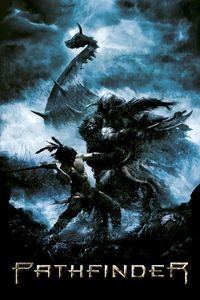
  • Pathfinder (2007)

    Pathfinder (2007)

    (In theaters, April 2007) There are bad dull movies and there are compulsively watchable bad movies. Pathfinder falls squarely in the first category. A war movie in which Vikings go against Native Americans in the year 1000, Pathfinder thuds in theatres and can’t be bothered to be interesting. Bad direction, ugly dark-and-blue cinematography, faint characters, major continuity mistakes (What’s that about walking to the Rockies from the eastern coast?) and a total lack of interest are the distinguishing characteristics of this sorry excuse for entertainment. At every moment, we’re reminded that Apocalypto did the whole “ancient war movie” so much better. Even by the low standards of action cinema, Pathfinder has little going for it. Go ahead; rent it despite the warnings of this review and feel sorry for yourself.

  • The Black Ice, Michael Connelly

    Warner, 1993, 439 pages, C$10.99 mmpb, ISBN 0-446-61344-4

    Whenever a reasonably good and consistent author emerges, reviewers inevitably wonder what will be the novel to break their stride. What’s the worst they can do? What is the least of their capabilities?

    The Black Ice may be an above-average police procedural, but this second entry in my Michael Connelly Reading Project (“One novel per month, every month, until I’m caught up”) is the weakest of the half-dozen Connelly novel I’ve read so far.

    Once again, the star of the show remains Harry Bosch, the laconic LAPD policeman that has since become Connelly’s signature character. For Harry, things are tough at work and about to get tougher as a policeman’s corpse is discovered. Suicide, say early results, but Bosch isn’t convinced –even as his superiors aren’t fond of too-clever deductions. In typical Connelly fashion, the subsequent investigation takes Harry in dangerous places, especially when the death turns out to be linked to the drug underground of Los Angeles, with an even more problematic Mexican connection.

    Throughout most of its duration, The Black Ice is slick procedural detective fiction, and it uses a number of L.A.-specific elements to spice up the narrative. Fruit flies have seldom been so important in a police procedural thriller, and even routine scenes such as a visit to a low-end bar end up having unexpected spikes of drama. Before the end of the novel, we’re even treated to a big SWAT action sequence.

    For readers who aren’t following Bosch’s novels in linear order, The Black Ice doesn’t particularly depend on the events of the first volume. Only Bosch’s romantic history and distrust of the LAPD’s Internal Investigations unit carry through most clearly. After the troubled romance of the first volume, Harry is after yet another opportune girlfriend this time around, although don’t worry –later volumes show that it won’t last. The internal investigation angle is trickier: Harry doesn’t trust the LAPD and the LAPD doesn’t trust him either. In Connelly’s fiction, though, this is business as usual.

    But “business as usual” ends up being the key expression to describe one of Connelly’s most average effort so far. His typically fluid prose remains just as apt at hooking readers into a complex web of competing subplots but The Black Ice, for the longest time, lacks the distinctive edge that usually gives an extra boost to Connelly’s fiction. Critics will struggle to find something to say about it and turn in shorter-than-usual reviews. Until the last quarter of the narrative, it’s “just” another murder investigation with a drug angle. What happens afterwards is definitely a spoiler, but that extra quasi-insane twist eventually becomes the most distinctive element of the novel.

    And yet, even if The Black Ice is satisfying crime fiction, it’s still a notch under what Connelly can usually write and the difference is perceptible. Since the result is still superior to the average, it’s easy to forgive Connelly this misstep. The mark of a great author, after all, is how he can be above the norm even in his weakest moments. The Michael Connelly Reading Project rolls on, far from being disappointed.

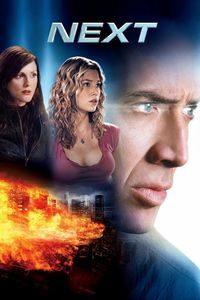
  • Next (2007)

    Next (2007)

    (In theaters, April 2007) Adaptations of Philip K. Dick stories are either SF classics or B-grade pap, and Next goes straight in the second category as a limp action film that never uses its premise to its fullest extent. Oh, Nicolas Cage is entertaining enough as a Las Vegas magician with a few special powers, but there’s little of note in the tedious film that surround him. The action scenes are by the numbers (all the best images are in the trailer), the special effects look substandard, and the ending takes back the entire third act. Boo! Though not quite egregiously offensive or awful, Next nonetheless leaves no lasting impression and will soon go languish in bargain bins all around the world, right next to Paycheck. Isn’t that just a waste?

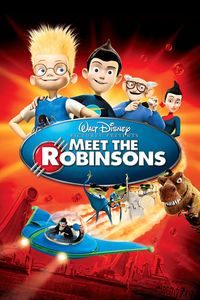
  • Meet The Robinsons (2007)

    Meet The Robinsons (2007)

    (In theaters, April 2007) This second Disney CGI effort after the uneven Chicken Little is a good step up for the new animation house: Not only is it a solid kid’s film, it espouses a number of worthwhile values and even presents a mission statement of sort of Disney itself. Not bad for a film dealing with a genius twin being carried away in the future. The pacing is brisk, the characters are surprisingly well-defined, the animation is fine and little of it is saccharine or maudlin. Better yet: the film often allows itself little forays in bizarre territory, such as when a dozen characters are introduced in ninety seconds, or when a family dinner turns into a cheaply dubbed martial arts sequence. Not exactly the kind of thing you’d expect from the fairly standard trailer. Perhaps the best thing about this film from a purely geek perspective is how it embraces the notion of technological progress as an extension of human values; that’s a nice SF attitude right there, and it does much to make me fond of the movie. (Heck, I even went back two weeks later to see it as a 3-D feature and still enjoyed it.)

  • Death Proof (2007)

    Death Proof (2007)

    (In theaters, April 2007) Seen as part of Grindhouse: “In comparison, Quentin Tarantino’s subversive Death Proof is far less even: it dawdles along on Tarantino’s usual verbal pyrotechnics, then delivers a jolt of exploitation adrenaline. But then the movie resets to another format, turning the cards and screwing around with audience expectations. It’s a ride and a half, perhaps too conceptually clever for its own sake.”

  • Planet Terror (2007)

    Planet Terror (2007)

    (In theaters, April 2007) Seen as part of Grindhouse: “Robert Rodriguez’s Planet Terror is by far the most entertaining film of the duo: A self-aware parody of zombie films, it’s crunchy-delicious in its avowed awfulness, and never misses an outlandish beat when it sees one.”

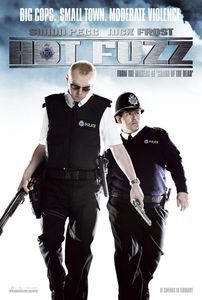
  • Hot Fuzz (2007)

    Hot Fuzz (2007)

    (In theaters, April 2007) The boys of Shaun Of The Dead are back with another genre comedy, and this time it’s both the quaint English countryside character comedy and the big old Hollywood action movie who successively come under fire. Simon Pegg is exceptional as the super-agent “Nick Frost” transferred from London (where he makes the rest of the force look bad) to a small village where nothing happens. Nothing? Well, OK, not nothing: maybe a continuous series of suspicious incidents… It’s all fun and surprisingly gory jokes until the two-third mark, at which point the film changes gears and truly tackles action movie clichés with a delirious energy. The solid all-star cast does little to distract from the fun. So far, this is the comedy to beat this year…

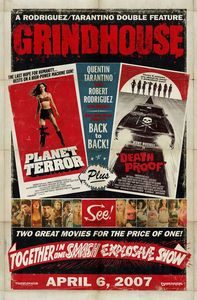
  • Grindhouse (2007)

    Grindhouse (2007)

    (In theaters, April 2007) For a movie industry that is renowned for not taking risks and always presenting the same thing, American cinema can still be surprising from time to time. Case in point: the wonderful cinematic experience that is Grindhouse, complete with two full-length movies, fake trailers, fake film damage, “missing reels” and intermission cards. (Canadian theatres even got the bonus trailer Hobo With A Shotgun). It’s long, it’s self-indulgent, it’s hyper-violent… but it’s a trip and one of the best prepackaged movie-going experience I ever had in a multiplex. The movies themselves aren’t all that special, but it’s the whole experience that makes the show. Robert Rodriguez’s Planet Terror is by far the most entertaining film of the duo: A self-aware parody of zombie films, it’s crunchy-delicious in its avowed awfulness, and never misses an outlandish beat when it sees one. In comparison, Quentin Tarantino’s subversive Death Proof is far less even: it dawdles along on Tarantino’s usual verbal pyrotechnics, then delivers a jolt of exploitation adrenaline. But then the movie resets to another format, turning the cards and screwing around with audience expectations. It’s a ride and a half, perhaps too conceptually clever for its own sake. Still, the entire package that is Grindhouse is a success and a great big gift to movie geeks. Whatever you do, don’t miss Don’t!

  • 253, Geoff Ryman

    Griffin , 1998, 384 pages, C$17.95 tpb, ISBN 0-312-18295-3

    (Preferably read online at http://www.ryman-novel.com )

    Now here’s an early-web curio that most may have forgotten: a “hypertext novel” in the purest sense, a story without much of a main plot but plenty of characters. 253 of them, in fact: the number of people that can fit in a London tube train. Every one of them to be described in 253-word long chapters. The train (we quickly learn) is doomed to a terrible crash, making the lives of its passengers seem even more poignant.

    High concepts such as “interactive novels” are often bandied about by amateur writers convinced of their genius and self-importance. Often, they’re just rehashes of cheap “make your own adventures” YA novels. Less often, they can take on deeper themes about the way we live stories (such as Kim Newman’s exceptional Life’s Lottery). Geoff Ryman isn’t just any writer (a fact that has grown even more obvious since 253) and his hypertext novel is considerably more ambitious than a piece of stunt writing.

    Inevitably, there are many ways to read 253. Paperbound readers will find a “paper remix” of the book available in bookstores. But that’s a very linear interpretation of the work: the fullest experience is freely available from the web site on which Ryman originally wrote the novel. Here you will find the introductory material, tragic conclusion and the 253 character profiles that form the backbone of the novel. Thanks to the hyperlinks, you will be able to jump from one character profile to another as they interact, building a fuller picture of what is happening aboard that doomed train. Navigating through the novel becomes your own interpretation of the book: Characters encountered in a particular context will have a different resonance later on when they’re seen from other viewpoints, perhaps irremediably affecting the experience of 253.

    For instance, I started reading 253 with the firm intention of doing it linearly: I would read all of the introductions, then all of the character profiles, then the conclusion. But only a few characters into the story, I started following the links that suggested a story. A young man with a crush on an older woman? Let’s click and see what she sees! What, she’s married and her husband is following her? Let’s click and see what happens! Ryman has been clever enough to include a number of such mini-dramas in the hypertext, and it’s not uncommon, following links, to go from one of those stories to another. In some ways, the free-form nature of 253 offers a clearer look at the way storytelling is wired in our brains: I found that I simply couldn’t resist the attraction of a suggested narrative. (Clearly, I’ve been spending too much time reading John “The World can be read as Story” Clute.)

    The number of characters also allows Ryman many fiction-bending possibilities, as it eventually becomes apparent (especially in the last car) that not every character is inhabiting the same world, the same genre or the same story. Some are lost in dreary domestic drama; others are stuck in a crime thriller; at least one would feel at ease in a science-fiction story (having discovered the proof of the entirely reasonable assertion that all males are slightly autistic), whereas a bunch of them eventually transform their train ride in a musical comedy. A “Tall, ravaged, nervous-looking middle aged man” named Geoff Ryman [Passenger 96] even makes an appearance as part of a roving comedy troupe. But even he isn’t the strangest character on-board: That honour could either go to another man studying his fellow passengers and writing the novel’s epitaph (Passenger 252), mysteriously blank character 70, “Pigeon-chested, pigeon-toed” character 121 (my personal favourite) or the ultimate passenger 253, who sends the entire novel into an entirely different direction altogether.

    It makes a unique reading experience: So many characters in such a condensed fashion, with unexpected links and a variety of lives worth experiencing. 253 often recalls the old joke about the dictionary (“great vocabulary, lousy plot”), but here the diversity and interconnectedness (or lack thereof) of the characters is the fabric from which the narrative is made. The train crash is the epilogue than caps off the story in tragic fashion, a sad note in what is otherwise an exhilarating experience (albeit occasionally tedious, when read too quickly). I’m half-glad, half-disappointed I got to experience it at home in front of my computer: In an ideal world, I might have done better had I read it on my PDA during my own lengthy bus rides to and back from work.

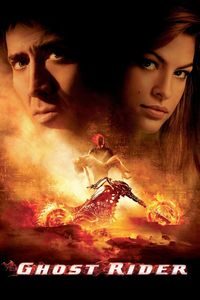
  • Ghost Rider (2007)

    Ghost Rider (2007)

    (In theaters, April 2007) Let’s name names, shall we? Writer/director Mark Steven Johnson, you are the one responsible for the insipid waste of time that is Ghost Rider. The failure isn’t all that surprising after the barely-better Daredevil: the only thing worth pondering is how Johnson was able to get another studio directing job after that train-wreck. Like its predecessor, Ghost Rider wastes every promising element it has, and compresses handily in a moderately interesting trailer that pretty much says everything worth knowing about the film. (The film itself is worse than anything you could imagine from the trailer.) Even the combined appeal of Nicolas Cage and the curvaceous Eva Mendes can’t rescue this turkey as it loses itself in a deeply predictable morass of clichés. The special effects are sub-standard, but it’s really the dull story that fails to engage. Save yourself the trouble: re-watch the trailer again and let this one go.

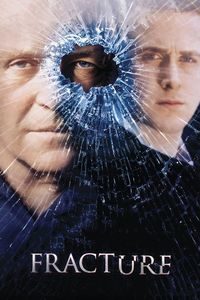
  • Fracture (2007)

    Fracture (2007)

    (In theaters, April 2007) At a time where out-of-left-field plot twists are becoming the norm in the thriller genre, it’s a refreshing change to see a competent howhedidit rather than a ludicrous whodunit. Here, there’s little doubt that Anthony Hopkins’ character shot his wife: the only question is how he was able to do it and yet do his best to escape every effort to convict him for the crime. Despite at least one huge whopper of a coincidence and a very convenient suicide, Fracture nonetheless moves along at a pleasant pace, in no small part due to Hopkins’ self-aware acting, and a decent turn by Ryan Gosling as a young cocky lawyer who learns better. Pay attention, and you will even hear a heartening bit of public service boosterism. Otherwise, well, Los Angeles is convincingly portrayed, the direction is efficient, and there’s a guilty thrill in looking at the brilliant antagonist as everyone plays according to his plan. While not flawless, or even truly memorable, this film will do as rainy afternoon entertainment.

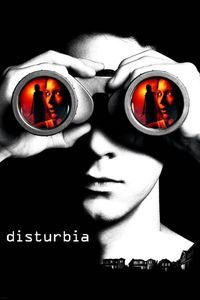
  • Disturbia (2007)

    Disturbia (2007)

    (In theaters, April 2007) I expected nothing from this teen Rear Window wannabe, so imagine my surprise at a well-done and reasonably entertaining teen thriller. Shia Lebouef emerges as a compelling lead in this film, and he’s ideally suited to the mixture of drama, comedy, romance and thriller that develops as Disturbia unfolds. There are some modern twists to the story, but the bare bones of a voyeur thriller are there, with an adolescent dash of mischief. It’s hardly perfect, what with the cheap plot twists, incompetent voyeuristic skills of the characters and manipulated dramatic twists… But it holds up to casual viewing, and ends up being much better than the cheap “Rear Window remake for teens” label might suggest.