Reviews

  • Hotel Rwanda (2004)

    Hotel Rwanda (2004)

    (In theaters, February 2005) Making a reasonably watchable film about genocide is a dicey proposition: You can be heartfelt and veer into melodrama, bashing the audience with massive quantities of guilt and disgust for the human race (hello Schindler’s List), or conversely treat the subject as nothing more than a great excuse for explosions, guns and righteous vengeance (I’m talking about you, Tears Of The Sun). This in an exception, though: by taking the path of a suspense film, canny writer/director Terry George manages to create a film that is both revelatory and, yes, fun to watch. Protagonist Paul Rusesabagina is your proverbial everyday man, stuck in an impossible situation without anything but his wits to keep the Rwandan genocide away from his hotel. Powerful stuff, but the way the film is constructed, as a series of mini-crises to be solved or else, makes its message accessible to a much wider audience. The suspense runs high, the horrors are shown crisply and the final message is one of quiet optimism: Bad things happen and most will try to pretend otherwise, but it’s possible to do good if you work at it. Competent technical credits and excellent acting from all players involved only make a good film great. Canadians will feel a strange sense of helpless pride at the sight of Nick Nolte as a Canadian UN peacekeeper (loosely modelled on real-life hero Roméo Dallaire) seething in impotent rage at the world’s inaction. The best thing about Hotel Rwanda is that it communicates this rage to us without feeling like a message film.

  • Hitch (2005)

    Hitch (2005)

    (In theaters, February 2005) My dating life needs all the help it can get, so Hitch had a pedagogic quality slightly beyond its simple entertainment value. Fortunately, it turns out to be one of the best romantic comedies of the past few years, a compliment that says more about romantic comedies in general than Hitch‘s actual worth. The originality of the premise alone is worth a look: Nominally paying attention to romance from a male perspective (at a time where romantic comedies are aimed straight at women), Hitch depends on the considerable charisma of leading-man Will Smith as a “Date Doctor” teaching hapless guys like me the proper way to woo women. It’s an excuse for good gags, of course, but also an interesting way to jump-start twin romantic plot-lines that don’t depend on silly love triangles to work. (Indeed, the disappointing third act reaches it nadir when it tries to use the “other man” plot device for a few moments.) Will Smith is as appealing as ever; perhaps one of the few actors working today able to pull off the required empathy/self-confidence shtick required to make this character work. Eva Mendez makes for a capable foil as another super-powered character who has to be convinced of the value of romance in order to fall for him. If the film has a principal flaw, it’s that it fails to exploit this “stronger characters require stronger romance” thread. Well, that and the fact that it become more and more conventional as it goes along. But one could use Hitch as a gateway for a discussion of romantic comedies without scratching the surface of why this is an enjoyable film for both males and females. Funny performances (with particular props to the irresistible comedic timing of Kevin James) enhance a good but wasteful script, and the result is more than tolerable.

  • Russian Spring, Norman Spinrad

    Bantam Spectra, 1991, 567 pages, C$27.50 hc, ISBN 0-553-07586-1

    Read this:

    “The United States… had let the dollar drop like a stone against the ECU in order to try to devaluate its enormous external debt, was reinvesting its capital and excess military capacity in Latin America… and loud voices in the American Congress and elsewhere had started clamoring for debt renunciation and even expropriation of Common European holdings in the States, none of which exactly assured Americans a warm welcome in the metropoles of Common Europe. Besides which, with the dollar so far down against the ECU and all the currency restrictions on American tourists…” [p.86]

    Replace ECU with Euro and Latin America with Middle East, and the above sure reads like a news headline, doesn’t it? Then how about the fact that it was written sometime in 1990-1991?

    Norman Spinrad may have had guessed a number of details wrong, but the future described in his 1991 family epic Russian Spring is a great deal more familiar today than anyone would have guessed at the time. In this novel, America turns its back on the world and on civilian high technology, invades most of Latin America, blocks its borders and indulges in xenophobia. Meanwhile, Europe -led by a post-communistic Russia- takes the lead in space technology and personal freedom.

    As I said; creepy foreshadowing, isn’t it? Spinrad may not have been aiming for much more than a contrarian reversal of roles, but our reality has a way of being even stranger than we can imagine. It’s not a perfect one-to-one correspondence but it’s close enough to be unnerving. (In Russian Spring, the ex-Soviet republics haven’t yet seceded in independent countries, a fact that plays heavily in its conclusion –even though it also features Ukrainian election heavily influenced by Americans!)

    The real protagonist of Russian Spring is Jerry Reed, an engineer courted by Europe to lead an ambitious aerospace project. There’s one catch, though; America won’t stand for his defection and demands Reed’s passport, stranding him outside the US. Things are resolved, somewhat, by the arrival of a Russian girl, Sonya Gargarin, who is in a position to make a complex deal to allow them both to stay in Paris.

    But that’s not the end of the story. Russian Spring evolves over thirty years, as tensions rise and fall between Europe, America, Russia and the rest of the world. Four main characters over three decades barely qualify for the title of “family epic”, but Spinrad’s novel has an ambitious sweep that has the feel of a big big story. Jerry Reed’s dream is to get into space, but at what cost?

    There are many thing to love and admire about Russian Spring, but perhaps the best is the combination of political complexity with good old-fashioned SF spirit. The post-cold-war balance of powers and forces between old allies and enemies is skillfully developed through characters with a lot to lose from even the slightest power shifts. Readers of political fiction ought to find something worthwhile in this novel, especially today.

    But at the same time, you have thank Spinrad for using SF’s traditional fixation on space exploration as a way to bring all of humanity together and rise above petty squabbles. This is high-grade techno-optimism and Russian Spring, fourteen years later, offers a suitable prism through which we can see a way out of this crazy “war of terrorism”.

    I have my own reservations about the book (the rise of a character named Wolwowitz -of all names!- is dicey, and so is the way two gratuitous accidents precipitate the entire conclusion), but there’s a lot more good than bad in this unexpected, largely forgotten gem. Read it today, because it’s never been more relevant. Still not convinced? Read this:

    “President Carson… is a schmuck. If it talks like a schmuck, runs the country like a schmuck, and surrounds itself with other schmucks, it probably is a schmuck, even if it wasn’t cruising this poor screwed-up country for another international bruising like the biggest schmuck of all.” [P.397].

    Hmmm.

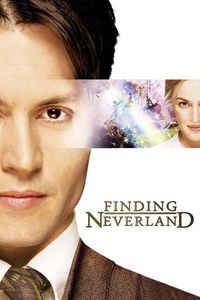
  • Finding Neverland (2004)

    Finding Neverland (2004)

    (In theaters, February 2005) I wish I could be mad about this film, but there’s something to be told about truth in advertising. Everything I’d seen or heard about this film -premise, trailer, poster- screamed “boring”, and it took the official Oscar nominations to make me see the film. While certainly not bad, it’s certain long and boring. The “true story behind the classic” shtick has been done, better, by Shakespeare In Love, and it takes only one errant cough to see where this film is going. I suppose that Peter Pan fans will get a lot more from this film than I did. Even at 106 minutes, Finding Neverland still feels like a slug. I can’t fault the technical side of the film nor the acting of Johnny Depp and the rest of the cast. On the other hand, the script has me wondering: Even though it’s supposed to be a celebration of imagination, the way that Depp’s character simply recycles everything he hears tends to diminish the role of the writer’s creativity. Oh well; if ever I saw the ideal target audience for this film, it was the three nattering ladies in front of me, who seemed to delight in even the tritest plot developments. Let them buy the DVD and torture their grandchildren with it.

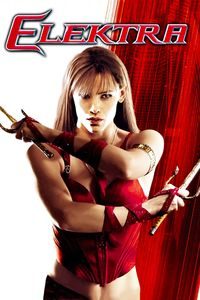
  • Elektra (2005)

    Elektra (2005)

    (In theaters, February 2005) Let the opening monologue be a warning regarding the quality of Elektra‘s writing: “obvious” doesn’t do it justice, though “lame” is closer to the mark. The following ninety minutes are rarely better: this is a superhero film that manages to make Daredevil look good in comparison. Oh, sure, the cinematography has one or two moments of interest and Jennifer Garner has a compelling figure. But that won’t be much of a comfort once the clichés start lining up, from the beautiful-but-mentally-disturbed heroine to the Asian Gang to the Reluctant Assassin. Worse is the half-hearted treatment by director Rob Bowman, who is directing far more for the paycheck that the audience’s enjoyment. Elektra makes a lesbian kiss dull, prolongs meaningless fights far past the point of annoyance and screws up even simple special effects. Everything about the universe of this film rings false, and nothing makes it even remotely interesting. It’s somewhat of a defeat for me, easy-to-please fan of bad fantasy and good-looking women, to struggle to find something of value in this film. Let’s just mention Jennifer Garner once more and blandly state that she deserves better.

  • Constantine (2005)

    Constantine (2005)

    (In theaters, February 2005) It took ninety seconds and the non-revelation of a Nazi flag to make me warm up to the film, and nothing that came after that could shake my happy contentment. Sure, the plot is just good enough to make us wish for something better. Sure, this comic-book adaptation is an abomination for fans of the original Hellblazer. Sure, the supernatural eyeball kicks are thrown into the film without regard for coherence or plausibility. Sure, you may not like Keanu Reeves constrained performances. But I do, so ha. Plus, I like Tilda Swinton and Rachel Weisz even more, so I’m not complaining. The upshot is that Constantine is pleasant enough for its entire duration despite a few lengths toward the end. Hey: I’m such a visual effects film geek that I’m likely to enjoy anything that has a whiff of competence. With this first film, director Francis Lawrence delivers a self-assured piece of visually ambitious supernatural suspense. It’s often very funny (and not in an obvious catchphrase kind of way, more in an offbeat Satan-in-a-leisure suit fashion) and just as often weird enough to be fascinating. Not a classic (nor even the best possible way to deal with the elements assembled here), but more than good enough to warrant a look.

  • Closer (2004)

    Closer (2004)

    (In theaters, February 2005) Two men, two women and a full-contact emotional destruction derby: Closer is one mean piece of work best appreciated as a performance showcase than anything profound on the nature of love. For one thing, keep in mind that this is an adaptation of a stage play: The unusual structure of the film, following short dramatic moments over the course of several years, is a direct off-shot of this, and so it the script’s reliance on dramatic dialogue. (Closer doesn’t spend much time showing us what happens when things go well for months at a time). As an excuse for showy acting, it’s nearly perfect: all four main players do well, but Clive Owen steals the show (as usual) over Natalie Portman, Jude Law and Julia Roberts. Still, don’t read too much in the characters: “What are you, twelve?”, says one at the beginning and so it’s difficult to imagine that we’re seeing the actions of anything but the puppets of a writer. If there are some terrific dialogue scenes throughout the entire film, it’s hard to connect with the impulsive actions and juvenile attitudes displayed by the characters. Closer, ironically, rebuffs any attempt to come closer to the characters: they are best admired, like the script, as a performance piece.

  • The Well of Lost Plots, Jasper Fforde

    NEL, 2003, 360 pages, C$24.95 tpb, ISBN 0-340-82592-8

    There’s never a dull moment in the life of Thursday Next, and that serves both as a plot description for The Well of Lost Plots as well as a plotting technique for Jasper Fforde. In this third volume of his enormously amusing humour/mystery/fantasy hybrid, Fforde continues to throw everything he can imagine at us grateful readers, and if he stretches things perhaps a tad too far in this entry, it easily remains a must-read for everyone who loved Next’s first two adventures.

    If you haven’t read The Eyre Affair and Lost in a Good Book, you may want to start there and come back after. Events in The Well of Lost Plots begin right after those of the previous book, and little time is spent catching up: If you remember the conclusion of the second novel, Thursday Next has decided to retreat from the alternate reality in which her husband has been erased from history and wait out the birth of her child in a novel still under construction. (Hey, don’t ask if you haven’t read the first two books.) The story picks up weeks later: Thursday is living the quiet life of a secondary character, but trouble is brewing in Text Grand Central, what with the disappearance of several Jurisfiction agents and the imminent introduction of UltraText[TM] technology.

    Seemingly proceeding on the principle that you can’t have enough of a good thing, Fforde sets the vast majority of The Well of Lost Plots inside the fictional universe of books first glimpsed in the first volume and defined in the second one. At the exception of two chapters set in the real world, all of this third tome is spent shuttling back and forth between novels and the Grand Library linking all of them together. As you would now expect from a Fforde novel, subplots multiply in an attempt to show us as many cool things as possible. We go deep in the “Well of Lost Plots” to find out how stories are constructed, how characters are defined and how unsuccessful fictions are slated for destruction. Amusingly enough, Fforde’s mythology reduces authors to mere transcribers, an ironic reversal when you compare it with the hundred of stories portraying authors as the end-all of literary creation, from Misery to Wonder Boys.

    But there’s a story of sorts behind it all, a twisty maze of double-crossings involving renegade Jurisfiction agents and an attempted takeover of Text Grand Central. Beloved characters die, Next investigates, everyone is a suspect and it all finds a somewhat satisfying deus-ex-libris ending at the 923rd Annual Fiction Awards. Meanwhile, Next herself has to deal with the aftermath of her husband’s eradication… or simply forget about it.

    As with Fforde’s first two books, The Well of Lost Plots is aimed at enthusiastic readers, and works on quantity as much as quality; there’s simply so much stuff to enjoy that it’s almost impossible to pause and reflect. In fact, this third volume starts to show the limits of Fforde’s premise: While all is well and fun, there’s a clear sense that this is almost too much; by setting almost all of his story inside the fuzzy boundaries of explicit fiction, Fforde also fudges with rules and limits. Anything can happen and pretty much everything does. Readers may start to yearn for the relative simplicity of Next’s native Swindon.

    There are also a number of troubling inconsistencies. Whereas Lost in a Good Book played around with the idea that Next was as fictional as the rest of the characters, The Well of Lost Plots makes her an Outlander whose reality is undisputed. The death of one character seems to contradict the epigram at the beginning of the second volume’s Chapter 29. But Fforde may have something else down his sleeve for Book Four, so let’s not be too quick to judge…

    Still, there are small problems compared to what you’ll get from the novel. Gems abound, such as the Wuthering Heights rage counselling session; the vision of all the other Grand Libraries; the way Generics are transformed in authentic Characters; the fantastic vyrus-fighting action sequence; the cameo appearance by Gully Foyle (Jurisfiction agent for the SF genre, as it turns out); the hilarious way Jurisfiction decide to deal with a shortage of “u”s. Wonderful.

    Of course, this book practically sells itself to Fforde’s fans, who probably pre-ordered the book as soon as it was announced. Onward to the fourth volume of the series, Something Rotten.

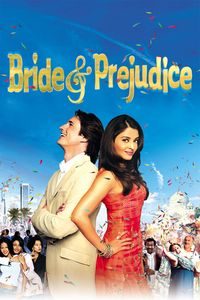
  • Bride & Prejudice (2004)

    Bride & Prejudice (2004)

    (In theaters, February 2005) This, all things considered, isn’t such a great film: As a hybrid adaptation of Jane Austen’s Pride and Prejudice in an Indian/Western setting, it wastes its potential. The dialogue is ordinary, the Darcy character is bland, the acting has rough edges and the third act seems thrown together. But you know what? Scarcely anything of that matters once the film is over and it makes you feel as if the world is a better place. Hot on the success of Bend It Like Beckham, director Gurinder Chadha delivers a clever blending of Indian, British and American culture, playing both to Eastern and Western crowds through its adaptation of Bollywood and Hollywood movie conventions. The tone is fast, colourful, breezy and definitely playful (Bride & Prejudice tickles the fourth wall at least twice, calling the purpose of the first musical number and, later, double-staging a fight in front of a movie screen.) Aishwarya Rai definitely lives up to her advance billing as “the world’s most beautiful woman”: her universal appeal shines brightly every time she’s on-screen, despite stiff competition from a number of other gorgeous Indian women. While there’s an energy lag in the third act (probably linked to the dearth of musical numbers in the film’s second half), the film ends on a suitably high romantic note, leaving you with the impression that the world is in better shape at the end of the movie than at the beginning.

  • Be Cool (2005)

    Be Cool (2005)

    (In theaters, February 2005) John Travolta can ooze cool effortlessly, and this sequel to Get Shorty seems built around that fact. It’s deceptive, of course: the seamless direction of F. Gary Gray manages to keep dozens of plot balls in the air at once without it seeming difficult, but there’s a number of complications under the surface. The casting is impressive, but standouts include The Rock (playing against type), Christina Milian (in what could be a star-making turn as significant and Jennifer Lopez in Selena) and tons of cameos from all areas of Hollywood. It’s all good fun, from a film that really doesn’t want to be taken seriously. There are sour notes, of course: The insufferable Vince Vaughn, the vapid nature of the pop-culture references and the changes to the original book. In fact, those changes are so numerous and significant (simplification of characters, changes in relationships, hard rock music to vapid hip-hop) that they would almost be worth getting excited about if it wasn’t for the fact that the book keeps harping on how its own adaptation will do exactly that. Somewhere, Elmore Leonard is laughing and cashing his checks.

  • Assault On Precinct 13 (2005)

    Assault On Precinct 13 (2005)

    (In theaters, February 2005) I can’t tell you how this remake compares to the original John Carpenter film, but as its own little suspense film it’s not too bad. While it’s a waste to see actors like Ethan Hawke, Gabriel Byrne and Lawrence Fishburne slum in B-movie roles like this, their talents are appreciated –especially in Fishburne’s case, as he lends a certain majesty to his role. The basic premise of the film hearkens back to westerns (what with an isolated fort and attacking savages) but the camera techniques are fully modern, complete with nervous editing and a hopping camera. At least there are some decent twists in the bargain. Unfortunately, little annoyances abound, such as how the “snow” never melts and all characters seem perfectly comfortable in a station that’s missing half its windows on Christmas’ Eve. Still, it doesn’t get really stupid until the end, where characters run out in an industrial area to end… in a forest. Whaaat? Oh well: for the longest time Assault On Precinct 13 at least has the look and feel of a perfectly respectable B-grade thriller. It will depend on your degree of indulgence that day.

  • Thunder in the Deep, Joe Buff

    Bantam, 2001, 465 pages, C$9.99 mmpb, ISBN 0-553-58240-2

    The problem with most military thrillers isn’t with the “military” part. Often recruited from active or retired ranks, military fiction writers have the technical details down pat. Given them the slightest excuse for a fictional war and they’ll be able to describe in telling detail how men will fight. What’s usually missing is the stuff fiction thrives on: Characters. Engaging writing. Adequate pacing. Dramatic build-up. Your typical military thriller can be mesmerizing if it’s written with competence, but too many such novels are published without much attention to traditional story-telling skills.

    Joe Buff’s Deep Sound Channel was a submarine thriller that floated in the deep inversion layer between a good thriller and an unreadable thicket of military details. Saddled with a trite plot, unconvincing characters, overwhelming jargon and spots of awful prose, Buff’s debut model nevertheless found an audience thanks to its reasonably engaging depiction of near-future underwater warfare. Bad fiction buoyed by good ideas, in the grand tradition of military techno-thrillers everywhere.

    Things haven’t changed much in the sequel Thunder in the Deep, but at least they’ve evolved in the right direction. Once more, we find ourselves aboard the USS Challenger, a new “ceramic-hulled” attack submarine stuck in the midst of a future war opposing the English-speaking bloc versus Germany and South Africa. The reasons behind the war are better explained here than in the first book, but they don’t make it any less ludicrous. But, as ever, let’s grant the author one big assumption and hop along for the ride.

    This time around, protagonist Jeffrey Fuller (ex-SEAL, current submarine captain and all-around good guy) is charged with a desperate mission in two parts: First, rescue the crew of a damaged American submarine. Then (surprise), continue on to the shores of Germany to launch a surprise attack against a research facility building unstoppable cruise missiles. Aboard for the ride is Ilse Reebeck, the renegade South-American oceanographer who doubles as the series’ tangential love interest.

    Plot-wise, Thunder of the Deep is almost identical to Deep Sound Channel: A mission, a submarine fight getting there, a land-based raid and another submarine battle coming back to base. The end. But don’t despair yet: Buff hasn’t messed with his formula, but he has learned a few other tricks. Simply put, Thunder of the Deep shows some improvement in the basic art of storytelling: Characters are slightly more complete, the jargon is turned down, the suspense is better-defined, the battles don’t seem as interminable as in the first book and novel’s overall impact is generally stronger. Small wonder, then, that when French editor Fleuve Noir decided to translate Buff’s fiction, they began with this volume rather than the first one.

    It also helps that Buff’s strengths are carried undiminished in this volume. Once again, Buff (a civilian expert in military submarines; check his web site) portrays underwater warfare as a complex set of interaction between physics, geology, weaponry and plain old human psychology. The impressive climax of the book takes place around an underwater volcano, with both submarine captains making the most out of a desperate stalemate.

    This being said, there are still significant problems with Thunder in the Deep, enough to keep this novel strictly for readers with an established interest in submarine warfare. As savvy as Buff may be in military matters, his political sense simply doesn’t measure up. The psychology of the book’s antagonists is still ridiculously simplistic: All native Germans, we’re shown, seem to be partisans of the war despite the tactical nukes flying left and right, cheering whenever their reichkommandant shows them war news footage. Ahem: Countries are not monoliths and enemies are not stupid.

    But generally speaking, Thunder in the Deep is an adequate military thriller, one that should slightly expand Buff’s readership. Best of all is the sense of improvement in the series, one which bodes well for Crush Depth, the follow-up Jeffery Fuller adventure. I’m not a big fan of military series in general, but since I’ve got a copy of the next book on my shelves, well…

  • The Second Angel, Philip Kerr

    Henry Holt, 1999, 392 pages, US$25.00 hc, ISBN 0-8050-5962-8

    There are many ways to explain how much I hated Philip Kerr’s The Second Angel, but the most succinct one can be boiled down to only one word: Footnotes.

    Sure, you say, footnotes can have a place in fiction. I won’t argue the point, especially, when I so recently lauded their use in Mark Z. Danielewski’ House of Leaves and Jasper Fforde’s Lost in a Good Book. But Philip Kerr isn’t writing post-modern or amusing fiction: The Second Angel tries to be a mystery/Science Fiction hybrid, with the genre plot serving as a template on which to hang erudite musings on the nature of blood. In 2069, the story goes, a devastating epidemic called P2 has contaminated a good proportion of the population, and clean blood (which can be used to cure the disease through transfusion) has become an valuable resource, so valuable that it’s used as collateral and “blood banks” (har-har) are now better-protected than money banks.

    From its very premise, The Second Angel doesn’t even make sense: You cannot cure a blood disease by simple transfusion: given that blood is produced in the bone marrow, transfusion is, at best, an expensive reprieve. (Practical proof of this assertion is to be found in the number of AIDS victims nowadays) Kerr himself acknowledges this plot hole when a minor character is diagnosed with a different type of blood problem and transfusion is seen as an expensive way to delay the inevitable. But then he still goes on to base the rest of the novel on the idea that P2 can simply be cleaned away through a full transfusion. This is simple contempt from the author toward his audience, and once you latch on to the idea that Kerr thinks you’re a moron, supporting evidence is everywhere to be found.

    Which brings us back to footnotes. The novel contains a copious number of them, inserted mostly for pedantic purposes, explaining things and historical details to the reader. At best, most footnotes bring nothing noteworthy to the reading experience. At worst, they’re simply dumb: Is it really useful to put a footnotes at “intel1 workers” if the footnote just explains “1: intelligent”? Worse: the footnotes are presumably inserted by the omniscient 2069-era narrator, intended to a contemporary audience. Alas, these footnotes (Hey! “Intel worker” means “Intelligent worker”!) would be strictly useless to a circa-2069 reader.

    No, the footnotes are just the most visible aspect of Kerr’s worst trait as a writer: He’s not a storyteller as much as he’s a lecturer who’s openly disdainful of his audience. SF readers will have tons of fun with The Second Angel… not because it’s good, but because it’s so inept. Yet another example of a writer barging into a genre without doing any homework, Kerr painfully ignores SF’s basic storytelling techniques and the result is awful narration throughout the entire book: “As you know, Bob”-type explanatory conversations pepper the narrative until it overwhelms it, and the prose style distrust the audience’s intelligence so much that it takes pains to explain every single detail in exasperating detail. Rip a page off of this novel (better yet; rip them all off) and compare it to the self-assured storytelling of a true SF writer like Kim Stanley Robinson or Charles Stross, and Kerr looks like an arrogant fool who can’t be bothered to tell a story properly.

    Never mind that his story doesn’t even hold interest in a strictest thriller-genre template: If you want complications, twists or even plausible motivations, you’re better off in a novel that’s not nearly so drunk with its own false erudition. Here, everything proceeds as planned without much in way of unusual complications. The overdone antagonist (How overdone? How about “necrophiliac rapist”?) dies well before the climax. Characters think nothing of nearly killing themselves to fake malfunctions that could be hacked through improper telemetry. After the run-through, the end heist is an exercise in tediousness. Even the framing device is a seriously lame one, with a revelation that’s more exasperating than illuminating.

    That’s not even mentioning the actual mistakes every half-dozen pages. Kerr sets out to write a novel packed with scientific details, but then he proceeds to screw up half of them. You could wipe the floor with my knowledge of advanced biology, but it doesn’t take a Nobel prize winner to figure out that a character can’t have his hair turn white in a matter of minutes. (Nor is this an oversight: Kerr mentions it two or three times afterwards.) Stupid physics mistakes betray Kerr’s lack of basic common sense over and over again, from a false need for super-refrigeration units for space travel (useless even today) to an idiotic distinction between liquid and solid excreta as a source of space hazards. (Here’s a hint, Kerr: Water freezes) The hyperbaric stuff doesn’t make a single PSI of sense. The search query stuff is hilarious. The novel even takes a trip in psychic lalaland near the end, with an easily-guessable plot development stolen straight (and badly) from Larry Niven’s “Gil the ARM” short stories. And let’s not get into the economics of The Second Angel. Not when blood is a renewable resource. Not when blood problems are still a problem despite fairly strong and widely-available nanotechnology. Not when vault have “labyrinths” to deter thieves (You’d think that the authorized users would want a way to quickly get in and out of the vault) Not when… oh, forget it: This, despite the cut-and-pasted erudition and the fancy vocabulary, is a deeply dumb novel.

    Worse; it’s a deeply dumb novel from someone who think he’s much more clever than the very readers who are supposed to buy his stuff. Condescension and disgust drips from every page of The Second Angel like water from a leaky drain: Imagine Kerr as the worst teacher you’ve ever had, haranguing his so-designated inferiors from a pulpit, mistakes infusing every second statement he makes. You can read some novels and not understand them; you can read some novels and not care for them; but only a select few novels provoke fully-informed loathing, and Kerr’s pathetic attempt at a SF thriller falls squarely in this category.

    Some may protest that these criticisms are unfair, that Kerr was attempting a philosophical reflection on the nature of blood, that The Second Angel is best seen as a high-tech fable. To which I have to answer that if what you want to write is fuzzy philosophy, you shouldn’t be peppering your novel with technical details explained in luscious detail. That’s just asking for trouble, and a dissection from readers with a far more accurate sense of reality. It doesn’t help that SF, as a genre, has already gone over the metaphorical and literal consequences of AIDS-like diseases… at least a decade before Kerr set out to write his own take on things.

    Keep in mind that this isn’t the first Kerr novel to fail so spectacularly: While I could tolerate A Philosophical Investigation on its own terms, The Grid was an atrocious mess of a techno-thriller whose lack of success is only exceeded by The Second Angel. If nothing else, Kerr’s monstrosity can be dissected as case study of the worst mistakes in writing SF. The back cover blurb of the hardcover edition says that the novel “assaults your ignorance”: you can’t make up quotes like that.

    It’s certainly okay to hate him as an author. After all, he doesn’t think much of you as a reader.

  • Deep Sound Channel, Joe Buff

    Bantam, 2000, 401 pages, C$9.99 mmpb, ISBN 0-553-58239-9

    I’ve been reading military techno-thrillers for fifteen years now, so I shouldn’t be surprised at the peculiarities of the sub-genre. And yet I find the overspecialization of some authors to be a constant source of wonderment. The united markets of America are probably the only publishing environment in the world big enough to be able to sustain a handful of writers specializing in, say, submarine thrillers. You may already recognize the names of Mark Joseph, Michael DiMercurio and Patrick Robinson. Now you can add Joe Buff to this list of naval experts turned novelists.

    Deep Sound Channel is the first in what promises to be a long series of naval adventures set during a future war between English-speaking Allies and a Berlin/Johannesburg Axis. Never mind that the antagonism is as sketchy as it’s implausible: The point here is to have an excuse to study future submarine technology in combat situations. The Russian navy is on the rocks and the Chinese one hasn’t impressed much over the past few decades: Why not take it all the way into fantasy-land and hand-wave a resurgent Germanic Empire? Let’s just be lenient and let this one pass.

    What we’re quick to figure out is that circa-2011 wars are as nasty as the author wants them to be: This conflict is waged with so many tactical nuclear weapons that skyscraper-set snipers have a few at their disposal, and SEALs planning a raid can reliably expect to use a leftover nuke to cover their traces through excessive vapourization. Ahem. Letting slide the political ramifications of a tacnuke-driven engagement (hey, it’s nice to deal with a psycho enemy that doesn’t care about public opinion), let’s just say that this brings both an extra edge and an extra yawn to the whole novel: Sure, there are bigger explosions throughout the novel. On the other hand –where’s the buildup?

    It’s not as if the plot is particularly complex: Six months after the beginning of the hostilities, XO Jeffrey Fuller is asked to assist on a daring mission on South-African soil: A team of SEALs sets off to destroy a biowarfare facility, and Fuller’s ship (the ultramodern Virginia-class “ceramic” attack submarine USS Challenger) is the only one up to the task of bringing them there and back. There is, as you may expect, an obstacle: The crew of the Voortrekker, another higher-tech German submarine. As this is a military adventure, you can figure out the rest of the story.

    There are, to be blunt, plot problems throughout the book and a number of characters straight out of lazy characterizations class. Protagonist Fuller is too soft, too kind, and yet ready to jump off his submarine for a SEAL mission at the drop of a ping. The enemy captain often cackles in mad attempts to outdo B-movie dialogue, doing tremendous damage to the credibility of the novel. (“Idiots! Did they really think their engine tonals would be masked against the floes … Fools! Our merchant marine masters would never make that error. The Americans are soft, Gunther, I’m telling you, and desperate.” [P.78] and later, less triumphantly: “I underestimated the Americans. I took too much for granted, and I fell for their clever tricks. So be it, but I swear to you, no longer. Next time we meet Challenger, she and her crew will die.” [P.377]) As is the case with specialized military fiction, jargon and tedious procedural details (almost invariably discussed by professionals who should already know this stuff) often overwhelm the flow of the story.

    But criticizing Deep Sound Channel on literary qualities would be misleading, for the true worth of the book lies elsewhere. Joe Buff knows his stuff, and his first novel brings something new to the military thriller field by exploring the cutting edge of submarine warfare, without falling over in Science Fiction. For those of you sub-fans weaned on Tom Clancy’s Hunt for Red October, (already more than twenty years old!) this novel is your wake-up call: Things have evolved since then, and Deep Sound Channel is crammed with new gadgets, nifty tactics and neat ideas. There’s an amazing amount of oceanographic information enmeshed with the military stuff, and the result is both clever and interesting. Despite my lack of enchantment with the narrative qualities of the novel, I often found myself finding something new in the combat passages. This cutting-edge material is the true reason to read Deep Sound Channel, not the characterization or the quality of the prose.

    In fact, it’s good enough to make me look forward to the author’s second novel (Thunder in the Deep). Buff’s writing skill can improve, and if they start matching his ideas… watch out.

  • Stranger than Fiction, Chuck Palahniuk

    Doubleday, 2004, 233 pages, C$35.95 hc, ISBN 0-385-50448-9

    Chuck Palahniuk is justly famous for his weird fiction, but as a hot young writer he has also earned a place in every hip magazine editor’s Rolodex as an ideal writer of weird nonfiction. Who else but the writer of Fight Club to go and take a look at amateur wrestling? Who else but the writer of Survivor to describe sessions where people try to sell their life story to Hollywood producers? Who else? Over the past few years, Palahniuk has accumulated more than a dozen nonfiction credits in magazines such as Gear, Black Book, Playboy or The Los Angeles Times.

    Now, Doubleday has packaged a real treat for fans of Palahniuk’s fiction: A collection of “true stories” (as the sub-title says) culled from Palahniuk’s work and Palahniuk’s life.

    Some articles are straight-up reportage pieces. A look at a raunchy festival that would make fundamentalist reach for their torches and pitchforks. A few days amongst college wrestlers, cauliflower ears and all. Profiles of contemporary American castle-builders. A backstage pass at a combine demolition derby. Unusual subjects, but Palahniuk’s unconventional style works well in presenting you-are-there pieces. He even manages to make nuclear submarine living interesting and unusual to a steady reader of submarine thrillers. There’s even a curious sympathy to it all; by reporting without editorializing much, Palahniuk allows for the obvious conclusion that there are just other modes of normalcy in our big and diverse world.

    Other pieces are interviews with people famous or infamous. Imagine Palahniuk’s choppy and gimmicky style used to do a profile of actress Juliette Lewis. Imagine the author of Invisible Monsters interviewing shock-rocker Marilyn Manson around a Tarot deck, then avoid whiplash as you consider a profile of conservative pundit Andrew Sullivan. In these pieces, Palahniuk’s acts less as a interviewer and more as a listener, an observer.

    But other pieces are much closer to autobiography, as the line between journalism and confession is crossed over and over again, as Palahniuk experiences gonzo journalism to a degree that would surprise even Hunter S. Thompson. Who else would dress up as a dog for a walk through the city, bulk up on steroids, not follow instructions on a bottle of hair depilatory and then write it all up? For Palahniuk’s fans, these pieces are the real substance of the book: They reveal that author as one of his characters, intentionally or not fashioning an image much alike that of his protagonists.

    For those fans, the book’s slim eight-pages introduction is almost worth the price of the book. Palahniuk tackles the American Dream (“Getting away from people”), his cyclical writing process, the nonfiction component of his novels and laces it all with introspection and tales of how his novels were written. It doesn’t really get any better than this, but it sets the tone quite well. After all, Stranger Than Fiction is part autobiography, what with Palahniuk dealing with his sudden fame, his experiences in Hollywood and the murder of his father. An interview with Amy Hempel (available online) says more about Palahniuk’s literary methods and lineage than about Hempel’s books —though it may lead more than one reader her way.

    All in all, it’s an enormously entertaining, highly satisfactory book. It’s difficult to imagine how well-received it will be by people who can’t distinguish Palahniuk from Patterson, but it ought to please the fan audience quite well. The biggest problem with the book is endemic with non-fiction collections: Magazine articles are often commissioned with both a writer and a photographer: While the writer can obtain comfortable reprinting rights for the text of the article, photos are another matter entirely, and often an expensive matter indeed. So the articles in Stranger than Fiction don’t have any illustration, which isn’t a problem most of the time, but can be very frustrating: whenever you hit pieces about modern-day castles, combine demolition derbies or other visually intriguing subjects, the void can be annoying.

    But when you’re dealing with a writer like Palahniuk, the lack of images is almost irrelevant. Anyone who has read even one of his books knows that he’s more than capable to keep our interest with just his words. And so Stranger Than Fiction is a treat, a pure dose of the writer looking at the world without the artifice of fiction. It almost ranks as an equal to Palahniuk’s non-true stories.