Reviews

  • Pearl Harbor (2001)

    Pearl Harbor (2001)

    (In theaters, June 2001) When all will be said and done, the best two things about this Bruckheimer/Bay production will be A> The stunning centerpiece of the film, a 45-minutes-long re-creation of the attack on Pearl Harbor, and B> a renewed appreciation for the masterpiece that was Titanic. The main problem of Pearl Harbor is its structure; while we could have lived with the trite dialogue, it’s hard to remember fondly a film that makes you wait an hour for the big action scene, and afterward goes on for another hour. You begin at Pearl Harbor and you end at Midway; or you resolve all the stories during the attack, but you! do! not! do it like that. It doesn’t help that the leads are blander than bland (though Kate Beckinsale is cute, and her fellow nurses even cuter), the dialogue is atrocious (they could hear me roll my eyes across the theater) and that Michael Bay’s usually dynamic style here comes across as unbearably pretentious. (I laughed aloud at a revolving door shot that went on… and on… and on…) The result is a mish-mash of a film, a 45-minutes Home Theater showpiece mixed with an emotion-free romance that drags on for a full two hours. It’s just that once you’ve seen the explosions, you just won’t care about anything else. At least Titanic, for all its faults, felt like a genuine story that didn’t waste your time. Here, at least half the film is filler, including most of the celebrity cameos that could have been cut without a moment’s notice. (C’mon; did we really need the Voigt, Gooding or Aykroyd characters? No!) It’s hard to say if the film fails because it’s too ambitious or because morons wrote it. In any case, it’s a half-success at best.

  • The Out-Of-Towners (1999)

    The Out-Of-Towners (1999)

    (On VHS, June 2001) Midwest yokels come to New York City and are quickly out of their depth! How funnier can it be? A lot funnier, easily. Goldie Hawn and Steve Martin reprise their usual screen personae, adding nothing and screaming a lot with scarcely any indication of how good they can be in other types of roles. John Cleese is a hoot as usual. The various plot points are pretty much predictable in advance, and aren’t all that skilfully executed either. For a film about New York, there isn’t a whole lot of scenery. There have been worse films, there have been better films, so there isn’t any cause for concern if ever you pass by The Out-Of-Towners and don’t pick it up.

    (Second viewing, in French, on Cable TV, December 2018) Watching The Out-Of-Towners remake right after the 1969 original only underscores how much more slap-sticky is the remake. Gone are the more serious undertones and barely-repressed desperation of the original. Instead, we get Steve Martin and Goldie Hawn hamming it up as much as they can stand. The result actually is reliably funny, although unsubstantial to a point where I didn’t even realize I had seen the film seventeen years ago. One good point in favour of the remake: the much more active role given to the female lead — it sure helps that Hawn can be reliably funny on a dime. There’s a surprising cameo appearance from pre-America’s-Mayor, pre-Crazy-Pundit Rudy Giuliani.

  • O Brother, Where Art Thou? (2000)

    O Brother, Where Art Thou? (2000)

    (In theaters, June 2001) The problem with pictures made by the Coen Brothers is that you can’t comment them fairly after seeing them only once. Their latest, a series of adventures set in depression-era Deep South, is both exceptional and average, interesting and boring, witty and muddled. George Clooney exhibits considerable charm as always, playing a fast-talking shady character sympathetic enough to hold the film together. O Brother, Where Art Thou? is a film unlike anything you’ve seen before, with music you haven’t heard before and sight you’re unlikely to see again. The mixture of folk music, southern accents and gold-tinted visuals is far, far away from the current Hollywood aesthetics. As far as the story goes, however, some are bound to be disappointed; the film wanders a lot, like the three protagonists, and viewers are likely to remember individual sequences, not a common plot. As a comedy, it’s decidedly low-octane; a steady smile, a few giggles but few outright laughs. Parallels with Homer’s The Odyssey might be overstated, unless you want to impress your date.

  • Nuit De Noces [Wedding Night] (2001)

    Nuit De Noces [Wedding Night] (2001)

    (In French, In theaters, June 2001) Interesting but not overwhelming French-Canadian film dealing with pre-marriage jitters in a young couple due to wed in Niagara Falls. Not exceptional, but reasonably good as a romantic comedy—though its typical French-Canadianisms might not travel very well. The lead actors are wonderful, and there are a few interesting script/directing meta-fictional tricks that add to the fun.

  • Tooth Imprints on a Corn Dog, Mark Leyner

    Harmony, 1995, 216 pages, C$26.50 tpb, ISBN 0-517-59384-X

    When reading anything by Mark Leyner, the tagline from the HIGHLANDER film series come to mind: There can only be one. You might try to find similar authors, but even a carefully-blended mix of Thompson, Adams and Stephenson won’t even come close to the pure undiluted Leyner. His mixture of wide-ranging knowledge, go-for-broke recklessness and carefully-honed absurdity easily places him in a special position in modern humor writing.

    Though as of this writing I haven’t yet been able to manage acquiring a copy of Leyner’s breakthrough book My Cousin, my Gastroenterologist, I was first hooked on his follow-up novel, Et Tu, Babe? a hilarious portrait of the writer-as-megalomaniac. Reading this book after so many intensely boring genre novels was like discovering MTV after a decade of Masterpiece Theater. Mainlining with pure caffeine. Adding nitrous oxyde to your morning commute.

    Tooth Imprints on a Corn Dog is Leyner’s third book (well, fourth if you include I Smell Esther Williams, about which later.) and while it is in a few ways a let-down after Et Tu, Babe, there’s nothing wrong with an extra dose of pure Leyner.

    Part of the letdown is inevitable, going from the unified (if disjoint) narrative of Et Tu, Babe? to the straight-ahead collection of plays, short stories and gonzo journalism in this follow-up. It’s not that Leyner is best at novels (his longer pieces are really excuses to go from one hilarious vignette to another), but shorter pieces can’t depend on sustained jokes and long build-ups. Blah, whatever; there are still more jokes per square page here than anywhere else.

    The second issue here is that Leyner seemed to have grown up a little. Either that or I’ve become used to his style. Nah. If you take a look at Leyner’s first book, a 1983 collection of pieces entitled I Smell Esther Williams, you’ll find an unrecognizable -and nearly unreadable- Leyner. While each sentence has a kernel of comic effect, they don’t seem to relate to each other in any fashion, and the result is a hyperspeed mish-mash of quasi-epigrams that’s just impossible to read in any fashion. Tooth Imprints on a Corn Dog serves to show how much Leyner’s been working on his craft. There are very few incoherent passages (and those who are pass quickly) and Leyner shows that he’s more than able to sustain our interest for longer pieces (the play “Young Bergdorf Goodman Brown” is 80 pages long, and fun from start to finish)

    One amusing note; there appears to be some nonfiction content in Tooth Imprints on a Corn Dog, if I believe a few interview made by Leyner after the publication of the book. The problem is that they’re not identified, and probably unidentifiable. What I took to be one of the zaniest pieces in the book (“The Good Seed”, about -no kidding- a sperm bank located in the Empire State Building) is in fact a nonfiction piece with some high-octane extrapolation thrown in. Good luck trying to find the rest of the nonfiction, if there’s any more.

    If I’ve succeeded in scaring some of you away from Leyner’s stuff, good; Not everyone can handle his books. It’s not enough to acknowledge that Leyner has no compunction about writing with his fantasy date with Princess Di, insert hard-core pornography in his pieces, recommend bringing your kids to practice extreme sports such as drag racing or committing crimes in order to become more attractive to the opposite sex. You’ve got to embrace his weirdness and make it your own. If the idea of loving, exemplary parents driving their kids to murder somehow strikes you as interesting in any way… well, welcome to the club. You’ll love the required reading material.

  • New York Stories (1989)

    New York Stories (1989)

    (On VHS, June 2001) For commercial reasons, the short-film category never makes it in theaters, but when you can depend on Scorsese, Allen and Copolla to deliver a short film each, well, suddenly a theater short-film anthology doesn’t feel so weird after all. It’s a fair assessment to say that there’s probably a story for you in the three, whatever your tastes are. The first film, Scorsese “Love’s Lessons”, is undoubtedly the most artistic, the most ambitious and also the longest. It’s the type of film that suggests a deeper meaning, whether there’s one or not. After that, we’re off to Copolla’s “Life without Sophie”, a charming tale that somehow seemed to constantly refer to another story. Not a whole lot of substance, but certainly the most romantic tale of the three. We end with what will either be your favorite or your worst short film, Woody Allen’s “Oedipal Wreck”, which takes the concept of the all-seeing mom to its logical extreme. You’ll howl or you’ll grit your teeth.

  • Mean Streets (1973)

    Mean Streets (1973)

    (On VHS, June 2001) Can’t remember a lot of things about Mean Streets even scant days after seeing it. I recall a gallery of younger well-known actors, including Robert de Niro. I certainly do recall a nude scene. I have jumbled memories of various violent acts. There are a few murders. There’s also a conclusion that takes the easiest way out, killing all characters after a preposterous coincidence that smacks more of screenwriter laziness than organic resolution (how else to explain a car finding another among all other car leaving New York at that moment?) Oh well. Scorsese-watchers will probably recognize elements from about half of all his later films in this one. Enjoy the references, people, because there isn’t much else. Practice makes perfect, and fortunately, this whiz-kid would go on to a few other better things…

    (Second viewing, On Cable TV, June 2019) Disregard my previous review—I’m now nearly twenty years older, have seen almost all of Scorsese’s movies and can now recognize an influential mob movie when I see one. This being said, I may now like Mean Streets but it doesn’t mean I love it: as a naturalistic look at low-level New York mobsters as they go along their business, it works better as a prototype for later Scorsese movies. Episodic, rambling and low-stakes, Mean Streets is definitely steeped into early-seventies New Hollywood grimy conventions. The musical choice is terrific, there’s an “are you calling me a mook?” sequence that anticipates a later Joe Pesci scene, and we can also recognize Scorsese’s fondness for lengthy tracking shots. (Mama Scorsese even has a cameo.)  The editing is tight, the actors handled well (it is fun to see Harvey Keitel as a dashing young man, not so much fun to see Robert de Niro as a psychopathic lowlife) and the religious symbolism as present as ever. Having a real ending to Mean Streets would help it, but not as much as we’d think at first given the disjointed nature of the film’s plotting.

  • Josie And The Pussycats (2001)

    Josie And The Pussycats (2001)

    (In theaters, June 2001) At its worst, this film features a bland romance, trite situations and a cliché music-group-film structure that will leave you indifferent. At its best, however, we get roughly the equivalent of a live-action Simpsons episode, with clever sight gags, off-the-wall plot developments, meta-fictional jokes and a subversive anti-commercialistic message that will make you blink twice in audacity. Unfortunately, not everything gels together: While the film preaches a rejection of labels and trends, it pushes so many brand names -in an unabashed in-your-face fashion- that the joke sours to the point where we’re never too sure if they mean it or not. There is a place for fake (even parodic) brands, and this film was it. Fortunately, I’m such an easily-swayed guy that the three lead actresses alone were enough to make me rush out to buy the soundtrack.

  • Joe Dirt (2001)

    Joe Dirt (2001)

    (In theaters, June 2001) Ay. Hard to know where to begin with this one. Was it the fact that David Spade’s brand of sarcasm was nowhere to be found? Or maybe the lack of funny material? The inane plot development that wouldn’t impress a twelve-year-old? The preachy sugary ending tagged on as an afterthought? The moronic romance? The anecdotal structure that’s a sorry excuse for plot development? The flat performance by Dennis Miller? The awful bad-guy character played by Kid Rock? The fact that I didn’t really laugh once? No! No! I know! It’s the total waste of Christopher Walken, and the false promise of his scenes, which momentarily lift this film in not-so-bad territory, only to kill us later as the rest of the film sinks to ever-lower levels of rot! There we go!

  • Ghostbusters (1984)

    Ghostbusters (1984)

    (On VHS, June 2001) Well, it had been a while since I’d seen this one, at it does hold up quite well fifteen years later. There are a few weak moments, and some special effects are showing their age, but the central premise and the sharply-defined protagonists more than make up for it. (I couldn’t stand Rick Moranis, though. Now that’s a name we’re not missing in this bold new millennium.) Oh, and Sigourney Weaver; oooh, aaah! Bill Murray is in top form, while Dan Aykroyd suddenly look very very young… In any case, the dialogue is fine, the pacing moves decently (at the regrettable exception of the Keymaster subplot) and the result is a fine film that can still compete with the best of them. Though the theme song… well… sounds really old and tired.

  • The Fisher King (1991)

    The Fisher King (1991)

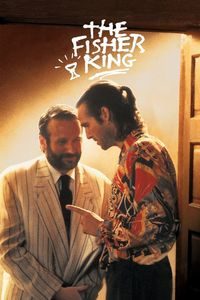
    (On VHS, June 2001) Hey, it’s Terry Gilliam, so it’s got to be good on a visual level, right? Maybe, if you squint real hard and get a mild brain seizure from the added pressure. The story of a fallen shock DJ and a wacko homeless person, The Fisher King might work on some quasi-mythic level, but most of the film is painful in that inimitable “here are miserable people and we’re going to rub your noses in their pathetic lives” fashion. There is an excruciatingly painful date sequence that will make you grit your teeth. There are two appearances by gratuitously violent men who serve no other purpose than to artlessly advance the plot through violent beatings. A whopper of a coincidence drives the story. Well, maybe I’m being too harsh; Mercedes Ruehl is wonderful, Jeff Bridges as cool as usual, there’s a good scene inside Grand Central Station and a happy ending. But it might not be worth it unless you really, really want to see the film.

  • The Fast And The Furious (2001)

    The Fast And The Furious (2001)

    (In theaters, June 2001) Yes! After a diet of pretentious pseudo-profound cinema and ultra-hyped moronic flicks aimed at retarded teens, it’s such a relief to find a honest B-movie that fully acknowledge what it is. If you like cars, you’ll go bonkers over The Fast And The Furious, one of the most enjoyable popcorn film seen so far in 2001. The plot structure is stolen almost beat-for-beat from Point Break, which should allow you to relax and concentrate on the driving scenes. There aren’t quite enough of those, but what’s there on the screen is so much better than recent car-flick predecessors like Gone In Sixty Seconds and Driven that director Rob Cohen can now justifiably park in the space formerly reserved for Dominic Sena and Renny Harlin. The film’s not without problems, but at least they’re so basic that they’re almost added features. The protagonist is supposed to be played by Paul Walker, but don’t worry; bland blond-boy gets each and every one of his scenes stolen by ascending superstar Vin Diesel, whose screen presence is of a rare distinction. Feminists will howl over the retrograde place of women in the film, but even wannabee-sensitive-guys like me will be indulgent and revel in Jordana Brewster and Michelle Rodriguez—not to mention the other obligatory car-babes kissing each other. Despite the disappointing lack of racing in the first half, there is a pair of great action sequences by the end, the best involving a botched robbery attempt on a rig with an armed driver. That scene hurts, okay? I still would have loved a better ending, but otherwise, don’t hesitate and rush to The Fast And The Furious if you’re looking for a good, fun B-movie.

    (Second viewing, On DVD, March 2002) There isn’t much to that film, if you look closely; three or four action scenes, conventional plotting, a few hot young actors and that’s it. But once again in B-movie-land, it all depends on the execution. Here, the young actors are really hot (from Walker to Diesel to Brewster to Rodriguez), the direction is unobtrusive enough and the film is infused with a love of speed that manages to make all quibbles insignificant. The ending is still problematic, with all its unresolved plot-lines, but the film holds up very well to another viewing. The DVD includes an amusing director’s commentary, deleted scenes (some good, some less. Unfortunately, the director once refers to an alternate ending that’s not included), a rather good making-of, three rather bad music videos and a bunch of other stuff.

    (Third viewing, Streaming, December 2025) Decades later, the publication of Barry Hertz’s history of the Fast and Furious franchise suddenly had me hankering for a re-watch of the series’ first instalment. As many have since said, The Fast and the Furious really holds up.  At its core, it remains a solid genre thriller, streamlined to focus on the essentials.  The story moves fast except when it slows down for just-enough background for the characters, the Los Angeles setting or the car culture that’s central to the film’s comfort.  The few action sequences are handled with a professional’s touch, with just enough non-mimetic material (such as some brief CGI, or the sped-up transitions from day to nighttime highlighting the different realms of the film) to highlight the metal-on-metal tactility of the stunts.  It’s easily watchable without too many dull or dumb moments.  And the soundtrack is terrific — although that may just be me recognizing the tracks I was listening at the time. But it’s the the halo effect of its many sequels’ blockbuster success that helps lift it up even further: Paul Walker is quite good here, and Vin Diesel is remarkable. Even comparing this relatively grounded first installment to its increasingly bombastic follow-ups isn’t that big of a jump: You can see where the most successful bits of the sequels come from, and where some of the characters are introduced.  The sequels also manage to tie up the loose ends of the abrupt ending, and develop some half-baked ideas.  But even taken on its own, The Fast and the Furious is a slick, fast, well-made action movie — well worth a look even a quarter-mile, er, a quarter-century later.

  • Evolution (2001)

    Evolution (2001)

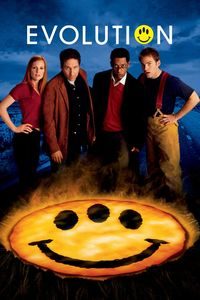
    (In theaters, June 2001) We live in an amazing age, where cutting-edge effects can be produced cheaply and inserted in a film that is so slight. Oh, don’t worry; you’ll laugh, giggle and smile during most of Evolution, but trust me, it will leave an empty feeling in your head soon afterward. The problem is how easy the film feels. No effort seems to have been put in the script, the acting nor the direction. (The special effects people worked until they fell asleep over their workstations, though.) All the jokes are obvious and laboriously set-up. A large splattering of vulgar humor covers the film like an oily sheen, making it less than commendable for family audiences while there was no real reason to go gross-out on us. At least the actors look as if they’re having fun; David Duchovny gets to crack a few smiles, Seann William Scott still looks like a sympathetic doofus (Dude, where’s your car? Oh, right; blown away by a meteor) and Julianne Moore’s character is an excellent antidote for everyone who hated her in Magnolia or Boogie Nights. One of the film’s few bright spot is a cameo by Sarah Silverman—though her site makes reference to another deleted scene. There’s a good action scene inside a mall. On the other hand, you’ll shake you head at the sorry science exhibited here. Oh well. There’s enough eye-candy here to make it worth a cheap rental at the very least.

  • Do The Right Thing (1989)

    Do The Right Thing (1989)

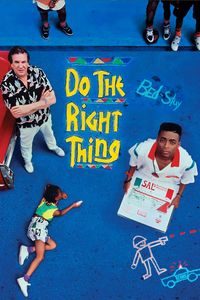
    (On VHS, June 2001) You’ve got to admire Spike Lee for the way he gradually cranks up the tension in a mixed-race neighborhood over the duration of this film. On the other hand, there isn’t all that much to like in the way the tension is unleashed, giving a particularly confused impression by the time the credits roll. After a particularly pointless title sequence, a rather large cast of characters (including a small role by a young Martin Lawrence) is progressively introduced and put in relation with one another. Of course, faults run across race lines, and the sweltering weather doesn’t help one bit. It all has to blow over sooner or later, and this is when the film doesn’t make as much sense. One characters makes what seems to be a completely rash decision for no good reason, which precipitates the unavoidable conclusion. The epilogue doesn’t help, almost bending itself out of shape to avoid laying blame to anyone. But, her, what do I know about Brooklyn neighborhoods? I’m just a white guy from the suburbs.

  • Bridget Jones: The Edge of Reason, Helen Fielding

    Penguin, 1999, 338 pages, C$19.00 tpb, ISBN 0-14-029847-9

    I really liked Helen Fielding’s Bridget Jones’s Diary and it seems as if I wasn’t the only one; the book remained one of Britain’s best-seller for quite some time. With this success, and a successful film adaptation, it was inevitable to see a sequel popping up in bookstores.

    The good and the bad news about The Edge of Reason are that, overall, it’s more of the same thing. If you loved Bridget Jones in her first diary -and who didn’t?-, you’ll love her about as much in the second one. Our heroine is still adorably confused, the writing style still as brisk, and the overall effect quite sympathetic. If you loved the prequel, there’s no doubt that you’ll like The Edge of Reason.

    Bridget begins her second diary scant weeks after the events of the first one; we find her still happily shacking up with Mark Darcy, the rock-solid barrister romantic hero of the first volume. All is well in paradise… or is it? A few obvious misunderstandings, comic interludes and disloyal incidents from acquaintances later, Bridget finds herself sort-of-single once again and determined to chuck all of her self-help books in the trash again.

    Hey, don’t worry; Mr. Darcy isn’t all that far away, and neither is the happy ending. In the meantime, Bridget is free to make even more outrageous slip-ups, obsess some more about her body and suffer through the manias of her mother. You can’t do the same romantic shtick twice, and the second volume of the Bridget Jones series is slanted towards broader comedy.

    As usual, some specific bits are laugh-aloud funny; a Colin Firth interview published verbatim (because Bridget goofed up once more) reads like the most asinine fan interview ever conducted. Furthermore, several of the funniest bits are self-contained in wonderful epigrams. You might even recognize moments of truth in Fielding’s prose. Your reviewer found himself laughing silly at the suggestions that Bridget was dumped for insufficient geographic knowledge, an incident with troubling similarities having happened in his immediate vicinity a few weeks before.

    Alas, as comic bits go, Fielding also includes less-amusing moments. It’s not easy to milk humor from a suicide attempt (fortunately, not Bridget’s) nor a few days in prison, and indeed, the laughs feel far more forced during these moments. If you can’t stand situational comedy whose setup is required by stupid misunderstandings, chances are that you’ll have a few problems with this book, which depends heavily on Bridget and Mark Darcy not communicating effectively at several crucial moments.

    The other big problem of The Edge of Reason is its occasional lack of relevance to the average reader. Everyone reading Bridget Jones’s Diary could identify with the protagonist or relate her to an acquaintance, mostly because her problems were so universal. Not so in the sequel; how many of us get to fly to Italy to interview Colin Firth, or take vacations in Thailand and then by framed for drug smuggling? Granted, it’s funny to see how Bridget reacts to these problems (she ends up lip-synching Madonna in prison) but on the other hand, it’s not something we’re likely to relate with our day-to-day lives. But, alas, maybe that’s the price to pay to extend a one-novel character… But as long as Bridget doesn’t find herself battling aliens by the third volume of the series, this isn’t cause for serious concern.

    These caveats expressed, fans of the first volume can’t really go wrong by checking out The Edge of Reason. Sure, it’s more of the same, but when it’s as good as Bridget Jones’s Diary, why complain?