Reviews

  • The Conversation (1974)

    The Conversation (1974)

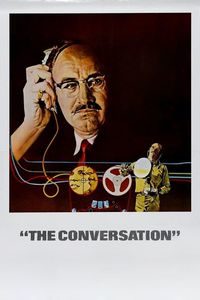
    (In French, On TV, May 2001) Unexplainably hailed as a good film, this typical seventies piece hasn’t aged well at all. Unlikeable characters, torpid pacing, a non-ending, a single simple point made over and over as is it was a brilliant piece of philosophy… it all adds up to a dull pretentious piece of tripe. For Gene Hackman completists and, maybe, the last scene. If only it had been built up by something stronger…

  • Clueless (1995)

    Clueless (1995)

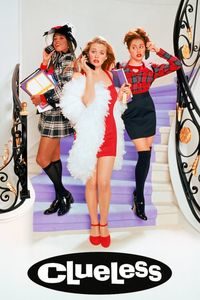
    (On VHS, May 2001) This joins the ranks of the teen comedies with crossover appeal through good writing and irresistible acting. (see Ferris Bueller’s Day Off, Heathers, Bring It On, etc…) A modern-day retelling of Emma, which already gives it a solid plot structure, Clueless plays like a quasi-demented parody of the upper-class California life we’re shown in other similar films. Great lines pepper the dialogue, and the delicious soundtrack polishes the result to near-perfection. Smarter than it appears. Constantly amusing. May unfortunately represent Alicia Silverstone’s career peak. Definitely worth a rental, preferably with other similar films.

  • Breaking Up (1997)

    Breaking Up (1997)

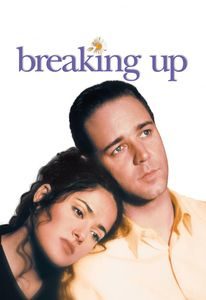
    (On VHS, May 2001) It’s hard to see where a romantic comedy could go wrong while featuring Russell Crowe and Salma Hayek on-screen for nearly 95% of its duration. The answer is that romantic comedies are supposed to be funny, and romantic. This one isn’t. Like so many independent films, Breaking Up wants to be different, and its idea of different is to foreshadow a break-up for 90 minutes, and then have it happen. Insert cries of disbelief from the audience. Not only is it unsatisfying in itself (everyone loves a happy ending), but it also pretty much makes the whole film feel useless. Fortunately, two or three things save the film from total collapse: The lead actors are completely adorable as their respective archetypes, the writing is decent and the direction has very good moments. But be prepared for one downer of a conclusion.

  • The Jericho Files, Alan Gold

    Harper, 1993, 578 pages, C$6.99 mmpb, ISBN 0-06-100894-X

    Stay away from this book. I mean it.

    You most probably read thrillers for fun. To pass time on the bus. To relax on the beach. To escape reality to a more interesting world where government are either steadfastly protecting our freedom or working hard at enslaving us.

    So you naturally want a well-paced story, protagonists you can root for, an original premise and a kicking conclusion that leaves everyone happy and the bad guys punished.

    I’m telling you: avoid Alan Gold’s The Jericho Files.

    It does start promisingly. At a peace conference where an agreement is about to be signed between Israelis and Arabs, the Prime Minister of Israel gets up, insults the whole crowd, does everything short of a snappy Nazi salute and plunges the entire proceedings in chaos. There’s no such thing as a good mystery to get the ball rolling on a novel, and this is a fascinating one.

    Then we’re inevitably introduced to our two protagonists. Miriam Davis is a tough but adorable Jewish Australian lawyer. She’s dating Paul Sinclair, a journalist. They’re a cute couple, even though they have a few problems due to religious differences. To patch things up, they visit her grandfather, who tells them a story about the Israeli Prime Minister’s past. Photographic proof in hand, he maintains that this particular Prime Minster -back in Pre-WW2 Poland- was a die-hard communist who helped to eradicate entire Jewish villages. Egawd! Could he be right?

    Well, of course he is. We’re privy to the conspiracies of an old man, who masterminds a plot for complete Russian world domination! Miriam’s grandfather is killed, Paul’s apartment is ransacked, and before long, our two intrepid investigators are on a plane away from Australia, looking for answers in the old countries.

    (Gold doesn’t miss an occasion to pump up Israel’s profile and generally make a fanfare out of Jewishness. That’s cool -I’m generally sympathetic to Israel-, but when constantly repeated over hundreds of pages, it can become annoying.)

    Meanwhile, Israel is torn apart by martial law and agents provocateurs. Our protagonists escape from the country with death teams hot on their heels and continue on to Poland, where they confirm the grandfather’s story. But everywhere they go, their witnesses and informants are ruthlessly killed shortly after having talked.

    Understand that I’m summarizing a lot, but not condensing much. Even though The Jericho Files nearly hits 600 pages, not a lot happens there. The narrative is padded with useless chatter, scenes which sap the suspense of the novel and a considerable amount of red herrings, cardboard characters, gratuitous subplots and dull moments.

    Eventually, Paul and Miriam link up with powerful Russian men who might be in a position to stop the Jericho plan. They gather their forces, prepare their counterstrike…

    …and are all killed. Paul and Miriam are taken deep inside a Russian forest and killed one after another by a bullet in the head. They’re then disfigured by sulphuric acid and buried in an unmarked grave.

    The End.

    I’m not making this up. 550+ pages for a complete failure and an unremarkable death.

    Couple this awful ending with the tepid pacing, and you’ve got a recipe for the anti-thesis of everything fun, good and sacred about thrillers. It doesn’t do to kick the reader in the head after s/he’s been patient enough to slog through 550+ pages of mostly indifferent prose to see the novel resolve itself in a big fat nothing. Stay away from this book. Now that I’ve spoiled it from beginning to end, you don’t even have a reason to go through it.

    Now, if you’ll excuse me, I’ll just go and deface my copy with sulphuric acid and bury it in an unmarked grave somewhere in my backyard.
  • The Astronaut’s Wife (1999)

    The Astronaut’s Wife (1999)

    (On VHS, May 2001) If you’re going to remake a film, don’t remake Rosemary’s Baby! And if you’re going to remake that dull piece of solid boredom, at least make it more interesting. But no. We’re stuck with a Charlize Theron made ugly Mia-Farrow-style, a somnolent pacing and a completely linear plot. The best (and “best” is still pretty bad) is kept for the end, where we finally get some special effects. The big twist is that the alien wins. There, now you know all. There are a few good camera tricks, but they somehow come across as being more pretentious than interesting. But then again, the pacing will put you to sleep before you have a chance to notice any of it.

  • An Ideal Husband (1999)

    An Ideal Husband (1999)

    (On VHS, May 2001) Irresistible Victorian-era comedy inspired by an Oscar Wilde play. Completely depends on the skill of the actors, who all rise superbly to the challenge. The sex-appeal factor alone (Minnie Driver, Cate Blanchett and Julianne Moore, in elegant period dresses) is worth the rental for guys, but my sister assures me that Jeremy Northam and Rupert Everett have a similar impact on female viewers. The comedy itself is literate, civilized, steadily amusing and appropriate for the whole family. The conclusion may require a moment’s thought. A wonderful film that most would unfortunately be tempted to overlook.

  • 15 Minutes (2001)

    15 Minutes (2001)

    (In theaters, May 2001) The power of the media! The lack of responsibility of current Americans! The failings of the judicial system! The undue respect given to criminal behavior! Big ideas! Bad execution! 15 Minutes has a twist or two that save it from total collapse, but more often than not, it ends up playing like a cartoon with a body count. The caricatural east-European bad guys don’t help, and neither does the oh-so-bad media newsperson. I mean; we’ve seen most of these issues raised as afterthoughts in Die Hard… did we need an entire film dedicated to it? Wit requires subtlety, and 15 Minutes is usually as subtle as a sledgehammer. If anyone escapes from the film with some honor, it’s Ed Burns, turning in a good performance despite a badly-written role that follows the typical cop-turns-psycho arc we’ve come to expect. (It doesn’t make much sense, but then again it rarely does. Other plot threads even disappear in mid-flight.) Good cinematography, and the direction had its moments despite an overuse of “amateur camera” shots. The film’s third quarter is actually quite good, thanks to one hard plot twist and a meanly effective fire action sequence. After that, it just gets sillier, and I don’t think that was the intent of the filmmakers.

  • Bridget Jones’s Diary, Helen Fielding

    Picador, 1996, 310 pages, C$10.99 mmpb, ISBN 0-330-37525-3

    01/05/2001: 13st8 (Eek! What am I, a bowling ball?), cigarettes 0 (as if), alcohol units 0 (yeah, right), 6/49 tickets 0 (not feeling one-in-fourteen-million special enough), nasty calls from Rogers Video 0 (v.g.), siblings visiting 2, calories stratospheric (shouldn’t have had third slice of pizza. Nor fourth, fifth or sixth one).

    L. came in my office again today, complaining about latest dating prospect and wondering whenever she’ll meet Mister Right and if new clothes make her too fat. Did my best impression of a gay best friend, sympathizing with everything she said while personal designs on her neither gay nor simply friendly. Have to wonder how I ended up in this bizarre situation someday, but not today as answer likely to be too depressing.

    Thought about L. a lot while finishing Bridget Jones’s Diary, but also about my own situation; young professional still single more by circumstance than choice. Whole book told as year-in-the-life diary of said Bridget Jones, single Londoner with more neuroses than entire Woody Allen oeuvre.

    Great book, fun reading, many laugh-out-loud moments. Even though Bridget not brightest bulb, it’s impossible not to really like her, problems and all. Constant metaphorical yearning to hug her and say everything would come out all right. Author Helen Fielding does great job at funny writing with huge drops of honesty. Loved passage about how single friends would rather keep everyone else single than lose their time with them because they’re in relationship.

    Had a few problems with the book, though; bunch of coincidences, mostly. Eventually learned that Mr. Darcy character based on similar Mr. Darcy in Jane Austen’s Pride and Prejudice, which might explain a lot if ever I end up seeing Pride and Prejudice.

    At least book much superior to movie, which stumbled worst when straying away from novel. Major distractions include whole mother subplot, which is nastier in book than film. Unfortunately, this cause movie ending to be far more Hollywoodish than book, which is far more satisfying (“Why did you do it?” “I think it’s obvious.” Perfect!) Whole book generally less formula romance than film, which now feels more contrived than ever. (While book never sends Darcy to New York, there is unfortunately no fist-fight. Oh well.) Interestingly enough, movie/book changes will keep up interest in the book for movie fans.

    Writing sharp, fast, hilarious & hypnotically easy to imitate. Fielding has comic genius; some embarrassed glances from other people in the bus after hearing me laughing aloud.

    Social significance of Bridget Jones probably worth noting, but too little space here to do so. Ironically enough, Bridget Jones’s Diary could be compared to a female Fight Club, both being about modern social dilemma stemming from doing first thirty years more or less right and then discovering things that parents never told you about. Modern teenhood being pushed back ten-fifteen years? Lack of established social models to deal with modern zeitgeist? Judging from bestseller lists in England and now States, chances are that many many ladies are identifying with Jones. Personal query; where are they all? Like to think of self as being much closer to Darcy than Daniel.

    Realize enjoyed Bridget Jones’s Diary a lot despite not being target audience, which leads self to question validity of initial premise. Maybe not as far away from Jones as would like to believe. Eek.

  • Tom Clancy’s Net Force, Tom Clancy [ghostwritten]

    Berkley, 1998, 372 pages, C$10.99 mmpb, ISBN 0-425-16172-2

    Reviewing “Tom Clancy’s” novels is the critical equivalent of shooting fish with big barrels. These ghost-written cookie-cutter novels sustain a basic level of readability, sure, but you’d be hard-pressed to remember anything about them only a few days after an initial read. Heck, you’d be lucky to remember the difference between the various series, whether they’re “Op-Center”, “Politika” or “Net Force”. As far as any serious reader is concerned, they’re three names for the same thing: Clancy’s willingness to whore out his diminishing reputation through dozens of mediocre novels he should be ashamed to be associated with.

    This venom now being out of my system, allow be to concede that as far as the “Tom Clancy’s” novels go, Net Force is better than the other ones. The premise is slightly more SFish than the other series, being concerned about a federal agency dedicated to fighting computer crime. The series is set in a ten-year-away future, which is depressingly similar to our own except when it suits the purposes of the plot.

    In other words, don’t go in Net Force expecting a fully-developed social anticipation in the tradition of the best Science Fiction. While Steve Perry has previously proven himself to be an adequate SF writer, he’s obviously writing Net Force to pay the bills, and this strictly alimentary approach to the novel shows through a distinct laziness.

    Take, for instance, Net Force‘s representation of cyberspace, which makes all the mistakes you might see in a slush-pile SF novel magically teleported from the mid-eighties. Metaphorized into a representation of the highway system, it forces characters to drive cars and search highways for bad guys. Not only does this represent a singularly useless and inefficient mapping of cumbersome real-world equivalent over something that doesn’t require it, but it also drags down the level of the rest of the book to this quasi-adolescent car fetishism where driving a Dodge Viper is good enough to catch the enemies.

    And, yes, there is a “good” level of the book to drag down. One character and one subplot is enough to keep our interest, the “Selkie” assassin and her contract against new Net Force director Alex Michaels. It’s the least ridiculous part of the book, the most focused and the most interesting. There’s also an interesting love triangle / martial arts exposé between Michaels, an agent named Toni Fiorella and some other agent whose name isn’t ultimately important. Oh, and a few funny scenes featuring a nerdy teenager.

    But that’s it. Zero other set-pieces, zero compelling characters, awful technology and scarcely any good writing besides a very few fascinating technical/procedural details. The rest of Net Force is of such forgettable averageness that it blurs up almost instantly, sinking is the cesspool of “Tom Clancy’s” novels. The only question left for me to ask remains “If I’m buying those awful novels used, who the heck keeps buying them new?”

  • High Crimes, Joseph Finder

    Avon, 1998, 388 pages, C$8.99 mmpb, ISBN 0-380-72880-X

    Fiction does not operate according to the usual laws of reality. Life seldom makes up interesting stories and that’s why, from stone-age shaman onward, making up compelling fiction has always required creative interpretations of how things usually happen.

    The protagonist is a good person who struggles in search of his goal. After difficulties, lovers end up together. Bad persons are punished. While not ironclad, these “rules” drive most of modern fiction. You’re familiar with them from years and years of novels, films and other stories.

    Sub-genres acquire their own dramatic conventions, which occasionally make them impenetrable to newcomers. Thrillers are no exception. After reading a few dozen of them, patterns start to emerge and readers may demand bigger surprises in order to be satisfied.

    Ironically, there are such things are expected surprises. A novel with twists and turns can start to be repetitive; any character whose body isn’t certifiably autopsied is liable to come back “from the dead”, any friend is a possible traitor and every government agency has squads of murderous operatives. It becomes possible to guess the next big twist simply by asking ourselves “What’s the worst that could happen at this point?” A lawyer asking himself if his client committed the crime isn’t much of a story if the client isn’t actually guilty as hell. (See, oh, films from JAGGED EDGE to PRIMAL FEAR, whose “twist” is given in the first line of dialogue.)

    Joseph Finder’s High Crimes is an enjoyable, but generally predictable thriller whose final twist is self-obvious whenever you ask yourself “What would be most interesting?” It then proceeds straight into ludicrous absurdity, but by this time, you’re only two pages away from the end, so you might as well finish the whole thing. Even if you’ll still end up with a few unanswered questions.

    This being said, the setup is interesting; a renowned attorney is stunned when her husband, theoretically an economist, is hunted down by the military for a war atrocity trial. He insists that he’s innocent and she agrees to defend him at a court-martial. Powerful forces from the Pentagon do everything they can to distance the trial from a few high-ranking officers. Who’s lying, the husband or the brass?

    What the novel lacks in overall surprise, it gains in sharp writing and solid details. Our heroine has to learn the intricacies of martial law at the same time as we do, and the result is a fascinating trip through an area few readers know about. Characters are presented efficiently, sometime too quickly, and developed with an adequate amount of care. The dialogue is witty and natural. The pacing drags a bit, especially in the beginning (just get the suspect in custody and go on with the story!), but it gets better and for all its little problems, High Crimes doesn’t become boring.

    It might even be unintentionally comical in its frantic effort to keep our interest. Aside from the inherent fascination of court-martial procedures and special-operation details, Findley piles up increasingly extreme events regardless of if the story calls for it. The setups are sometime so laborious as to be offensive, such as with the whole chapters leading up to the apprehension. A few latter sequences, like the car sabotage, scream “cheap thrill!” more than they suggest an organic plot development. But given that they’re eventually inconsequential to the overall dramatic arc, most of these cheap thrills remain meaningless.

    But that’s all part of dramatic logic, where the bad guys are notoriously inconsistent in their desire to kill off the protagonists. Dramatic logic -where the best friends are in fact the best enemies and the most unexpected twists become mandatory- is the real main character in High Crimes. It’s a good testimony of Finder’s professionalism that his novel can sustain interest despite holding few genuine surprises.

  • THX 1138 (1971)

    THX 1138 (1971)

    (On VHS, April 2001) The story’s been done better elsewhere (man tries to escape his oppressive society; see Dark City, Gattaca, Truman Show) but this is a creditable effort for the seventies. You will be unable to associate this grim and artistic George Lucas with his latter American Graffiti or Star Wars series. (Sharp-eyed observers, however, will note Lucas’ recurring motifs of car chases and distrust of technology) Unfortunately, Lucas’ vision is hampered by four things; a low budget, a lack of storytelling skills, no knowledge of science-fiction and an approach more suitable to arty films than popular entertainment. All of this combine to produce a film with recycled imagery, simplistic plotting, awful dialogue, an unsatisfying ending, laborious introduction/development of well-known concepts and “artistic” imagery that exasperates more than it enlighten. While THX-1138 doesn’t hold up to modern standards and inspires more guffaws than deep thoughts, it’s of definite historical interest. Worth a look despite everything else.

    (Second viewing, On Cable TV, August 2019) It had been nearly twenty years since I’d seen THX 1138, but as I watched it a second time it became obvious that it wasn’t the version I had watched in 2001: The inclusion of obvious CGI in a 1971 quickly led me to realize that I was watching the 2004 director’s cut of the film, with added digital details to fix the most dated aspects of the film. The result is strangely compelling: by updating the effects, George Lucas has removed a fundamental stumbling block of casual viewing (focusing on bad effects rather than the story), while the block he has added (those are modern effects in an older movie!) won’t be as obtrusive to most viewers. The story, of course, has not changed much: it’s still a good old repressed protagonist in a dystopian society (although one notes with some interest that it’s a society that’s not even particularly good at keeping itself working: there are plenty of hints that things are not going well, that there are accidents and errors and systemic failures even in an environment where everything is supposed to be controlled) realizing that the society is dystopian and escaping it. It’s the ur-example of dystopian fiction plotting familiar through endless examples, but it’s not badly done. The antiseptic aesthetic sense of THX 1138 remains intriguing, and some of the details (including, yes, the bolted-on CGI additions) do create a certain tangible reality. A dystopian vision from the early 1970s can feel intriguingly out of time these days, and while I’m still not a fan of the film, at least I can see that it may be worth a look. Then there’s the whole link with Star Wars to think about, but that’s been discussed already.

  • Spy Kids (2001)

    Spy Kids (2001)

    (In theaters, April 2001) After trying to pander to the teen crown with The Faculty, Robert Rodriguez goes after the family market with Spy Kids, one rare example of a film that successfully delivers to the youngsters while keeping the adults interested. Make no mistake; this is still very much a kid’s film, with simplified plotting, much fantasy, not a whole lot of subtlety and no real attempt at an extra layer of sly winks at adults. Still, it’s all very enjoyable; Rodriguez turns in his most polished film yet without losing touch with his dynamic style. There are a lot of fights, cool gadgets, conscious set-pieces and a lot of stuff blows up, but the film is supported by a solid promotion of family values and an overall lack of objectionable material. The latino settings and sensibilities add another touch of pleasant distinctiveness. Bring on the sequel.

  • Xiao Li fei dao zi Fei dao wai chuan [The Legend Of The Flying Swordsman] (2000)

    Xiao Li fei dao zi Fei dao wai chuan [The Legend Of The Flying Swordsman] (2000)

    (On TV, April 2001) With a title like that, you might expect a martial-arts action-fest jam-packed with sword fights and wire-fu. Well, you’re in for a major disappointment, and that also stands for the film as a whole. The first forty minutes are concerned with, roughly, a wayward husband’s addiction to the fine products of the local bar. Then things get more extreme, with adultery, infanticide, a high body count and more ludicrousness. There is one sword fight, which is actually really good in a cartoonish sort of way, but it quickly passes and the rest of the film is an unabashed loss of time, a clash of genres and a mess of incoherent storytelling. Maybe it can be explained to me through obscure cultural references, but I prefer the simplest explanation; a bad film.

  • Set It Off (1996)

    Set It Off (1996)

    (In French, On TV, April 2001) Four beautiful black women robs banks in order to get out of the ghetto. Sounds interesting? It is, but even that premise has limits. Letting slide the disappointing lack of full frontal nudity, the film’s goal to marry an attempt at a serious out-of-the-ghetto tale to an action crime thriller quickly produces contradictions that are hard to ignore. While the heist set-pieces are very well done, one can’t say the same thing about the rest of the film. The setup is laborious, as each character is manipulated (often by those no-good white rich people and policemen) in a desperate situation. Then, inevitably, we get the group-bonding scenes, complete with requisite drug inhalation and weak jokes. Then the ending conjures up a high body-count, often challenging basic credibility to do so. Characters are shot-down-by-police- while-reaching-for-a-weapon with a eye-rolling predictability, most often out of no discernible reason. (One of the gunfight is precipitated by such a dumb move by a security guard that it effectively destroys the film’s impact from then on.) The ending suddenly tries to milk maximum pathos and does so in such a ludicrous fashion that the net effect is more unintentionally funny than affecting. At least the direction is well handled, in a first effort by Gary F. Gray.

  • Skeptic, Holden Scott

    St. Martin’s, 1999, 376 pages, C$8.99 mmpb, ISBN 0-312-96928-7

    Looking at the world through tabloid newspaper glasses, it seems that the strange, the unusual, the supernatural and the just plain weird is constantly threatening to invade our so-called-reality. The universe described by the New York Times, or any other “mainstream” media, seems hopelessly constrained, boring in its lack of excitement, pathetic in its self-explanatory fashion. But wait! The Loch Ness monster will be captured! Aliens will land on the White House lawn! Even the humble vampires want nothing worse than to be our friends!

    It’s difficult to gauge how many people gobble up fantastic stories as honest truth, or even how many people might be tempted to believe in some of it. Polls routinely indicate that a significant proportion of Americans believe that telepathy exists, that aliens are among us, that angels routinely intervene in their lives and there’s got to be something in all these JFK conspiracy theories.

    There’s definitely a potential for a few hundred novels on the subject of skepticism and so-called reality. When a thriller called Skeptic comes across our desks for perusal, it’s hard not to expect some kind of definitive statement on the subject. But while an intriguing novel, Holden Scott’s first book isn’t quite up to the task.

    Oh, it’s not as if there isn’t a lot of stuff in these 376 pages. From a medical research center in Boston to a raid deep inside Chinese lines, this is the type of thriller that sacrifices plausibility for maximum bang; avid readers of the genre will love it if only because it shows them something new.

    The plot revolves around a scientific discovery that more or less validates the concept of ghosts. Through a complex and not-quite-credible mechanism involving viruses, it seems that deceased people’s “spirits” can communicate with the living. Now mix in a dangerous Chinese super-spy, a political assassination, a CIA agent as beautiful as she’s deadly and you’ve got an interesting story.

    There are a few serviceable characters, including the requisite competent/rebellious/tortured doctor hero, the sexy CIA agent and the eeevil antagonist. There are a few good gadgets, including a (fictional?) type of weaponry not seen anywhere else yet. There are gruesome autopsy scenes that will make your stomach churn. There are chases, escapes, gunfights and explosions. There’s even a massive plot to take over the world, if you still wanted something of the sort.

    But there’s only one little tiny instance of supernatural doing, and it’s almost an afterthought thrown in at the last minute by the author. But as for the main plot, there’s nothing that warrant belief of skepticism; Scott does his suspension-of-disbelief techno-babble so well that there’s no need to be skeptic.

    Leaving that aside, Skeptic remains a better-than-average thriller, thanks to effective writing, memorable incidents and a strong dose of originality. Yes, Scott does get carried away from time to time and his grandiose conspiracy is simultaneously too over-the-top and seemingly useless that it’s likely to inspire more giggles than chills. But when considering the novel’s overall freshness, that doesn’t seem too bad. Much like tabloid newspaper readers, thriller fans would rather read blatantly ridiculous material than to be stuck in the same old reality.