Reviews

  • You’ll Never Eat Lunch in This Town Again, Julia Phillips

    Signet, 1991, 628 pages, C$7.99 mmpb, ISBN 0-451-17072-5

    Sex! Power! Drugs! Money! More money! More power! More sex!

    Nope, I’m not talking about Washington. The New Babylon, as most suspect, is Hollywood. Tinseltown is what happens when you funnel millions (assuming that every American spends 25$ a year to see movies on screen or video, that’s six billion dollars, folks.) and you place it in the hands of people without talent, brains or restraint. I’ve never had too much of a high opinion of Hollywood (that’s what happens when you identify more closely with the writers and CGI animators than anyone else) and it sank even more with You’ll Never Eat Lunch in This Town Again.

    Lunch is the autobiography of Julia Philips, a movie producer. Her filmography is semi-impressive: In the seventies, she produced The Sting, Taxi Driver and Close Encounters of the Third Kind. Other than that, not much. No wonder that most moviegoers haven’t really heard of her.

    But outside a simple filmography, Phillips spent most of her time in Hollywood (and most of this book’s hefty 600+ pages) doing drugs. Lunch is a confessional where she describes her ascent, descent and recovery. It’s less glorious or fascinating than it sounds.

    Lunch, in a few words, teaches important lessons: When reading an autobiography by someone you don’t know, it is essential that:

    A> The narrator is likeable. Not the case here, since Phillips is most definitely someone I wouldn’t like to meet (and this is reciprocal; “Scorsese, Dreyfuss, Milius, Spielberg, Schraeder, etc. A rogues’ gallery of nerds. There is not a single guy here I would have dated in high school or college.” [P.131] I happen to be a nerd; G’bye, Julia!). Her constant, and unrepenting, abuse of drugs, alcohol and sex doesn’t help. You’ll excuse me if I don’t find attractive folks accepting Oscars while on a coke high. What also grates is that while she says she stopped doing coke, by the end of the book she’s still heavily in the so-called “softer” drugs… Redemption? Really?

    B> If you can’t be likeable, be interesting. Here too, Philips fails: Lunch is six hundred pages of minutia, of boring and unlikeable anecdotes, of flings with people we couldn’t care less about. Some will say that this only adds texture to the narrative; I say that this would have been a crackerjax 200-pages autobiography. As such, most of the time we’re wading in irrelevancies. I didn’t skim, but I really wanted to.

    C> The narrative should attach itself to known markers. Here, Philips is most interesting when she talks about the making of CLOSE ENCOUNTERS OF THE THIRD KIND, Steven Spielberg, Arthur C. Clarke or known actors. Since we’ve already established that we’re not interested in her life (see A> and B>), she might as well talk about others. Sadly, this doesn’t really happen as often as we wish it would. (In the middle of a chainsaw autobiography, however, it’s fun to see who remains unscathered. Speilberg comes out okay.)

    but finally…

    D> Be coherent. And Phillips isn’t. As said before, the book is overlong. But it’s also full of digressions that aren’t related to the tale, of sermonizing little philosophical speeches and of self-congratulatory monologues. Problem is, most of them don’t make as much sense as she thinks it does (I did mention she was still doing soft drugs, hmmm?) and the remainder is just embarrassingly juvenile. It also doesn’t help that Phillips consider herself as exceptionally intelligent. I was reminded of a line in John Brunner’s The Sheep Looks up: “If [she’s] so intelligent, then why isn’t she so smart?”

    The result is a bloated failure. Fortunately, a complete index will help out the impatient reader anxious to get to all the good parts. Read the sections about CLOSE ENCOUNTERS OF THE THIRD KIND, about Spielberg, Beatty, Clarke, Gere, Rice, Truffault and (Don) Simpson, but don’t give Phillips the karmic satisfaction of dumping all her anxious neuroses on you.

  • The Hudsucker Proxy (1994)

    The Hudsucker Proxy (1994)

    (On TV, October 1998) A delight during its first hour, where we see the unwitting ascension of a slightly-naïve young man. The visual style is wonderful, the performances (by Tim Robbins, Jennifer Jason Leigh, Paul Newman, Bruce Campbell…) are excellent and the story draws you into the movie. The second half is more conventional and loses steam, though it still keeps your interest. The final ending, though, is a cheat. Overall; good entertainment.

  • Gridlock (1996)

    Gridlock (1996)

    (On TV, October 1998) It’s a well-known fact that high-profile film project often inspire cheap b-series movies. Jurassic Park spawned Carnosaur and Twister spun off Tornado (with Bruce Campbell) but here, Gridlock is a low-budget TV-movie exploitation of Die Hard 3: With A Vengeance. To wit: Robbers cause mayhem in New York to cover the fact that they’re robbing the Federal Reserve Bank. But instead of Following Bruce Willis and Samuel L. Jackson through New York, we get to see David Hasselhoff as a police officer trying to rescue his fiancée -played by supermodel Kathy Ireland- from the evil robber terrorists. Hasselhoff is actually credible and Ireland is pretty to look at. The remainder of the movie is an exercise on how to film a standard action flick without the big budget, a competent action director or a big budget: While the preposterous story is adequate by the standards of the genre, the final result falls short of even the most average actionners. (Favorite stupid detail: They steal gold and paper money and erase the numbers of both in the main computer. Why not just grab the gold and melt it afterward? Duuuh…)

  • Down Periscope (1996)

    Down Periscope (1996)

    (On TV, October 1998) This isn’t very good considering the logical plotholes, run-of-the-mill plotting, average dialogue and sophomoric humor. On the other hand, it lets itself be watched quite easily. Few comedies deal with submarines and it’s probably a measure of my fascination with subs that I enjoyed this even despite counting off the stupid mistakes. (Though we get the feeling that the mistakes are intentional and from someone who has at least an adequate grasp of the field.) Lauren Holly, despite being completely useless, is a visual delight constantly renewed (it’s amazing to see the lengths at which movie producers will go to show cleavage in any movie). It’s also kind of cool to see a Village People song used as package for the end credit outtakes, along with bodacious babes in bikinis in the background. A guilty pleasure.

  • Disclosure (1994)

    Disclosure (1994)

    (On TV, October 1998) Michael Crichton’s reactionary novel about female sexual harassment in a high-tech firm was a pernicious page-turner. Written according to Crichton’s usual stellar standards of plotting, accessibility and superficial issue examination, it seemed like a natural candidate for translation on the big screen. Disclosure is exactly what it purports to be; an average thriller with enough anti-feminist elements to make it attractive to the general public. Some moments are ludicrous (the Virtual Reality sequence, the elevator dream), but the remainder is okay. Demi Moore is hot. Some changes from the book.

  • The Dreams our Stuff is Made Of, Thomas M. Disch

    Free Press, 1998, 256 pages, C$35.00 hc, ISBN 0-684-82405-1

    Don’t bother reading The Dreams our Stuff is Made Of if you don’t really know your Science-Fiction. I mean it.

    Good, serious, knowledgeable critical studies of Science-Fiction aren’t exactly common. (recently, only David Hartwell’s revised edition of Age of Wonders and the John Clute collection of reviews Look at the Evidence come to mind) So it wasn’t a surprise if Dreams‘s reputation preceded its arrival in my reading stack. For a book as opinionated as Dreams, it’s a wonder the whole work wasn’t spoiled well beforehand.

    Thomas M. Disch isn’t exactly a superstar of SF nowadays, but he has published a variety of deeply impressive stories since the sixties, as well as several “classic” novels like Camp Concentration and 334. He has also published widely out of the SF genre, including a volume of poetry criticism. Part unfamiliar figure, part seasoned veteran, Disch is uniquely positioned to comment on the genre with a view that’s both sympathetic and iconoclastic.

    Books like Dreams are written to slaughter sacred cows. And SF has more than a herd of those. Disch spends pages explaining why Heinlein was racist and sexist, then turns around and mows down Ursula K. LeGuin. As if that wasn’t enough, he moves on to easier targets like new-age wackoes, UFO true believers and scientologists only to drive the point home by stating than for better of for worse, these weirdoes were created and are sustained by SF. Many will blush.

    Other highlights include an intriguing treatise on why Edgar Allan Poe is the true father of SF, not Mary Shelley, Wells or Verne. While the argumentation isn’t flawless, it’s interesting. Also worth reading is the effect of SF on the cold war, the argument that dreams entail responsibility and Disch’s views on televised SF, Star Trek in particular.

    And yet, despite these juicy bits, The Dreams our Stuff is Made of seems curiously tame, almost as if Disch pulls his punches. Call me a bloody ungrateful bastard, but I wanted more. I wanted Disch to spend more time on the Fringe/SF connection, the disappearing place of SF in a society more and more influenced by SF, the effect of contemporary fantasy on SF and the effect of SF on politics. But then again, I also wanted him to name the writers whose output was affected by drugs instead of getting away with such hints as “read between the lines of those senior writers who once seemed so wonderful and who now, so noticeably, are not. The reason, when it isn’t booze, is probably pot.” [P. 114]

    The other major flaw of Dreams is more serious. While Disch tries to paint a picture of a whole genre, his examples of written SF are from before 1985, at the shocking exceptions of Greg Egan’s Quarantine, Whitley Streiber’s alien contact “non-fiction” and The Forstein/Gingrinch “collaboration” 1945. He does talk at length, however about INDEPENDENCE DAY while mentioning THE FIFTH ELEMENT, CONTACT and THE LOST WORLD… Is Disch trying to say that written SF isn’t as relevant to the genre? Even though he’s essentially saying this, it might lead some readers to suspect that there’s almost fifteen years of SF that Disch is deliberately ignoring.

    Finally, the book doesn’t really prove its own proposition (“How SF conquered the world”), instead presenting a series of thoughts about the genre. It might be more appropriate to call this an essay collection.

    Oh; Page 10: Wasn’t Del Rey books named after Judy-Lynn Del Rey?

    Perhaps the most shocking thing about Dreams is the way I wasn’t shocked by Disch’s argumentation. As mentioned, this is a bit of a disappointment. But it might also be a measure of Disch’s ambiguous success, with a book of criticism that’s recapitulative but not definitive, rough but not heretical, less impressive than expected but still commendable.

  • Death Warrant (1990)

    Death Warrant (1990)

    (On TV, October 1998) This scores high on the giggle-meter if only for the setup, where Jean-Claude Van Damme is revealed to be a policeman from Quebec (!) put in a California prison so that he won’t be recognized (!!) while investigating the deaths of several prisoners. (!!!) From stereotypical lecherous hackers to the final showdown between van Damme and The Guy Who Killed His Partner -including the non-resolution of the mystery,- this is bad enough to make you throw a party every time it plays on TV. Better yet; rent it with Sudden Death and bill your experience as Sudden Death Warrant: A Van Damme Retrospective.

  • Darkman (1990)

    Darkman (1990)

    (On TV, October 1998) While this film will never be considered a great movie by any rational criteria, it must be said that it’s considerably enjoyable. One of the purest comic-book movies ever, Darkman blends howlingly funny melodrama with the over-the-top direction of Sam Raimi (Army Of Darkness) and the result is silly but exciting. It’s a shock to see Serious Actor Liam Neeson in the title role. A good late-night movie.

  • Chinatown (1974)

    Chinatown (1974)

    (On TV, October 1998) Even though I’ve used Syd Field’s Screenplay to write a script and generally worship everything the guy says, I don’t agree with his enthusiastic praise of Chinatown. Problem is; it’s just not interesting enough. Three P.I. tricks, incest, unhappy ending and a cut nose. Nope; saw better elsewhere. Nicholson is okay, but the other players fade in the background. It certainly holds up better than most of the other movies of the time (it can be re-watched today without many problems), it’s probably one of the best movies of the seventies, but so far it’s not a favorite of mine.

    (Second Viewing, On Cable TV, July 2021) I’m sorry, everyone! One of the reasons why I amend my movie reviews as I re-watch them is to capture the evolution of my reactions across the years. That goes doubles for films I revisit after decades, hoping that the years have given me a better perspective on the result. If you’re reading this, you probably read my amazingly stupid first take on Chinatown in the preceding paragraph, written as a young twentysomething college student. I was young and ignorant, but that’s no excuse. Now that I’m approaching the film with a far better understanding of life and Hollywood history, let me change my mind – Chinatown deserves the classic status that has been bestowed upon it. It is markedly better-written than most movies, better executed and far more hard-hitting in its thematic intentions. As the intersection of crime thriller, Los Angeles history, character study, genre deconstruction and paean to classic films, it’s got quite a lot on its mind, and presents it effectively. I remembered broad strokes of the film and the implacable conclusion, but much of the pleasure of a second viewing is in appreciating its execution: Much has been written on the collaborative push-and-pull that resulted in the final result, and it’s a fascinating case study in how it takes plenty of skilled people to produce something like it. Jack Nicholson is excellent as the private detective manipulated in creating problems for everyone, while Jack Huston turns in a veteran’s performance as a monstrous antagonist. The period recreation is convincing despite being limited by the means available at the time – although critics have a point when they suggest that the film isn’t about being set in a specific year as much as it’s a blend of historical elements spanning decades. The narrative engine of the film is strong enough to keep even spoiled viewers invested in where it’s all going, especially as it starts tweaking clichés along the way. Yes, I’m glad that I revisited Chinatown, if only because I can update my assessment to a far more satisfactory one.

  • Casino (1995)

    Casino (1995)

    (On TV, October 1998) I had originally intended to complete an assignment on the computer with Casino playing in the background. What happened was that from the very first frames of the movie, I was reeled in by the film and quickly abandoned the thought of doing any useful work on the computer. Not only the tale of Las Vegas gangsters during the seventies, Casino is the type of film that tells a great story in a way that’s completely absorbing. Clearly the work of a masterful director (Scorsese), it makes good use of stars De Niro, Pesci and Stone. While the first half is the best (with its emphasis on Las Vegas rather than advancing the plot), the remainder is no lightweight either. Narration that works, Sharon Stone doing some acting, sympathy for devils: those are only a few of the things that Casino achieve. Rent it now.

  • Forever Peace, Joe Haldeman

    Ace, 1997, 351 pages, C$8.99 mmpb, ISBN 0-441-00566-7

    Most experienced SF readers faced with the occasion to read Joe Haldeman’s Forever Peace will inevitably draw parallels and comparisons with the author’s biggest success to date, the 1975 Hugo-and-Nebula winning Vietnam allegory The Forever War. Not only are the titles similar, but both stories star soldiers as protagonists and touch upon the theme of war.

    But most differences end there. If The Forever War‘s protagonist Mandella was a true infantryman in the classical sense, Forever Peace‘s Julian Class is a soldierboy operator. Plunged in a full-VR suit, he controls sophisticated “robots” (soldierboys) hundreds of kilometers away. War by proxy, except that like Vietnam, Americans are still faced with a steadily worsening guerilla campaign. Not even the home front is safe, as Class will discover.

    Class isn’t a full-time soldier, though: once his nine days of continuous duty are done, he disconnects from the machine and resumes his job as physics teacher at an American university. What is at first a subplot -Class’ relationship with a older woman and her stunning discoveries- soon becomes central to the plot, and the main thrust of Forever Peace begins.

    It’s not a bad novel. Among other things, Forever Peace has been selected as a Publisher’s Weekly Best Book of the Year and has also won the 1998 Hugo Award for best novel. For the most part, Haldeman succeeds in producing a very good true Science-Fiction novel. Mixing good characterization with plausible science and readable style, Forever Peace is a better choice than many of the other nominees.

    But, even despite the risk of sounding needlessly bitter, it might be time to reconsider Forever Peace. For all its qualities, it often has the feeling of a good first novel by a promising author, not the work of a seasoned pro.

    Take the worldbuilding, for instance. Nanotech is there and some reasonably valid consequences are explained (like the essential remodeling of the economic system), but on the other hand these consequences still seem a bit irrelevant. The world of Forever Peace looks a lot like ours even though it seems like if a true leisure society has emerged.

    Haldeman being a Vietnam veteran himself, it’s a bit surprising to find out that the motivation for the war (and opponents, and tactics, and goals, and…) are so shallow. (“under-examined” might be a better expression.) Of course, Haldeman’s attitude toward war, politics and government is as bitter as could be expected from him. It still doesn’t create a good impression.

    (No, but really; nanotech is there… why fight a war?)

    Then the second half of the book is plagued with exactly the same problem that almost destroyed Spider Robinson’s Lady Slings the Booze: Strange characters are assembled and shakily establish a doomsday scenario on a foundation of half-deductions, incredible speculation and doubtful assumptions. Then they make up a plan to save the world and the second half of the book is just an implementation of the plan. Booo-

    Fortunately, Haldeman maintains a certain level of tension throughout and doesn’t attempt to play it for half-laughs-half-tears like Robinson. Expert commandoes are sent, a few unexpected things happen but the hero still save the day/world/universe on schedule. At least, it’s entertaining.

    Yet, Forever Peace is a worthwhile read. Far from being as good as the classic The Forever War, it nevertheless remains a pretty good SF book in its own right. And somewhere near the end, maybe you’ll glimpse the true nature of its relation with The Forever War. The first volume’s resolution is precipitated by an event alien and frightening to the protagonist. The solution this time around is exactly the same and remains alien to the protagonist. But this time, we’re supposed to feel grateful. We have become the alien. There is nothing to fear this time.

    Nice trick, Mr. Haldeman.

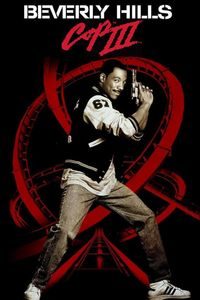
  • Beverly Hills Cop III (1994)

    Beverly Hills Cop III (1994)

    (On TV, October 1998) A mess. Purely and simply. Sometime comedy, sometime action, the mixture just clashes—for instance at the end, where all three main characters have been seriously shot and the film plays is as a laugh-aloud funny moment. The more-than-obvious dialogue given to Eddie Murphy doesn’t help either. The worst thing about this unholy mixture of bad directing and awful writing comes after the last scene, when the credit sequence informs us that no one else but John Landis (Gremlins, The Blues Brothers) and Stephen DeSouza (Die Hard) have produced this piece of garbage. Sure, there are one or two good action sequences (the first car chase, and the ride rescue) but the remainder is bad enough to make you grind your teeth.

  • Antz (1998)

    Antz (1998)

    (In theaters, October 1998) The business of making an all-animated CGI movie must be completely different from a normal film: Since all shots are deliberate and cost incredible amounts of money, care must be taken is order to use the best script and voice talent available, perhaps at the expense of artistic innovation. Antz is a good example. The script/story/dialogue is pretty good (best summed up by one of the movie’s best lines: “It’s just your boy-meets-girl, boy-likes-girl, boy-overthrows-underlying-social-order kind of story”) and the voice talent shines. The animation, needless to say, is great. The overall effect is a decent movie. Perhaps a bit lacking in heart and quirkiness, but one that will offer repeated delights for some time. A good choice for a rental.

  • All The President’s Men (1976)

    All The President’s Men (1976)

    (On TV, October 1998) I remember reading All The President’s Men, a few years ago. At the time, I had been stunned by the non-fiction account of the Watergate scandal by the two journalists who broke the affair, Woodward and Bernstein. This film version, starring Robert Redford as Woodward and Dustin Hoffman as Bernstein, isn’t as complete as the book but faithfully translate the gripping tension of the book. Effective direction, a good script and great acting help, but the real star of the movie remains the Watergate story, which stays relevant even twenty-five years later. This movie has its place besides Schindler’s List and other great historical dramas.

  • Ribofunk, Paul Di Filippo

    Avon EOS, 1998, 241 pages, C$3.99 mmpb, ISBN 0-380-73076-6

    It’s no surprise if Ribofunk rhymes with cyberpunk. In his own way, Paul di Filippo created his own genre, a mixture of deeply ironic low-down technological anti-glitz combined with a distinctive narrative style that is, as pointed out in the opening-page blurbs, to biotechnology what cyberpunk was to the consumer electronic market segment.

    Ribofunk is a series of thirteen short stories -published 1989-1995- unified by a common future history. Sometimes late next century (or maybe the one after that), biotechnology has progressed to the point where bio-modifications of the body are as commonplace as -say- tattoos, sentient human/animal beings are commonplace and North America is ruled by Canadians. Among other things. It’s not an enviable future: despite the wonderful aspect of many technologies, it’s also a world constantly threatened by genetic terrorists, runaway splices and experiments gone awfully wrong. It far less “clean” that even the dirtiest cyberpunk.

    But what a trip it is! Ribofunk is a frenzied, ultra-dense ticket to a richly-detailed future too good to miss. di Filippo packs more ideas in a twenty-page story that some writers manage to put into full-length novels. Given some of the latest headlines, most of it even appears quite reasonable. It’s been said that biotech will the twenty-first century’s biggest science. Ribofunk shows that the same might be true for twenty-first century’s science-fiction. When mixed up with the traditional SF elements like robotic servants, nanotechnology, space travel, moving walkways (take that, Heinlein!), amusement parks and such… it’s an experience that will leave you wanting more. DI Filippo’s satiric tone also helps.

    Even better; up to a certain point, Ribofunk impresses more with is style that with its ideas. Di Filippo writes like Heinlein on an overdose of Gibson; densely-packed futurespeak evoking a fully-realized future that feels immensely real. One story is told by a narrator whose brain was damaged in such a way that he unpredictably breaks into rap rhyming in times of stress; it’s a hoot. Another is a series of dispatches from a soldier increasingly affected by biological warfare. Three stories are in a deliciously noir-ish tough-guy PI tone of voice. Another one tells of a genetically-modified Peter Rabbit going against farmer McGregor… Virtually every page of this collection can be examined for textbook examples on how SF should be written. Di Filippo has done truly stupendous things with the English language.

    Given this onslaughts of stylistic merit and overflowing ideas, it seems almost ungrateful to speak of shortcomings, and yet… Ribofunk‘s stories exhibits a curious tendency to falter at the end, or ending abruptly without any kind of after-denouement. Some stories also appear quite simplistic in retrospect, although most readers will probably be so caught up in the prose that they’ll miss it the first time around. Characterization is adequate, although most will agree that di Filippo’s world is the principal character. The last story also appears out of place with the remainder of the future history, for reasons that will remain a spoiler.

    Still, Ribofunk takes its place along with Egan’s Axiomatic as an SF tour-de-force, an array of future wonders and completely absorbing storytelling. One of the best collections in recent memory, and an exceptional value for anyone given its positioning as the last 3.99$ Avon/EOS special offer. It’s the kind of book that creates fans. Don’t miss it: As the jacket blurb says, “The future isn’t electronic, nuclear or cyber… it’s organic.”