Ben Kingsley

  • Transsiberian (2008)

    Transsiberian (2008)

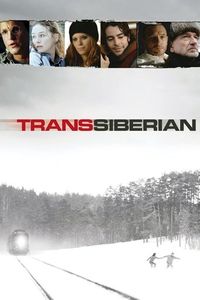
    (On TV, October 2021) Between cinematic strengths and weaknesses, there’s a whole spectrum of mediocre annoyances that will strike some viewers as trivial and others as irritants. So it is that while I’m not ready to condemn Transsiberian as a terrible thriller, it’s just annoying enough that I can’t bring myself to recommend it. Coming from the dark era of the late 2000s, where ugly cinematography was the rage, the film follows an American couple (Emily Mortimer and Woody Harrelson playing an intellectual) as it travels from China to Moscow on the Transsiberian railroad. Of course, it’s a thriller, not a travelogue, so before long they’re stuck with sordid travel companions, drug trafficking and a sinister police officer (Ben Kingsley, effective but clearly slumming it). The suspense is mildly effective, but the film plays a strangely divided game between this ugly, quasi-monochrome cinematography and a lurid storyline that’s about as far away from the grittiness of the visuals. The characters are annoying, and the film doesn’t help by turning them into bloodthirsty killers. A slow start saps initial goodwill, and an overextended finale clearly shows how much it has overstayed its welcome by that point. The train setting is familiar, but the film doesn’t seem to be using all of the opportunities at its disposal to crank up the tension and stick to some kind of spatial unity. Writer-director Brad Anderson’s filmography is incredibly inconsistent, going from the best (The Machinist) to the worst (The Vanishing on 7th Street) and it’s not Transsiberian that makes it any better or worse.

  • Robot Overlords (2014)

    Robot Overlords (2014)

    (In French, On TV, August 2020) “Not good, but better than expected” is a perfectly valid accolade in discussing science fiction films, especially those low-budget foreign productions involving a mostly teenage cast. In this case, Robot Overlords hails from small-town England, where the global tyranny of alien robot invaders means that people are confined at home and subject to occasional deep scans that suck the life out of them. Our heroes are a bunch of teenagers who somehow figure out how to turn off their tracking implants, leading to inevitable revolt. Coming in the middle of the Young-Adult dystopian craze of 2012–2016, and featuring an initial lack of polish reminiscent of Syfy specials, Robot Overlords initially looks as if it could have been much, much worse. Its science-fictional elements are both ordinary and thrown together without much refinement, and the dramatic beats can be seen coming well in advance. The film also features two veteran actors known for slumming: Gillian Anderson turns up as the sympathetic mom of one of the teenaged characters, while Ben Kingsley plays a human enforcer of the alien rule. But, happily, Robot Overlords eventually works its way back to competency—the action moves steadily forward, and the missteps are somehow tolerable. The small-town British setting is different enough to be interesting, and the special effects can keep things lively. By the time the action climax comes around, the film works well enough and leads to a wrap-up that doesn’t overstay its welcome. There are still plenty of conventional moments requiring quite a bit of indulgence from viewers, but the overall package is, again, better than expected.

  • Collide (2016)

    Collide (2016)

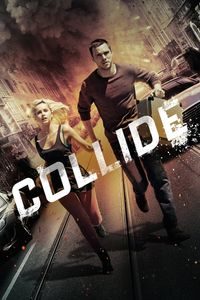
    (On Cable TV, October 2017) The real collisions in Collide are the mismatch between the film’s cast and the pedestrian script … or the way it comes alive during its action sequences, only to wallow in far less exciting clichés once the guns and the cars quiet down. In many ways, few things distinguish Collide from countless other mid-budget action movies that clutter up the VOD release calendar: the script is a collection of familiar plot elements arranged in excessive thriller melodrama, featuring literary allusions that never add up to something like subtext or depth. It takes place in Europe, for lower shooting budgets, foreign financing partners and slightly exotic atmosphere … not to mention the bonus xenophobia considering that the two protagonists are American expats. What sets Collide apart are the presence of living legends Ben Kingsley and Anthony Hopkins as duelling crime lords—money is obviously the answer as to what they’re doing here, which doesn’t make the end result less intriguing to watch. Hopkins is on autopilot while spouting classical literature references as an upper-class crime lord, while Kingsley is also in familiar-persona mode (viz; Lucky Number Slevin, Sexy Beast, even Iron Man 3) as a crude trash-talking nouveau-riche kingpin. Seeing them face off is sort of interesting despite the lacklustre film around them, including generic leads played by Nicholas Hoult and Felicity Jones. Fortunately, another highlight comes whenever the action starts and the cars start racing each other on the autobahn. Director Eran Creevy seems far more interested in fast mayhem and Collide has at least a modest charge for action junkies. It’s also a modest step up from his previous Welcome to the Punch, although there is still a long way to go. Collide doesn’t really escape the limitations of the mid-budget action thriller, but anyone who risks a viewing should find one or two things to break the tedium.

  • Sexy Beast (2000)

    Sexy Beast (2000)

    (Netflix streaming, July 2017) It seems counter-intuitive that a dull movie would feature a great performance, but here you go: Sexy Beast is an overly stylish, largely forgettable crime film that can nonetheless boast of a terrific performance by Ben Kingsley. Kingsley enjoys a reputation as a very respected actor (he won an Oscar for playing Gandhi, no less), but many of his roles have been on the less respectable side of the spectrum, and in Sexy Beast he hits a nadir of sorts as a psychopathic criminal with a non-existent fuse. Copious swearing and psychological manipulation is the least of what he can do, and violence is never far from his actions. It’s a terrific performance, and unfortunately it lands in a film that doesn’t deserve it. Sexy Beast is a caper film that masquerades as a psychological crime drama, but it’s almost empty of anything looking like suspense. While I usually like stylishly directed film, Jonathan Glazer’s work here seems more pretentious and aimless than anything else—None of the pieces really add up to anything interesting, and while I liked the dynamics of a crucial scene in which victims take revenge, Sexy Beast takes a long time to get there, and falsely thinks it’s not the end of the story. Everything else is anticlimactic and increasingly irritating. The result couldn’t be more uneven: a great performance by a great actor, limited in a film that doesn’t quite know what to do with it.

  • Self/Less (2015)

    Self/Less (2015)

    (Netflix Streaming, May 2016) If you ask written Science Fiction fans why they’re so frequently annoyed by media SF, you’re likely to get variations on a common theme: Media SF doesn’t do much with the ideas it plays with. It’s rare to see a SF movie that plays with ideas longer than the duration of a trailer: More often, the SF premise leads to an intensely familiar plot transplanted from other genres almost as-is. A representative example of this problem can be found in Self/Less, which barely has time to explain its premise (Rich old dying man transplanted in younger body, discovers that the body belonged to someone else and vows to fight those who lied to him before then exterminate him) before settling into a very familiar chase thriller. It’s not exactly a new premise (although viewers should be forgiven if they don’t remember 1966’s Seconds), but the execution’s lack of wit instantly relegates Self/Less to undistinguished bargain bin status. Too bad for Ryan Reynolds, who once again doesn’t have much of a role to play. Too bad for Ben Kingsley, who deserves better. Too bad, too for director Tarsem Singh, who delivers perhaps the blandest film of an otherwise colourful career: Aside from some memory flashes, there’s little in Self/Less to justify using a strongly visual director like Singh. The result, sadly, is almost instantly forgettable: The plot is bland, the action sequences are dull and the emotional beats are intensely predictable. For a film based on class exploitation (as in “being rich enough to buy a new body”), Self/Less doesn’t seem particularly interested in exploring them, nor anything else moderately interesting. While Self/Less is competently made, it’s also safe to the point of being featureless. No wonder SF fans often prefer turning to a good book.

  • Eliza Graves aka Stonehearst Asylum (2014)

    Eliza Graves aka Stonehearst Asylum (2014)

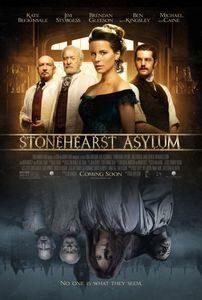
    (On Cable TV, April 2016) There isn’t much in Stonehearst Asylum that’s startlingly new, but the result is well executed enough to make anyone wonder why the film hasn’t received more attention. As is usual with nearly all movies revolving around an asylum, the question of who’s sane and who isn’t weighs heavily on the plot—and seeing Ben Kingsley in a role similar to the one he played in Shutter Island doesn’t do this film any favour. There is a bit of a plodding rhythm to the movie, with a second half that seems a bit empty once the film’s Big Revelation is explained a third of the way through. (There is another Big Revelation toward the end, but it feels almost meaningless.) Still, what makes Stonehearst Asylum so interesting as an unassuming late-night cable-TV discovery is polish and atmosphere. The surprisingly good cast helps: Alongside an always-effective Kingsley, we get Michael Caine in a smaller part than expected, Kate Beckinsale looking pleasantly glamorous despite being in an asylum, David Thewlis playing the heavy and Jim Sturgess as the everyman protagonist doing his best to avoid overshadowing nearly everyone else. The 1899/1900 period setting is effectively rendered by Brad Anderson’s direction, the Victorian-era asylums offering plenty of opportunities for atmospheric visuals. The cinematography is clean and crisp, adding to the visual polish of a thriller than may not be exceptionally thrilling, but certainly has an appeal of its own. It wouldn’t be helpful to expect too much from Stonehearst Asylum: The film runs on low-grade thrills compared to some similar movies. But it plays much better than expected from a film that was a commercial failure and practically went straight to video.

  • The Dictator (2012)

    The Dictator (2012)

    (On-demand, August 2012) After the very-loosely-scripted antics of Borat and Bruno, Sacha Baron Cohen is back in a more traditional comedy mold with The Dictator, which follows an arrogant tyrant forced to confront New York City’s harsher realities.  Plot is the least of the film’s concerns, though, as it showcases Cohen’s character work and does its best to subvert most of the usual movie-comedy conventions.  Don’t expect the dictator protagonist to have a pro-democracy change of heart, don’t expect the heroine to break out of her androgyny, and certainly don’t expect the movie to play nice, because it delights in being as offensive as it can be.  There’s something to offend everyone here, but The Dictator at least manages to get a few laughs out of the results.  It’s a very uneven film, with humor as worldly-sophisticated as it can be gross-vulgar, scenes that drag on far after they’ve made their point, or recurring gags that clearly aren’t as funny as the filmmakers intended.  Some of the targets are easy (including an on-the-nose moment in which parallels are made in-between the USA and dictatorships), “eww” is not a synonym for “ha-ha”, and some of the grosser writing felt lazy.  But it works often enough that even the unfunny stuff is bulldozed away by the next rounds of laughs.  Cohen is, even in a scripted setting, as fully committed to his role, and he seems to be setting an example for the other actors trying their best to keep up.  It’s almost always funny seeing actors like Ben Kingsley in those kinds of dumb comedies, not to mention a quick appearance from Edward Norton.  Still, even with the laughter, there’s a lot of slack in The Dictator’s comedy engine, and it’s those kinds of dull moments, leavened by vulgarity, that would make anyone with for a bit more discipline from Cohen or director Larry Charles.  If anything, The Dictator shows that Cohen’s brand of comic offensiveness can be sustained on a script… but it would be better if it was just a bit more controlled.

  • Species (1995)

    Species (1995)

    (On-demand, August 2012) Unaccountably, I had never seen Species until now, nearly seventeen years later.  For some reason, I had filed away this title as a throwaway B-grade monster movie, not worth the trouble to seek out.  But the future is now, and the film is only a few buttons away from on-demand viewing!  While Species is, in fact, a B-grade monster movie, it’s a slickly-made one, with a few good ideas and some noteworthy elements.  Take your pick of the various names featured in the credits: H.R. Giger’s nightmarish creature design (leading to a few “have I really seen this?” moments), a scene-setting performance by young Michelle Williams as a young alien on the run, Michael Madsen’s cocky turn as a special operative, Forrest Whittaker’s good take on a bad “empath” role, Ben Kingsley as a government operative, or Natasha Henstridge’s asset-baring first big-screen performance.  In Science-Fiction terms, Species is borderline incoherent nonsense, but it springs from a fairly clever conceit of remote alien invasion via radio-signal DNA sequencing.  (Other written-SF stories have tackled the idea, but it’s still relatively original for Movie-SF.)  There are also a few nice things to say about the themes of the film, which combine a few rough ideas about predation and reproduction with more standard horror-film tropes.  Plot-wise, the film remains a monster chase, but the team of monster-hunters is shown effectively, and the rhythm doesn’t really falter until the last act’s fairly standard subterranean heroics.  Species’ dynamic night-time chase sequences show that the film had a decent budget, making the B-movie exploitation elements seem all the more noteworthy.  While some of the film is still stuck in the mid-nineties, it hasn’t aged all that badly and rewards casual viewing even today.

  • Hugo (2011)

    Hugo (2011)

    (On-demand video, March 2012) Watching Hugo became mandatory after its five-Oscar performance at the 84th Academy Awards, but such success was predictable given that Hugo is a movie celebrating movies; Hollywood loves patting itself on the back (as further proved by the night’s other big winner, the silent-film homage The Artist) and Hugo is less about its plot that it is about seeing Martin Scorsese deliver a paean to the beginning of the film industry and, in the same breath, the tradition perpetuated by Hollywood. Which isn’t to say that Hugo is overrated: As a flight of fancy honoring Georges Meliès and the beginning of film-making as a dream factory, it’s perfectly-controlled, lavishly produced and almost heartfelt.  It tells an enchanting story and does so with the best and latest feats of technical wizardry.  Even seen in two-dimensions, Hugo benefits from having been shot in 3D: The opening half-hour, in particular, shows a Cameronian understanding of how to move a camera through space, creating a depth to the film that will delight anyone interested in great cinematography.  The special effects are used wisely, and 1931 Paris comes alive in a way that somehow feels different from any of the many versions of the city seen on film so far.  Hugo doesn’t avoid feeling a bit long, especially toward the end, and wallows in its own sentimentality, but the result is still a film that combines emotion and technology in efficient fashion.  Ben Kingsley is remarkable, and the film allows itself a few moments that, while not strictly necessary, show how much wonder you can create with a big budget and decent craftsmen.  The 2011 epitome of Hollywood at its most lavish, Hugo will speak most clearly to cinephiles willing to embrace “the magic of movies”.