Chris Stokes

  • Running Out of Time (2018)

    (On TV, January 2022) In watching Running Out of Time, I think I’m closing the filmography of writer-director Chris Stokes’s feature-film work for the BET channel. I’ve written elsewhere of my growing awareness of Stokes as a filmmaker and my ongoing disappointment in his work, but I have to admit that Running Out of Time is a high note. While he’s still riffing off a very familiar concept—this time around, a home invasion in which our characters are threatened by bad guys about a secret they don’t know about—, there’s some welcome effectiveness to the opening half of the film. None of it is subtle and some of it borders on overdone, such as the voice of one of the masked antagonists. Much of Running Out of Time is predictable—the mid-turn twist isn’t impressive, and there’s a sense that (as in other Stokes films) the screenplay is simply playing with big broad ideas while not having much to say on its own. Things decline throughout the third act, especially as the action moves outside the house, breaks the tight spatial unity of the story, and steadily dissipates to be replaced with increasingly cheaper attempts to ape better films. The epilogue is baffling—fast-forwarding a few months later for nothing more than a coup de grace that could have been administered earlier and with much less fuss. (So how did she get that top-secret assassination device? There’s an entirely other film in that.)  Tasha Smith looks great, walks around in lingerie but doesn’t have much of a character (not, apparently, much in terms of directing attention) to get into. Running Out of Time is, to be clear, not that good. But when put against other Stokes films for BET, it’s slightly tighter, slightly less ridiculous, slightly more effective. It’s still a significant notch below comparable thrillers, but it’s not as terrible as it could have been.

  • Always and Forever (2020)

    (On TV, January 2022) I don’t exactly enjoy recognizing writer-director Chris Stokes’ name, nor having a (relatively low) opinion of his cinematic body of work, but the truth is that I’ve been watching a lot of BET original movies lately and he’s one of their go-to directors. After watching no less than six of his films in short order, I can say that he’s not always a bad director, but he doesn’t do very well under budgetary constraints—especially in the more demanding suspense genre. His comedies (Fall Girls, Swag Inc.) are better than his thrillers (Til Death Do Us Part, We Belong Together), where his limits as a screenwriter become more obvious. Still, his work fits well within the BET house brand of thrillers, that is: female-centric suspense films playing with familiar tropes often blended in wild ways. The specifics of the plot, the staging or the dialogue aren’t as important as delivering cheap thrills on a small budget. In this regard, Always and Forever is exactly what BET or BET’s viewers expect from a Stokes film: Attractive female lead put in danger, with a wild “twist” both ludicrous and predictable. The specifics in this instance are that a young lawyer (the beautiful Cynthia Addai-Robinson) finds herself in the middle of a dangerous situation when her childhood friends all start dying in mysterious ways. We, as viewers, having been teased with flashback scenes to her teenage years spent tormenting a pudgy young man, suspect that there’s a revenge story at play. It’s ridiculously easy to guess who’s the bad guy, so I suppose there’s some comfort in knowing where the story is going, despite the supposedly intelligent protagonist not having a clue. It escalates to a familiar place—a moonlit deserted summer camp where she and the killer go head-to-head, with the cavalry (a surprisingly intense Wood Harris) not far behind. Much of Always and Forever is simply preposterous, and that’s well before (and after) the Big Twist we’re not supposed to see coming: characters act in contrived ways more useful to the clunky plotting than anything else. (Such as leaving a gun on the ground so that the villain can then pick it up.)  Weird things only make sense in retrospect when they justify later plot points. Don’t ask questions about what’s not expressly shown on-screen (such as an entire murder trial where you would think a defence lawyer would do their job and expose The Twist) and especially do not ask yourself why the villain would hatch such a convoluted and insanely risky decade-long revenge. “He’s a psycho, that’s why” is an uncommonly frequent justification in the Stokes oeuvre. Still, I am now consciously seeking Stokes movies to watch and there’s got to be a reason for it: he is, for lack of a better word, an interesting filmmaker. His scripts are case studies of what not to do and his direction labours under budgetary constraints. But he’s got an eye for attractive actresses, he delivers wild material without even acknowledging its preposterousness and his movies have this strange mixture of narrative rhythm and plot problems that make them fun to dissect. No wonder I can’t stop watching his movies and writing about them.

  • We Belong Together (2018)

    We Belong Together (2018)

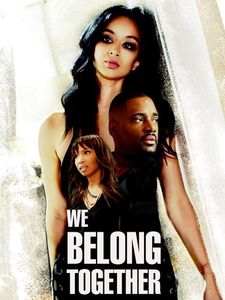
    (On TV, November 2014) As far as trashy psycho-woman thrillers go, BET-broadcast We Belong Together manages to put together the essentials, but doesn’t go beyond them. The plot couldn’t be more familiar, as a divorced man is seduced by a dangerous young woman who then goes on a rampage to ensure that he remains hers and only hers. There’s a poor Teaching Assistant who has to die in order to establish how psychotic our antagonist truly is, but otherwise much of the film is spent steadily moving toward its climax, in which the protagonist’s ex-wife becomes the final target. Even a low-budget thriller, We Belong Together never punches above its weight: writer-director Chris Stokes is, as in other films of his, not particularly ambitious nor skilled. His script is clunky and only occasionally reaches the heights of straightforwardness (“I am your serpent in the tree” is a real piece of dialogue from the antagonist trying to be sexy while pouring liquor down a chained recovering alcoholic’s throat) while his directing feels lazy most of the time — as clearly shown by an underwhelming climax that fades to black before anything too expensive is shown. Charles Malik Whitfield is merely adequate as the protagonist, but if the film has one single asset, it’s clearly Draya Michele in the antagonist’s role: She’s perfectly sexy evil as the femme fatale, mesmerizing for her looks (amply underscored by the camera) as much as her screen presence. She brings a lot to an underwritten character that relies too much on easy clichés (she’s a psycho — we’re done here) than anything like credible characterization. There’s nothing in We Belong Together — no plot development, no individual story beat — that can’t be predicted, but that’s almost to be expected considering the film’s straight-to-TV pedigree. It’s still not too terrible, especially as background material. Michele is worth a look, though.

  • Sacrifice (2019)

    Sacrifice (2019)

    (On TV, October 2021) Star power, sex-appeal, likability… call it what you want, but such a thing can matter a lot in compensating for an otherwise disappointing film. I would watch Paula Patton in just about anything, and so she’s one of the few things keeping me from calling BET+ Original film Sacrifice a complete miss. Here she plays a high-powered entertainment lawyer who, rather than do dull stuff like negotiating contracts and taking care of intellectual rights tangles, uses shady methods to investigate crimes and fight the local District Attorney on behalf of her rather loathsome clients. There’s a uniquely BET sensibility to the premise, blending flashy entertainment bling (all of her clients are music people—nothing so mundane as a writer or non-hyphenate actor) and the narrative assets of someone who can fight crime. Or condone it, as the film’s fuzzy morality suggests. If that sounds like an ideal premise for a Ray Donovan-like TV series, then you’ll understand my growing dismay as the film heads for a non-conclusive ending as if it was a TV pilot, because it is, and to a degree rarely seen in publicly aired pilots. Interesting characters are introduced, plot lines are set in motion, the dramatic redemption arc is barely sketched (let alone begun), an innocent killed, an overarching mystery set up… and then the film ends at a funeral, with opposite personalities hissing at each other while outlining the moral stakes of the series. Designed to hook viewers into a series that, as of one year after the announcement, was theoretically approved but never put in production due to the pandemic, Sacrifice is probably avoided until the follow-up series materializes [November 2021: Which it did!], or unless your crush on Patton is strong enough. Uninspired direction and some clunky dialogue don’t help. The unfinished narrative business also gives a very odd morality to the standalone result: The protagonist is set up as having many long-term issues (murdered dad, promiscuousness, shady morals) that are designed to be untangled and resolved over a long period of time, but just make her feel like an unlikable villain—even when she sororially tangles with a bullheaded DA that, from an objective perspective, should be the person we should cheer for. Liking Patton (and the extravagant outfits she gets in every scene) helps a lot, but she’s a beautiful actress who needs to be firmly directed to break out of her emotionless delivery, and I don’t think that writer-director Chris Stokes was able to do that: whether it’s a quirk of character or the actress herself, her flat blank-face line reading is not nearly effective enough. I did like many of the supporting characters, though—Erica Ash frequently rolls over Patton as the hard-charging DA, Veronika Boseman is captivating in a supporting role and there’s a good geekish character that feels like an ensemble dark horse. You can see where a series would go with those elements, but that presupposes that a series would be there to provide character development and dramatic resolution. Right now, though—none of that is available. Some pilots are developed without resolution… but they’re never shown publicly without the rest of the series, and that’s probably what should have happened with Sacrifice.

  • Fall Girls (2019)

    Fall Girls (2019)

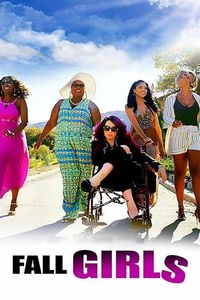
    (On TV, June 2021) I have a soft spot for BET channel original films — they don’t always aim high, but the diversity of characters is often interesting by itself, and the actresses often look really nice. With Fall Girls, we have the feeling that the premise comes from the melted components of roughly a dozen films. The opening moments have four women (three of them friends, one of them definitely not) heading to Las Vegas to live it up with their soon-to-be-retiring boss. But after a night of (what else?) wild debauchery, they wake up in a trashed hotel room, with their boss dead. Fans of The Hangover and Girls Trip (to name only two) can rest easy, because now comes Weekend at Bernie’s to take over as guiding light, as the four lead characters fake their way into making everyone believe that their boss is still alive and hanging with them… even to those who killed her. After that, the plot goes off in all directions, what with the one-night stand that ends up being more than that, corporate rivalry gone hot, female bonding comedy, and a concluding thirty seconds crammed with more crosses, double-crosses and triple-crosses than an entire cathedral. There’s even some stylistic flair from time to time, at least more than is the norm for BET originals. Fall Girls stops making any sense well before the end, but the conclusion springs a patently impossible new technology as a way to explain an unexplainable plot — just to give you an idea about how little writer-director Chris Stokes actually cares about us caring. Still, it’s not without its moments. Amara La Negra looks good despite some shaky line readings, and there are a few chuckle-worthy moments. The ending is so over-the-top that it gathers some admiration for audacity, if not any compliments for plausibility. Fall Girls may not be great art, but it’s middling fun and that’s really what I was expecting.