Daniel Auteuil

  • Fanny (2013)

    (On TV, January 2022) (This review addresses both the 2013 versions of Marius and Fanny, so closely are they related) I have now watched three takes on Marcel Pagnol’s Trilogie Marseillaise: the original 1930s French duology, the 1961 Hollywood version that blended all three volumes in one lengthy film, and this, a 2013 diptych that brings the first two volumes to life. My favourite, blasphemously enough, remains the Hollywood version: Not only does it compress the entire trilogy into a single film, it features the iconic performances of Maurice Chevalier and Charles Boyerin two key parts, plus Leslie Caron in one of her most attractive roles. While this 2013 version of the story benefits greatly from a more fully lived-in presentation of the sets and a more naturalistic approach to the acting, it’s cruelly missing a compelling cast. Director Daniel Auteuil doesn’t do badly with his ensemble of actors (including himself in a lead role), but they don’t measure up to their predecessors. Choosing to tell the story in three films also leads to at least two vexing problems: The first, obvious one is that the pacing of the story becomes languid. While 1961’s Fanny was a delight because of the amount of plotting it crammed during its running time, this adaptation takes forever to make basic plot points and challenges the patience of movie audiences. Less obviously, this decision to split the story in three parts leaves the project open to a worse case scenario that, indeed, happened: the filmmakers and their financial backers lost interest in concluding the trilogy, meaning that the third volume was never produced and will never exist using this cast and approach. As a terminal case of narrative frustration, it’s reason enough to go back to 1961 for full satisfaction. I still liked these newer takes on Marius and Fanny quite a bit of it: the wonderful Marseilles accent is on full display here, and the sense of place created by modern filmmaking does give this version of the story its best reason to exist. Still, and I realize that I’m belabouring the point, you really don’t need this version if you’ve seen the Hollywood one. Watch it if you’re a completionist or if you’re curious to see how it compares to previous versions. Otherwise, you risk terminal narrative frustration.
  • Marius (2013)

    (On TV, January 2022) (This review addresses both the 2013 versions of Marius and Fanny, so closely are they related) I have now watched three takes on Marcel Pagnol’s Trilogie Marseillaise: the original 1930s French duology, the 1961 Hollywood version that blended all three volumes in one lengthy film, and this, a 2013 diptych that brings the first two volumes to life. My favourite, blasphemously enough, remains the Hollywood version: Not only does it compress the entire trilogy into a single film, it features the iconic performances of Maurice Chevalier and Charles Boyerin two key parts, plus Leslie Caron in one of her most attractive roles. While this 2013 version of the story benefits greatly from a more fully lived-in presentation of the sets and a more naturalistic approach to the acting, it’s cruelly missing a compelling cast. Director Daniel Auteuil doesn’t do badly with his ensemble of actors (including himself in a lead role), but they don’t measure up to their predecessors. Choosing to tell the story in three films also leads to at least two vexing problems: The first, obvious one is that the pacing of the story becomes languid. While 1961’s Fanny was a delight because of the amount of plotting it crammed during its running time, this adaptation takes forever to make basic plot points and challenges the patience of movie audiences. Less obviously, this decision to split the story in three parts leaves the project open to a worse case scenario that, indeed, happened: the filmmakers and their financial backers lost interest in concluding the trilogy, meaning that the third volume was never produced and will never exist using this cast and approach. As a terminal case of narrative frustration, it’s reason enough to go back to 1961 for full satisfaction. I still liked these newer takes on Marius and Fanny quite a bit of it: the wonderful Marseilles accent is on full display here, and the sense of place created by modern filmmaking does give this version of the story its best reason to exist. Still, and I realize that I’m belabouring the point, you really don’t need this version if you’ve seen the Hollywood one. Watch it if you’re a completionist or if you’re curious to see how it compares to previous versions. Otherwise, you risk terminal narrative frustration.

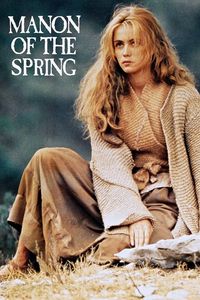
  • Manon des sources (1986)

    Manon des sources (1986)

    (On Cable TV, January 2021) If you were left bewildered and heartbroken by the tragic tale of French drama Jean de Florette, keep in mind that it was only the first part of a whole completed by Manon des sources—both movies being shot as a single super-production with the approval of a French government eager to bolster its national history through glossy motion pictures. This second half of the story (adapted from a novel by the renowned Marcel Pagnol) picks up half a generation later, as the young Manon (who, in the earlier film, saw her father’s life being destroyed by the schemes of two local farmers) attains adulthood and sets out to avenge past offences. As with the previous film, there’s a strong cinematographic quality to Provence as shot in yellow, green and brown: the scenery is magnificent in its semi-arid quality, and we feel as much as we understand the importance of the local water supply. But it’s narratively that Manon des sources provides most satisfaction: After spending three hours of total time cranking up the pressure of unpunished injustice, the last hour of the film goes from revelations to punishment in several cycles, giving the last words to Yves Montand in a great last performance. The ending does pile up so many revelations and twists that it defies plausibility, but since much of the film takes place in solidly melodramatic territory, this isn’t as inappropriate nor as ineffective as you’d think. Montand is typically great in what feels like an archetypical role, but Daniel Auteuil also does well, and Emmanuelle Béart aptly replaces Gérard Depardieu. By the end of the film, my opinion of both movies had increased significantly from the first moments of the first film: it wraps up with a nice bow and a tragic flourish. Jean de Florette and Manon des sources are landmarks of 1980s French cinema for a good reason.

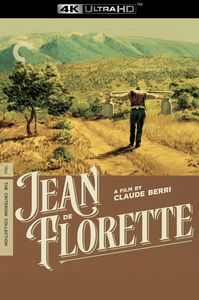
  • Jean de Florette (1986)

    Jean de Florette (1986)

    (On TV, January 2021) If you want to talk about the big guns of 1980s French cinema, Jean de Florette imposes itself as a must-see: As the first half of a massive project (along with sequel Manon des sources) going back to early-20th-century Provence as a backdrop to a melodramatic tale of deception and revenge, it features lush cinematography, big stars and the approval of the French establishment. Adapted from a book written by no less than Académie Française member Marcel Pagnol, it seemingly spares no expenses going back in time to a small village where water is a scarce commodity. Gérard Depardieu stars as a family man coming back to his deceased mother’s farm with big plans to raise rabbits. But that plan depends on having access to water, and as luck would have it, the locals have other plans: Distrustful of the educated, optimistic outsider, two of them conspire to hide an invaluable spring on his farm. The legendary Yves Montand capstones an illustrious career as the antagonist, with some able assistance from Daniel Auteuil as a co-conspirator. Spending two hours watching a likable protagonist’s plans being thwarted by the small-mindedness of rural locals may not be anyone’s idea of a good time, but there’s a compelling quality to the narrative; the pacing is faster than you’d expect and the film is meant to be seen as the depressing Part One of a larger work preparing for the release offered by Manon des sources. Depardieu, Montand and Auteuil each provide exceptional performances in their own way, and the setting provides the rest. Shot in a yellow/green palette punctuated by brown, it’s often a spectacular film even when abstracting the narrative. Historically, the film fits in a national strategy of exploring France’s past through movies, and it’s hard to imagine a better depiction of that time and place. (Even if, to French-Canadian ears, the accents often play as a caricature of a certain kind of Frenchman—Montand is particularly ripe for imitation.)  I was honestly surprised by Jean de Florette—I watched it out of obligation, and ended up enjoying it. (But I’m writing this after the far more engaging Manon des sources, so keep the necessity of watching both in mind.)