Darren Grant

  • Make It Happen (2008)

    (On Cable TV, February 2022) I’m amazed that Make it Happen doesn’t have a higher profile, but I think I can explain why… and acknowledge that my own interest in the film isn’t that innocent. Let’s address that last idea first, since it may be the film’s biggest selling point for some: If you had told me at any point over the past few years that there was a film about Tessa Thompson doing burlesque dancing, you would not have been safe standing in the path between me and the nearest screen. But it’s true! Make It Happen dates from the late-2000s dance-movie craze, and it happens to feature a pre-stardom Thompson (in one of her first movie roles) as a dancer at a burlesque-influenced club. Now, let’s be clear on pain of setting far-too-high expectations for the film—this is burlesque-light at best, and Thompson’s showcase number is very chaste even when it showcases her quite well. It’s rated PG-13 for a reason, and the film doesn’t really go anywhere beyond most of the dancing movies of the time. It’s also very conventional in terms of plotting—ye olde “small-city girl moves to the big city, sees her initial dreams dashed, gains experience in a tangentially-related way and then finally achieves her ambitions” dramatic arc that’s been a staple of musical comedies since the 1930s. It’s thin to the point of feeling that the film ends abruptly, but it’s not necessarily unenjoyable. While Thompson is the focal point of my interest in the film, she’s a supporting character: Mary Elizabeth Winstead does rather well in the lead role, convincingly gyrating as her character should. The film is structured in a way that it’s clear when the dance numbers are on—in the proud tradition of musical comedies, each dance number becomes its own minifilm with specific cinematography and a focus on the performers. Director Darren Grant isn’t that good a director for big dance numbers, but the point gets across. (Incidentally, this was the last of the four films in Grant’s eclectic filmography that I hadn’t yet seen.)  Make it Happen amounts to a pleasant watch—nothing wild, nothing particularly memorable unless you’re a Tessa Thompson fan (and if you’re not—what’s wrong with you?) but something far more enjoyable than its near-obscure status nowadays would suggest.
  • Diary of a Mad Black Woman (2005)

    (On Cable TV, January 2022) While not personally directed by Tyler Perry, Diary of a Mad Black Woman is clearly a Perry movie, and his first as well—he wrote it, and makes his big-screen debut(s) as a lawyer, an elderly man and Madea herself. The film comes straight from his prior theatrical experience and box-office receipts—Perry’s life and rise to notoriety will one day be the topic of a movie, and I expect that this film will be a major turning point. It certainly exhibits in even rawer form than usual the trademarks of Perry’s later career: the brute-force melodramatic style of his movies, the awkward blend of funny and serious scenes, the role of spirituality, the earnest romantic material, the importance he places on female characters, and—most strikingly of all—the place that his Madea character would occupy in his work. As the film begins, our narrator (a rich, pampered wife of a respected lawyer) finds herself kicked to the curb in an absurdly over-the-top sequence in which her belongings are stuffed in a moving van, her husband’s side-chick moves in her formerly palatial house (along with two mentioned-but-never-seen kids) and she finds herself abruptly homeless on their 18th wedding anniversary. Seeking refuge with Madea launches the Madeaverse in a broader sense, and leads to the film’s funniest sequence in which Madea goes for some tough-love chainsaw-powered retribution (which then, less joyously, results in the first of her many skirmishes with the law). The rest of Diary of a Mad Black Woman goes high and low in the search for self-fulfillment and forgiveness of its main character—and she’s certainly not portrayed as a saint considering that some of the third-act wild turns have her become an abuser. There’s some great material here, although it’s presented in very raw form: While Darren Grant directs efficiently, this is Perry’s show—the story often can’t focus, goes through wild mood swings, does not deal in execution subtleties even when it tackles challenging material, and does offer decent showcases for its actors. Kimberly Elise is not bad in the lead role, while Steve Harris does get some rough material to play as her near-ex-husband. Cicely Tyson appears for a few scenes as the protagonist’s mother, foreshadowing Perry’s gift for casting great actors in later films. Diary of a Mad Black Woman probably plays better now than it did in 2005—Perry is now a known quality and a certifiable success, so this works better as a piece of juvenilia than a calling card for a new talent. If you’re a fan of the Madeaverse, it’s decent-enough entertainment: at least you know what flaws to expect.

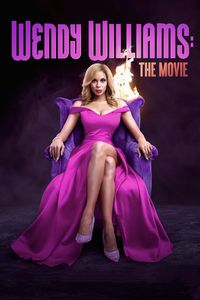
  • Wendy Williams: The Movie (2021)

    Wendy Williams: The Movie (2021)

    (On TV, January 2021) I watched quite a bit of Wendy Williams’ show for a few years when I was married (“How you doin’?”), and her oversized personality is enough to make Wendy Williams: The Movie sound like an interesting topic. Even casual Williams fans know quite a bit about her struggles—candid honesty has been one of her trademarks for a long time, and the biography illuminates what we’ve known or suspected. Everyone should note that this Lifetime biography is practically a Williams vanity project: Produced by her own production company and presenting the story as explicitly narrated by Williams (who closes the film by appearing on-screen to talk to the viewers), the film presents Williams as being right even when she’s behaving badly or being done dirty: Body issues from childhood spurred on by her parents; a date rape that leaves her more determined than even to forge her own way ahead; cocaine addition kicked in an instant after realizing it didn’t do much for her; the discovery of her husband’s double life that gives her the excuse to behave like the spurned heroine of her own movie… it’s also a film made for Williams fans, with very little second-guessing allowed. Even a cursory recall of Williams’ various controversies (Despite her intelligence, Williams has said a lot of outrageous stuff over the years and some of it was incredibly stupid) is enough to remind us that a lot goes unsaid or unaddressed in this “tell-all” biofiction. Ciera Payton gets plenty of praise for playing Williams despite not looking all that much like her—but then who else does?—while director Darren Grant gets things moving within the confines of a TV movie’s budget and time constraints. The narrative is too raw on the drugs, rape and betrayal side to qualify as fluff entertainment, but viewers are going to be reminded from beginning to end that this is Wendy Williams as seen by Wendy Williams, which may not always be the most interesting angle.