Eleanor Parker

  • Interrupted Melody (1955)

    (On Cable TV, March 2022) One of the problems in seeing as many movies as I do is that when it becomes obvious that the film plays along familiar lines… well, I can be tempted to tune out. This is particularly pronounced in genres I don’t particularly care for, or in historical context not known for their surprises. When it became obvious that Interrupted Melody, in presenting the life of polio-stricken opera singer Marjorie Lawrence, was going to go through the musical biopic template and the disabled protagonist narrative (according to old-school Classic Hollywood style), well, I had to rewind a few times in order to keep up with my wandering attention. Alas, this attention to reviewing ethics wasn’t rewarded—upon a second look, the film was almost exactly what it had sounded like on a distracted first viewing: an overproduced heroic biography made according to the MGM house style of the time, patently artificial and yet confidently produced as such. Despite being Lawrence’s biography (as she is played by Eleanor Parker), Glenn Ford somehow gets first billing as the somewhat irritating husband who put her through the wringer. Interrupted Melody is not particularly thrilling from a musical point of view, and somewhat pedestrian from a cinematic standpoint. It feels rote despite its intention to inspire, and doesn’t leave much of an impression. It is what it is for that time, but there’s a reason why it doesn’t warrant much attention these days.
  • Warning Shot (1967)

    (On Cable TV, February 2022) There’s something very contemporary about a film exploring the repercussions of a police shooting, but don’t go into Warning Shot expecting much in terms of police contrition: this is one of those movies in which deadly force by the police is not just explained and justified, but repeated in time for the finale. There isn’t much to see in cinematographic terms either: the film was shot by a TV production unit and it shows through the flat lighting, close-up framing, limited locations and generally unimaginative colour cinematography. Still, there’s a nicely-handled plot throughout, as our policeman protagonist must defend himself against accusations of having shot a noble doctor for no reason, and finds himself ostracized by everyone except by a ratings-seeking media personality. There are plenty of elements that have become far more familiar over the past few decades, and one wonders if a more stylish take on the story (race-flipped to make it more interesting) would do well these days. A few known names (including Lillian Gish, Eleanor Parker, George Sanders and Joan Collins at very different stages of their careers) pepper the supporting cast. Warning Shot doesn’t have much of a profile these days (I happened to see as it was featured as part of TCM’s “neo-noir” series, which feels like a stretch) and it’s easy to understand why—aside from a few known names in supporting roles, there isn’t much here that’s distinctive. But it can still be readily watched.

  • Caged (1950)

    Caged (1950)

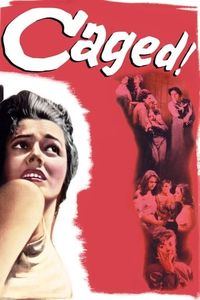
    (On Cable TV, October 2021) Women-in-prison exploitation films are nothing new, especially when they’re toned down just a little bit to become social dramas: I’ve seen examples dating back to the 1930s. Caged is nothing new when compared to later examples of the form, but the harshness of its treatment combined with its film-noir production era does lend it a curious kind of respectability. (People at the time agreed—the film was nominated for three Oscars.)  Much of the film is a story of corruption—terrible prison conditions, of course, but also the corruption of its lead character (a rather good performance by Eleanor Parker) as she goes from naïve young woman to hardened criminal during her time inside. The film spares no plot devices—whether it’s prison-born babies, killed kittens, inmate murder or desperation suicide—to keep viewers incensed and involved. It’s grim and effective all the way to the final merciless line of the film. It’s tautly made at barely 96 minutes, and director John Cromwell keeps things grim and simple. There’s exploitation to Caged, of course, but it’s cleverly crafted and disguised as a socially conscious description of how the prison process itself dehumanizes its victims.

  • Scaramouche (1952)

    Scaramouche (1952)

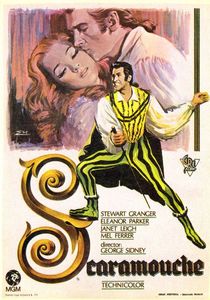
    (On Cable TV, August 2020) Hey, let’s head back to royal France for some good old-fashioned land-bound swashbuckling! Scaramouche is the kind of expansive epic film that Hollywood was able to execute so well in the early 1950s. Filmed in bright colours, it adapts classic literature into an adventure meant for the big screen. Our hero is a young man ably played by the square-jawed Stewart Granger, who finds himself tempted by two women (the gorgeous red-headed Eleanor Parker, and the no less good-looking Janet Leigh) as he makes an enemy of an aristocratic master swordsman (deliciously played by Mel Ferrer). Realizing that he doesn’t stand a chance in combat, he goes hiding in a theatre troupe, hoping to sharpen his sword-fighting skills until he can confront his nemesis. The emphasis on the theatrical performance of comedia del arte allows Scaramouche to have some intentionally comic interludes in-between the bouts of action and swordplay, but don’t worry: it ends with a magnificent eight-minute sword-fight that goes all around and behind a theatre, blending all of the clichés of Hollywood fencing in a rather delightful package. It’s all quite charming, and an almost pitch-perfect of the kind of Hollywood was churning out on an assembly line at some point. It’s far less leadened than many other historical movies, and Parker is a sight to see while waiting for the climactic sword-fight. The far-fetched plot elements are insane, but completely in keeping with Scaramouche’s slightly feverish pace and attitude.