Frank Sinatra

  • Ava Gardner, la gitane d’Hollywood: les années espagnoles de la Comtesse aux Pieds Nus [Ava Gardner: The Gypsy of Hollywood] (2018)

    Ava Gardner, la gitane d’Hollywood: les années espagnoles de la Comtesse aux Pieds Nus [Ava Gardner: The Gypsy of Hollywood] (2018)

    (On Cable TV, August 2018) Made-in-France TV documentary Ava Gardner, la gitane d’Hollywood: les années espagnoles de la Comtesse aux Pieds Nus has both a breathless title and a somewhat tight focus on Gardner’s years in Spain during Franco’s dictatorial regime. While there’s clearly some affection for Gardner here (expressed either through interviewees who met her over there, or star-struck commentators), she does get excoriated for her indifference to the authoritarian regime that welcomed her, and her lack of awareness for the role she played in realpolitik between the United States and the Spanish government at the time. A secondary axis of focus for the film is in describing how Gardner was possessed of a beauty that outstripped her ability to deal with it. Coming from modest rural origins, she was celebrated as a world-class beauty but it was a life-long struggle for Gardner to come to grip with what it meant and not being exploited for it. A third area of interest consists in her tumultuous marriage with Frank Sinatra, although there’s a lot left out of that segment. The rest of Gardner’s life and career gets perfunctory but disappointing mention—her apprenticeship in the studio system prior to The Killers, her stardom years, her twilight decades before her 1990 death in London all get comparatively short thrift here compared to the Spanish years. It’s not uninteresting (especially as an occasion to learn more about Gardner), but the film ends up being unsatisfying: It’s focused on too narrow a period in her life when there’s an incredibly rich career barely mentioned. I suspect that much of Ava Gardner, la gitane d’Hollywood’s shortcomings come from its origins as a time-limited TV documentary and ready access to Europe-based sources more familiar with Gardner’s Spanish years—but there’s a lot of material left untouched if anyone else wants to make a better Gardner biopic.

  • Guys and Dolls (1955)

    Guys and Dolls (1955)

    (On Cable TV, August 2019) I remain amazed at how some movies can produce some consistent reactions for decades. If you look at contemporary accounts of Guys and Dolls prior to its release, the themes are similar: “What? Joseph L. Mankiewicz directs a musical featuring Jean Simmons and Marlon Brando? What craziness is this?!”  Considering that neither Mankiewicz, Simmons nor Brando ever went back to musicals after this one-off, you can get the exact same reaction well into the twenty-first century. Of course, we now have fairly entertaining stories of rivalry on the set between Brando and co-star Frank Sinatra, the latter of which was not impressed by Brando’s mumbling or singing deficiencies. (I’ll agree with Sinatra on this one.)  Guys and Dolls, seen from today’s perspective, is not entirely as slick as other musicals of the era—and Brando has the double disadvantages of not being in his element either as a singer or a comedian, his mumbling quickly becoming annoying. Sinatra is far more comfortable in going from song to jokes. The cabaret numbers are fun: I enjoyed the “Pet me Papa” cat-girl number a bit too much. Mankiewicz does relatively well in helming the production: The introduction is great, the conclusion makes good use of its impressive Times Square stage and the dice gambling scene is not bad either. The result is a bit too long at 150 minutes, but Guys and Dolls did scratch my itch for a lavish musical … and I look forward to future generations of cinephiles also asking themselves what Brando was doing in a musical.

  • Anchors Aweigh (1945)

    Anchors Aweigh (1945)

    (On Cable TV, January 2019) I’m probably showing the shallowness of my pool of reference, but Anchors Aweigh certainly struck me as a dry run for the more successful On the Town four years later. After all, both movies star Gene Kelly and Frank Sinatra as sailors on shore leave, reaching for the same kind of audience-friendly mixture of comedy and music. It’s as if both sprang from the same starting point, with On the Town improving upon its predecessor by featuring more couples and swapping Los Angeles for New York. Still, Anchors Aweigh is far more than a prototype—it’s a perfectly enjoyable film in its own right. The plot is serviceable as a way to showcase what its leads do best. Sinatra is great while singing a quiet number at a piano, while Gene Kelly dances as well as ever—famously with an animated Jerry the Mouse, but also in a market sequence, and then again in a dream Spanish adventure sequence. The colourful look at 1945 movie studios pleasantly blurs the line between fiction and memorializing then-reality. George Sidney’s direction is slickly professional (especially during the Hollywood Bowl piano sequence), and female lead Kathryn Grayson is very, very cute. While comparisons with On the Town do Anchors Aweigh no favour, it’s a very enjoyable musical, and it’s doubly worth seeing by classical Hollywood fans by virtue of showing us what MGM studios looked like at the close of WW2.

  • Robin and the 7 Hoods (1964)

    Robin and the 7 Hoods (1964)

    (In French, On Cable TV, November 2018) Now Robin and the 7 Hoods is an interesting curio: A gangster musical, featuring Bing Crosby and the Rat Pack. Adding even more interest to the proceedings, the story is a retelling of Robin Hood in Prohibition-era Chicago. With a premise and cast like this, you can almost be forgiven for thinking that whatever is on-screen is a let-down from whatever idealized movie you could imagine. Depending on your taste, the film is either too talky, too long, not witty enough to fully capitalize on its potential, or to make good use of its long list of performers. Barbara Rush isn’t as good a Marian as she could have been, while we can quibble about the number of songs given to this or that actor/singer. All of this is true—Robin and the 7 Hoods is never mentioned as a major musical, and there’s a feeling that the material could be done quite a bit better. And yet … there are some really good moment in here. The highlight has to be the “Bang! Bang!” number featuring Sammy Davis, Jr. as a gun-crazy gangster shooting up the place. Another great sequence has a speakeasy transforming itself into a religious mission complete with gospel singers. Edward G. Robinson shows up briefly as an elderly gangster, while Frank Sinatra, Dean Martin (a bit wasted) and Bing Crosby (showing up too late) get to croon a few numbers. The colourful portrait of 1920s Chicago is a straight-up cliché, justifiably so in a silly musical comedy. I do wish Robin and the 7 Hoods would have been just a bit better, but I still had quite a good time watching it all. Just the thrill of discovery does account for much of it.

  • Von Ryan’s Express (1965)

    Von Ryan’s Express (1965)

    (On TV, October 2018) The 1960s were a strange time for war movies, as they (influenced by the Vietnam debacle) steadily evolved from the war-is-an-adventure tone of the 1950s to the war-is-hell tone of the 1970s. Von Ryan’s Express is an unsatisfying mid-way point along that evolution: While it does present itself largely as an adventure in which WW2 Allied POWs escape the clutches of the Nazis thanks to complex train-bound shenanigans, it also features a rather depressing ending that cuts short any willingness to cheer all the way to the ending credits. This ending (reportedly motivated by star Frank Sinatra’s desire to avoid sequels) is all the more maddening because it’s not quite tonally consistent with the rest of the film, which is a good old-fashioned outwit-the-Nazis romp on rails in the closing days of the war. Sinatra is dependably charismatic in the lead role, with a decent ensemble of supporting character actors. The production values are high and so is the verisimilitude of the results. The tension runs high, and Von Ryan’s Express does, up until its last few moments, seem aimed to become a sure crowd-pleaser. But then there’s the ending … which I’ve already discussed.

  • High Society (1956)

    High Society (1956)

    (On Cable TV, July 2018) Considering the high esteem with which I hold The Philadelphia Story (Hepburn! Grant! Stewart!), you may think that I wouldn’t be so happy about its musical remake High Society. But that’s not the case! I like musicals, and High Society is a great musical, justifying its existence by doing things that the original film couldn’t do. The fun starts early as the film features Louis Armstrong and His Band introducing the setting in song before turning to the audience and winking, “End of song, beginning of story.”  I like my musicals self-aware, and the tone thus having been settled, we’re off to the races as Grace Kelly, Bing Crosby and Frank Sinatra end up forming the triangle at the centre of the story. Kelly plays her princess-like role well enough—not up to Katharine Hepburn’s level, but the irony level is off the chart considering that this would be her last film before becoming a member of the real Monaco royalty. Crosby and Sinatra are effortlessly charming as usual—“Who Wants to Be a Millionaire?” is sensational, and “Now You Has Jazz” has Armstrong taking centre stage for a welcome encore. The film is at its weakest when running through the motions of repeating its inspiration, and at its strongest when it goes off in song and dance numbers. I really enjoyed it—especially as a musical.

  • From Here to Eternity (1953)

    From Here to Eternity (1953)

    (On Cable TV, May 2018) For all of the continued acclaim of From Here to Eternity as a classic piece of Hollywood Cinema, the film itself is often a disappointment. From its descriptions, you could maybe expect a sweeping drama set in pre-Pearl Harbor Hawaii, with high romance being interrupted by the beginning of the war. Alas, that’s just you going from the iconic beach scene and hazy memories of Michael Bay’s Pearl Harbor—the reality of From Here to Eternity has more to do with it being an adaptation of a gritty dramatic novel in which nobody gets a happy ending. On the menu: a sordid affair (one of many) between a traumatized housewife and an indecisive soldier; physical abuse in the military; a character falling for a high-end prostitute (oh, OK, “hostess”); and the Japanese on their way to ruin the melodrama right before the end. Also on the menu; terrifying dumb decisions from the characters to ensure that they will not get what they want (often dying in the process). As a period piece, From Here to Eternity is not that successful—until the Japanese attack, the film feels far too intimate to reflect the reality of living on a military base and the way it spends nearly all of its time in small sets does undercuts its bigger ambitions. The image of the beach romance suggested by the film’s reputation is far worse in context: Not only is the beach frolicking limited to a few seconds, it’s in support of an adulterous relationship that’s not particularly admirable, and it leads straight to a soliloquy of intense personal grief. Frame the picture of Burt Lancaster and Deborah Kerr smooching if you want, but don’t expect the film to heighten the fantasy. This being said, much of this reaction is a reaction to the film’s sterling reputation—taken on its own, From Here to Eternity does remain a good dramatic piece, anchored by able performances by Lancaster, Montgomery Clift and (especially) Frank Sinatra, with Kerr and Donna Reed on the distaff side. Still, reading about the film (and the changes from the original novel) is often more interesting than the film itself. Overinflated expectations or under-delivering period piece—I can’t decide for now (and I suspect that watching three WW2 movies in a row due to Memorial weekend doesn’t help), although I am glad to have seen it to complete that bit of Hollywood History.

  • On the Town (1949)

    On the Town (1949)

    (On Cable TV, February 2018) At face value, On the Town is a ridiculous film. Following three sailors on leave in Manhattan through a day of gentle debauchery, it has unbelievable coincidences, a pat ending, generic characters and some astonishing lengths, including an entirely optional dream sequence. But here’s the thing: it’s a musical, and like many of the musicals closely associated with Gene Kelly, it knows it’s a musical. It doesn’t even waste any time telling us that it acknowledges its own absurdity, from the impossibly full morning tourism of the characters, to three cabarets reprising the same ditty, to the consciously ridiculous meet-cute romances. Gene Kelly and Frank Sinatra make for fantastic leads, and the visual polish of On the Town is often eye-popping: If I liked Ann Miller best of all the film’s dames, it may have something to do with the fantastic green dress she wears throughout “Prehistoric Man.”  The film is, from “New York, New York” on, a joy to watch: Cheerful, exuberant, unconcerned with plausibility and rather racy in some implications, it’s also a delightful romanticized time capsule of post-war New York City in full Technicolor. The location shooting (a rarity at the time), as short as it was, brings a lot to the film. I’m not terribly fond of the dream sequence, except that it does show the possibilities of ballet in a non-traditional setting … like many of Gene Kelly’s films. All in all, I was pleasantly surprised by On the Town—it’s much better than a summary would suggest, and simply a lot of fun.

    (Second viewing, On Cable TV, August 2020) Two-and-a-half years and several dozen musicals later, I still like On the Town a lot — it’s self-aware, visually imaginative, can depend of the combined talents of Gene Kelly, Frank Sinatra and Ann Miller and does create the bubble of fantasy that many musicals rely on.  A second look highlights a few things that hadn’t necessarily focused upon the first time — such as the underhanded agency of the female characters, and the fact that our male protagonists are slightly idiotic.  Once past Ann Miller, I also have plenty of nice things to say about Vera-Ellen, Betty Garrett and even Alice Pearce in a clearly comic role.

  • The Manchurian Candidate (1962)

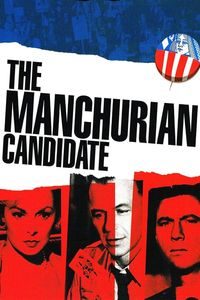
    The Manchurian Candidate (1962)

    (Second viewing, On Cable TV, November 2017) I thought I remembered The Manchurian Candidate from seeing it (on TV, in French) more than two decades ago, but it turns out that I had forgotten quite a bit in the meantime. Which is a good thing, given that I got to re-experience it all over again. A product of the paranoid early sixties (it was famously released shortly before the Cuba Crisis), The Manchurian Candidate delves into far-reaching Russian plots to destabilize the United States through intervention in its politics—but stop me if this is too familiar circa 2017. What I really did not remember from my first viewing is how early we know of the Russian brainwashing, and the delightfully crazy way in which this is explained, through a dream sequence that switches between real and imagined environments. After that, it’s up to Frank Sinatra as the protagonist to get Laurence Harvey (as the tragic anti-hero) to reject his condition. There are complications. While The Manchurian Candidate remains a clear product of its time, director John Frankenheimer keeps things moving, and the fascinating glimpse at early-sixties contemporary reality is now fascinating and proof that the film has aged well. It even takes potshots at McCarthyism. Sinatra is quite good in a relatively straightforward role, while Angela Lansbury is surprisingly evil as a scheming mother. Better yet, the film itself is a crackling good thriller with interweaving subplots and good character performances. While much of The Manchurian Candidate will feel stiff by today’s standard (and occasionally silly or misleading, such as Sinatra’s character love interest), it remains compelling today and well worth another look.