Gary Sinise

  • Of Mice and Men (1992)

    Of Mice and Men (1992)

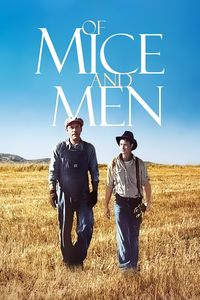
    (In French, On TV, April 2020) Generations of American high school students know all about John Steinbeck’s Of Mice and Men, with its heavy mixture of depression-era vagrants, uncontrolled force, tough choices and titular mouse. As such, there’s a ready-made public for an adaptation, whether it’s to revisit a classic about which a substantial proportion of all Americans had to write an essay about, or post-1992 classrooms that might as well watch the film rather than read the novella. There had already been one movie version of the story in 1939, so this one had an opportunity to upgrade the craft of the film adaptation while remaining faithful to the text. Under director Gary Sinise (who also plays the quick-witted one of the duo), this take on Of Mice and Men succeeds at keeping much of the Steinbeck text while updating the classic film: the visuals carry some sort of gentle nostalgia for a less-complex time, the images are what we would expect of a period film, and both Sinise and John Malkovich (who plays the strong-but-slow one) are good in their roles. The controversial casting here is Malkovich, who’s far from being the image of the bulky and physically imposing character… but makes up for it in innocent menace. In many ways, Sinise’s Of Mice and Men is the ideal case for literary adaptation: It doesn’t deviate much from the original text, sumptuously executes the story, delivers on cinematic aspects—and in doing so, manages to reach even those who aren’t primed to like the story through the curricular circumstances of how they encountered it.
  • Forrest Gump (1994)

    Forrest Gump (1994)

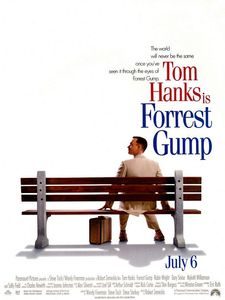
    (On DVD, April 2017) Mmm mmm, mmm, delicious crow. I’ve long been an immature know-it-all, but now that I’m undeniably middle-aged, it’s time to atone and repent—part of it being recognizing Forrest Gump’s greatness. For, alas, dear readers, I have been boycotting Forrest Gump since it came out, since I was a mid-nineties neckbeard taking Bruce Sterling’s opinion as gospel. (True story: I was the guy who, while standing in line to see True Lies, sarcastically said “Awww, noooo” when they announced that Forrest Gump was sold-out.) Now, it’s true that I’ve never been a fan of holy fool stories. It’s also a given that I didn’t know enough about recent American history in 1994 to fully appreciate Forrest Gump’s little jokes and subtle inferences. It’s particularly true that my taste in movies has expanded quite a bit since then. All of which to say that while I’m late to the Forrest Gump party (to partly exonerate myself, I have read the novel a decade ago), I’m more than ready to cover it with praise. Perhaps the most noteworthy thing about the movie is that it’s actually dealing with very clever matters under the guise of telling how a simple-minded man made his way through thirty tumultuous years of American history. At this stage in my life, I’m seeing it as a parable about how being good is better than being smart. But it’s also about the advantages of letting go, the synthesis of different views (Forrest vs Jenny) about life and history, the strengths of expressionist filmmaking and just how good Tom Hanks can be at incarnating the spirit of the United States in its multifaceted quality. Robert Zemeckis pushes the envelope of filmmaking so well that the special effects remain convincing even twenty-some years later—the use of “invisible” special effects to heighten reality remains close to the gold standard even today. Hanks is terrific as the lead character, finding a tricky balance between simple dialogue and complex acting while the film also has good turns for Robin Wright and Gary Sinise. The various nods and jokes at 1950s–1980s American history are hilarious (I’m sure I missed a few) while the film does manage to escape its episodic nature by weaving a few subplots in and out of the episodes. It’s a weirdly compelling film, with short comic bits combining with an overall story to make for sustained watching pleasure. A smart movie about a not-so-smart (but admirable) man, Forrest Gump has since ascended to the status of a modern classic, and I now see why. I may not wholly embrace it as five-star perfection, but I concede happily that I should have seen it earlier.

  • Ransom (1996)

    Ransom (1996)

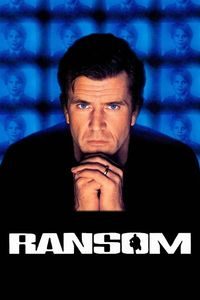
    (On TV, February 2000) It takes some effort to put together a good thriller, but no one ever accused Ron Howard of not being a professional filmmaker. Here, he draws upon Mel Gibson, Renee Russo and Gary Sinise to set up a sombre kidnapping affair that quickly goes awry. Solid leading-man Gibson is perfect for the role, and Sinise makes the most of his name’s resemblance with sinister as the bad guy. Even though the film feels slightly too long at more than two hours, it moves quickly and the viewer is never bored. The conventional finale disappoints somewhat, as if the scriptwriters didn’t know what to do with their last-minute twists. But Ransom mostly delivers what it sets out to do; a good, fun, crunchy thriller.

    (Second Viewing, On Cable TV, May 2022) So, TCM just had a double-bill with both the 1956 version of Ransom! and the exclamation-less 1996 Ransom remake – I just couldn’t let the occasion go by to compare and contrast.  I had dim but favourable memories of the 1996 film, so I was curious to find out if my disappointment in the 1956 film was a nostalgic artefact or a real appreciation.  Well, the verdict is in and the remake is the best film for two or three reasons.  The first, obviously, is that director Ron Howard had many more tools in his mid-1990s toolbox – decades’ worth of thriller-film formula elements, better equipment, use of colour, slicker sets (including many exteriors) and arguably better actors in Mel Gibson and Gary Sinise.  Which brings us to a second, crucial improvement: showing hero (Gibson) and antagonist (Sinise) trying to outwit each other throughout the film.  Finally, let’s acknowledge that there’s simply more plot to this remake: While the 1956 film essentially concluded on the central idea of both films (offering the ransom as bounty-hunting prize), the remake adds at least an act’s worth of increasingly frantic action as the consequences of this turn play out.  The result being executed with the big budget that standalone thrillers could still command back in the mid-1990s, Ransom still feels like a terrific, clever thriller.  It’s got some style, great anchor performances and a twisty script that throws in one curveball after another, often as the two lead characters change their plans in reaction to one another.  (That tit-for-tat plot leadership may feel like an elementary thriller asset, but you’d be surprised at the number of suspense films where the protagonist is constantly on the defensive from the villain’s plans.)  I had no trouble liking Ransom all over again a few decades after first watching it, and even –especially- when measured against its inspiration.  It makes the 1956 film look like a prototype, which is about the best thing one can say about a remake.