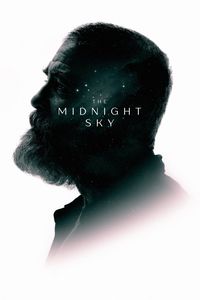
The Midnight Sky (2020)
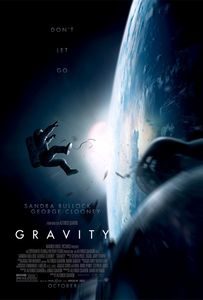
(Netflix Streaming, March 2021) As someone with great affection for Science Fiction that plays by the established rules of physics, there’s a strange mixture of hard-science moments and cheap plotting tricks at play in The Midnight Sky, and if I can really like some of its scenes, I’m far cooler on the overall film. Maybe the source of the problem lies in the original book — but it’s not as if Hollywood hasn’t changed whatever it wanted when adapting existing works. Director-star George Clooney is better than the mess of a script, as his magnificent old-man beard commands attention whenever he’s on-screen. Set against a frustratingly vague global catastrophe, he’s apparently the last survivor on Earth, and he happens to have the right mixture of skills and equipment in his polar hideout to be able to communicate with the returning crew of a Jovian expedition — and warn them not to land. (As if they couldn’t see it for themselves?) At times, such as when the space ship crew goes outside to fix a communication problem, the film is about as hard-SF as it gets — bringing back fond memories of Gravity and other successful space adventures sticking to realism. At others, such as when it discusses a habitable (but hitherto unknown) Jovian moon, slides into Adam-and-Eve territory, concludes on coincidental parentage, or goes for the now-exasperating fictional-character trope, The Midnight Sky looks like a bunch of naïve clichés strung together, sorely testing the patience of those expecting more substantial material. It’s hard not to play the spot-the-inspiration game in cataloguing which films did all of this earlier and better. I’m marginally kinder to Clooney’s directorial skills — the film fluently uses terrific visual effects and strings together a number of intelligible action sequences, expanding Clooney’s technical range beyond his previous more intimate films. Still, The Midnight Sky is a film that goes for a narrative-heavy experience (although not a dialogue-heavy one: several sequences play out wordlessly) but creates an unpleasant mismatch between the credibility of its execution and the unbelievability of its plot. There are reasons why those clichés are done or on their way out — while the film goes for an “uplifting rebirth of the human race” conclusion, more realistic viewers will recognize that humanity is doomed even if it wasn’t heading back to a terrifyingly dangerous outer planet. It does betray a film that really hasn’t thought through the consequences of its narrative choices, and it’s hard to trust the result after that.