Geraldine Page

  • The Trip to Bountiful (1985)

    (On Cable TV, March 2022) It’s not a good sign if your first impression of a film’s opening minutes is a strong desire to get away from it, but that’s what The Trip to Bountiful feels like. The film’s first act takes place in a 1940s dysfunctional household—an unlikable wife, her suffering husband and his mother mistreated by the younger woman. The point of the film is stated early on: Our elderly protagonist just wants to escape the choking oppressiveness of their tiny city apartment and go see her rural childhood home in Bountiful. That’s pretty much the entire film right there: how does a frail older woman manage to escape her step-daughter, travel to another state and make her way to her childhood home without any support from her family? Geraldine Page is quite good in the lead role (she won an Academy Award for it), but viewers should be forewarned that this is a long and drawn-out trip: Director Peter Masterson, working from a play, isn’t in a hurry to conclude the trip, and that gives the film a very specific forward rhythm. Not the most action-packed film, then, but it clearly outlines its dramatic stakes and then keeps going until everyone has learned a lesson or two.
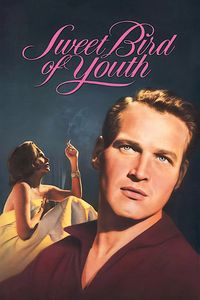
  • Sweet Bird of Youth (1962)

    Sweet Bird of Youth (1962)

    (On Cable TV, January 2021) I really expected a film about a young man coming back to his small-town with a fading Hollywood star in tow to be more interesting than Sweet Bird of Youth. Despite the mixture of Hollywood bitterness and small-town politics, the film is a bit of a damp muddle. Paul Newman plays the kind of overly hard-headed semi-hoodlum that he did so well at the time, but somehow seems miscast. Geraldine Page does better as the drug-addled Hollywood star on the decline (although she still looks too young for the part), and so does Ed Begley as the powerful politician with mob boss habits. The theatrical origins of the film can be seen in the small scales and restrained locations—and knowing that the film was adapted from a Tennessee Williams play automatically leads one to look for the way in which it was softened from the original. (And this one is a doozy.)  Still, even with the happier ending, Sweet Bird of Youth isn’t much of a sit: it drags, it meanders, it gives us the yearning to escape back to Hollywood by the nearest available bus out of town. Newman fans may want to have a look, but even they may overdose on the obnoxious persona that he had at the time.