Hal Ashby

  • Bound for Glory (1976)

    (On Cable TV, March 2022) By all rights, Bound for Glory should have been more interesting. As an (admittedly very fictionalized) biography of Woody Guthrie, a very interesting figure at the intersection of American history, labour activism and entertainment, it’s clearly given the big-budget treatment. (It was reportedly the first film to use a Steadicam.)  The cast is striking even today, with David Carradine in the lead role and Randy Quaid in a supporting one. It comes with an illustrious pedigree, having been nominated and several won Academy Awards—among other honours. On paper, the one thing that gives me pause is that it’s directed by Hal Ashby, a director with more hits than misses as far as I’m concerned. (Not that this is a widely shared view—Ashby remains a favourite of New Hollywood fans… which I’m not.)  And indeed, it doesn’t take much until the brown-gray execution of Bound for Glory sucked all of my interest in the picture, with a slow pacing and cinematography taken straight from the Great Depression illustrated by the film. You can’t even try to explain the lack of interest by an overly faithful adhesion to facts, as even a cursory look at Guthrie’s biography shows numerous instances of fictionalization. I gradually become disengaged throughout the film’s gruelling two-and-a-half-hour running time, only perking up (or waking up?) once the classic “This Land Is Your Land” made its climactic appearance. Bound for Glory has a dull execution of a fascinating topic, and that makes it even more frustrating.
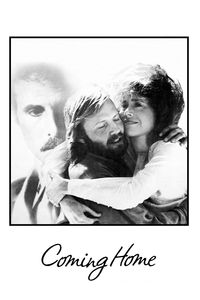
  • Coming Home (1978)

    Coming Home (1978)

    (On Cable TV, May 2020) If you were to assemble a team of scientists to create a film guaranteed to feel dull to me, you would probably end up with something like Coming Home—Hal Ashby, Jane Fonda, late-1970s drama, disabled protagonist, Vietnam veteran drama, documentary-style filming… it all adds up as things I’m not particularly interested in. Plus, I have already seen Born on the Fourth of July, which tackles many of the same themes and even has a common point of inspiration. Clearly a film of its time, Coming Home is a blunt-force declaration of themes as much as it’s a character drama. Handled by director Ashby, it’s a film with an unusually soft image quality—even on TCM, which I assume uses the highest-quality version available. And yet, despite all of this, I found Coming Hope quite a bit more involving than expected. The drama is decent, and it builds up to a good (if tidy) conclusion. What’s perhaps most interesting is how specific it is in its late-1960s detail (including a soundtrack that even includes as rare appearance by the Beatles), representing the era both as a current memory, but also as a period piece. The message is blunt, the ending is convenient and the drama feels endless, but I liked Coming Home quite a bit more than I expected.

  • Harold and Maude (1971)

    Harold and Maude (1971)

    (In French, On TV, December 2018) As much as I respect and understand the forces that led to the New Hollywood of 1967–1977, I cannot and most likely will never be able to muster any kind of enthusiasm or affection for it. Films of that era and sensibilities remain almost uniformly grim, pointless and unpleasant. Case in point: Harold and Maude, which details the growing affection between a death-obsessed teenager and a much older woman. Affected with the typical disaffection of an early-1970s protagonist, Harold drives his parents crazy, can’t relate to the world and is intrigued by the idea of suicide. Meanwhile, Maude is an elderly free-spirit living life to the fullest but with the intention of checking out on her own terms at 80 years of age. It’s a strange, off-beat, morbid movie, but calling it a comedy feels like a stretch, especially when there’s very little joy to be found in its exasperating execution. Helmed by Hal Ashby (whom I’m increasingly recognizing as a director who does nothing for me), it’s clearly a reflection of the increased freedom that filmmakers enjoyed at the time. I can’t help, however, than to think that whatever Harold and Maude brought to the film world has been fully integrated in the corpus and doesn’t have much left to say if you don’t enjoy it on its own terms. The Cat Stevens music is as dated as the film itself, and if Harold and Maude is worth a look for a pure undiluted shot of New Hollywood, nobody is forcing anyone to enjoy it.

  • Shampoo (1975)

    Shampoo (1975)

    (On Cable TV, November 2018) Despite suspecting better, I half-expected to like Shampoo. I’m usually receptive to critiques of the 1960s or Warren Beatty’s projects, and I like the concept of examining an era’s social more through the lenses of a specific day (here the election of Richard Nixon in November 1968). Shampoo, alas, proved to be a far more sombre experience than I expected. Beatty deservedly stars as an in-demand hairdresser able to use his job to meet women and maintain simultaneous affairs at once. Of course, such a character must not be allowed to profit, and much of the film details the ways in which his life implodes over the course of slightly more than a day. The playboy lifestyle is not played for laughs or wish-fulfillment, with the so-called comedy of the film being tinged with a substantial amount of humiliation, self-recrimination and missed opportunities. It’s not a whole lot of fun and if I had paid more attention to director Hal Ashby’s name or the 1975 year of release of the film I could have predicted that for myself. (For various reasons, my reactions to Ashby’s movies ranges from tepid liking to outright loathing—but then again that’s my reaction to most of the New Hollywood era in general.) Considering the downer plot and restrained laughs, I best reconciled myself with Shampoo as a period study, taking a look at the excesses of 1968 from the decade-long hangover of the 1970s. It’s not much, but it’s better than nothing.