Haley Bennett

  • Swallow (2019)

    (On Cable TV, September 2022) In transgressive cinema taking on extreme psychological issues, there’s a delicate balance between putting up a freak show and being a responsible filmmaker. I would argue that the best approach is an over-the-top one that makes social responsibility irrelevant—if a comedy is so ridiculous, no one will care about the deviation from reality. At the other end of the scale, filmmakers can make the sensitive drama that they want, but they should then not go wallowing in transgressive moments that may bring the whole tonal balance down. Unfortunately, Swallow gets the balance wrong. It’s super-serious, super-clinical in its depiction of pica, a disorder in which someone eats objects not meant to be consumed. In Swallow’s quasi-clinical approach, this means that we’ll squirm in seeing a doll-like protagonist (Haley Bennett, suitably cute) ingest marbles, batteries and a thumbtack—to deleterious effect. This is all meant to illustrate a deeper problem—her pampered existence as a housewife to a wealthy man and her aimlessness of purpose. Maybe she should have learned how to code. But such sarcasm feels unwarranted in the light of the film’s solemn yet exploitative treatment of its subject. There’s a clear undercurrent of body horror (as in: absence of bodily autonomy) throughout much of Swallowed, but it seems deployed both for shock, transgression and high drama. The protagonist eventually becomes pregnant and… oh, I’ve said too much already. The plotting gets wilder as it goes on, peeling off evermore-troubling layers to the lead’s shaky mental health. The film thus zig-zags between exploitation and serious issues, never quite committing to horror or to drama. The result, as uncomfortable as it is, ends up being the worst of both worlds: never zany enough to get to the end of its thematic concerns, but not completely comfortable with the strictures of the sober, meticulously art-directed drama it portrays itself to be. Writer-director Carlo Mirabella-Davis takes a swing and a miss here—much better than not taking a swing at all, but not quite as satisfying as a solid hit could have been.

  • Music and Lyrics (2007)

    Music and Lyrics (2007)

    (On TV, May 2017) Innocuous but likable, Music and Lyrics manages to exceed the familiar average for romantic comedies, largely based on the strengths of its lead actors and the interesting backdrop in which the familiar rom-com situations occur. Hugh Grant stars as a washed-up popstar eking a living through royalties and small concerts in dismal places. When he’s asked to pen a song for a young and impulsive signer (Haley Bennett, playing a character that now seems like a slightly demented blend of Taylor Swift and Katy Perry), he comes to rely on an eccentric woman (Drew Barrymore, less bland than usual) to break through his creative block. The music-industry backdrop adds a lot to the film, especially in its high-comedy moments. Meanwhile, Grant and Barrymore work effectively together despite the fifteen-year age difference. Given those assets, it’s somewhat disappointing that the film can’t do anything else beyond relying on stock rom-com situations and false conflicts to juice up the drama. Even a mildly intriguing subplot about the female lead being the inspiration for a popular fictional antagonist eventually peters out to nothing much. Still, the film can coast a long time on its lead and backdrop, which helps make Music and Lyrics slightly more interesting than most of the other rom-com of the time. Give it a shot if you’re in that kind of mood.

  • The Hole (2009)

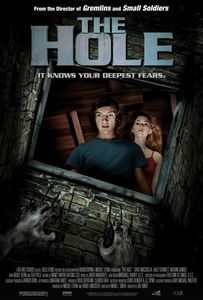
    The Hole (2009)

    (On Cable TV, June 2014) Just about the only noteworthy thing about The Hole is that it’s directed by Joe Dante, a veteran whose influence in the eighties and early nineties has faded to nothingness ever since. His professionalism certainly shows through this minor production: Despite an imperfect script and a family-friendly focus, horror film The Hole is handled professionally, has a pleasant rhythm and doesn’t let late-script disappointment get the better of its presentation. The 3D motif feels silly on the small flat screen, but the direction is clean and polished throughout. The story of three teenagers who discover a bottomless hole in their basement reflecting their deepest fears, The Hole is decidedly a horror film for young teenage audiences: it’s barely gory, low-key in its scare sequences and plays off childhood fears more than deep-set adult trauma. Nonetheless, the quality of the production holds it aloft even if the script doesn’t quite manage to hold together: not only does it spend its time on the symptoms of the hole rather than its root, it squanders some promising leads when it devolves to fairly standard “confront your deepest fears” messaging, along with a suddenly-bizarre finale that literalizes too many metaphors with sub-standard special effects. Chris Massoglia is a bit dull in the lead role, whereas Haley Bennett easily steals her scenes with a bubbly girl-next-door portrayal (although, typically, later script revelations contradict her early-movie reactions). There is, frustratingly, a lot of untapped potential in the initial set-up that is nowhere nearly fulfilled by the rest of the film. Still, it’s handled fairly well, can be watched without too much trouble and generally holds interest until the end. As far as horror movies go, it’s not too bad, and considering the wretched horror films aimed at younger teenagers, The Hole eventually ends up feeling like a welcome throwback to the kind of movies that Joe Dante himself was directing in the eighties.