Humphrey Bogart

  • The Treasure of the Sierra Madre (1948)

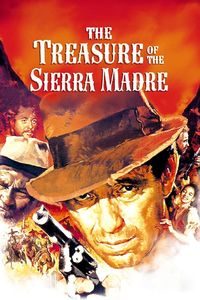
    The Treasure of the Sierra Madre (1948)

    (On Cable TV, February 2018) I was impressed to see how, even seventy years later, there is still such a strong narrative drive to The Treasure of the Sierra Madre and how well it balances character development with its plot. It helps that the film quickly sets up its core characters. Humphrey Bogart is fine as a downtrodden American willing to do whatever it takes to barely survive in Mexico, but the film’s highlight is Walter Huston (the director’s father) as an immensely likable grizzled prospector. Meanwhile, Tim Holt does serviceable work at the character who is tempted by various moral choices. With such good characters, the plot comes alive as our protagonist find a way out of a backwater Mexican town to explore a mountain for gold. That they find it so quickly only sets up more difficult choices later on, as gold fever grips the characters and paranoia sets in. Notable for having been shot on location, The Treasure of the Sierra Madre is one of those (surprisingly rare) black-and-white movies that I wish had been shot in colour, given how much importance the setting takes. In other areas, however, the film hasn’t aged a bit: the dialogue is still sharp, the plot generally unpredictable and the actors do fine work with the dramatic arc they’re given. Writer/director John Huston did exceptional work and the result still speaks for itself.

  • Casablanca (1942)

    Casablanca (1942)

    (Second or third viewing, On DVD, January 2018) I first saw Casablanca in the mid-nineties, as I was rummaging through my university library’s collection of film classics. I really, really loved it at the time, to the point of writing a Science Fiction parody that has thankfully not escaped my hard drive since then. Casablanca remained my standard for accidental greatness from the Hollywood studio system, the kind of film where magic just happens from competent people just doing their job. (In discussions about classic cinema, I usually oppose Casablanca to Citizen Kane, both of whom I love dearly but the second of which was designed to be a masterpiece while the first just sort of happened.)  I wasn’t necessarily looking forward to another viewing now: What if the film wasn’t as good as I remembered? What if it fell flat next to the thousands of movies I had seen since then? I shouldn’t have worried: Casablanca is still as good today as at any time since its original release. It’s a film that grabs you quickly and seldom lets go, whether it’s firing on romantic or thrilling energy. Blending comedy, passion, suspense and political issues (now deliciously historical), Casablanca is one of the original four-quadrant triumphs, seamlessly going from one thing to another along the way from a gripping opening to a memorable conclusion. Humphrey Bogart is impeccable as the protagonist, but the supporting performances are fine across the board, from Claude Rains to Ingrid Bergman to Paul Henreid, all the way to the extras singing The Marseillaise given how (Casablanca histories tell us) that they were nearly all European exiles or refugees. Historically, Casablanca rolled the dice and landed a solid 12, describing a personal tipping point right after the country decided to go beat up Nazi Germany. Still, there is something for everyone in this film—you don’t have to catch the allusions to the date of the events to feel for its heroes at the most basic level. The Paris scenes may feel redundant, but they provide some of the film’s best quotes and movie-star moments. All told, iconic Casablanca remains a triumph of moviemaking, as good as the genre ever gets. I look forward to seeing it another time.

  • The Big Sleep (1946)

    The Big Sleep (1946)

    (In theaters, August 2000) Truly great movies are never outdated, which is why we’re still able to look at The Big Sleep nearly fifty years later and wonder why they don’t make’em like this any more. Crunchy dialogue (you could pull quotes from this one forever), wonderful characters, a Byzantine plot, constant reversals (not much suspense, but plenty of surprises!) and several of the world’s loveliest women soft-shot in glorious black and white, including one librarian (Dorothy Malone) that has definitely not gone out of style. Add to that a great, unashamedly-macho performance by Humphrey Bogart, and you’ve got yourself a classic. You will want to watch it again, if only to understand the plot.

    (Second viewing, On Cable TV, November 2020) I first saw The Big Sleep in a repertory theatre roughly twenty years ago, well before I started being interested in Humphrey Bogart, Howard Hawks, noir or even the classic film period. So, I was curious to see it again and see if my perspective had changed in any way. There are a few things I remembered from my first viewing that I revisited with as much joy this time around: Dorothy Malone’s super-sexy one-scene wonder as a librarian, for instance, is even better a second time around knowing the direction that Malone’s career would take later on. Something that I was definitely anticipating this second time around was the sheer scene-to-scene narrative appeal of director Hawks’ approach. Among other things, his ideal of “the Hawksian woman” leads to three very strong female roles—beyond Malone’s character, we also get two very confident sisters, each playing the events on their own terms. For modern viewers, the Hawksian women always feel more interesting than other female roles at the time, even in the notoriously female-empowered noir subgenre. This being said, I suspect that the marquee appeal of The Big Sleep will remain elsewhere—namely, one of Bogart’s most striking performances as private detective Philip Marlowe, the trenchcoat and overdone narration exemplifying the core of his screen persona. Considering this assortment of riches almost entirely unrelated to the plot, it’s no surprise to realize, once again, that The Big Sleep is best appreciated as a mood scene: the plot is so infamously complex that even the filmmakers had trouble keeping it straight, which means that viewers are advised to soak in the film’s atmosphere, even enjoy individual self-contained scenes, and not worry too much about whether it all makes sense. Fortunately, there’s enough atmosphere, bon mots and acting moments to reward viewers throughout even after they’ve stopped worrying about keeping the entire story in their heads at once. Given the twenty-year gap between both of my viewings, I’m nearly sure that the version I’ve seen in theatres was the 1997 re-release of the 1945 original cut and so was this Turner Classic Movies broadcast… but I can’t be too sure, and I don’t care all that much: If you ask me, The Big Sleep is about Bogey looking frumpy and talking tough, Malone and her glasses, Hawks making sure that the female characters were interesting, and the pure encapsulated iconography of noir on full display.
  • Dead Men Don’t Wear Plaid (1982)

    Dead Men Don’t Wear Plaid (1982)

    (On TV, January 2000) I can testify that Dead Men Don’t Wear Plaid works pretty well as a comedy without catching any of its references to the noir genre it’s so obviously parodying. This fabulous cinematic experiment intercuts actual scenes from classic 1930-1950 films into its own B/W footage, and so includes Steve Martin and the gorgeous Rachel Ward interacting with the great Humphrey Bogart, Ingrid Bergman, Vincent Price, Cary Grant, Greta Garbo… and a few others. It presumably blows the mind of the fans of these type of films, but as a total neophyte to this period, I though the film was pretty darn successful without knowing the references. You’ve got to love the recurring tie gag.

    (On DVD, November 2021) How interesting it is to revisit Dead Men Don’t Wear Plaid after watching a few hundred noir films – the basic comedy of the film is still the same, but now I can recognize the actors, and sometimes even the clips used by Carl Reiner and Steve Martin in putting together their homage. The distinction of the film is not only having Martin play a private investigator in 1940s Los Angeles, but especially having him interact (through clips from older movies) with Classic Hollywood actors. While the film features a heroic re-creation effort in set design, cinematography and costuming (sometimes from people who had worked on the original films, such as Edith Head!), the difference between the original and new footage is quite obvious on DVD: Since Dead Men Don’t Wear Plaid was shot in 1980s widescreen and the original footage is in 4:3 “Academy ratio,” the older footage is zoomed into widescreen format and the grain difference is perceptible. Still, that doesn’t do much to lessen the fun of Martin arguing over the phone with Barbara Stanwyck, telling Humphrey Bogart what tie to wear, sharing a train cabin with Cary Grant or getting hit on by Joan Crawford. While the film’s first two acts can often feel disconnected as the protagonist goes investigating and lands in separate films, the last act is more cohesive given how it borrows much of the sequences from The Bribe. While the comedy has its ups and downs, it’s all good fun – and having the beautiful Rachel Ward as the original-footage femme fatale doesn’t hurt either. Martin sports dark hair and is a good sport about the silliness asked of him – Dead Men Don’t Wear Plaid is clearly part of his early-1980s heyday as a film comedian, and still a funny film today… although it’s a different kind of funny for film noir fans.