Jack Lemmon

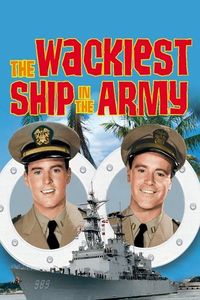
  • The Wackiest Ship in the Army (1960)

    The Wackiest Ship in the Army (1960)

    (On TV, December 2021) It’s one of the paradoxes of Hollywood that many people can do their best while working on a specific film, and yet the result can still feel underwhelming. In the case of The Wackiest Ship in the Army, we have Jack Lemmon in a familiar role, stuck in a familiar story, with a familiar tone. Semi-comic naval stories set against the Pacific theatre of WW2 are a surprisingly robust subgenre, and so are stories of naval officers being given an unusual command (in this case, a sailboat — the magazine article that was the loose inspiration for the film discussed how an older ship was transferred to the U.S. Army, but the film doesn’t explain its own title). Lemmon (an actor with many Pacific theatre WW2 movies in his filmography) brings his usual blend of manic comedy considering how his character does his best with an unimpressive vessel and an unprepared crew. There are the usual comic hijinks, all the way to a climactic contribution to the war effort. The intent to entertain is clear and successful, even if everything isn’t nearly as fresh as it wants to be. The Wackiest Ship in the Army is not bad, but it definitely lives in the shadow of Operation Petticoat, Mister Robert, Father Goose and other WW2 comedies set in the same area.

  • Airport ’77 (1977)

    (In French, On TV, November 2021) By 1977, both the Airport series and the disaster-movie subgenre had evolved to make the existence of a ludicrous film like Airport ’77 inevitable. While the first Airport was an ensemble melodrama enlivened with some techno-thriller elements, the success of its imitators focused on the thrills and by the time the follow-ups came around, the drama was clearly an accessory to the spectacle, although it allowed some Classic Hollywood superstars one last go at box-office gold. So it is that one of the two most engaging elements of Airport ’77 is James Stewart, with a relatively small role as the owner of an airline—so proud of his newest plane that he loads it up with invaluable treasures right before it’s set to travel from New York to the Caribbean, with none other than Jack Lemmon playing the plane’s pilot. But this wouldn’t be a disaster without a disaster, and so thieves drug the passengers, steal the valuables and make a dumb mistake that sends the plane crashing into the ocean and settling down a few metres down the surface. The other asset of the film kicks in at that point — a relatively credible description of how such a disaster would be tackled by the US Navy (with some assistance from series mascot George Kennedy), slipping large balloons underneath the wings of the plan to raise it up to the surface so that passengers can be rescued. (Let’s all agree to ignore the extremely high likelihood of the plane breaking up upon hitting the ocean in the first place.)  Stewart, Lemmon and the US Navy don’t quite add up to a completely enjoyable film, but they do help rescue it from disaster. I don’t necessarily count the unlikeliness of the plotting against Airport ’77 — it’s a disaster film, after all. But there’s still too much dead weight, too many bog-standard subplots, and too little of a climax to cap things off. It fits with the other films of the series… even if the steady drop-off in quality becomes more and more obvious.

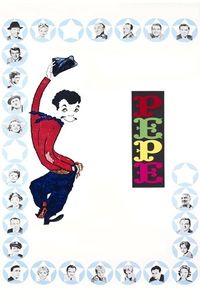
  • Pepe (1960)

    Pepe (1960)

    (On Cable TV, September 2021) Whenever you’re a movie producer putting together a star vehicle, you must be amazingly confident that your star can sustain the film, otherwise, well… Putting together a star vehicle for Mexican comedian Catinflas wasn’t an obvious exercise back in 1960 — while the diminutive, hyperactive actor has earned good notices for his turn in Around the World in 80 Days and was a world-wide sensation outside the United States, Hollywood didn’t quite know what to do with him. This clearly shows in how it approached Pepe — first, by passing off the then-50 years old as a youngster searching for his beloved horse in Hollywood, then stacking the film with so many cameos from known actors of the time that even if you don’t like the lead, you can still find something entertaining in the result. This is really not the best way to be introduced to Cantinflas — his comic persona is deadened by a silly script, unrealistic expectations and a mismatch of comic styles. The film predictably makes him out to be a holy fool of sorts, his simplistic rural assumptions wowing the sophisticated Hollywood types with their homegrown wisdom. This is trite even by circa-1960 standards, and your liking for the film is likely to pair up with your tolerance for that kind of comedy. (Tellingly, this kind of protagonist is funny-friend rather than boyfriend material for our white female lead, as the conclusion makes clear.)  So, what’s left? The cameos, of course — Catinflas aside, Pepe does make up for a quick tour of its era’s celebrities, and you’ll get more out of it the more you know about the time. Bing Crosby pleasantly croons his way past our protagonist at the studio gates, while Dean Martin plays cards with him in Vegas. Jack Lemmon shows up in full drag (then out of it, then back into it) as a big nod to the previous year’s Some Like It Hot, but in colour — and so does his co-star Tony Curtis in a separate but amusing scene. Sammy Davis. Jr. sings “Hurray for Hollywood,” while the classic instrumental “Tequila” gets a dreamlike segment. Maurice Chevalier sings “Mimi” and trades love tips with Catinflas, Judy Garland is heard but not seen, and Kim Novak provides jewelry advice. If you know those names and don’t object to celebrity walk-ons, then Pepe probably still has something for you. If you’re a bit lost as to who these people are and why they’re worth seeing on-screen, you may want to wait until you do before watching the film. Pepe is not that enjoyable as a standalone comedy, but it is substantially better as a late-era satirical look at classic Hollywood through celebrity cameos, not dissimilar to 1949’s Doris Day comedy It’s a Great Feeling or the earlier star-studded Canteen films of WW2.

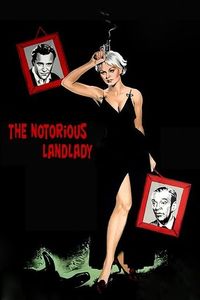
  • The Notorious Landlady (1962)

    The Notorious Landlady (1962)

    (On Cable TV, August 2021) Sometimes, a good cast is all you really need. While the script for The Notorious Landlady is decent enough, it’s the presence of Kim Novak, Jack Lemmon and Fred Astaire (in a non-dancing, non-singing role) that really makes the film a joy to watch. It begins as an American diplomat newly arrived in London goes flat-hunting and finds a rather nice place at a good price — although there’s clearly something off in the way the neighbours treat the landlady. With Novak as the landlady, Lemmon as the diplomat and Astaire as the diplomat’s superior, the cast is well-aligned to the script’s blend of comedy with just a bit of suspense: what has the landlady done, and is it likely to happen again? Disappointing shot in black-and-white at a time when that kind of light-hearted film had no reason not to be in colour (indeed, director Richard Quine’s films prior and following this one were both comedies shot in colour), The Notorious Landlady does make the most out of its cast playing roles well-suited to them. Lemmon is instantly likable as a do-gooder diplomat, while Novak is clearly not the monster that her neighbours whisper about, while Astaire is funny on his own as a senior official stuck with a very visible situation he doesn’t want. (He has the film’s best quote, one that I can see myself using at the office: “Gridley, you will learn that the higher your position, the more mistakes you’re allowed. In fact, if you make enough of them, it’s considered your style.”) The script, co-written by future-comedy-superstar director Blake Edwards, blends a fair amount of comedy, romance and criminal suspense. The Notorious Landlady is a solid film, not something that ranks as a classic, but something fit to be appreciated as a decent unassuming studio product, aimed to entertain. (I suspect that the film would be more widely appreciated had it been shot in colour, but that’s something else.)

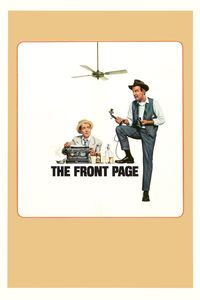
  • The Front Page (1974)

    The Front Page (1974)

    (On Cable TV, June 2021) On the one hand, I’m happy they remade the classic 1920s newspaper comedy The Front Page in the 1970s, and that they got talents such as Billy Wilder, Walter Matthau and Jack Lemmon to take part in it — it’s a slick update to a good movie, and it’s far more accessible to modern audiences. It’s an easier way to experience the story by virtue of being in colour, with a clean soundtrack and mature camerawork, more familiar actors, etc. The skill though which Wilder and often-unrecognized co-writer I.A.L. Diamond retools the story is a case study in subtlety and appropriateness — executed up to the 1970s standards (with a few additions), it generally feels like the original, while sanding away a number of the rougher edges that weren’t as acceptable fifty years later. It’s decently amusing, especially as an affectionate look at the rough-and-tumble world of city journalism in the 1920s. On the other hand, I have deliberately avoided comparing 1970s The Front page to 1930s His Girl Friday, because there really isn’t any comparison: Wilder/Matthau/Lemmon are fantastic but not trying for the same thing as Hawks/Grant/Russell were going for, and the 1934 film is probably (still!) faster-paced than the later film. The gender flip that brought so much romantic tension to the story is not there, as it reverts to the original premise, and you can see the repercussions of that decision nearly everywhere in the result. In other words, The Front Page remake is good, while His Girl Friday remains terrific. You could ask if merely remaking a film was the best use of Wilder/Matthau/Lemmon’s talents, especially at that late stage of Wilder’s career, but second-guessing veteran directors looking to scratch an itch (Wilder having been a newspaperman early in his career) isn’t always useful. The result does have a few misfires — Carole Burnett isn’t up to her usual standards here in a role that remains atonally troublesome even with the Wilder/Diamond sanding of its rough edges. Still, I’d probably screen this version of the story as appetizer to anyone not used to classic films but interested in watching His Girl Friday — it’s a good basic presentation of the story, and it can ease viewers into progressively older material. I’m still glad that it exists and it may have been the best film that Wilder could have done at the time. Still, I can’t help but wonder what other films Wilder could have done instead.

  • The Prisoner of Second Avenue (1975)

    The Prisoner of Second Avenue (1975)

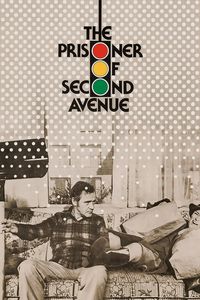
    (On TV, March 2021) An exasperated Jack Lemmon was, for decades, one of cinemas most reliable comic engine and The Prisoner of Second Avenue is ample proof of that… even if it’s substantially darker than many other comedies in his filmography. A tale of mid-1970s alienation told with sarcasm, it’s about a man who starts the film as a comfortable middle-aged man, then experiences one indignity after another until he snaps and spends much of the film flouting social conventions even as further indignities accumulate. Adapted from a Neil Simon play, it does feature some wonderful dialogue and clever character work — plus there’s a telling reflection of the way Manhattan must have felt in the mid-1970s, with garbage strikes, petty crime, friction between neighbours and constant noise weighing down on its citizens. (I encourage a themed double-feature with the original The Out-of-Towners for more of Lemmon’s exasperation in the streets of New York City.)  Anne Bancroft provides a lot of support as the put-upon wife developing her own crankiness along the way, and Sylvester Stallone pops up in a small funny role. A few factors, however, do take The Prisoner of Second Avenue out of the top tier of Lemmon comedies. For one thing, it’s not quite always played for laughs — the comedy can be dark at times. For another, tales of middle-class urban alienation have been a staple since well before the mid-1970s, and this one is not always distinctive enough to leave a mark. Still, it’s a solid film and one that does get Lemmon the chance to run through some of his most comfortable material.

  • It Happened to Jane (1959)

    It Happened to Jane (1959)

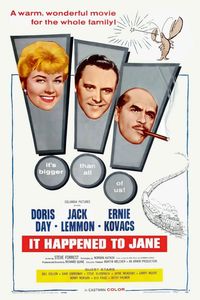
    (On Cable TV, March 2021) I’m almost certain that I will forget the title of It Happened to Jane tomorrow, but I won’t so quickly forget that the film co-stars Doris Day and Jack Lemmon, or that its plot revolves around lobsters and trains. As a romantic comedy, it gets going when a lobster processing plant owner (Day) sees her shipment ruined by the neglect of a railroad company — the fun starts when she gets a friendly lawyer (Lemmon) to successfully sue the railroad and earns as payment… a train. The respective charms of both actors are well used, as they each play within their screen persona. The flip-side of this degree of comfort is that the film itself quickly becomes unremarkable. This is a middle-of-the-road effort for both of them, and it’s hard to say whether the finished film would have been better if it had played more seriously or more absurdly. (The smile we get in seeing Lemmon shovel coal in a train is a strong hint, though.) It’s pleasant to watch but curiously insubstantial, which is a weird thing to say given its plot elements and the quality of its stars. It doesn’t help that Day (an actress I find mildly likable but saddled with a bland persona) pales in comparison to Lemmon’s frequently-frantic antics. The final result is perhaps most interesting for its bucolic northeastern setting and winks at the burgeoning TV landscape rather than for how well it executes a lacklustre plot. If you accept that It Happened to Jane is an average comedy of its time, you also have to acknowledge that late-1950s comedies were in an odd place — too late for the golden era of musicals, but too early for the reinvigoration that the permissiveness of the 1960s would bring to the genre.

  • Days of Wine and Roses (1962)

    Days of Wine and Roses (1962)

    (On Cable TV, March 2021) Considering the gallons of alcohol apparently drunk on-screen during the Hollywood movies of the 1960s and the industry’s tolerance of the habit, it’s almost refreshing to see a film of the era squarely tackle the problems of alcoholism in a non-glamorous, often unsettling way. It all begins as our protagonist (Jack Lemmon, quite unlike other roles in his filmography) argues about the ethics of alcohol-fuelled schmoozing events with a likable secretary (Lee Remick, often quite good). One thing leads to another, and soon they’re not only married with a daughter, but chugging back heroic quantities of booze under the pretence of social drinking. He loses his job; she sets a fire to their apartment that almost kills her and their daughter. He realizes that he’s got no choice than to go sober — but she doesn’t see it that way. The initial breezy romantic comedy of the first few minutes eventually gives way to dramatic thunder-and-lightning dramatic scenes, glasshouse trashing and a runaway wife. This isn’t meant to be a comedy, and the haunting final shot suggests that the troubles are never going away. Lemmon is particularly interesting here, as his gift for comedy is used to get our sympathy, and then turn it inside out as his dramatic outbursts end up being even more striking because they feel out of character. Still, despite slightly misogynist notes in the screenplay, I think that Remick gets the best role as the teetotaller with addictive tendencies who gets overwhelmed by the overwhelming appeal of alcoholism — she goes from picture-perfect secretary to a wild-haired floozy in less than 90 minutes. (Both of them got Oscar nominations out of the film.) There’s some irony in seeing that the film is an early entry in director Blake Edwards’s filmography — alcohol fuels much of the comedy of his later films, but he himself became sober a year after wrapping up production on Days of Wine and Roses (there was apparently a lot of drinking going on during filming for him and Lemmon, who also went sober years later). While the film can’t resist exploitation and melodrama, it is unflinching about the cumulative damage of heavy drinking. The result is something that still has quite a bit of resonance today, and a welcome demonstration of what Lemmon and Remick could do with the right material.

  • The Fortune Cookie (1966)

    The Fortune Cookie (1966)

    (On Cable TV, February 2021) One of the reasons why Billy Wilder’s films have endured better than many of his contemporaries is the clever wit with which they’re built. Uncommonly smart at working within the confines of the Hays Code, Wilder’s movies still speak to us through their cynicism, imperfect characters and atypical narratives. The same goes for The Fortune Cookie. To be fair, I don’t think that the idea of a man being manipulated by their wily lawyer into faking an injury for insurance purposes is as fresh today as it must have been in 1966 — it’s the kind of thing that has become a cliché. But the way Wilder goes about it remains entertaining and compelling. It does help that he can benefit from some solid actors in the lead roles: The Fortune Cookie is perhaps best known for being the first of many on-screen pairings of Jack Lemmon and Walter Matthau. Here, Lemmon plays the injured party encouraged to remain bedridden, while Matthau plays the slimy lawyer going after an insurance settlement. (Matthau suffered a heart attack during the film’s production, returning to set weeks later and thirty pounds lighter — he won an Oscar for his troubles.)  The result is a comedy that’s not particularly heavy on the laughs, but still maintains a lighthearted touch throughout. It even ends with a certain moral fortitude while allowing all characters to keep their heads high. Unexplainably shot in black-and-white at the close of that format’s relevance in Hollywood, The Fortune Cookie remains a solid film, clearly showing the Wilder touch as a filmmaker who continues to impress cinephiles.

  • Bell Book and Candle (1958)

    Bell Book and Candle (1958)

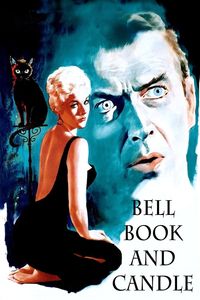
    (On Cable TV, September 2020) The ridiculously charming Bell Book and Candle combines a few of my favourite things: James Steward, Jack Lemmon, witches, cats and a supernatural romantic comedy. Pairing-wise, there is a nice contrast between Kim Novak’s glamorous sophistication and Stewart’s down-to-Earth affability, and the film doesn’t skip an occasion of making good use of it. Lemmon (and Ernie Kovacs) brings more overt comedy in the film’s subplot. Even the cat has a role to play—and it all takes place in Manhattan’s Beatnik-central Greenwich Village. Shot in very enjoyable Technicolor, Bell Book and Candle is both a fairly standard romantic comedy and a very cute one. [November 2024: Let it be recorded that, inspired by this film, I tried for months to get my cat to stand on my shoulders. I occasionally succeeded, which is not bad given the nature of my cat. The pandemic was weird.]

  • It Should Happen to You (1954)

    It Should Happen to You (1954)

    (On Cable TV, June 2020) No matter whether you’re talking about 2020s influencers or 1950s aspiring actresses, the lure of instant fame is evergreen, and It Should Happen to You offers a time capsule of what that looked like in mid-twentieth century America. The hook lies in having an obscure young woman taking out a billboard in her name, hoping that the publicity will lead somewhere. Against all odds, it works—and she quickly finds herself in a romantic triangle between a well-off executive and a more modest filmmaker. The unusual premise quickly leads to a far more conventional romantic comedy, but there are enough known names in the production to keep things interesting. Under George Cukor’s direction, we have Judy Holliday as the young not-so-smart ingenue, being wooed by Peter Lawford and Jack Lemmon in his movie debut. While some of the film’s initial intentions get lost in the shuffle, the film ends on a funny and romantic note. The black-and-white cinematography highlights It Should Happen to You’s old-fashioned atmosphere (at times, it feels like a late-1930s film): Maybe Cukor, as competent as he was, couldn’t quite bring himself to shoot the material in colour and reflect the slightly dourer 1950s—ah, colour footage of those Manhattan locations would have been something to see! The actors are all charming in their own way: while I’ll confess never quite getting the fascination for Holliday’s persona, she does well here. While not a waste of time, It Should Happen to You certainly does feel as if it’s restraining itself—although, considering that it’s about advertising in the mid-1950s, we’re already getting quite a lot.

  • Missing (1982)

    Missing (1982)

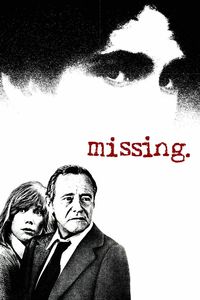
    (On TV, January 2020) To anyone used to Jack Lemmon’s comic body of work, it can be jarring to see him at work in Missing, a film about as humourless as any can be. Here, Lemmon plays an American businessman travelling to Chile an unnamed country after a coup to investigate his son’s disappearance. He teams up with his son’s wife, but their relationship does not start harmoniously and it’s further tested as their investigations either produce no results, or lead them to darker and darker certainties. Eventually, writer-director Costa-Gavras, working from real events, accuses the US government of complicity in the coup and the numerous deaths that ensued. Missing is absolutely not a happy movie: the atmosphere of a post-coup authoritarian country is utterly nightmarish, and the central mystery at the heart of the film has a merciless resolution. Lemmon, as one could expect, is quite good in a much darker role than usual, channelling righteous anger as he portrays a father looking for his only child. Alongside him, Sissy Spacek is also quite good in a more difficult role designed to clash with the older man. (Both of them earnest Academy Awards nominations for their roles) Where Missing stumbles is in not focusing tightly on the story it wants to tell—Costa-Gravas is a bit too self-satisfied and goes on numerous tangents (the opening twenty minutes, for starters) that don’t necessarily improve the result. Still, Missing is a film with weight, anger, and a thick atmosphere you’ll yearn to escape.

  • Grumpy Old Men (1993)

    Grumpy Old Men (1993)

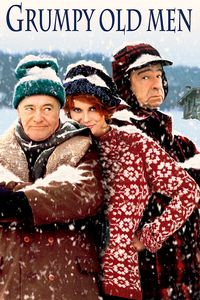
    (In French, On Cable TV, January 2020) As its stars age past retirement, Hollywood also developed its subgenre of victory-lap movies—one last chance for actors with recognizable screen persona to strut their stuff once more, and run on memories of past performances. Grumpy Old Men is a classic example of the form: It once again features Jack Lemmon and Walter Matthau as a bickering pair of lifelong elderly friends in wintry Minnesota, with none other than Ann-Margret looking amazing as the middle-aged temptress driving a further wedge between them. (It’s acceptable to have mixed feelings about this trio—While it’s rare and welcome to have a female romantic interest older than 30, there was still a 16-to-21 years difference between Ann-Margret—aged 52 at the time of the film’s release—and the Matthau/Lemmon duo—aged 73 and 68 at the film’s release.) Still, the point of the film isn’t to add thirty years to the usual Hollywood age difference, but to allow Lemmon and Matthau one more chance (which ended up being four more chances) to bicker on-screen decades after The Odd Couple. Anyone watching the film for the marquee names certainly knows what they’ll get: biting repartee and petty pranks are what keep those two characters bonded, and it’s not a September-November romance that’s going to get between them. It’s a romantic comedy, after all, and it even has a B-couple made up of the protagonist’s children. (Ann-Margret looks better than Darryl Hannah, but it’s a close thing.) There’s an adequate mixture of jokes, romance, jokes about romance and a bit of heart-driven drama toward the end to put everything in perspective. The ending fake-out won’t fool anyone. In those movies, the biggest measure of success isn’t about the plotting complexity or the quality of the filmmaking but whether the stars got a chance to remind audiences of what made them famous. On that criterion, Grumpy Old Men achieves its objective: Ann-Margret looks fantastic with red hair (at least this time nobody thinks it’s a natural red), Matthau is grumpy, Lemmon is funny and anyone even remotely familiar with 1960s cinema has also been driven once more around the lap.

  • My Fellow Americans (1996)

    My Fellow Americans (1996)

    (In French, On TV, October 2019) There isn’t anything particularly sophisticated in My Fellow Americans, which features two bickering American ex-presidents going on the run after being exposed to malfeasance from the current administration. But it’s one great late-period opportunity for Jack Lemmon and James Garner to shine in comic performance as elder statesmen. The film eventually becomes a buddy road movie (complete with the mandatory shot of the two characters screaming, “Aaah!” while driving), taking them (mostly) undercover through America in an effort to get back to Washington and expose the plot before they’re killed. There’s an effective mixture of the high and the low here, with two revered figures often acting out like schoolboys. Despite the warring presidents from different parties, don’t expect much political relevance from a film that would rather settle for silliness rather than barbed satire. (It’s also from an era where you could actually respect [ex-] presidents no matter their affiliation, but we’re long past that point now.) Still, Lemmon and Garner make for a good comic pair, even when the rest of the film around them is trite and obvious. I half-enjoyed My Fellow Americans, which is more than I can say from most similar movies.

  • Mister Roberts (1955)

    Mister Roberts (1955)

    (On Cable TV, July 2019) There’s a very odd quality to Mister Roberts that makes itself known early on, as this “war movie” remains behind the front lines, spending its time with the crew of a supply ship that never gets close to the front. The forced comedy of the first few scenes feels amazingly close to the anarchic spirit of 1970’s MASH at times, with sailor goofing off in between their war effort, characters intentionally shirking their duties (most notably Jack Lemmon) and the title character (Henry Fonda) trying to shield his crew from an irascible captain (James Cagney). The main cast is intriguing, but the rhythm of the film feels forced, making jokes that remain unfunny and multiplying the episodes that don’t amount to much. The material is there for an examination of men at-war-but-not-at-war, but Mister Roberts, perhaps shackled by source material (it was first a novel and then a Broadway play), seems split between rambling dialogues, incongruous voiceovers and mildly annoying characters. It does feel like a film out of time, more at ease in the anti-war movies of the 1970s than the still-triumphant mood of 1950s WW2 films. (I’m actually amazed that the film got the full cooperation of the US Navy for location shooting.)  Mister Roberts’ plot does get better as the film advances, but it leads to a tragic conclusion that feels at odds with the rest of the film.

    (Second Viewing, On Cable TV, April 2021) Revisiting Mister Roberts two years later but with better knowledge of the main actors involved does give a different perspective on the entire film. Jack Lemmon in an early role, going up against a mid-career Henry Fonda, a late-career turn from James Cagney and William Powell’s last screen role. It’s the kind of cast that makes the film worth viewing no matter what. Mister Roberts does play with tone at times, delving into absurdity and then coming back to some kind of funny realism only to plunge into wistful drama a few seconds before the end. I kept thinking about MASH in seeing the way the film takes an almost-affectionate look at men coping with war (or their decidedly unheroic role in it) by cracking jokes until they sound insane. (Interestingly enough, the last moments of the film sound like a paean for those smart enough not to be a hero, which is a kind of attitude we wouldn’t often see in Hollywood movies until the 1970s.)  In some ways, this kind of tonal yo-yo makes the second viewing a more interesting experience – we know what to expect and when to expect it, and to take in the sketches that make up much of the film’s running time. Still, there’s no denying that the draw here is the cast . Lemmon is already comfortable in his semi-manic persona, while Powell couldn’t be more at ease, dignified and funny as the ship’s doctor. Meanwhile, Fonda and Robinson are up to themselves here – matching established personas to strong roles. Some movies don’t pack as big of a punch the second time around, but Mister Roberts feels like a better film the second time around.