James Stewart

  • The Shop Around the Corner (1940)

    The Shop Around the Corner (1940)

    (On Cable TV, December 2017) It takes a long time, indeed a very long time for The Shop Around the Corner to come alive. Set in Budapest (perhaps daringly, given the way World War II was going on at the time), mostly in a downtown shop, this is a film about the timeless concept of differences between inner and outer selves, as a salesman falls for the written words of a pen-pal who turns out to be his insufferable co-worker. (If this is familiar, consider that the film was very loosely remade as You’ve Got Mail in 1998.)  Margaret Sullavan plays the pen-pal, but it’s James Stewart, in all of his youthful likability, who steals the show as the salesman. Stewart’s character is terrific, and only he could manage to make audiences fall for his mixture of competence, arrogance and good intentions. But it takes a while for the film to come around to its romantic climax—first, we have to learn far more than we’d ever imagined about the inner workings of a Hungarian shop before getting to the dramatic engines of the film. It builds steadily, however, and hits the right notes right on time for the Christmas Eve climax. Definitely a film of its time, and yet still accessible today, The Shop Around the Corner warrants a look, especially as a Christmas movie.
  • The Man Who Knew Too Much (1956)

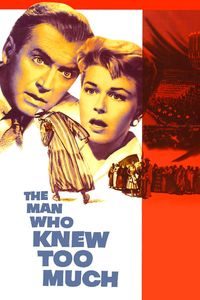
    The Man Who Knew Too Much (1956)

    (On Cable TV, December 2017) I distinctly remember the cymbal climax of The Man Who Knew Too Much from boyhood memories, so technically this would be a second viewing … but given that I only remembered that, let’s not pretend that I’m revisiting it. After all, watching it today I’m more interested in seeing another Alfred Hitchcock movie starring James Stewart and Doris Day. The result is in line with expectations, although I’ll note that overall, and compared to other Hitchcock movies of the same era, The Man Who Knew Too Much feels more average than it should. It’s overlong, with some sequences milking the same emotions to diminishing return. It takes much longer than it should to get started, and the “Que Sera, Sera” climax, while effective, is extended far too long after the cymbal moment to be as satisfying as it could be. Even Stewart, as good as he is, seems to be coasting on an average performance in an average film. Some of the plot curlicues are suspiciously convenient (such as having Day’s character being a retired yet still famous singer) but that’s to be expected. Still, for all of what’s not so good about The Man Who Knew Too Much, it’s still a Hitchcock film from the director’s competent period, with likable smart leads in Stewart and not-so-icy blonde Day. The suspense is well handled and if the film feels lacking today, it’s largely because it has set the standard through which modern thrillers are examined. As an entry through Hitchcock’s filmography, it’s a painless enough viewing. 

  • The Man Who Shot Liberty Valance (1962)

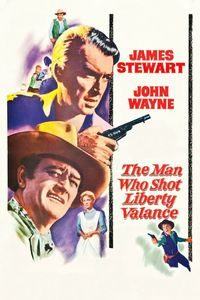
    The Man Who Shot Liberty Valance (1962)

    (On Cable TV, December 2017) My understanding of James Stewart and John Wayne’s screen persona is still incomplete (especially when it comes to Stewart’s latter-day westerns), but as of now, “James Stewart and John Wayne in a Western” tells me nearly all I needed to know about The Man Who Shot Liberty Valance’s plot. The clash between Stewart’s urbane gentility and Wayne’s tough-guy gruffness isn’t just casting: it’s the crux of the film’s nuanced look at the end of the Western period. The film’s classic set-up (an eastern-trained lawyer comes to town, becomes an enemy of the local villain) becomes an examination of Western tropes when the easy fatal solution is rejected by the protagonist as being against his values. When John Ford’s character steps in as a necessary conduit for violence, this deceptively simple film becomes a thought-piece questioning an entire genre. I surprisingly liked it upon watching (save for an extended sequences in which American democracy is slowly explained) and liked it even more upon further thought. Stewart is terrific in a role that harkens back to his more youthful idealist persona, while Ford is impeccable as a somewhat repellent but ultimately heroic figure. (I find it significant that my three favourite Wayne movies so far, along with The Searchers and The Shootist, have him willing to play roles that are critical of his usual persona.)  Under John Ford’s experienced direction, The Man Who Shot Liberty Valance acts as an epilogue to the Western and a hopeful examination of American values that emerged from the period.

  • Call Northside 777 (1948)

    Call Northside 777 (1948)

    (On DVD, January 2008) Even sixty years later, James Stewart is still The Man: As the lead in this semi-documentary drama about a journalist working to free a man unjustly accused of murder, he’s the mesmerizing rock upon which everything else depends. His impassioned speech at the end of the film evokes memories of other great Stewart performances, but it also stands on its own. Six decades later, it’s easy to be amused by the dramatic devices in what must have felt like a techno-thriller back then: The lie detector, the photographic processes, the remote transmission process: yeah technology! But the film itself is solid: Even if the film shows its age, the characters are interesting, the rhythm compares well to other films of the time and the look at then-Chicago has its own charm. But most of all: James Stewart. The guy isn’t one of the greats for nothing.

  • Rope (1948)

    Rope (1948)

    (On DVD, December 2006) Any Hitchcock film is now regarded with respect, but even on its own, this cleverly-made thriller would be worth a look. The first and most obvious distinction of the film is how it’s conceived as a filmed play with a minimal amount of cuts: The lengthy segments lend an air of sustained tension to the storytelling, showcasing the skill of the actors. But beyond the surface, there’s a lot of subtext to the piece, whether it’s the references to the Leopold/Leob case, or the heavy allusions to homosexuality. James Stewart unfortunately looks like a boy-scout in the middle of all this, but his reassuring presence makes up for his lack of emotional involvement in the story. The technical fascination of the film’s making-of only adds to the interest of the film itself, making for a viewing experience that will reward viewers even sixty years later. Among other questions raised by the film is this one: Why hasn’t this type of film-making been attempted more often since, aside from oddities such as Mike Figgis’ Timecode?

    (Second Viewing, On Cable TV, June 2021) I thought a second viewing of Alfred Hitchcock’s Rope would damage the film – I remembered semi-fondly as an audacious but flawed experiment in “real time” one-cut cinema, but I expected to be disappointed in measuring it against many more recent examples of the form. Much to my surprise, I ended up liking as much, if not even more, this time around. For one thing, it’s obviously not a “real-time” film – the camera may move smoothly around the studio (with not-so-invisible cuts), but there’s clearly several hours of action crammed in 80 very efficient minutes, with the sun setting outside the confines of the set and people arriving, leaving and coming back to the action. James Stewart is quite good here as the man who figures out the murder mystery, but John Dall and Farley Granger are also quite good as the two young men who murder their classmate, then host a party while the body of their victim is hidden inside a chest visible to everyone as a buffet table. The party mixes inane chatter with far more portentous philosophical discussions outlining the thematic concerns at the heart of the film, all leading to a great conclusion. I don’t see the flaws of the film as much as I applaud its audaciousness and the way it manages to reach its objective – but that may say more about my evolution as a movie critic and the weight I now tend to place on high concepts. Hitchcock (working from a story by none other than Hume Cronyn!) does create an almost-subliminal sense of tension in the way standard film editing devices are avoided – the “can they pull this off?” is as meta-cinematic as it is plot-driven – and he pulls one of the most unusual cameos of his filmography here. Rope is a daredevil act by 1948 standards (through premise, execution and not-so-veiled references to homosexuality), and it still works really well for twenty-first century viewers. Don’t miss it.

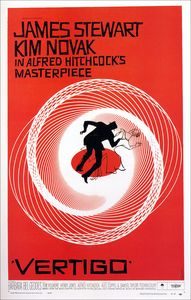
  • Vertigo (1958)

    Vertigo (1958)

    (In theaters, June 2000) Every great director can make mistakes once in a while, and while Vertigo has its adherents, I can’t help but feel that Hitchcock dropped the ball with this one; it’s a story with huge structural problems and a baffling finale. This being said, it develops quite nicely, and could forever coast on the talents of Kim Novak and James Stewart. Still, there are inexcusable faults, like the disjointed nature of the film (some cutting required), the disappearance of the girl-friend character and the abrupt huh-inducing finale. It doesn’t hold up nearly as well as Hitchcock’s better films…

    (Second viewing, On Cable TV, November 2020) I wasn’t a big Vertigo fan when I first saw it twenty years ago, and considering the impeccable critical acclaim that the film gets these days, I was curious to see it again and see whether two decades’ experiences and a much better understanding of Hitchcock’s career would lead me to another conclusion. Happily, it does; unhappily, I have to live with my first dumb review. Oh, I’m still not overly enthusiastic about Vertigo. I think Hitchcock has done better movies, and its appeal baffles me slightly. I have issues with the construction of the script and its far too hasty revelation (you know the one), as well as the disappearance of a supporting character without explanation. In the wider context of Hitchcock’s career, though, Vertigo is special: Its thematic obsession with, well, obsession neatly reflects other movies of his, and it’s no accident if the object of the protagonist’s fervour is a cool-ice blonde. I strongly suspect that the appeal of the film hovers at a near-unconscious level: not something based on plot or character, but in images, feelings and subtext. But, at long last, I do like it. Not a lot, but I do. James Stewart helps quite a bit, considering that his significantly darker character is epochal. Kim Novak makes for a splendid icon for Hitchcock’s own obsessions. As for San Francisco, well, it’s practically a third character with its multiple landmarks (most of whom I visited during my sole trip to the city!) showing up every few minutes. The plot itself makes slightly more sense than it did twenty years ago, but still hovers on the line of preposterousness. But that’s the nature of Vertigo: not entirely understandable on a purely rational level, and clearly aiming for a wealth of interpretations. I still like Rear Window much better, but I’ve made my peace with Vertigo so much applause.