Joan Collins

  • The Big Sleep (1978)

    (On TV, March 2022) Forty-five years later, the decision to remake a classic 1940s Los Angeles-based film noir as a 1970s London-based thriller smacks more of a stunt than a modernization of the story. There is, to be fair, a rather amazing cast in the 1978 version of The Big Sleep. With Robert Mitchum playing the private investigator to an elderly James Stewart, the film then goes on to have Joan Collins in a small role… even if Sarah Miles gets most of the appreciative stares playing a mop-topped redhead. While updated elements include colour cinematography and free mentions of elements too racy to have been acknowledged by classic Hollywood, the deliberately labyrinthine plotting has been kept almost intact. It makes for interesting viewing, but that may have more to do with the incongruity of the adaptation than its success. It’s a fun ride, but it would be an exaggeration to call it a good movie. Mitchum is easily twenty or thirty years too old for the role, and the film tortures itself to justify the American-accented Mitchum and Stewart in the middle of an otherwise very British film. Director Michael Winner’s pacing is slack, and Mitchum relies a bit too much on his tough taciturn persona rather than inhabiting the character. The period feel is more flashy than transparent (exactly the opposite of what the filmmakers intended for audiences at the time) and the direction is much flatter than expected, with the actors not always fully engaged in their roles. Oh, I still liked this The Big Sleep remake—but I liked it as a perversion of a much-admired original rather than its own thing.

  • Warning Shot (1967)

    (On Cable TV, February 2022) There’s something very contemporary about a film exploring the repercussions of a police shooting, but don’t go into Warning Shot expecting much in terms of police contrition: this is one of those movies in which deadly force by the police is not just explained and justified, but repeated in time for the finale. There isn’t much to see in cinematographic terms either: the film was shot by a TV production unit and it shows through the flat lighting, close-up framing, limited locations and generally unimaginative colour cinematography. Still, there’s a nicely-handled plot throughout, as our policeman protagonist must defend himself against accusations of having shot a noble doctor for no reason, and finds himself ostracized by everyone except by a ratings-seeking media personality. There are plenty of elements that have become far more familiar over the past few decades, and one wonders if a more stylish take on the story (race-flipped to make it more interesting) would do well these days. A few known names (including Lillian Gish, Eleanor Parker, George Sanders and Joan Collins at very different stages of their careers) pepper the supporting cast. Warning Shot doesn’t have much of a profile these days (I happened to see as it was featured as part of TCM’s “neo-noir” series, which feels like a stretch) and it’s easy to understand why—aside from a few known names in supporting roles, there isn’t much here that’s distinctive. But it can still be readily watched.

  • I Don’t Want to Be Born aka The Devil Within Her (1975)

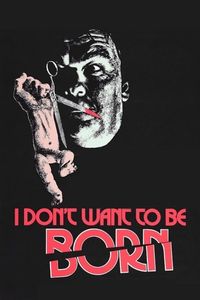
    I Don’t Want to Be Born aka The Devil Within Her (1975)

    (On Cable TV, January 2021) Evil-kids horror movies were a dime a dozen in the 1970s—spurred by 1968’s Rosemary’s Baby and bolstered by 1976’s The Omen, the genre had many imitators that haven’t stood the test of time as well as those. One of them is The Devil Within Her, a British production that can’t quite commit itself to comic insanity, despite featuring an evil baby that somehow manages to kill an impressive string of characters in increasingly ridiculous ways. While I could, at the limit, accept that someone pushing a pram could somehow fall and hit their head fatally, it gets tougher to be indulgent when the baby wields a knife. Ridiculous? Yes, but no one bothered to tell director Peter Sasdy as he gets Joan Collins playing the mother of an evil baby out for a rampage. Ostensibly funny but not executed as such, I Don’t Want to Be Born aka The Monster aka It Lives Within Her aka Sharon’s Baby aka The Devil Within Her (whew!) doesn’t manage to commit to the comedy of its premise. Its straight-faced approach also manages to make it more offensive—I really would have done without the anti-dwarfism prejudice that it features, with shot stature being associated with ugliness being associated with, well, satanic evil. Coupled with its typically ugly 1970s cinematography, it makes the film half-dumb, half-funny and almost entirely boring once it wraps up. The death scenes are understandably more ludicrous than disquieting, and that’s pretty much in keeping with the rest of the film—but even if you’re looking for some so-bad-it’s-good fun, you’re not likely to be satisfied with the rest of the film, no matter which title it comes under.

  • Land of the Pharaohs (1955)

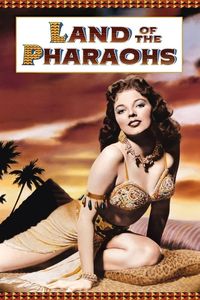
    Land of the Pharaohs (1955)

    (On Cable TV, October 2020) Years after the disappointing release of Land of the Pharaohs, director Howard Hawks admitted that he had taken up the job for the opportunity to work in widescreen CinemaScope. He did have a point—it’s impossible to watch the film and not be impressed by the sheer large-scale cast-of-thousands scope of the entire production. The story takes us to the construction of the pyramids, and it practically recreates the effort at scale: the making of the film involved official cooperation from the Egyptian government to unearth the foundations of an unfinished pyramid, and secured the cooperation of the army for the in-camera recreation of sequences with up to ten thousand extras. It’s a mind-boggling production story, one that will never be repeated considering CGI economies of scale, and an effort that is immediately visible on-screen. And yet, despite Hawks orchestrating such a production, Land of Pharaohs feels like a miss—by itself, but also as a piece of Hawks’ filmography. Gone is the whip-fast dialogue, the competent heroine and the sense of urban sophistication: this is a film that, in keeping with the sweeping historical epics of the time, deals in arch fake-profound dialogue, a very conventional role for the heroine, and a weird sense of historical recreation that never feels too far away from Hollywood’s sense of history rather than any real effort to commit to the historical era. The plot, about the pyramid’s architect trying to find a way to make the pyramid robber-proof while escaping being executed to keep its secrets, is fine without being as good as the setting. The eye-popping presentation of the pyramid’s construction far outshines anything in the plot, which doesn’t give as much weight to the rest of the film. The best-known star here is Joan Collins as the female lead, and while she’s very attractive, she’s not that good of an actress. While you can easily justify watching Land of the Pharaohs for its visual aspect, the rest of the film is a disappointment, and perhaps even a double disappointment considering the rest of Hawks’ filmography. This being said, I did find one aspect of the film amusing: as someone whose day job consists of managing “architects” of sorts, I had a load of fun passing on some of the film’s most pretentious lines of dialogue: “I do not intend to punish you, architect, but to reward your skill,” “Work swiftly, architect,” “Well, architect, you sent word you had a plan,” “I did believe in you once, architect,” “You have served me well, architect,” “I will not bargain with you, architect,” “Architect, I understand that you’re ready to start work on the inner labyrinth…”…

  • The Opposite Sex (1956)

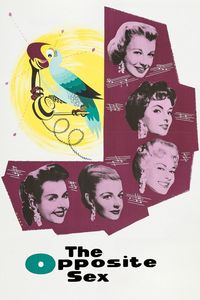
    The Opposite Sex (1956)

    (On Cable TV, August 2020) Knowing that The Opposite Sex is adapted from the same novel that led to 1939’s classic The Women, and having a look at its great cast, and watching its roaringly cynical start in which a woman speaks tartly about other women, you could be forgiven for having high expectations for it. Alas, the reality is a bit more pedestrian: The script settles into a lower-pitch struggle between women arguing about men. It’s certainly watchable, but there are many missed opportunities to do better. Bizarrely enough, I’m against the decision to include male characters in the film—The Women showed how to do it well, and they don’t add much to the arguments between the female protagonists. The musical comedy nature of the film is hard to grasp, considering that seasoned signer Dolores Grey barely sings, and noted triple-threat Ann Miller doesn’t dance nor sing. While the bon mots can be biting here and there, the script settles into a routine pace as the film advances: the women complain about men to other women, then complain about other women to yet other women. At least there’s more to see than to hear—I watched The Opposite Sex because of Ann Miller and was slightly disappointed in this regard, but that disappointment was more than nullified by seeing a lot of a young and radiant Joan Collins. Many other second-string notables populate the cast, from June Allyson, Joan Blondell, Ann Sheridan and Leslie Nielsen in a very serious role. Also worth noting is the garishly oversaturated Technicolor, which for some reason doesn’t really feature a lot of greens but does push the MGM Technicolor style about as far as it could go. Somehow less modern than the 1939 version, this mid-1950s romantic drama isn’t that bad by itself, but there are a lot of questionable choices made here knowing what else could have been done with this material and these performers.