Joan Crawford

  • Dance, Fools, Dance (1931)

    (On Cable TV, December 2021) I wouldn’t recommend Dance, Fools, Dance to 1930s cinema newcomers — there are far better choices out there, and this film doesn’t measure up in terms of narrative, style or impact. But for those who are familiar with the period, the film offers a remarkable amount of comfort. It starts with the casting — a young and attractive Joan Crawford playing opposite a young and not-quite-superstar Clark Gable as a gangster. (Before the end of 1931, Crawford and Gable would have an affair and be well on their way to becoming superstars.)  Beyond those two familiar names, the film is built on many conventions of the time — organized crime, the newspaper business, and heirs forced to work because of the Depression — that clearly make this a piece of 1930s cinema. Dance, Fools, Dance doesn’t do much with its Pre-Code freedom compared to racier films of the time, but the reflection of the era still feels relatively raw in its acknowledgement of one-night stands and recognition that Depression was taking place (a topic conspicuously avoided by escapist Hollywood). Crawford is quite good here, and the film flows easily — but it’s best seen by people able to put it in context.

  • The Ice Follies of 1939 (1939)

    The Ice Follies of 1939 (1939)

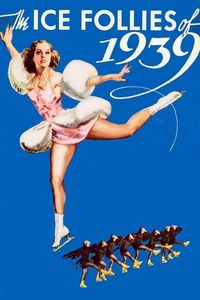
    (On Cable TV, December 2021) Let’s admit that it is fun to watch James Stewart as an ice skater putting together an epic skating show in The Ice Follies of 1939. It’s even more fun when he’s alongside Joan Crawford playing a mediocre skater who finds great success as an actress even as he’s still putting together his groundbreaking “musical on ice.”  Don’t worry — they’ll make it work eventually, but much of the film is spent with the two obsessing about the other one’s success (or lack thereof) and how it makes them feel. There’s a decent bit of business about showbusiness when our female lead stumbles into stardom thanks to her good looks and great attitude. The conflict between matrimony and success is given a fairer shake in this film than many others, largely because it’s a conflict between two successful people, not necessarily a star and someone offering support. Both lead actors are better than the undercooked material, which feels sandwiched between the requirements of a musical and the demands of making something interesting about ice skating. (The solution, as could be expected, was to blend movies and ice skating.)  It ends with a colour musical… on ice. But that’s Hollywood for you: stars pressed in ill-fitting roles, no matter their suitability for the setting… or the believability of the setting itself. The Ice Follies of 1939 is, at least, worth a look for the climactic dance number on ice, and some of the scenes between Steward and Crawford. Otherwise, well, there’s a reason why it’s more seen as a curio these days.

  • The Gorgeous Hussey (1936)

    The Gorgeous Hussey (1936)

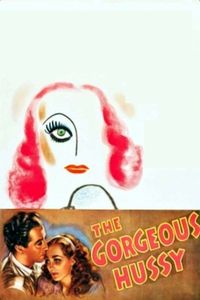
    (On Cable TV, September 2021) Maybe it’s my still-evolving understanding of English vocabulary, but I’m still grinning at the moxie required to name a movie The Gorgeous Hussey. It does fit, though: As a very fictionalized retelling of the life of a humble woman who became an unlikely power broker thanks to her friendship with American politicians such as Andrew Jackson, it’s meant to be a clash of sensibilities between beauty and politics within a character definitely meant to illustrate more contemporary values. In the surprisingly large filmography about American politics, this film stands out by being more about saucy romance and backroom dealings than policy or memorable speeches. Of course, the project was crippled from the get-go — made in the early aggressive early days of the Hays Code, The Gorgeous Hussey got away with its title, but could not do justice to the affairs, bawdy actions and ostracism of the Petticoat Affair it describes. As a result, it feels neutered — especially when you look up the historical record of the events that the film is meant to explore. It’s not a complete loss, though: visually, the film makes the most out of its period settings with great costumes and sets. Acting-wise, the good news is that the cast has a number of very familiar names, from Joan Crawford in the lead, James Stewart and Franchot Tone as supporting players, and Lionel Barrymore playing Jackson with panache. Unfortunately, that casting is now a double-edged sword: Crawford’s persona is too modern to play a historical figure without reminding audiences of her other films, and a similar problem also affects Stewart — magnified by the thinness of his part. All of these issues make The Gorgeous Hussey more a curio than a satisfying film in its own right. It’s worth a look to see how a Hays-Code-era film tried to portray a subject matter too salacious for its own good, but it’s not really much of a success on its own.

  • Love on the Run (1936)

    (On Cable TV, July 2021) Neither Joan Crawford, Clark Gable or Franchot Tone step far away from their established screen personas in Love on the Run, a kind of silly romantic comedy that had its start in the 1930s but certainly didn’t end there. The premise will be dead familiar to anyone who’s ever seen a screen romance: a millionaire (Crawford) wants to get away from the attention she’s getting, while an undercover reporter (Gable) is only too willing to help her… as long as there is a good story in it. The tension created by the lies sustains much of the film, as is the rivalry between reporters Gable and Tone. To contemporary viewers, what makes Love on the Run more than a romantic comedy is the 1930s atmosphere: With hard-nosed print reporters in the lead, colourful characters such as aviator (how exciting!), communication by cablegrams, the allure of a glamorous European getaway, and the menace of international spies, it’s almost more interesting now than it must have been at the time. Still, there isn’t much to the foundations of the story — it’s clearly a derivative of It Happened One Night (back then a box-office and Oscar sensation) and it plays in the same comic space as many films of its era. It’s fun to watch but not overly gripping even if you like the actors involved in it. Still, Love on the Run is perhaps best not appreciated by itself, but as a representative example of a genre — the 1930s Hollywood comedy, light on the screwball and heavy on the romance between marquee names.

  • Possessed (1947)

    Possessed (1947)

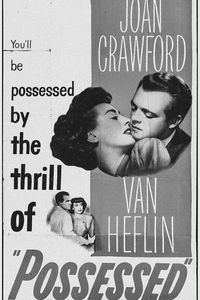
    (On Cable TV, June 2021) I’m not a big Joan Crawford fan (I’ve made my choice in the Davis-versus-Crawford feud), but it’s hard not to be impressed by the performance she gives in classic film noir Possessed, and by the overwhelming bleakness of the film surrounding her. The framing device has a woman (Crawford) telling a doctor about the events that have landed her in a psychiatric help facility, the film going through a multi-year dramatic story. There’s a very noirish sense of fatalism to the events, as Crawford’s character goes to the end of her murderous crush on a man. The story is told with admirable fuzziness, blurring the lines between subjective recollection of a troubled mind and the descriptive realism that was Hollywood’s mainstream style at the time. No less than Van Heflin and Raymond Massey play the two men with polar relationships with the protagonist — one of them she loves and who doesn’t in return, the other she doesn’t love even though he does. While conceived as a psychological drama rather than a crime film, the dark ending and sombre cinematography mean that Possessed has been included with some fanfare in the film noir corpus. It’s not a bad pick — and much of that credit goes back to Crawford herself.

  • Susan and God (1940)

    Susan and God (1940)

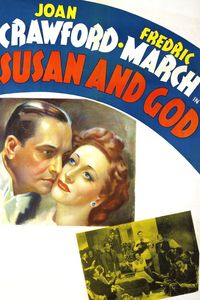
    (On Cable TV, March 2021) Try as I might, I just couldn’t get interested in Susan and God. Watching it because it’s directed by George Cukor, I was reminded that, having seen the best of his filmography, I’m now seeing the rest. As a comedy, it’s limp, and as a drama, it’s insubstantial. I’m not Joan Crawford’s biggest fan, and Fredrick March leaves me unmoved most of the time. There’s some promise in the premise (bored socialite claims to have found religion, then proceeds to blow up friendships and relationships by exposing everyone’s sins) but the execution is bland and featureless. I can sort-of-see the echo of the end of prohibition in how the film tackles self-righteousness and piety-as-tourism, but it’s really not enough to elevate the entire film from the doldrums. Too bad, really, because reading reviews of Susan and God has me thinking that this is the kind of material that appeals to me… but what I saw on-screen was simply not enough to stay interested.

  • It’s a Great Feeling (1949)

    It’s a Great Feeling (1949)

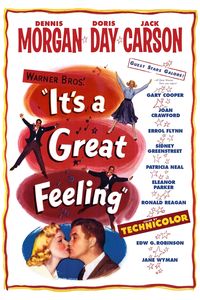
    (On Cable TV, March 2021) As much as I’ll take any occasion to recommend classic Hollywood movies to everyone, there are a few movies that are best seen once you’re a few hundred titles deep in the Golden-Age Hollywood back-catalogue. Many of them are films that are best classified as parodies, satires or ensemble comedies poking fun at the other movies churned out by Hollywood at that time. It’s a Great Feeling is a crystal-clear example of that form, as it tells viewers a tall tale about a young actress being discovered by a studio that becomes eager to feature her on the big screen. The point of the film, however, isn’t as much the plot as selling, in colour!, the fantasy of the studio system at the end of the 1940s, and more specifically Warner Brothers’ stable of contract actors. Doris Day, in one of her earlier, more free-wheeling roles, plays a cafeteria girl with big dreams who tries to make nice with the director and lead actor of an upcoming prestige production… but things soon turn awry when they have to get studio head approval. Nearly everyone here plays themselves, at the exception of Day, the studio executive and a few character roles. From the first moments of It’s a Great Feeling (featuring directors Vidor, Curtiz and Walsh turning down a project), there are many, many cameos and finding them funny is a litmus test on your knowledge of circa-1949 Hollywood. The best of those cameos has to be Joan Crawford, throwing a hissy fit as the protagonists because that’s what she does in every film. Also funny is Edward G. Robinson convincing a security guard to play up his image as a tough guy. More conventional comedy segments (such as a still-funny series of technical mishaps sabotaging a screen test) are interspaced between a few musical numbers to showcase Day’s singing talents. The clever script, written by frequent Billy Wilder collaborator I. A. L. Diamond, spoofs Hollywood without quite criticizing it (polishing its mythology in doing so) but keeps its most iconoclastic joke for the end, as Hollywood life isn’t for our protagonist… and then immediately flips that joke on its head with a quick final cameo that may or may not work as a comedy capstone depending on whether you recognize Clark Gable. In some ways, it does feel like a backlot-budget version of other better musicals of that time, but the style of comedy here is very specific and quite specifically dated to 1949. These days, It’s a Great Feeling works best as an inside joke for classic Hollywood fans — spot the celebrities, bask in the idyllic portrait of studio contracts and smile at the not-too-satirical take on something that was intensely familiar to everyone involved in the film’s production.

  • A Woman’s Face (1941)

    A Woman’s Face (1941)

    (On Cable TV, February 2021) It’s easy to see in bits and pieces what makes A Woman’s Face a bit better than most melodramas of the time. Despite a fundamentally unlikely premise blending organized crime, blackmail, disfigurement, child murder and a framing device set in a courtroom, the film gets quite a bit of mileage from Joan Crawford’s convincing performance in facial scarring makeup. The film wrings extra tension from the back-and-forth between the events of the story and the courtroom framing device, while George Cukor keeps things grounded despite the unlikely narrative and the Swedish setting. (But then again, the film is a remake of a Swedish original starring Ingrid Bergman.)  While I’m not much of a Crawford fan, she’s quite good here and A Woman’s Face remains an above-average 1940s melodrama.

  • This Woman Is Dangerous (1952)

    This Woman Is Dangerous (1952)

    (On Cable TV, November 2020) I don’t particularly like Joan Crawford-the-person, but as an actress she could have her moments in even the most average films, and it’s a quirk of characterization that makes her the star of This Woman is Dangerous. Trying out permutations on a familiar theme of a gangster eyeing a mundane life, the script makes showcases a woman as the head of a crime gang, and Crawford tears into the role with relish, living up to the title of the film before settling down with a tale of progressive blindness and falling in love with her surgeon. The complications come up when her ex-lover comes back to get her, although the interest of the film diminishes the closer it gets back to a standard crime thriller. By far the best part of the film is the opening, during which Crawford barks orders to her gang and proves that she is not to be trifled with. Her character softens and becomes less interesting as it goes by, although as a quasi-noir crime film, This Woman is Dangerous does have basic watchability.

  • Johnny Guitar (1954)

    Johnny Guitar (1954)

    (On Cable TV, October 2020) I don’t normally like Joan Crawford (Mommy Dearest didn’t help), but she is a force of nature in Johnny Guitar, a film that, despite its title, actually revolves around her. The titular Johnny (played by Sterling Hayden) initially gives us the impression that he’s going to be one of those singing cowboys matinee idols as he enters a saloon in the middle of nowhere and starts strumming and crooning. But the drama quickly displaces the music, as Crawford’s character (the owner of the saloon) comes in and sets the plot in motion. Her saloon is not built in the middle of nowhere as much as on the path of a future railway; nearby townspeople are insanely envious, and she has close ties to one of the local hoodlums. Our guitar-toting hero is also an ex-flame, and when the local bank is robbed in her presence, everything goes up in flames. A somewhat unpredictable screenplay and a steady descent into heavier and heavier drama do help make the most out of Johnny Guitar’s western elements. Crawford finds an equally impressive opponent in Mercedes McCambridge’s vengeful antagonist (a somewhat unusual case of a female antagonist in western films, if I’m not mistaken)—it’s said that the two women wouldn’t stand each other off the set as well. Nice outdoors colour cinematography also helps in wrapping up a package that’s far more interesting than your usual western.

  • Humoresque (1946)

    Humoresque (1946)

    (On Cable TV, October 2020) I’m not a big Joan Crawford fan, but she’s the single best element of Humoresque, a dour and dark romantic drama that rests on her performance as a damaged woman dragging a young and inexperienced violinist (John Garfield, fine but no more) in her self-destructive spiral. In many ways, this is an old-fashioned weepie, with characters fated to bad ends through their own flaws. There are not a lot of opportunities for levity or jokes here (placing supporting actor Oscar Levant at a disadvantage, as his later roles would demonstrate), reinforcing the all-orchestral swell of melodramatic intensity that goes with the ending. There’s a little more to it than just a melodrama in how the film delves, especially in the first half, in the universe of classical music performance. This enables the film to spend a lot of time featuring good music (and for Levant to play a bit of piano), lending additional respectability to the result. Humoresque is not exactly a good movie, but Crawford is compelling here as a woman who knows she can’t be redeemed, and if the result is overlong, it’s not to be dismissed easily.

  • Dancing Lady (1933)

    Dancing Lady (1933)

    (On Cable TV, June 2020) While Dancing Lady is technically the first of Fred Astaire’s movie musicals, his fans should keep in mind that it took him a few movies’ worth of scene-stealing appearances before getting his first lead role, and so this film sees him relegated to a climactic showcase number, as himself, dancing with Joan Crawford. Not that he’s the only one making early appearances here that now overshadow the leads of the film—An early iteration of The Three Stooges also shows up, plus later star Nelson Eddy, making this film’s supporting cast far more remarkable than nominal leads Franchot Tone and Clark Gable. (I would add “…and Crawford” except that she looks absolutely spectacular here—although not a dancer of Astaire’s calibre.) As an early Pre-Code musical of the early sound era, Dancing Lady is still quite rough around the edges: even the narrative doesn’t go too far away from its Broadway inspiration by featuring a making of a musical as its narrative foundation. It feels a bit short at 92 minutes, but that’s probably because we’re expecting more Astaire. While Dancing Lady is perfectly watchable, it’s probably more of interest to Astaire fans and cinephiles tracking the evolution of the early musicals… although the Pre-Code attitude does make it more interesting than most.

    (Second Viewing, On Cable TV, October 2021) It’s very amusing to see Fred Astaire billed in a very secondary role in Dancing Lady—five years later, he would have headlined such a title and made it much better by sole virtue of integrating dancing with comedy acting. But this was his screen debut, and so Clark Gable gets the leading (non-dancing) role as a Broadway impresario trying to put on a show despite romantic complications with his leading lady (Joan Crawford) and her rich boyfriend. Much of the plot is obvious and paper-thin, rotely going over tropes of Broadway musicals without much flair nor energy. It’s seriously dull in much of its opening two-thirds—only opening up when the show gets going in the last act. Astaire fans will note that he’s playing himself (a Broadway dancer) in the film, all the way to being credited in the film’s glimpse of the playbill. The other noteworthy cameo is having the Three Stooges in a walk-on comic role. Crawford is rather impressive when going toe-to-toe with Astaire in the film’s best moments, while Gable doesn’t deviate much from his persona as the romantic non-singing non-dancing lead, letting Astaire take the leading role whenever the film switches over to the Berkeleyesque dancing sequences. It’s a good thing that Dancing Lady gets a late surge of energy, dancing and singing, because what comes before is mildly pleasant at best, and repetitive of better films at worst.

  • Mommie Dearest (1981)

    Mommie Dearest (1981)

    (In French, On Cable TV, February 2020) Even though I’m moderately knowledgeable about movies, I’m still often surprised by the stories that I unlock in researching movies prior to these capsule reviews. Obviously, I knew of Joan Crawford, and her relatively small modern profile (especially when compared to Bette Davis, with whom she legendarily feuded), and the tarnishing of the Golden Age of Hollywood idols, and Faye Dunaway’s decline as an actress throughout the 1980s. But prior to watching and reading about Mommie Dearest, I was certainly missing on a piece of the puzzle that linked all of these things together. To put it simply: Mommie Dearest is an adaptation of a biography by Crawford’s adopted daughter, in which she revealed that her “mommie dearest” was a cold-hearted parent, a child abuser, and an overall wreck. In film history, Mommie Dearest was the first landmark in a series of books by children of Classic Hollywood stars that unbolted their saintlike public image. Many followed, but Mommie Dearest had a bigger impact than most in that much of it was corroborated, and it led to a movie whose execution, to put it charitably, maximized the tragic arc of the story. Faye Dunaway here plays Crawford as a quasi-caricatural monster, and the first half-hour of the film is the depiction of one episode of child abuse after another, as the mom terrifies her daughter in ways that are actively unpleasant to watch. (The famous “Wire Hanger” scene is one for the history books even in its French dubbed version: my cat, who can normally tolerate the worst horror movies with supreme feline detachment, had her ears pointed sideways in alarm at the screaming in the sequence… and I wasn’t necessarily any more detached.) I’m told that the film earned an unplanned reputation as an over-the-top camp classic of unintentional hilarity, but I’m not subscribing to that viewpoint. While some sequences do attain a certain comic level of scenery-chewing, there’s only so much outright child abuse that anyone can tolerate, and despite Dunaway’s unhinged performance, the character she plays is an out-and-out harridan who clearly should not have any kids. It’s that character portrait that still makes Mommie Dearest ghastly intriguing to watch today: the raw mother/daughter feud, and how it fed into the falsity of their public appearances at the time. It’s hard to say whether the book or the movie had a bigger impact on Crawford’s reputation, but I note with some interest that Crawford’s star was considerably dimmed compared to some better-behaved contemporaries. Everyone has taken sides for Bette Davis in the Davis/Crawford feud, and Crawford is now seldom mentioned without sideways glances at her personal life. I suppose that Crawford’s lesser body of work may have something to do with it (She’s distinctive in her Oscar-winning performance in Mildred Pierce and not much else), but comparing the way she’s discussed to that of comparable stars of the same period is instructive. There’s an argument to be made that Faye Dunaway’s performance here was too good for her own good: While she was a superstar in the 1970s, her filmography dimmed significantly in the 1980s following the acid reception of this film. That’s quite a lot of material for a film to touch upon, but only a few other films so clearly attack the reputation of a former Hollywood icon as savagely as this one. (Have a look at The Lives and Deaths of Peter Sellers and The Girl for further examples.)
  • The Hollywood Revue of 1929 (1929)

    The Hollywood Revue of 1929 (1929)

    (On Cable TV, September 2019) Now this is a curio on several levels. Keep in mind that The Hollywood Revue of 1929 was made at a time when sound cinema was just getting started: It was still considered a novelty, and it’s fair to say that Hollywood didn’t quite know what to do with it exactly. A natural idea was to transpose a Broadway revue on-screen: let’s just have the stars walk in, do a bit of music, dance or comedy, record everything and string them along in a plotless experience. Why not? Such a thing would be strikingly inappropriate for the theatrical experience today now that televised variety shows and streaming options can bring the best of the world to our screens at any time, but back in 1929 it wasn’t just a good idea—the result was seriously considered for the first Academy Awards. Of course, there’s quite a cliff from concept to execution: what survives of The Hollywood Revue of 1929 ninety years later is very rough on a technical level: the top of the image seems cut off, the special effects are laughable, the muddy image is of low quality, low contrast and poor sound quality. The dance choreography has little of the polish that we’d see from Busby Berkeley even a few years later. But that it has survived at all is amazing—many movies of that time never made it to this day. It’s quite an experience to see what were, at the time, the studio’s biggest stars—while we still remember Joan Crawford, Buster Keaton (very funny in a small part), and the Laurel and Hardy duo, many of the other people on-screen have faded away in obscurity, known only to early-cinema aficionados. There are a few highlights: Jack Benny’s emceeing routines have their moments. There are a few funny comic routines (including one featuring Lon Chaney). Of the good musical numbers, one number featuring Queen’s Guards dancers is rather good. There’s an early version of “Singin’ in the Rain” (later quoted in the That’s Entertainment! series). Perhaps more strikingly, three very primitive colour sequences mark, I think, the first use of colour I’ve seen in a Hollywood film and it does add an extra dimension in the film. There’s something to be said about the value of such a document travelling through the ages, now available for endless digital copies. In many ways, The Hollywood Revue of 1929 is a primitive form of time travel—what if you were sitting in the middle of the front row at the time’s hottest theatrical entertainment show?

  • The Unknown (1927)

    The Unknown (1927)

    (On Cable TV, March 2019) Contemporary viewers may decry the violence, vulgarity and provocativeness of today’s cinema, but the truth is that the frontier between moviemaking and sensational freak-show has never been all that clear, even during the first decades of the medium. In The Unknown, for instance, we can recognize the huckster’s instinct to show audiences something they may never admit they crave. Consider this: Lon Chaney stars as a circus attraction: a man without arms, who can throw knives and shoot a rifle with his feet. Except that he does have arms, tightly bound behind him: his characteristic double-thumb would easily identify him as a wanted criminal. Working at the circus is a good way to fly under the watch of police authorities … that is, until he falls for another circus worker (played by Joan Crawford) who cannot bear a man’s touch yet is desired by another man. More murder and terrible ironies abound in the rest of the picture. The story is simplistic, with much of the ending telegraphed well in advance, but there is one unnerving plot development midway through, and even the expected twists and turns help in making this an essential silent melodrama. Yes, The Unknown is lurid … but audiences then and now willingly paid to see this stuff.