John Lithgow

  • Blow Out (1981)

    Blow Out (1981)

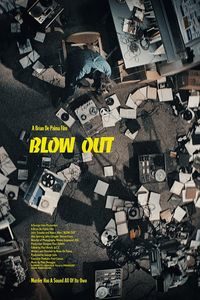
    (On Cable TV, March 2018) I hadn’t seen Blow Out in at least thirty years, so it’s funny to see what sticks and what doesn’t—my childhood memories of seeing the film (in French, on broadcast TV “prestige” Saturday evening showing) included the ending shot and the “animated film” sequence but little else. I think I learned of the Chappaquiddick political scandal after watching the film, which is really weird in retrospect. Watching the film as a seasoned thriller fan, I was a bit more impressed by director Brian de Palma’s ability to create suspense and memorable sequences through directorial audacity. John Travolta is surprisingly good (and young!) as a sound-effect technician who ends up embroiled in a political assassination conspiracy—with no less than an even younger-looking John Lithgow as an effectively creepy antagonist. Blow Out moves quickly and doesn’t have too many dull moments. While some character motivations are suspect (as in; the protagonist seeing the heroine again for no other reason that she’s attractive) and the coincidences in the plot defy credibility, but de Palma knows what he’s doing (just watch that opening shot) and the look at exploitation filmmaking at the eve of the eighties is simply fascinating—the period feel of the era’s technology, complete with tapes and physical cutting, is now one of the film’s biggest strengths. The ending is a downer, but it’s almost entirely justifiable through the film’s atmosphere and thematic resonance. Blow Out remains a remarkable early-eighties suspense movie that clearly owes much to the conspiracy thrillers of the seventies.

  • Footloose (1984)

    Footloose (1984)

    (Netflix Streaming, April 2017) While I can recognize that Footloose isn’t a great movie, it’s easy to be swept along by its charm, clearly-defined stakes and infectious energy. I happen to like the song itself a lot, and the clever opening sequence is a lot of fun to watch. Then it’s off to rural America, when a stranger, our protagonist, comes to town to bring some wholesome urban values in the Midwestern wasteland. As a treatise on blue-versus-red America, Footloose has a lot to say and did so decades before the US electoral map ossified to the point that brought you president 45. But there I go tainting Footloose’s innocent fun with not-so-fun stuff. It’s far better to focus on Kevin Bacon’s career-making performance, the ludicrous chicken-tractor sequence, or John Lithgow’s turn as a persuadable preacher. Footloose, alas, does run out of steam a bit too quickly: the ending seems to peter out after resolving itself ten minutes earlier, not quite managing to deliver a decent finale. Still, it’s a fun movie with a bit of depth to offer regarding the rural-vs-urban divide. The music is also quite a bit better than that other early-eighties musical Flashdance.

  • This is 40 (2012)

    This is 40 (2012)

    (Video on-demand, March 2013) Aimless character-driven comedy about the humanity of relationship makes for a nice change of pace from a diet of highly-plotted action-driven special-effects extravaganza, and you couldn’t ask for more amiable actors than Paul Rudd and Leslie Mann as lead protagonists.  This is 40 aims to provide a warts-and-all look at the dynamics of an established marriage, and it doesn’t take a lot to see echoes of universal experience in the sometimes-horrid thoughts expressed here.  Still, it’s about sticking together no matter how difficult circumstances can be, and it helps that the dialogue is both cutting and revealing.  There is a lot of depth to the ensemble cast, with particularly challenging roles for Albert Brooks and John Lithgow as polar-opposite grand-dads.  Everyone is playing their part in a very relaxed fashion, which may explain how and why such a seemingly plot-less film can sustain attention for so long.  Where the film falters is in its coda, which wraps up too quickly without giving decent send-offs to the myriad subplots introduced throughout the picture.  Still, this is a film about moments, not dramatic arcs: Writer/Director Judd Apatow’s been mining the less-romantic aspects of romance throughout this career, and This is 40 fits squarely in this niche.