Jonathan Demme

  • Melvin and Howard (1980)

    (On TV, January 2022) I didn’t even realize that Melvin and Howard was based on a true story while I was watching it. Yes, I knew who Howard Hugues was—in fact, it was one of the things that drew me into this film. But what I only found out after the end credits was that the film is based on real events. Or rather—real affirmations of what may or may not have happened. To recap: In our timeline, eccentric billionaire Howard Hugues died without having a formally recognized will. That much is true. What is also true is that hundreds of claims to his fortune and fraudulent wills emerged in the years following Hugues’s death, all of them found wanting. One of those claims was “The Mormon Will,” which apparently awarded one sixteenth of Hugues’ fortune to an everyday man named Melvin Dummar, who claimed that he had once given a lift back to Los Angeles to someone claiming to be Hugues, and had the will dropped in his gas station by a mysterious stranger. There are a lot of dubious “claims” in these assertions (which were resoundingly proven false in court), but Melvin and Howard plays it straight—what if Melvin’s side of the story was the truth? (Suddenly, I don’t feel too bad about not immediately knowing that this was a “true” story.)  That hook ends up being a reason for director Jonathan Demme to deliver a compassionate character study of struggling Americans throughout the 1970s. If you, like me, don’t know from the get-go that Melvin and Howard is supposed to be a true story, the resulting film feels oddly mis-structured. After an opening in which Hugues crashes his motorcycle in the desert, Dummar picks him up out of happenstance (and the kindness of his heart) and the two men bond over the following truck ride. Then the film forgets about Hugues for more than an hour as Dummar struggles to keep a job, remarries his ex-wife, moves to another state and generally tries to keep things together through divorce and unemployment. Dummar is near the bottom of the American society, often a single step ahead of repossession and being fired. Paul Le Mat gives a credible and likable portrait of a lower-class working man making poor choices, even if the always-wonderful Mary Steenburgen steals the movie as his long-suffering (then re-divorced) wife. It’s only late in the film, as the opening moments have been nearly forgotten, that a will is mysteriously left on his desk and the film renews with Hugues’ legacy. From that point on, Melvin and Howard is not necessarily to be trusted on factual grounds: the film tells it squarely from Dummar’s perspective, and the trial that convincingly determined that the “Mormon Will” was a hoax is here presented as the persecution of an honest man. It does make for an interesting film, even if not necessarily a cohesive one: A portrait of a working-class schlub bookended by much jazzier fiction about a billionaire’s intrusion on his life. What makes the film special is its affection for its erring protagonist—and the slice-of-life portrayal of a struggling family. While not exactly truthful, Melvin and Howard does poke at universality.

  • Swing Shift (1984)

    (On Cable TV, January 2022) Sometimes mentioned as the movie during which Kurt Russell and Goldie Hawn fell in love, Swing Shift is frustratingly inconsistent to watch. It tries to do a little bit of everything, but in doing so seems to be ignoring what makes it special. I was most intrigued by the WW2 home-front aspect of the film, as women sign up to work in airplane factories while their husbands are off to fight the war—there’s some predictable sexism, but also a bit of comedy, empowerment, self-actualization and further drama as their work becomes redundant at the end of the conflict and they’re let go from “the best job they’re ever had.”  That aspect of the film, while not completely new, is intriguing and could have supported an entire film. Nice production values, contemporary attitudes and some colourful supporting characters do help in creating a WW2 film more credible than those made during WW2 itself. Alas, there’s also a far more conventional love triangle that ends up swallowing the rest of the picture in its conventional maw—whenever the film threatens to get too interesting, Hawn and Russell (with some support from Ed Harris) go back under the spotlight for material that feels perfunctory compared to the rest of the film. Swing Shift’s production history tells us that the original script is not what ended up on screen—the picture was wrestled away from director Jonathan Demme late in production, with half an hour of new material shot to emphasize the love triangle. The result is a disappointment in more ways than one—it doesn’t end with a climax as much as a return to disappointing normalcy for the lead character, and little payoff for her colleagues on the assembly line. The feminist sensibilities of the film seem smothered in a decided unthreatening romantic triangle with an underwhelming finish. Much of what happened between the first version and the released one is described in detail in a rather wonderful Sight and Sound article, but you don’t need to understand how the original cut was less conventional to be frustrated by what’s on screen. But, hey—there’s Hawn and Russell are the beginning of their still-ongoing relationship, so at least there’s that.

  • The Truth About Charlie (2002)

    The Truth About Charlie (2002)

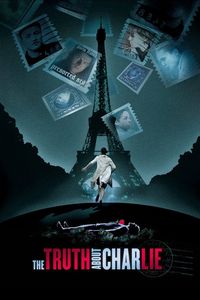
    (In French, On Cable TV, February 2021) I never bothered watching The Truth About Charlie at any point in the past eighteen years, discouraged by its lousy reviews and having missed it during its period of maximum hype. But having seen Charade (the 1963 film of which this is a remake) was enough to get me curious—and being reminded that Thandie Newton starred in the film didn’t hurt either—Mark Wahlberg is no Cary Grant, but I’d probably think a few seconds before choosing between Newton and Audrey Hepburn. Surprisingly enough, the remade script doesn’t mess all that much with the premise of the original: we still have a newlywed coming back to Paris to discover her husband gone and their apartment empty. We still have a mysterious stranger claiming to help despite being allied with three dangerous people. We still have the stamp thing and an American embassy official. It’s more in the directing style that The Truth About Charlie distinguishes itself from Charade — and really not in a good way. Director Jonathan Demme throws in a flurry of circa-2002 stylistic quirks, plus many more of his own (such as the staring-at-the-camera dialogue shots) and the result isn’t dynamic as much as it’s intensely irritating. While the basics of the narrative are still there, they’re made less comprehensible by the showy direction and the elided connective material. It gets worse once you realize that little of the film’s stylistic excesses really serve the thriller — a lot of them are actively distracting from the narrative, and some of them (such as Charles Aznavour showing up to sing) remain completely unexplainable — I happen to think that featuring New Wave director Agnès Varda in a small strange role is Very Significant in figuring out that there’s nothing to figure out. Tim Robbins is fine in the Walter Matthau role, Wahlberg is miscast and Newton is always a delight, but the film around them struggles to keep a coherent tone or even clearly presents its narrative. I suppose that remaking an intensely watchable suspense film as an arthouse experiment is more interesting than simply aping it verbatim, but it completely misses the point of why people loved the film so much in the first place: I’m not sure anyone ever watched the original Charade (which, to be fair, does have its moments of first-act weirdness) and thought, “You know, what this movie needs is more incomprehensible stuff.”

  • Caged Heat (1974)

    Caged Heat (1974)

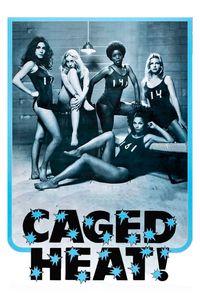
    (On Cable TV, September 2020) Not every Oscar-winning director has an immaculate high-art past, and so it is that the celebrated Jonathan Demme got his start on Roger Corman exploitation pictures, and exploitation thriller Caged Heat was his first directing credit. As a better-than-average women-in-prison film, Caged Heat has all of the nudity, violence, girl-on-girl fighting, anti-establishment screeds and sadistic wards that you’d expect from such films. The plot first goes where you think it will go (unjust arrest; meet the cast; early rebellion; punishment; greater rebellion; escape and so on) and then doesn’t, with the details along the way being little bits of titillation thrown to the audience. Where Demme does bring his touch is that the result is noticeably better than other films of the subgenre: there’s some humour to the proceedings, social critiques, scenes that go beyond the strict minimum, and the film minimizes (but does not eliminate) male-on-female violence to focus on female-on-female oppression (or rather system-on-women oppression). Some of the casting does work: Barbara Steele does have one weird role as the wheelchair-bound warden, and Juanita Brown is simply captivating. It’s not much, but it does work: most of the film plays according to exploitation expectations, but there’s enough going on here to keep interest if you’re committed to the film. I suppose that if you must watch a women-in-prison film, you could do worse than Caged Heat.

  • Something Wild (1986)

    Something Wild (1986)

    (In French, On Cable TV, February 2020) Much of Something Wild feels like a film on autopilot, as long as you account for one mid-movie swerve into slightly different territory. It doesn’t take a long time for the premise to be established: here’s a straight-arrow corporate guy who gets snagged in the schemes of a flighty bohemian-type girl and—somehow—goes along with her on a road trip away from Manhattan back to her small town. Stuff happens, lessons are learned, characters revealed, cars crashed and chuckles obtained but that only takes us to the middle of the movie, as the last half gets significantly darker as the female lead’s dangerous ex-boyfriend shows up to make trouble for everyone. Jeff Daniels and Melanie Griffith are the lead couple, while Ray Liotta makes an early bid at his tough-guy screen persona with his role as the ex-boyfriend. The casting seems appropriate; Griffith, in particular, gets to play a few roles all by herself and her chameleonic character. Still, much of the fun of Something Wild is in seeing what else it has in store for the pair’s difficult trip and how they will deal with the unbelievable coincidences that keep complicating their lives. I’m not sure about the darker shift in tone toward the end, but it does feel as if it lives up to its “anything can happen” credo. Not a bad choice for fans of the lead actors or director Jonathan Demme, but there have been quite a few similar movies since then.